
Foreign News
Nine left in critical condition after UK train collision that killed driver

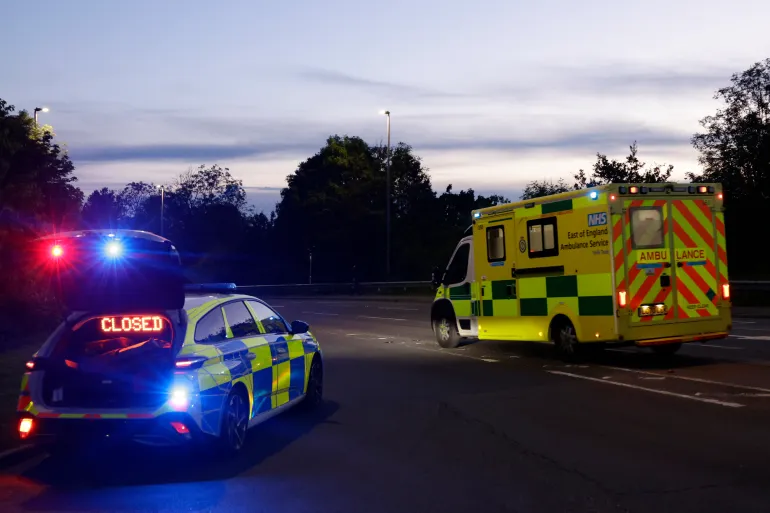
At least nine people remain in critical condition after two passenger trains crashed into each other and killed one driver near Bedford, about 56 miles (90km) north of London.
British Transport Police said on Saturday that more than 80 people had received hospital treatment on Friday night after the trains collided.
“As of this morning, 28 remain in hospital, and nine are in a critical condition,” Chief Constable Lucy D’Orsi said.
She added that “specialist investigators from British Transport Police are working with colleagues at the Rail Accident Investigation Branch (RAIB) to gather the facts and determine what has happened”.
Moreover, Transport Secretary Heidi Alexander said that it was “too early to speculate” on the cause of the crash, and promised that “a thorough investigation … to ensure that lessons are learnt” would be launched.
Friday’s crash involved two London-bound trains on the same track, according to East Midlands Railway (EMR), which operates both services.
On Friday, police confirmed that the driver of one of the trains had died at the scene.
In a statement from Buckingham Palace, King Charles said he was “greatly saddened” by the incident and sent “his thoughts and sympathies” to the dead driver’s family and to those injured.
The East of England Ambulance Service said on Saturday that 11 people sustained “very serious” injuries, while a further 32 suffered serious wounds and 56 others had minor injuries.
EMR’s managing director, Will Rogers, also called the crash “a profoundly sad day for the railway community”.
“We are deeply saddened that our driver has tragically died, and a number of other people have suffered injuries,” he said, speaking at the scene alongside other officials.
He added that EMR was “fully supporting” the RAIB probe.
More than 20 ambulances, specialist hazardous area rescue teams and six air ambulances were dispatched to the scene of Friday’s crash.
While the investigation continues, officials have not said whether signalling issues played a role in the incident.
[Aljazeera]


The Philippine Coast Guard says it has recovered 41 bodies from the wreckage of a ferry that caught fire this week, bringing the total death toll to 76.
More than 130 people were on board the MV June Aster when the blaze erupted on Wednesday as it neared its destination at the tourist hotspot of Coron, after departing from Manila.
The coast guard said on Saturday the number of survivors remained 43, with many receiving treatment in hospital, but 13 people remain unaccounted for.
Recovery of bodies had been hampered due to toxic fumes and lingering heat, which meant authorities were unable to board until Friday.
Geronimo Tuvilla, an official for the Philippine Coast Guard, said the priority was identifying victims and determining the cause of the blaze.
Kristine Ablana, a tourism official in Coron, said relatives were being asked to help identify family members through personal items and DNA testing.
“Once someone is able to verify that this photo or these belongings are indeed those of their relative, they will be asked to provide a DNA sample,” she said.
Coast Guard spokesperson Commodore Noemie Cayabyab said the fire began in a cargo hold before spreading.
She said survivors had described hearing a loud explosion, “the appearance of smoke and then fire. It spread very quickly”. She added that those who had made it off the ship did not have time to put on lifejackets.
A survivor who was hauled to safety on a rescue boat told the BBC he had heard frantic cries onboard when the fire erupted, and was trampled by panicked people as he tried to escape.
The ferry, built in 2002, held valid safety certificates and passed an enforcement inspection in March, but investigators are looking into potential manifest discrepancies, cargo loading integrity, and crew emergency response protocols, the Palawan Daily reported.
The vessel was carrying 117 passengers and 17 crew members.
Atienza Interisland Ferries, the vessel’s operator, has pledged full co-operation with the inquiry.
[BBC]
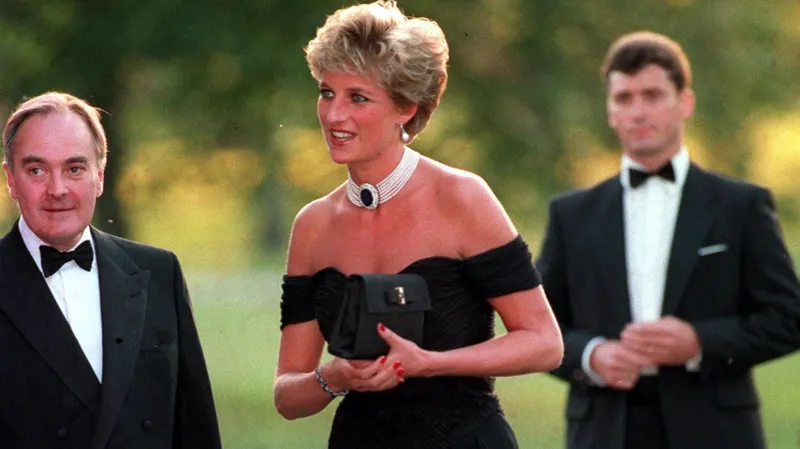
A dress worn by Princess Diana to a party in London hours after a documentary was televised in which the then-Prince Charles admitted to committing adultery during their marriage is going up for auction.
Her dramatic arrival at the Serpentine Gallery in 1994 in a custom-made black silk evening dress by designer Christina Stambolian became an iconic pop-culture moment.
The media dubbed her outfit the “revenge dress”.
Auction house Sotheby’s expects the dress to sell for up to £220,000 ($300,000) when it goes under the hammer on 9 December.
A press release from Sotheby’s said it is the first time the dress has been offered at auction since 1997, when the late princess sold 79 of her dresses to raise money for charities.
Morgane Halimi, Sotheby’s Global Head of Handbags and Fashion, said in a statement that Princess Diana “understood instinctively” that fashion can be a language in its own right.
“On her own terms, Princess Diana turned the dress into one of the most powerful messages she ever made, during one of the most scrutinised and emotionally charged episodes of her life,” Halimi said.
“She walked into a moment in which so much of her story was being told for her and, through what she chose to wear, reclaimed the narrative for herself.”

According to Sotheby’s, Anna Harvey, her stylist at the time, said Diana “wanted to look a million dollars”.
The princess made a last-minute wardrobe change for the fundraising dinner and chose the strapless evening dress by the Greek designer Christina Stambolian – which she accessorised with a royal jewel, a black clutch and black heels.
The vintage Jaguar XJ40 car that Diana arrived in at the event was sold at auction earlier this year for £66,250.
The revenge dress is expected to fetch a considerably higher price.
If it does, it will not be the first time an item from the princess’s wardrobe has sold for a significant sum.
Princess Diana’s sweater featuring a black sheep among rows of white ones was sold for £920,000 at an auction by Sotheby’s in New York in 2023.
[BBC]

A Pakistan Under-19 cricket team suddenly became the centre of focus when it was mistaken for a group of asylum seekers in Portsmouth. A group of protesters gathered outside the Marriott Hotel in Portsmouth after reports that asylum seekers were staying there. The situation had to be later diffused when it was ascertained that the hotel was hosting the Pakistan Under-19 team.
According to the Guardian, the situation became tense when a crowd gathered outside the Marriott hotel after reports that about 40 men who did not seem to be English arrived at the hotel. George Madgwick, a Reform councillor, called the hotel to mediate between the Pakistan Under-19 staff and the assembled crowd, following which the crowd dispersed.
“I spoke to the coach of the team, who was very understanding,” Madgwick told the Guardian. “I went out to the protesters and told them, ‘You’ve got it wrong guys, it’s a cricket club.’ They left within a couple of minutes. It was a massively unfortunate incident.
“From the perspective of the people of Portsmouth who are already on high alert, this was a coach from the same company which was turning up with about 40 foreign men.”
The ECB has been in touch with the Pakistan management following the incident and is reviewing security arrangements.
The Pakistan Under-19 team played a four-day game against England Under-19 in Arundel from September 2 to 5, which they lost by ten runs. The two teams faced off in a Youth ODI on September 9, with Pakistan winning by 177 runs. Pakistan’s senior men’s team are also playing the third and final Test against England at Edgbaston.
[Cricinfo]

Showers about 75 mm are likely at some places in the Western, Sabaragamuwa, Central and Southern provinces

Brook, Buttler, Baker star as Sri Lanka slump to 119-run rout

Where is Gnanasara Thera?Police pass buck to court

Russian citizens in Lanka to vote in State Duma elections

Euro 110,000 research drive to tackle plastic waste in food sector

New SAU-RCSS pact to boost South Asian dialogue

‘Dates have the highest sugar content to fight Coronavirus’

Sunday Island 27 December – Headlines

#SundayIsland 17th December – Headlines

Sunday Island – 28th March

Sunday Island Headlines – 21 March

Sunday Island – 21st February – Headlines
-

 Sports5 days ago
DDS set to lose Test captaincy
-

 News5 days ago
Sri Lanka faces new grid challenge as rooftop solar surges: former CEB GM
-
 Latest News5 days ago
Shafali, Deepti power India into sixth T20 Asia Cup final
-

 Latest News4 days ago
Sri Lanka thwart Fatima Sana challenge to secure Asia Cup final spot
-

 News3 days ago
Gnanasara Thero absconding after SC ruling
-

 Features6 days ago
Lost for 90 years: Rare Goby resurfaces in Jaffna
-

 News4 days ago
Ammunition cache found in old Kandy bungalow
-
 Latest News7 days ago
Italian Naval Vessel ‘ITS Giuseppe Garibaldi’ arrives in Colombo