
News
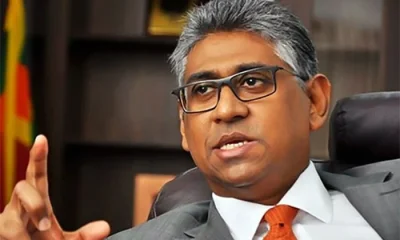
Nimal Siripala pushes for more seagoing jobs

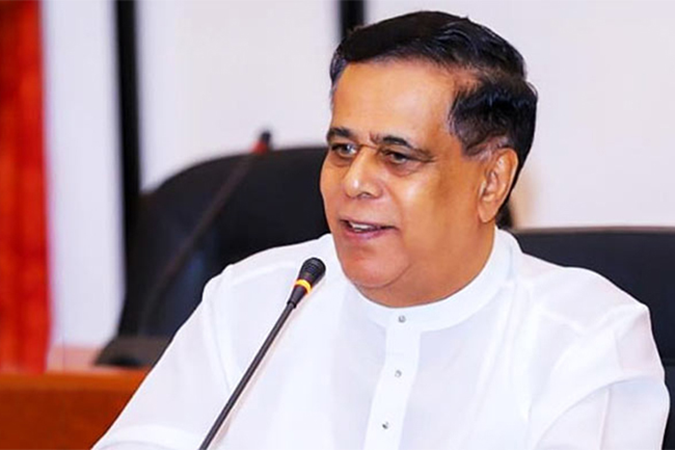
Ports, Shipping and Aviation Minister Nimal Siripala de Silva says that although Sri Lanka is an island nation the number of seafarers and people engaged in employment in the maritime sector by Lankans is less 0.1 percent.
Addressing the 56th Annual General Meeting of Ceylon Association of Shipping Agents in Colombo last Wednesday (14), the Minister said: “Sri Lanka being an island nation, we would have diverted young people of Sri Lanka towards Maritime employment opportunities. If you take Philippines, 10 percent of their foreign employment is in the Maritime field which draws large amount of foreign currency to Philippines.”
He said: Our Government and my Ministry has launched an ambitious program to train more seafarers and engineers, craftsman to be employed in the ships. I seek your assistance and also the shipowner’s assistance to absorb more cadets from Sri Lanka which would help us to train more youth in the maritime field and provide them with secure employment.
Sri Lanka moving its way into the top ranks of global sea ports by volume and growth, it is a joint effort of public bodies like SLPA and private organizations collaborating in order to bring international best practices to the industry. With the recent changes in policy, and through the collaboration of experts from both public and private sector bodies like CASA working on the existing issues together, there is a limitless potential for Sri Lanka to be a maritime hub in the region.
Given that 90% of the world trade is transported through oceans, the shipping field is a key factor in the growth of many country economies including Sri Lanka. With the international trade is increasing globally I am sure your role is crucial in the years to come. Considering the fact that Port of Colombo (POC) was ranked as the 15th connected Port, we invite the world shipping lines to consider more transshipment at POC. The cargo that is brought to POC can
be easily connected to the Indian Ports, Africa, Bangladesh, Maldives and Far East. Such service may also provide a competitive price for them. CASA could be the voice of being the brand ambassador in promoting the Port of Colombo as a Transshipment Hub and thereby contribute to the uplift of the growth.
Apart from port infrastructure we identify the need to develop our ancillary services to move forward in the concept of a hub. A successful hub port requires the full range of ancillary port and marine services at competitive prices in order to be attractive to mainline and feeder operators, casual callers and attracting vessels specifically for services even without cargo operations.”



Latest News
A Policy is being formulated to ensure Child Protection in the use of Technology — Prime Minister


Prime Minister Dr. Harini Amarasuriya stated that a policy is currently being formulated to ensure child protection in the use of technology.
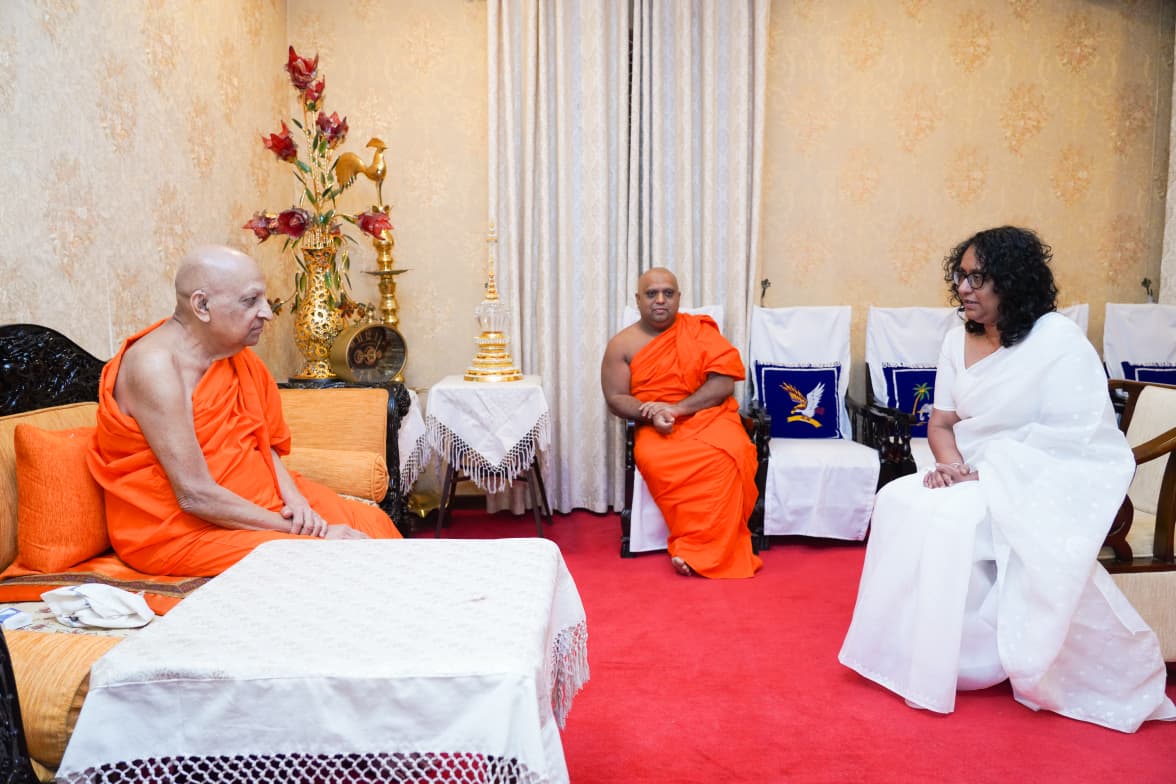
The Prime Minister made this statement on Thursday (08) in Kandy while briefing the Most Venerable Mahanayake Theros of the Asgiriya and Malwathu Chapters on the issue that has arisen regarding the Grade 6 English module. Thereafter, printed copies of all modules were presented to the Mahanayake Theros.
Earlier on Thursday (08), the Prime Minister visited the Malwathu Viharaya in Kandy and met the Most Venerable Thibbatuwawe Sri Siddhartha Sumangala Nayaka Thero, the Mahanayake of the Malwathu Chapter, where she explained the error that had occurred in the first print run of the English module for Grade 6 .
The Mahanayake Theros emphasized that education is a sensitive subject and that such matters should be handled with greater sensitivity and proper oversight. They further advised that a formal investigation should be conducted and that education reforms should be carried forward in a systematic manner.
Subsequently, the Prime Minister visited the Asgiriya Maha Viharaya and met the Most Venerable Warakagoda Sri Gnanarathana Mahanayaka Thero of the Asgiriya Chapter, where she clarified the error related to the English module.
The Mahanayake Thero noted that education reforms are a timely necessity and should be implemented with due oversight and careful review and also pointed out that there are broader issues in Sri Lanka regarding the use of technology, which are evident in the manner in which modern tools such as AI technologies are being used on social media.
Clarifying the issue Prime Minister Dr. Harini Amarasuriya further stated,
“We have appointed a committee to look into this issue, and based on the recommendations of the National Institute of Education (NIE), steps were taken to remove the relevant lesson. In addition, all printed copies of the relevant module have been stamped, and no module has been distributed to schoolchildren. A formal investigation into this matter has been initiated by the Ministry, and a complaint has also been lodged with the Criminal Investigation Department.
At the same time, we are in the process of formulating a policy on child protection in the use of technology”.
Thereafter, addressing the media and responding to the’ questions raised by journalists, the Prime Minister stated:
“The Opposition is attempting to use this national task for their own political advantage. However, many in society have expressed their views on the issues that have arisen in a positive manner, with the objective of identifying and correcting mistakes. The government has decided to move forward with education reforms by recognizing the error that have occurred and rectifying them. We will take the no-confidence motion brought by the Opposition as an opportunity to further advance dialogue on education reforms”
The occasion was graced by the Most Venerable Anunayaka Thero of the Asgiriya Chapter, Venerable Narampanawe Ananda Nayaka Thero; Deputy Registrar of the Asgiriya Chapter, Venerable Muruddeniye Dhammarakkhita Thero; Deputy Registrar of the Malwathu Chapter, Venerable Mahawela Rathanapala Thero; Members of Parliament Thushari Jayasinghe and Thanura Dissanayake; Mayor of Kandy Chandrasiri Wijenayake; Secretary to the Ministry of Education Nalaka Kaluwewa; and Secretary to the Ceylon Teachers’ Union in Central Province D. D. Wimalaweera.
[Prime Minister’s Media Division]
Latest News
The deep depression to the South-east of Sri Lanka is likely to intensify in to a cyclonic storm during the next 24 hours

A RED warning for a deep depression to the South-east of Sri Lanka has been issued at 01.00 a.m. on 09 January 2026 for the period until 01.00 a.m. 10 January 2026 by the Natural Hazards Early Warning Centre, of the Department of Meteorology.
The deep depression in the Bay of Bengal to the southeast of Sri Lanka (At 01:00 a.m. on Jan 9th, 2026 located about 200 km East of Pottuvil) is very likely to intensify further and move west-northwestwards towards the coast of Sri Lanka between Pottuvil and Trincomalee in the evening today (9th January 2026.) The system is likely to intensify in to a cyclonic storm
during the next 24 hours.
Hence, showery, and windy condition over the island, particularly in the Northern, North-Central, Eastern, Uva and Central provinces is expected to enhance.
… asks who called for third DNA test
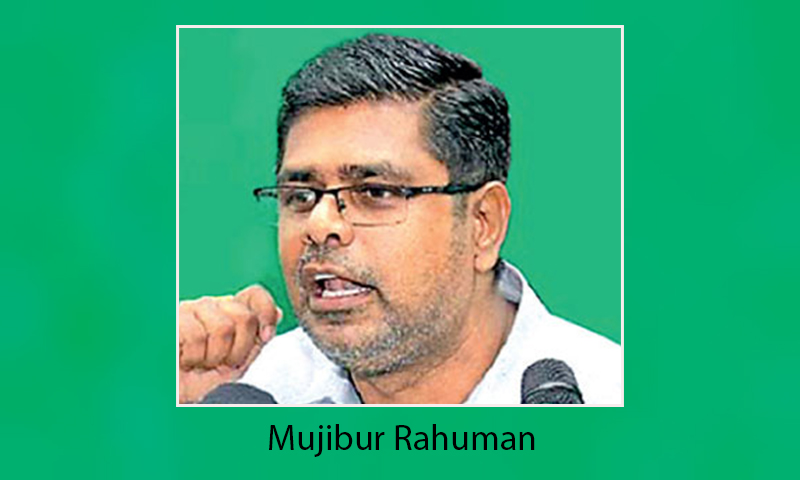
Top SJB spokesman Mujibur Rahuman, MP, wants the Catholic Church to exert pressure on the NPP government to have an arrest warrant issued for Pulasthini Mahendran aka Sara Jasmine, wife of Katuwapitiya suicide bomber Atchchi Muhammadu Hastun.
Colombo District lawmaker yesterday (8) told The Island that the Catholic Church should throw its weight behind the SJB’s call for an open warrant and pressure the government to ask for Interpol assistance to track down the fugitive.
She would be able to throw light on the 2019 Easter Sunday carnage, the former UNPer said, urging the Catholic Church to make its position known without delay.
Alleging that Public Security and Parliamentary Affairs Minister Ananda Wijepala had been evasive in his response to a query posed to him in parliament on Wednesday regarding Easter Sunday attacks, lawmaker Rahuman asked whether the NPP was trying to cover up something.
Against the backdrop of the NPP’s declaration that Sara Jasmine is alive, the government should inquire into the circumstances the Government Analyst Department in late Sept 2023 announced that she was among those who perished in multiple blasts at Sainthamaruthu on April 26, 2019.
The Police Headquarters made the announcement on behalf of the Government Analyst’s Department that reached the conclusion after carrying out DNA tests for the third time on the tissue samples that had been obtained for the investigations by Judicial Medical Officers, Detectives from the Criminal Investigations Department, and the Government Analyst’s Department.
After the change of government following the last presidential election the NPP initiated an inquiry to verify the third DNA test. MP Rahuman pointed out that the third DNA test had been quite controversial as the two previous proved that she was not among the dead at Sainthamaruthu, where the group including some family members gathered.
The CID inquiring into the third DNA test last month recorded statements from C.D. Wickremeratne who had been the IGP at that time as well as DIG CID, Prasad Ranasinghe regarding the issues at hand. Wickremaratne has said that the third test was ordered in the wake of the concerns expressed at the National Security Council (NSC) regarding Sara Jasmine’s status.
MP Rahuman stressed that right along he believed Sara Jasmine was alive and had taken refuge in India.
MP Rahuman quoted terror mastermind Zahran Hashim’s wife, Abdul Cader Fatima Hadiya, as having told the Presidential Commission of Inquiry (P CoI) into the Easter Sunday blasts, that she heard Jasmine’s voice, after the blasts. Those killed at Sainthamaruthu, a week later, included Zahran Hashim’s father Mohamed Hashim and his brothers Zainee and Rilwan. Rilwan is believed to have been one of those who detonated bombs. Fatima and her child survived the Sainthamaruthu blasts and remain in government custody.
Lawmaker Rahuman said that the Catholic Church’s intervention is essential to compel President Anura Kumara Dissanayake to go the whole hog. “We cannot forget that the father of two of the suicide bombers was on the JVP National List at the 2015 parliamentary election and that wife of one of the bombers blasted herself at their Dematagoda home.”
By Shamindra Ferdinando ✍️

Clinical Pakistan look to keep momentum going and wrap up series

Astronaut’s ‘serious medical condition’ forces Nasa to end space station mission early

Six whales die after mass stranding on remote New Zealand beach

Which are the 66 global organisations the US is leaving under Trump?

Brazil to send national guard near border with Venezuela

A Policy is being formulated to ensure Child Protection in the use of Technology — Prime Minister

‘Dates have the highest sugar content to fight Coronavirus’

Sunday Island 27 December – Headlines

#SundayIsland 17th December – Headlines

Sunday Island – 28th March

Sunday Island Headlines – 21 March

Sunday Island – 21st February – Headlines
-

 News3 days ago
Interception of SL fishing craft by Seychelles: Trawler owners demand international investigation
-
 News3 days ago
Broad support emerges for Faiszer’s sweeping proposals on long- delayed divorce and personal law reforms
-

 News4 days ago
Private airline crew member nabbed with contraband gold
-

 News2 days ago
Prez seeks Harsha’s help to address CC’s concerns over appointment of AG
-

 News2 days ago
Govt. exploring possibility of converting EPF benefits into private sector pensions
-

 Latest News20 hours ago
Warning for deep depression over South-east Bay of Bengal Sea area
-

 Features3 days ago
Educational reforms under the NPP government
-

 News6 days ago
Health Minister sends letter of demand for one billion rupees in damages