
Foreign News
Nigeria sees one of worst mass abductions as 315 taken from school

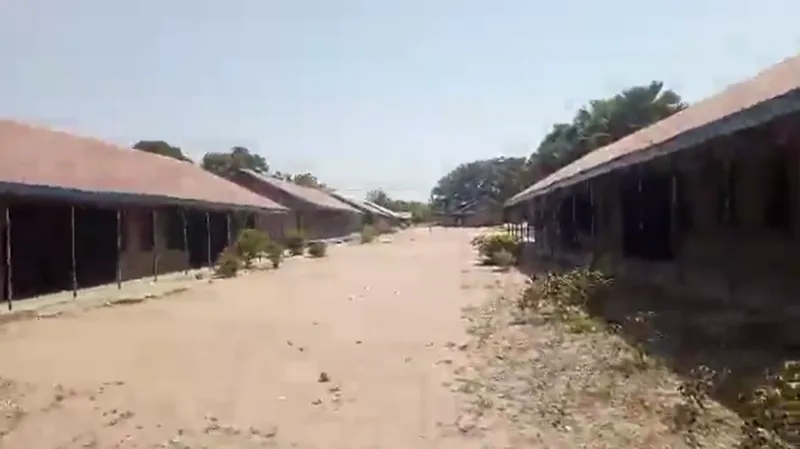
More than 300 children and staff are now thought to have been kidnapped by gunmen from a Catholic school in central Nigeria, making it one of the worst mass abductions the country has seen.
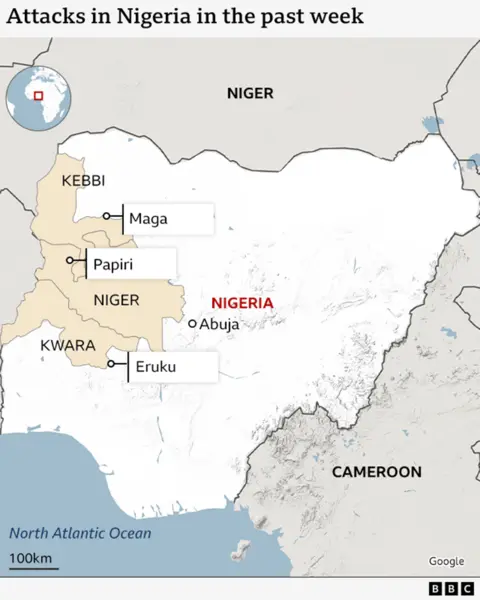
The Christian Association of Nigeria said 303 students and 12 teachers were taken from on St Mary’s School in Papiri, Niger state – substantially more than previously estimated.
It said the figures have been revised upwards “after a verification exercise”.
The kidnapping comes amid a surge of attacks by armed groups. The revised number of people taken surpasses the 276 abducted during the infamous Chibok mass abduction of 2014.
Local police said armed men stormed the school at around 02:00 local time (01:00 GMT) on Friday morning, abducting students who were staying there.
Dominic Adamu, whose daughters attend the school but were not taken, told the BBC: “Everybody is weak… it took everybody by surprise.”
One distressed woman tearfully told the BBC that her nieces, aged six and 13, had been kidnapped, adding: “I just want them to come home.”
Police said that security agencies were “combing the forests with a view to rescue the abducted students”.
It was initialy reported that 215 pupils had been taken – but that figure has since been revised upwards. The new number is believed to be almost half of the school’s student population, the news agency AFP reports.
Authorities in Niger state said the school had disregarded an order to close all boarding facilities following intelligence warnings of a heightened risk of attacks.
They said in a statement the move exposed pupils and staff to “avoidable risk”. The school has not commented on that claim.
The kidnapping of people for ransom by criminal gangs, known locally as bandits, has become a major problem in many parts of Nigeria.
The payment of ransoms has been outlawed in an attempt to cut the supply of money to the criminal gangs – but this has had little effect.
Friday’s mass abduction was the third such attack in the country in a week.
On Monday, more than 20 schoolgirls, who the BBC has been told are Muslim, were kidnapped from a boarding school in neighbouring Kebbi state.
A church was also attacked further south, in Kwara state, with two people killed and 38 others abducted.
Nigerian President Bola Tinubu has postponed his foreign trips – including to this weekend’s G20 summit in South Africa – in order to address the security concerns.
The central government has ordered more than 40 federal colleges to close and public schools in some states have been shut.
But the rising insecurity is fuelling anger as well as fear in Nigeria, with citizens demanding stronger action to protect children and communities.
The mass abduction follows claims by right-wing figures in the US, including President Donald Trump, that Christians are being persecuted in Nigeria – an allegation dismissed by the Nigerian government.
For months, campaigners and politicians in Washington have been alleging that islamist militants are systemattically targetting Christians in Nigeria.
Earlier this month, Trump said he would send troops into Nigeria “guns a-blazing” if the African nation’s government “continues to allow the killing of Christians”.
The Nigerian government has called claims that Christians are being persecuted “a gross misrepresentation of reality”.
An official said that “terrorists attack all who reject their murderous ideology – Muslims, Christians and those of no faith alike”.
In the north-east, jihadist groups have been battling the state for more than a decade.
Organisations monitoring violence say most of the victims of these groups are Muslim because most attacks happen in the majority Muslim north of the country.
In the centre of Nigeria, there are also frequently deadly attacks between herders – who are mostly Muslim – on farmers, who are largely Christian.
However, analysts say these are often motivated by competition for resources, such as water or land, rather than religion.
The militant Islamist group Boko Haram took 276 girls from their school in the town of Chibok 2014.
The incident courted international attention and sparked a global campaign seeking their return, which included an intervention from then-US First Lady Michelle Obama.
Many have since either escaped or been freed – but as many as 100 still remain missing.
[BBC]

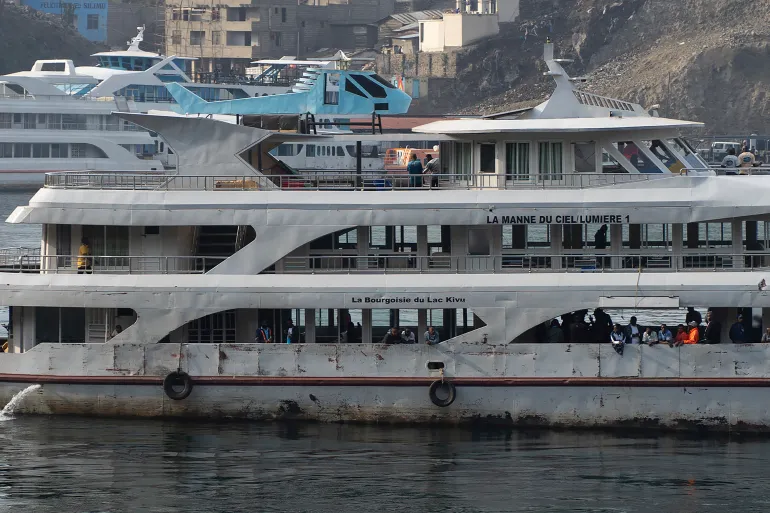
At least 41 people have died, and 49 others have been rescued, after a boat capsized on Lake Tanganyika in the Democratic Republic of the Congo (DRC).
Norris Mulongoyi, the provincial transport minister for DRC’s Tanganyika province, told The Associated Press news agency that search operations were under way to locate the remaining passengers
The boat was reportedly carrying about 100 people and cargo when it capsized near the Congolese village of Mapera.
The vessel was travelling from the port of Kigoma in Tanzania to the city of Kalemie in DRC when it sank on Thursday.
A survivor identified as Annie Moyoni told Radio Okapi, a UN-backed Congolese broadcaster, that passengers were awakened at about 1am and found the boat tilting to one side.
It is unclear what caused the vessel to capsize, but hundreds of people have been killed in boat disasters in the DRC in recent years, according to the AP. Vessels are often overloaded and lack life jackets.
For many in the DRC, travelling by boat is the cheapest and most affordable way to get around. The country is one of the poorest in the world and lacks sufficient infrastructure for its more than 100 million people.
The sinking was the second loss of a Congolese vessel on the Kigoma-Kalemie route in less than a month.
On August 28, the Congolese vessel MV Pacifique caught fire and exploded at the port of Kigoma while loading fuel, according to Radio Okapi.
Six crew members were killed, and a seventh was reported missing, Radio Okapi said, citing port authorities. The vessel operated between Kigoma and Kalemie and was used to transport fuel.
At least 20 people also died when a wooden boat carrying students returning from state exams sank in central DRC in July.
(Aljazeera)
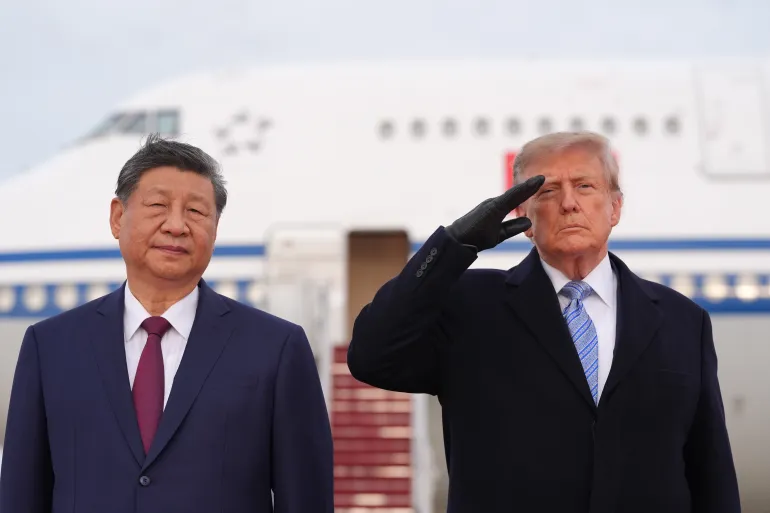
United States President Donald Trump has welcomed Chinese President Xi Jinping as he arrived in the US for a three-day trip focused on issues such as security, trade and technology.
Trump took the rare step of meeting the Chinese leader in person at Joint Base Andrews in the state of Maryland on Wednesday, the first president to do so in recent memory.
The US president and First Lady Melania Trump greeted Xi and his wife on the tarmac during a welcoming ceremony, where a red carpet was rolled out and the couples exchanged handshakes. Trump and Xi then walked side by side, flanked by US soldiers, before standing for a gunfire salute and the US national anthem
The in-person greeting is a sign of the significance that Washington ascribes to its relationship with Beijing, whose meteoric economic rise over the last several decades has transformed it into a global superpower capable of rivalling the United States.
Despite tense relations that worsened after the Trump administration placed high tariffs on Chinese goods – a move that was met with retaliatory measures from Beijing – Trump has expressed personal affinity for Xi and his desire for strong ties with China.
The Chinese president’s trip to the US will include a state dinner, attended by leaders of the country’s powerful tech industry, a military ceremony at the White House, and a visit to the National Archives, home to documents of historical and cultural significance such as the US Constitution and the Declaration of Independence
But both countries remain wary of the other as they compete for political and economic influence. The trip is likely to include discussion of issues such as the US war on Iran, trade, technology, rare-earth minerals and US ties to Taiwan, the self-governing island that China claims as part of its territory
(Aljazeera)
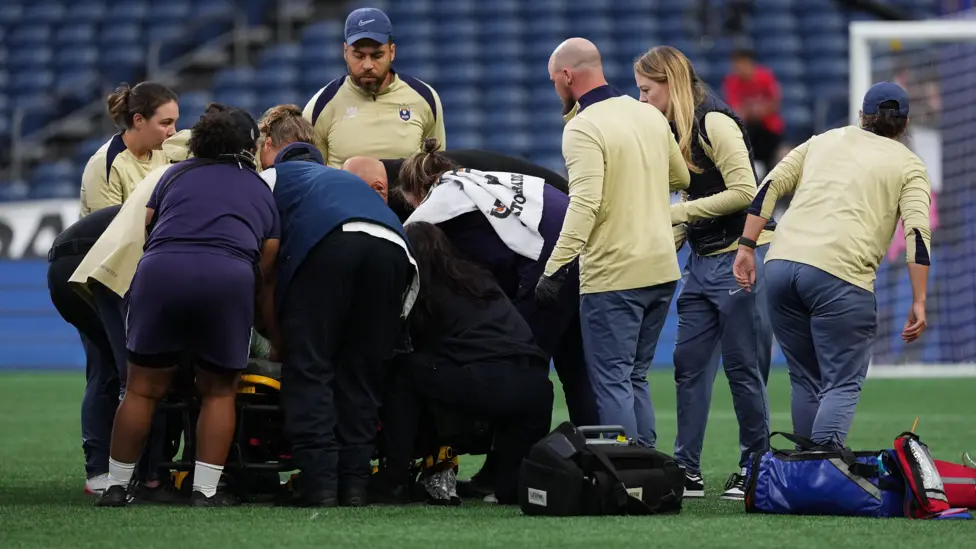
United States women’s national team player Savannah DeMelo is suing a hospital and two doctors after she suffered a cardiac arrest on the pitch last year.
Midfielder DeMelo, who has seven senior caps for the USA, has filed a lawsuit against University of Louisville Health (UofL Health) for negligence.
The 28-year-old, who plays for Racing Louisville, collapsed in the first half of a National Women’s Soccer League (NWSL) match on 14 September 2025.
According to documents seen by BBC Sport, the case was filed on Tuesday morning with Jefferson Circuit Court in Kentucky, where her club is based – a year and a day after her on-field collapse.
DeMelo’s filing claims UofL Health and two doctors, Dr Sarabjeet Suri and Dr Jennifer Daily, “failed to act as a reasonably prudent and competent medical practice, and such negligence was a substantial factor in causing DeMelo to suffer severe physical injuries, including, but not limited to, her cardiac arrest”.
Dr Daily, according to her online UofL biography, is Racing Louisville’s chief medical officer. The lawsuit states DeMelo was under the care of Dr Daily from January 2024 to July 2026.
It states that in March 2025, Dr Daily referred DeMelo to Dr Suri for “evaluation and treatment” after she had been complaining of chest pain, dizziness and shortness of air; Dr Suri obtained a history, performed a physical examination and ordered diagnostic tests.
Nearly six months later, DeMelo suffered the cardiac arrest.
“She was subsequently diagnosed and treated for ventricular tachycardia [an abnormal heart rhythm],” the suit states.
DeMelo, who has spent her entire professional career with Racing Louisville, has not played since her collapse.
In a post to her instagram page on Tuesday, De Melo – who was picked in the USA squad for the 2023 Women’s World Cup and started their first two games – marked the anniversary of the incident.
“A year ago today, while playing soccer, I collapsed due to an undiagnosed cardiac arrhythmia, that caused me to go into cardiac arrest,” she wrote.
“I respect and appreciate the privacy everyone has met me with while going through everything I have this year. I’ll never be able to fully put into words how emotionally hard this year has been. There has been a lot of uncertainty and emotions intertwined with it all.”
[BBC]

Buttler out of Oval decider as Lawrence earns ODI call-up

Showers will occur in the Western, Eastern, Uva and Sabaragamuwa provinces and in Galle, Matara, Kandy and Nuwara-Eliya districts.

Nor’easter brings flooding as New York and New Jersey declare emergency 2 hours ago

Trump rejects Iran deal to reopen Strait of Hormuz in seven days

Govt plans to hire 121,000 state workers, redistribute tax revenue

Parliament clears 22A amid protests

‘Dates have the highest sugar content to fight Coronavirus’

Sunday Island 27 December – Headlines

#SundayIsland 17th December – Headlines

Sunday Island – 28th March

Sunday Island Headlines – 21 March

Sunday Island – 21st February – Headlines
-

 News4 days ago
Mastermind Naufer Moulavi among 15 found guilty
-
 News6 days ago
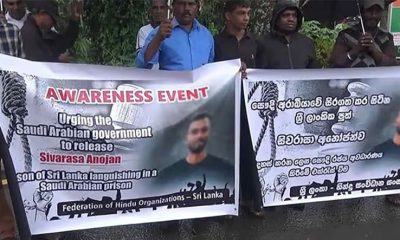
Hatton youth protest against reported death sentence for Lankan in Saudi Arabia
-
 News5 days ago
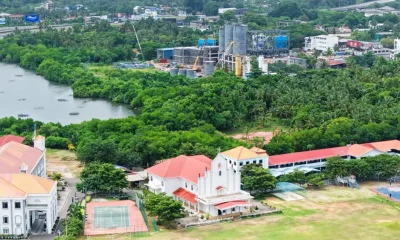
Protest against setting up of cement factory in highly populated area near BIA
-
 News6 days ago
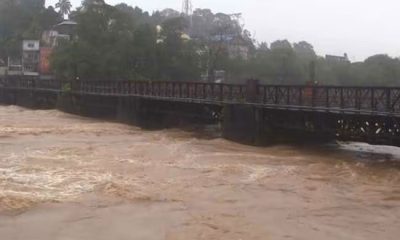
Mahaweli rises as heavy rain triggers flood, landslide fears
-

 Latest News7 days ago
Landslide Red Alerts issued to the districts of Kandy, Kegalle and Nuwara Eliya
-

 Midweek Review4 days ago
Thileepan’s fast unto death: An authentic narrative that many missed
-
 Latest News3 days ago
Showers above 100 mm are likely at some places in the Western, Sabaragamuwa, Central and North-western provinces and in Galle and Matara Districts
-

 Editorial4 days ago
Big Bad Bills