
News
New Global Multidimensional Poverty Index Report reveals nearly 80% of world’s poor live in regions exposed to climate hazards


Nearly 8 in 10 people living in multidimensional poverty – 887 million out of 1.1 billion globally – are directly exposed to climate hazards such as extreme heat, flooding, drought, or air pollution, according to a new report released last Friday by the United Nations Development Programme (UNDP) and the Oxford Poverty and Human Initiative (OPHI) at the University of Oxford.
The 2025 Global Multidimensional Poverty Index (MPI) report “Overlapping Hardships: Poverty and Climate Hazards”, released ahead of the COP30 climate summit in Brazil, presents new evidence that the climate crisis is reshaping global poverty. By overlaying climate hazard data with multidimensional poverty data for the first time, the findings reveal a world where poverty is not just a standalone socio-economic issue but one that is deeply interlinked with planetary pressures and instability.
Exposure to climate hazards likely exacerbates the daily challenges faced by people living in poverty, reinforcing and deepening their disadvantages. The report finds that among those assessed to be living in acute multidimensional poverty – spanning health, education, and living standards – an overwhelming 651 million endure two or more climate hazards, while 309 million face three or four hazards simultaneously.
“Our new research shows that to address global poverty and create a more stable world for everyone, we must confront the climate risks endangering nearly 900 million poor people,” said Haoliang Xu, UNDP Acting Administrator. “When world leaders meet in Brazil for the Climate Conference, COP30, next month, their national climate pledges must revitalize the stagnating development progress that threatens to leave the world’s poorest people behind.”
The findings emphasize that poor people globally are often confronting multiple, concurrent environmental challenges rather than a single one in isolation.
• Of the 887 million poor people exposed to at least one climate hazard, 651 million face two or more concurrent hazards.
• Alarmingly, 309 million poor people live in regions exposed to three or four overlapping climate hazards while experiencing acute multidimensional poverty. These individuals face a “triple or quadruple burden,” often possessing limited assets and minimal access to social protection systems, amplifying the negative effects of the shocks.
• Individually, the most widespread hazards affecting poor people globally are high heat (608 million) and air pollution (577 million). Flood-prone regions are home to 465 million poor people, while 207 million live in areas affected by drought.
“This report shows where the climate crisis and poverty are notably converging. Understanding where the planet is under greatest strain and where people face additional burdens created by climate challenges is essential to creating mutually reinforcing development strategies that put humanity at the centre of climate action,” said co-author, Sabina Alkire, Director of the Oxford Poverty and Human Development Initiative.
The burden of exposure is distributed unevenly across regions and income groups.
• South Asia and Sub-Saharan Africa are identified as global hotspots for these compounded hardships, accounting for the largest numbers of poor people living in regions affected by climate hazards (380 million and 344 million respectively).
• In South Asia, the exposure is nearly universal; fully 99.1 percent of poor people in the region are exposed to one or more climate shocks (380 million people), with 91.6 percent (351 million) facing two or more, much higher than any other world region. Despite making momentous and historic strides in poverty reduction, South Asia must also accelerate climate action.
• Across income groups, lower-middle-income countries bear the greatest burden of exposure of poor people to climate hazards, both in terms of absolute number and high proportion. About 548 million poor people in lower-middle-income countries are estimated to be exposed to at least one climate hazard, representing 61.8% of global poor people who are exposed to any climate hazard. Critically, over 470 million poor people in lower-middle-income countries confront two or more, concurrent climate hazards simultaneously.
“The burdens identified are not limited to the present but are expected to intensify in the future,” said Pedro Conceição, Director of the Human Development Report Office, UNDP. Analysis of temperature projection data reveals that countries with higher current levels of multidimensional poverty are predicted to experience the greatest increases in temperatures by the end of this century.
These findings highlight the urgent need for global action to address the unequal burden of climate-related hazards on people living in multidimensional poverty. Confronting these overlapping risks requires moving from recognition to action, emphasizing the need for climate-resilient poverty reduction strategies, strengthened local capacities for adaptation, and scaled international redistribution and cooperative finance mechanisms.


The National Business Facilitation Centre (NBFC), which is being established under the Presidential Secretariat with the aim of removing administrative and regulatory barriers that exist among government institutions in relation to investment and industry and expediting these processes, will be opened tomorrow (22).
The centre is being established on the President’s initiative with the aim of bringing about a positive transformation in the industrial sector. The centre will provide solutions to issues that arise in dealing with the government machinery when starting and operating a business, while also coordinating with the relevant government institutions to provide the necessary facilities.
The “ViYASA” National Business Facilitation Centre (NBFC) has been established at Building C-80, Hector Kobbekaduwa Mawatha, Colombo 07, and is headed by Senior Additional( Secretary to the President, Seevali Arukgoda.
The centre will be opened under the patronage of Minister of Labour and Deputy Minister of Finance and Planning Dr Anil Jayantha Fernando and Minister of Industry and Entrepreneurship Development Sunil Handunnetti, with the participation of Secretary to the President Dr Nandika Sanath Kumanayake.
The website https://nbfc.presidentsoffice.gov.lk is also scheduled to be officially launched on the occasion.
President’s Media Division)
Latest News
Court of Appeal Judge M. Sri Mevan Anthony Edirimannasuriya Corea appointed as Acting President of the Court of Appeal

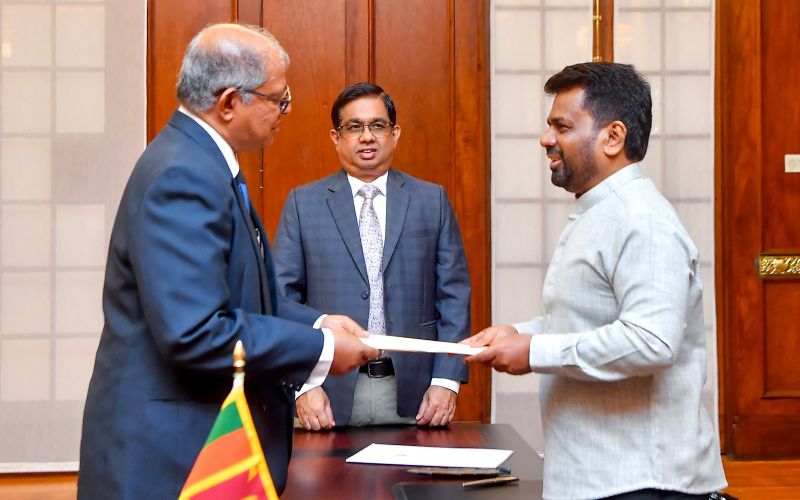
President Anura Kumara Dissanayake has appointed Court of Appeal Judge Mayadunna Sri Mevan Anthony Edirimannasuriya Corea as the Acting President of the Court of Appeal.
The appointment has been made as President’s Counsel Nalin Rohantha Abeysuriya, who currently serves as President of the Court of Appeal, will be overseas until the 24th.
Accordingly Judge Mayadunna Corea was sworn in as Acting President of the Court of Appeal before President Anura Kumara Dissanayake at the Presidential secretariat this morning (21).
Secretary to the President Dr Nandika Sanath Kumanayake was also present at the occasion.
(President’s Media Division)
Latest News
President instructs expediting further measures concerning Sivarasa Anojan, sentenced to death in Saudi Arabia
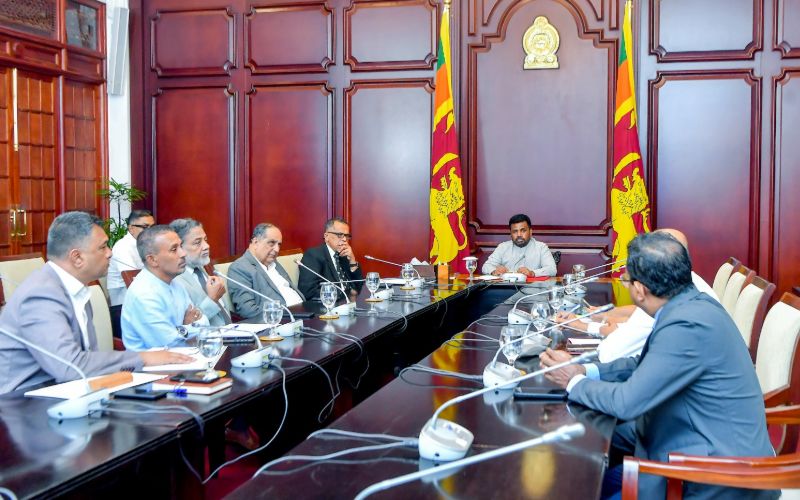
A discussion to review the further measures that could be taken regarding Sivarasa Anojan, a young Sri Lankan national who has been sentenced to death in Saudi Arabia, was held at the Presidential Secretariat this afternoon (21), under the patronage of President Anura Kumara Dissanayake.
The discussion focused on the measures taken to date concerning Sivaraasa Anojan and the further diplomatic and legal steps that could be pursued. Attention was also given to expediting the necessary further measures that could be taken to secure his release.
President Anura Kumara Dissanayake instructed officials to continue the necessary diplomatic engagement with the relevant authorities in Saudi Arabia and to maintain close and continuous involvement in all further measures concerning the case.
Reaffirming the Government’s continued attention to the safety and welfare of Sri Lankans living and working overseas, the President also stressed the need for the relevant ministries and institutions to work in close coordination and pursue all possible measures that could be taken in connection with the case.
Deputy Speaker Rizvie Salih, Deputy Minister of Religious and Cultural Affairs Muneer Mulaffer, Governor of the Western Province Hanif Yusoof, Secretary – Ministry of Foreign Affairs, Foreign Employment and Tourism Aruni Ranaraja, Secretary to the Ministry of Defence Air Vice Marshal Sampath Thuyacontha (Retd), Attorney General Parinda Ranasinghe and officials of the Ministry of Foreign Affairs, Foreign Employment and Tourism were also present at the discussion.
(President’s Media Division)

“ViYASA” National Business Facilitation Centre (NBFC) to be opened tomorrow (22)

Court of Appeal Judge M. Sri Mevan Anthony Edirimannasuriya Corea appointed as Acting President of the Court of Appeal

President instructs expediting further measures concerning Sivarasa Anojan, sentenced to death in Saudi Arabia

It’s Shafali vs Athapaththu as Sri Lanka seek to stop India juggernaut

Trophy row unlikely to repeat in Japan

Powerful explosions at Syrian army site near Aleppo injure at least four

‘Dates have the highest sugar content to fight Coronavirus’

Sunday Island 27 December – Headlines

#SundayIsland 17th December – Headlines

Sunday Island – 28th March

Sunday Island Headlines – 21 March

Sunday Island – 21st February – Headlines
-

 News5 days ago
US embassy won’t comment on IGP’s probe into joint drug raid
-

 News4 days ago
Bid for Basil’s extradition nears final stage: Police
-

 News3 days ago
Shanakiyan urges urgent action over reported death sentence for Lankan in Saudi Arabia
-

 Features7 days ago
The emptying university: why are academics leaving?
-

 Business5 days ago
All-new Bolero MaXX unveiled in Sri Lanka
-
 Opinion7 days ago
Who committed genocide and created mass graves in Sri Lanka?
-

 News2 days ago
Namal Rajapaksa Buddhist gambit fails, bail denied
-
 Opinion5 days ago
A journalist who wrote across the divide