
Sports
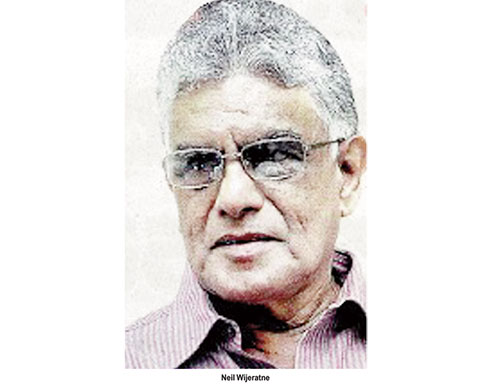
Neil’s books on rugby bring back nostalgic memories

By A Special Sports Correspondent
These are days where sportsmen and women can review their lives and careers. Some would say it’s a must do during these times where there are travel restrictions. We all experience such a period some time during our lives when we are made inactive. From a rugby perspective there is so much literature to read up. Innovative people can do a documentary on rugby or short film clip and post on social media and youtube. This writer remembers the two books penned on rugby by one time recorder of Sri Lanka Rugby Neil Wijeratne.
These are great days to read his two books ‘Rugby Across the Straits’ and our very own ‘Sevens Saga’-which caps the rugby sevens history of the island.
Wijeratne is still the person to go to when a writer wants information for a sports article. He is a serious historian and takes great pain in collecting his facts and figures for his compilations. He has been generous in parting with whatever statistics he has when budding writers and journalists tap him as a source.
 He was pushed to keeping sports records on pen and paper because destiny didn’t afford him the opportunity to be a sportsman. Many feel that sport was richly rewarded because this brought the writer out in Wijeratne.
Wijeratne showed his prowess in writing as a schoolboy and penned his first novel ‘Mihiduma Atharin’ in 1968. That pen kept flowing and he produced many gems in writing; his compilations coming out in English and Sinhala languages.
He is one person who saw rugby’s changing face from being an amateur sport to its professional status. Those who speak with him will vouch that his cherished memories were when players played for the love of the game and remained as amateurs.
His writings highlight those achievements by ‘amateur’ rugby players. He mentions of players like Apisai Nagata, Sari de Sylva, Nalin de Silva, Didacus de Almeida, Michael Jayasekare and Nalaka Weerakkody in a note of acknowledgement in his book Sevens Saga. He leaves out two great names that of Hisham Abdeen and Priyantha Ekanayake in that list. But who are we scribes to challenge his thoughts as a writer? May be a writer like Wijeratne sees subtle intriguing qualities and more interesting traits in these players he has mentioned because that total package makes their presence on the field so much interesting.
Wijeratne picked up those bits of information which the spectator might have missed out on and brings them out in his writings. He also never forgot about to write on lesser known sports personalities and people who contributed to sport from behind the scenes.
We Sri Lankans have often caught the attention of overseas crowds when contesting international sevens tournaments. This could be one reason why he dedicated effort and time to pen the early history of the island’s sevens rugby.
According to him it had all happened in 1931 on a February 1st in Ratnapura when the Police team took on a planters combined outfit that marked the first rugby sevens game in Sri Lanka. The writer in his book goes on to find out the exact population in Ratnapura (8497) which adds flavour to the article and brings back nostalgic memories of the past. According to Wijeratne the person credited for introducing rugby sevens to this nation is Welshman K.F Jenkins who was stationed here as a probationary Assistant Superintendent of Police.
 As rugby progressed and more clubs came into being Wijeratne simply expanded his horizons. From rugby sevens tournaments in Colombo’s Longden Place and Race Course he has captured the action in tournaments like Sabaragamuwa Sevens, Kurunegala Sevens, Ruhunu Sevens, Uva Sevens, Dimbula Sevens travelling the length and breadth of Sri Lanka. He also writes about Sri Lanka hosting its first international rugby tournament -the Cargills International Sevens-which was won by Fiji Islanders’. The team comprised all Fijian players, who played domestic rugby here, except for Chandrishan Perera, who was probably included here to keep the interest of the local crowd in the tournament till the end. The old style of playing rugby is captured by Wijeratne in his punchy style of writing English. In the article titled ‘Some days are diamond days’ dedicated to Sri Lanka’s Bowl Championship win at the 1994 Fiji Sevens he writes ‘Sri Lanka was very much famous in Fiji not because of any rugby prowess of theirs, but as a country where the Fijians are looking ahead to make lucrative playing careers. Wijeratne brings out the best of Sri Lanka rugby when the islanders are on top and dazzling and still can keep the reader glued to the page with his descriptive writing when the ‘Tuskers’ are struggling with defeat staring in the face.
Still for Wijeratne, he can’t help but find space for two legends like Abdeen and Priyantha Ekanayake in the book ‘Sevens Saga’. He writes extensively on Sri Lanka’s 1984 Bowl Championship win where Abdeen led from the front as skipper. The author underscores the leadership skills and rise to fame of Ekanayake in selected sections of the book. When one begins to think that the book is not complete without the mention of two rugby stalwarts who gave so much opportunities for rugby players one finds the names of Kishin Butani and Malik Samarawickreme and some of their contributions to sevens rugby.
During these lockdown days where rugby activity is absent Wijeratne’s books are ideal to do more than pass the time; they are educative as well.
In his characteristic way of saying it Wijeratne’s rugby books ‘offer a nostalgic pilgrimage to recapture everlasting moments in rugby seen in this island’.


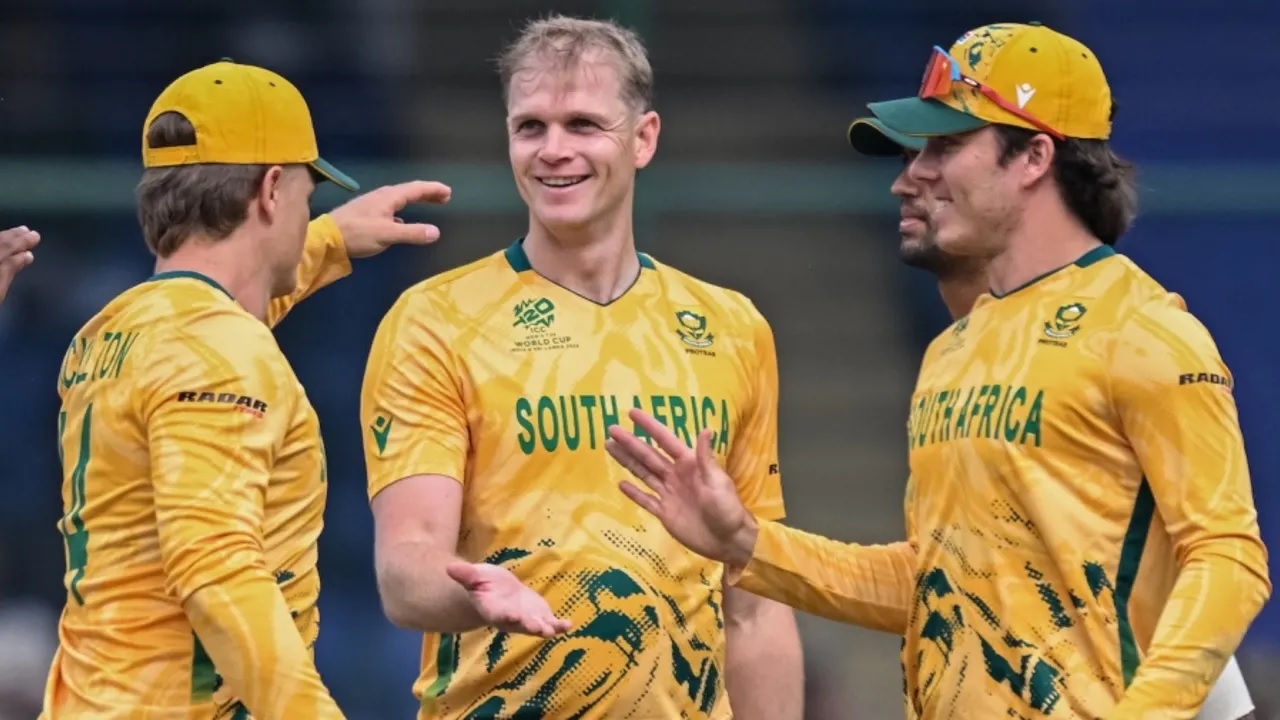
South Africa go to the Super Eight of the T20 World Cup undefeated after brushing UAE aside in Delhi by six wickets with 40 balls to spare. Corbin Bosch’s three-for and George Linde’s 1 for 17 stood out with the ball as South Africa rested Marco Jansen, Keshav Maharaj and Lungi Ngidi. Aiden Markram, Ryan Rickelton and Dewald Brevis all got fast starts in a chase that required just that ahead of potentially tougher tests.
UAE could not make a dent in their final game of the tournament. Alishan Sharafu top-scored with 45 in an innings where six of the eight batters on show scored 13 or fewer. Four of their bowlers took a wicket each but none threatened South Africa in a modest chase.
Muhammad Waseem’s intent was clear from the start when he drove Kwena Mapakha for four down the ground. He hit three boundaries off Kagiso Rabada to start the third over, making room and going down the ground twice and then helping one down to fine leg.
But when Waseem looked to take down spin in similar fashion, he missed a sweep off Linde and was pinned in front.
Sharafu couldn’t get going for large parts of his 38-ball 45. He was hit on the helmet twice and was dropped twice. He started well with an inside-out drive off Linde and carved Anrich Nortje over deep third, but he then went 17 balls without a boundary. He got three fours in his last ten balls before edging a cramped pull to midwicket.
On a tacky surface in Delhi, South Africa’s pacers worked out their lengths early and stuck to them well. According to ESPNcricinfo’s ball-by-ball data, they bowled 46 balls on a short or short-of-good-length spot and conceded just 41 runs and took four wickets with those.
The death overs also had a lot of short balls, with some cutters thrown in, and UAE made just 20 runs and lost two wickets in that period.
Bosch bowled across all phases, took a three-for, and was the most economical bowler. He had Aryansh Sharma and Muhammad Arfan pull to midwicket, and got rising bounce to get Sohaib Khan nicking to the keeper.
Nortje conceded 18 in his first two overs but came back sharply with the wickets of Syed Haider and Sharafu in his back two, both of them with into-the-pitch balls that were pulled to fielders.
Linde had a great day in Maharaj’s absence too. He got Waseem, kept it slow, and often hit the length length to concede just one boundary in his four-over spell.
South Africa dropped four catches in UAE’s innings, it was a major blemish in an otherwise clinical performance for them.
It started with a regulation chance to Quinton de Kock off an Aryansh Sharma miscue. De Kock ran back but couldn’t get underneath the swirling ball and a late turn to the side didn’t help as the ball popped out.
Then there were three drops between the 15th and 17th overs. Nortje tried to relay a catch to Jason Smith, who couldn’t collect it. Sharafu survived again next over as Nortje ran in from deep third but couldn’t hold on to a low chance in front of him. Bosch dropped a regulation chance off Muhammad Arfan, running in from mid-off, and juggling a high catch to the ground.
A rain break between innings did not matter to South Africa’s top-order batters, who approached the chase with free-flowing batting that resulted in 11 fours and a six in a 56-run powerplay.
Markram hit five fours and a six in 11 balls. He was severe on Junaid Siddique, who bowled too straight, and Haider Ali, whom he hit both sides of the ground before missing a slog and losing his stumps.
Rickelton and de Kock kept South Africa rolling by punishing Siddique and Muhammad Jawadullah as they bowled short and wide. It did work as de Kock fell cutting to deep-backward point but by then the required rate was under five.
With the game in the bag, Brevis flayed and pulled Jawadullah before slapping Haider over extra cover for boundaries. Rickelton looked to finish in a hurry as he whacked two sixes off Muhammad Farooq before pulling to the fielder on the deep-midwicket boundary. Tristan Stubbs then belted a six and then top-edged a pull to mid-off with the game effectively over. It got over soon after.
Brief scores:
South Africa 123 for 4 in 13.2 overs (Aiden Markram 28, Quinton de Kock 14, Ryan Rickelton 30, Dewald Brevis 36; Haider Ali 1-33, Muhammad Jawadullah 1-20, Muhammad Arfan 1-16, Muhammad Farooq 1-19) beat UAE 122 for 6 in 20 overs (Aryansh Sharma 13, Muhammad Waseem 22, Alishan Sharafu 45, Muhammad Arfan 11; Corbin Bosch 3-12, Anrich Nortje 2-28, George Linde 1-17) by six wickets
[Cricinfo]
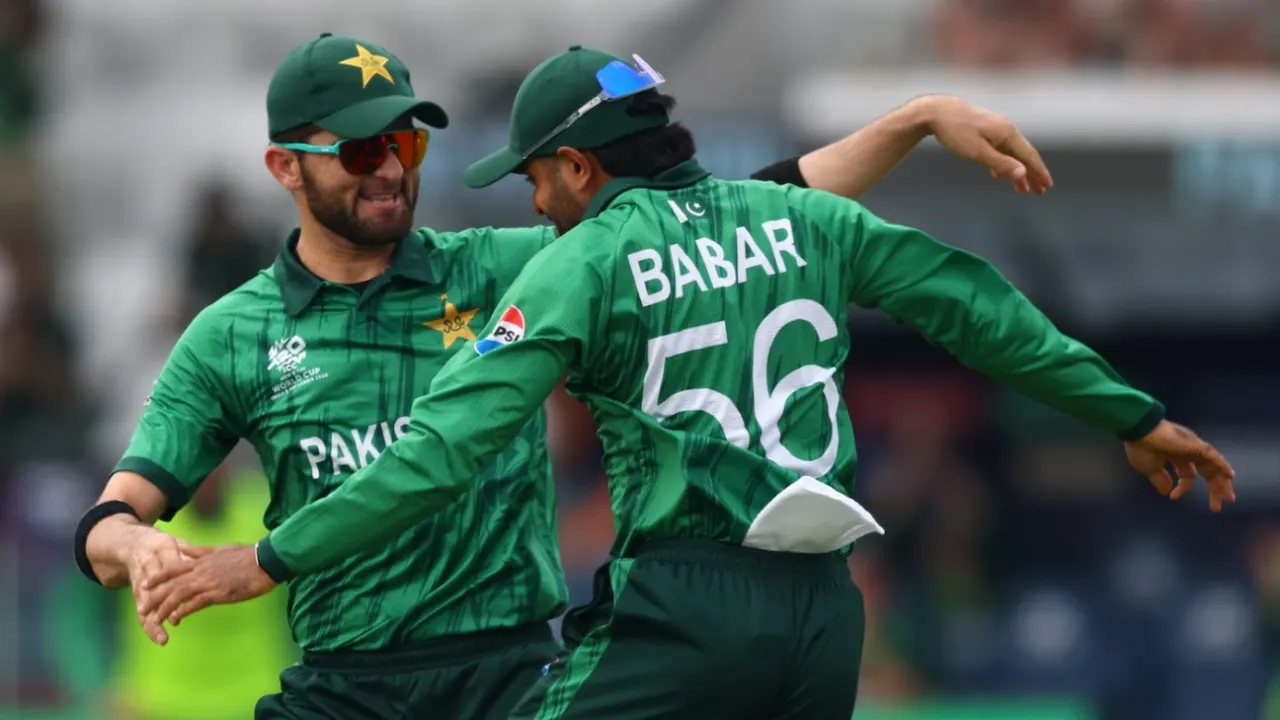
Pakistan captain, Salman Agha, put his side in to bat first with a Super Eight spot on the line. They face a must-win situation: unless they win their final match in Group A, against Namibia – or the match is abandoned because of weather – they will be knocked out of the T20 World Cup in the group stage for the second time running.
Still, Agha denied he was under pressure, saying Pakistan had been in this situation “previously as well”. They made two changes to the side, with Salmqan Mirza and Khawaja Nafay playing, and Shaheen Afridi and Abrar sitting out.
Namibia made two changes, too, with 20-year old Jack Brassell coming into the side for 17-year old Max Heingo. They are mathematically out of the running for the Super Eight already. However, in case they pull off an upset today, they will assist an unlikely qualification for the United States of America. USA sit second on the table right now having finished all their matches. In case Pakistan cannot secure two points today, USA will go through to the next round instead of Pakistan.
Pakistan: Sahibzada Farhan (wk), Saim Ayub, Salman Agha (capt), Babar Azam, Usman Khan (wk), Khawaja Nafay, Shadab Khan , Mohammad Nawaz, Salman Mirza, Naseem Shah, Usman Tariq
Namibia: Jan Frylinck, Louren Steenkamp, Jan Nicol Loftie-Eaton, Gerhard Erasmus (capt), Alexander Busing-Volschenk, JJ Smit, Zane Green (wk), Ruben Trumpelmann, Willem Myburgh, Bernard Scholtz, Jack Brassell
[Cricinfo]
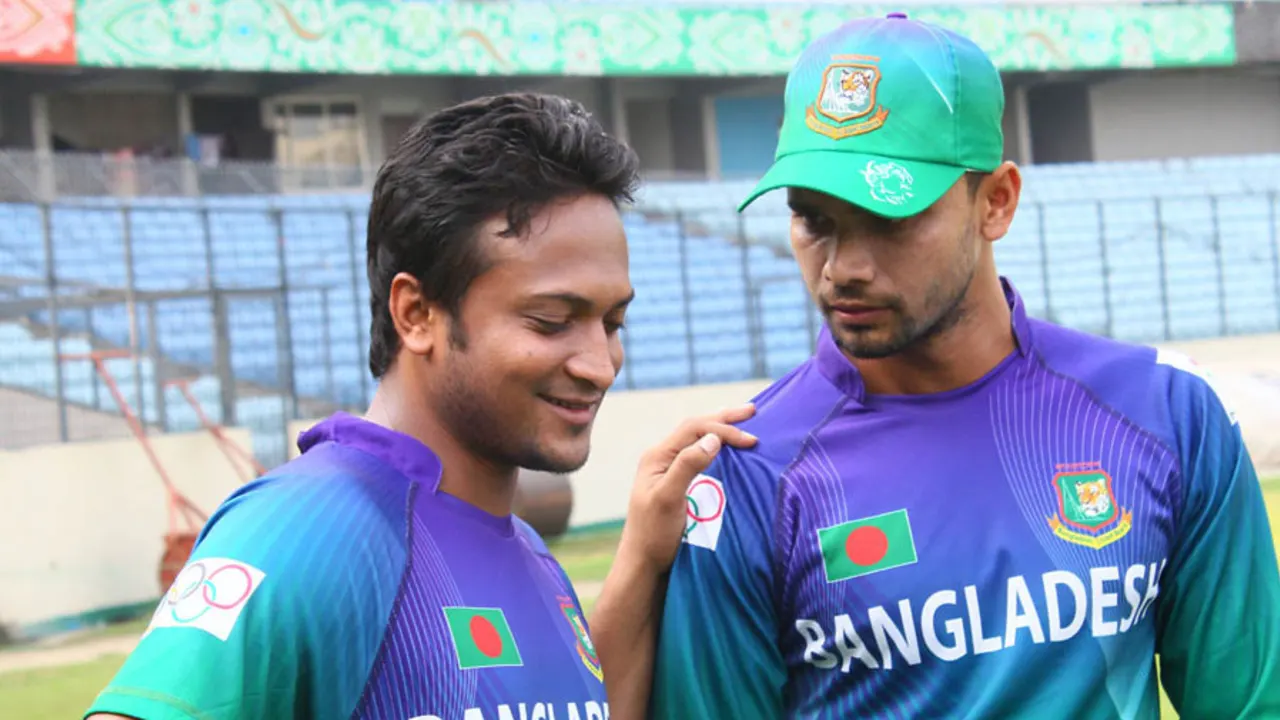
Bangladesh’s new sports minister Aminul Haque has said that the government will fast track the procedures in the cases against Shakib Al Hassan and Mashrafe Mortaza so that the two former Awami League members of parliament can return to cricket swiftly.
Haque, a former Bangladesh football captain, is among 49 new central and state ministers appointed on Tuesday after the Bangladesh Nationalist Party (BNP) came to power by winning the general elections held on February 12. Haque said that the new government would be “tolerant and flexible” on the former Bangladesh captains against whom several cases were filed after the Awami League government fell in 2024.
“The government will deal with the matter concerning Shakib and Mashrafe. We will remain tolerant and flexible on them,” Haque said. “The cases against them will be handled by the government. We want Shakib to return to Bangladesh. We hope those will be resolved swiftly so they can return. We also want Shakib and Mashrafe back in Bangladesh cricket.”
Shakib hasn’t been back in Bangladesh since May 2024 – he is based in the USA for the past few years. Though he hasn’t played for Bangladesh since October 2024, he has been in action in franchise T20 leagues, including the PSL and the CPL. During a recent interview to the Beard Before Wicket podcast, Shakib announced that he had reversed his decision to retire from international cricket. He said that he wanted to retire after playing a full international series, though he didn’t put a timeline to it.
“I am officially not retired from all formats. This is the first time I’ll be revealing that. My plan is to go back to Bangladesh, play one full series of ODI, Test, and T20, and retire,” he had said in December last year. “I mean, I can retire from all formats in a series. So it can start from T20I, ODI and Test, or Test, ODI, T20I. Either way, I’m fine, but I want to play a whole series and retire. That’s what I want.”
Mashrafe, meanwhile, has been out of the public eye since August 2024, with very little known about his whereabouts. He was still playing in the Dhaka Premier League in 2024 despite playing his last international match in 2020. Mashrafe was serving his second term as an Awami League MP when the government was overthrown by a revolution led by students in August that year.
On the subject of the BCB elections held last year, Haque said the proceedings were “questionable”. Haque was reportedly backing the Tamim Iqbal-led alliance, which pulled out of the race citing corruption and unfair practices at the time.
“I have said it before and I will say it again: it was a questionable election of the BCB,” Haque said. “But since I am now in a responsible position, I will sit down with them and discuss how we can move to a better stage.”
His predecessor as BCB president, Aminul Islam, has reportedly left the country last week.
[Cricinfo]

Muscular South Africa stroll into Super Eight with all-win record

Pakistan bat first, drop Shaheen Afridi in must-win encounter against Namibia

New Bangladesh sports minister wants to fast track cases against Shakib and Mortaza

Climber on trial for leaving girlfriend to die on Austria’s highest mountain

IMF MD commends government’s efforts in stabilizing the country’s economy

India look to go into Super Eight stage with all-win record

‘Dates have the highest sugar content to fight Coronavirus’

Sunday Island 27 December – Headlines

#SundayIsland 17th December – Headlines

Sunday Island – 28th March

Sunday Island Headlines – 21 March

Sunday Island – 21st February – Headlines
-
 Life style4 days ago
Marriot new GM Suranga
-

 Business3 days ago
Ministry of Brands to launch Sri Lanka’s first off-price retail destination
-
 Features4 days ago
Monks’ march, in America and Sri Lanka
-
 Opinion7 days ago
Will computers ever be intelligent?
-

 Features4 days ago
The Rise of Takaichi
-

 Features4 days ago
Wetlands of Sri Lanka:
-

 News4 days ago
Thailand to recruit 10,000 Lankans under new labour pact
-
 News4 days ago
Massive Sangha confab to address alleged injustices against monks