
Latest News
Nearly one-third of women worldwide faced partner or sexual violence: WHO


Nearly one in three women – totalling about 840 million around the world – have experienced intimate partner or sexual violence in their lifetimes, the World Health Organization (WHO) said in a new report.
Released on Wednesday, it also found 316 million women and girls aged 15 and older were subjected to physical or sexual violence by an intimate partner over the past year.
That amounts to about 11 percent of all women and girls in that age bracket globally.
“Violence against women is one of humanity’s oldest and most pervasive injustices yet still one of the least acted upon,” WHO Director-General Tedros Adhanom Ghebreyesus said in a statement accompanying the findings.
“No society can call itself fair, safe or healthy while half its population lives in fear. Ending this violence is not only a matter of policy; it is a matter of dignity, equality and human rights. Behind every statistic is a woman or girl whose life has been forever altered.”
Released in advance of the UN’s International Day for the Elimination of Violence Against Women and Girls later this month, the WHO report analysed data from 168 countries collected between 2000 and 2023.
Despite the stark findings, the UN agency warned violence against women remains “a deeply neglected crisis” with efforts to address the problem “critically underfunded”.
It said only 0.2 percent of global aid was allocated to programmes focused on preventing violence against women in 2022.
That funding fell even further this year, the report said, as United States President Donald Trump slashed his country’s foreign aid and development contributions.
The WHO also warned that women and girls in conflict zones or living in other vulnerable situations are particularly at risk of experiencing intimate partner and sexual violence.
“In recent years, the rising number of armed conflicts, protracted crises and environmental degradation and disasters have underscored the increasing risk of violence against women living in these fragile contexts,” the report said.
“The risk of exposure to this violence is heightened by the resulting displacement and insecurity.”
[Aljazeera]

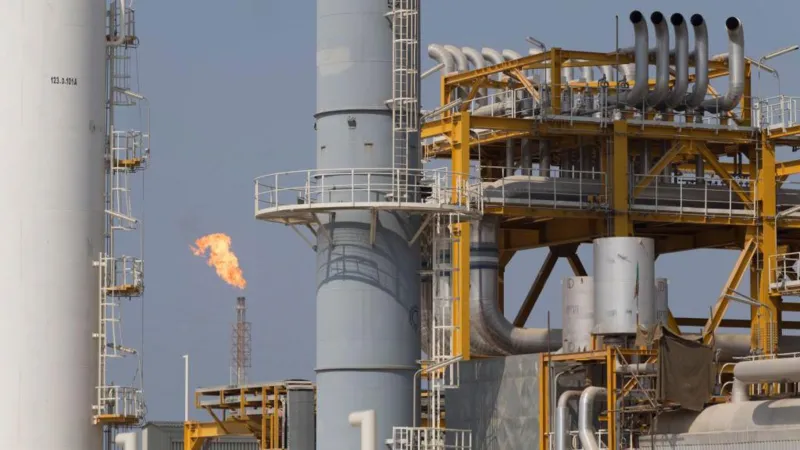
Oil prices leapt to nearly $110 a barrel after Iranian media reported an airstrike hitting a facility on the world’s largest natural gas field.
The Brent crude oil benchmark hit $109.91 a barrel just after 14:30 GMT, more than 5% higher than Tuesday’s prices, but has since fallen slightly.
The benchmark UK gas price also jumped by 6% to 143.53p a therm before falling back below the 140p mark.
The surge followed reports Iran’s petrochemical complex on the South Pars gas field had been hit. Several hours later, Qatar reported that there was “extensive damage” at the Ras Laffan industrial site following threats from Iran.
While the price of both oil and gas spiked, they remained below highs seen earlier in the conflict.
Oil reached $116.78 a barrel on 9 March, while UK gas reached 162.55p a therm on 3 March.
Iran’s oil ministry said a fire at the petrochemical complex was under control, according to Tasnim, a news agency affiliated with the Islamic Revolutionary Guard Corps.
Iran’s military warned it would take “decisive action” in response to the strike on its energy infrastructure.
“As previously warned, if the fuel, energy, gas, and economic infrastructures of our country are attacked by the American-Zionist enemy, in addition to a powerful counterattack against the enemy, we will severely strike the origin of that aggression as well,” the military said in a statement published by Tasnim.
“We consider targeting the fuel, energy, and gas infrastructures of the countries of origin legitimate and will retaliate strongly at the earliest opportunity.”
Qatar also operates facilities on the gas field, which it calls North Dome.
But the country, which produces a fifth of the world’s liquefied natural gas, had halted production earlier in March in response to the conflict.
Qatar’s foreign ministry spokesman Majed Al Ansari said strikes against energy infrastructure “constitutes a threat to global energy security”.
Just after 1815 GMT, the Qatari interior minister said it was responding to “a fire in the Ras Laffan area following an Iranian targeting”. Qatar’s petrol firm QatarEnergy later said there was “extensive damage” at the site.
The interior minister said just after 1900 GMT that it had “initially brought the fire in Ras Laffan under control, with no injuries reported”.
Ras Laffan was among the sites listed by Iran in a warning that it would take “decisive action” after its South Pars gas field facilities were reportedly hit by Israeli strikes.
‘Energy markets will likely remain volatile’
AJ Bell’s head of financial analysis Danni Hewson said the attack and retaliation by Iran had “helped dial up the temperature once again and put renewed upward pressure on oil prices”.
“Any solution to the blockage of the Strait of Hormuz looks pretty distant at this point and until there is progress on that front, energy markets will likely remain volatile,” she added.
The White House on Wednesday responded to the rising oil price by saying it was suspending the Jones Act — a 1920 law that says only American-made ships can be used to transport goods between US ports.
US Press Secretary Karoline Leavitt said the 60-day waiver of the rules, which are intended to boost shipbuilding, will allow “vital resources like oil, natural gas, fertiliser, and coal to flow freely” as non-American-made ships can now be used.
However, maritime groups in the US said the effect would be minimal, noting that oil prices, not shipping costs, are behind rising prices at the pump.
Experts say earlier efforts by world leaders to ease price pressures, including an unprecedented release of oil reserves, have done little to reduce oil prices.
Meanwhile, Iran has also suspended the flow of gas to Iraq to shore up domestic supplies, a senior Iraqi official told Reuters.
The vast majority of Iran’s gas supply – 94% – is used domestically, according to data from the Gas Exporting Countries Forum.
[BBC]
Latest News
Heat Index at ‘Caution Level’ in the Western, Sabaragamuwa, North-central, Southern and North-western provinces and in Monaragala, Mannar, Vavuniya and Mullaitivu districts
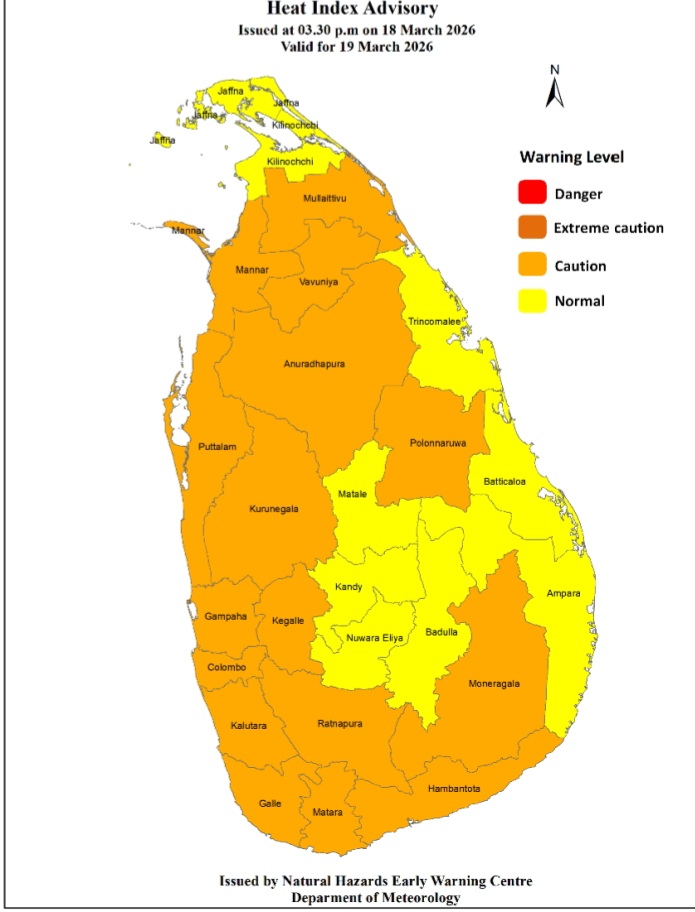
Warm Weather Advisory Issued by the Natural Hazards Early Warning Centre of the Department of Meteorology at 3.30 p.m. on 18 March 2026, valid for 19 March 2026
The general public are cautioned that the Heat index, the temperature felt on human body is likely to increase up to ‘Caution level’ at some places in the Western, Sabaragamuwa, North-central, Southern and North-western provinces and in Monaragala, Mannar, Vavuniya and Mullaitivu districts.
The Heat Index Forecast is calculated by using relative humidity and maximum temperature and this is the condition that is felt on your body. This is not the forecast of maximum temperature. It is generated by the Department of Meteorology for the next day period and prepared by using global numerical weather prediction model data.
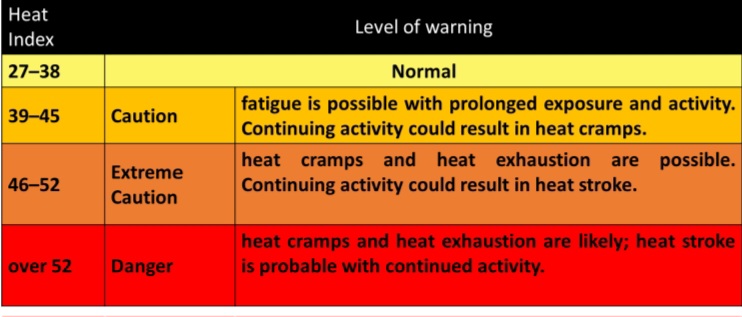
Effect of the heat index on human body is mentioned in the above table and it is prepared on the advice of the Ministry of Health and Indigenous Medical Services.
ACTION REQUIRED
Job sites: Stay hydrated and takes breaks in the shade as often as possible.
Indoors: Check up on the elderly and the sick.
Vehicles: Never leave children unattended.
Outdoors: Limit strenuous outdoor activities, find shade and stay hydrated.
Dress: Wear lightweight and white or light-colored clothing.
Note:
In addition, please refer to advisories issued by the Disaster Preparedness & Response Division, Ministry of Health in this regard as well. For further clarifications please contact 011-7446491.
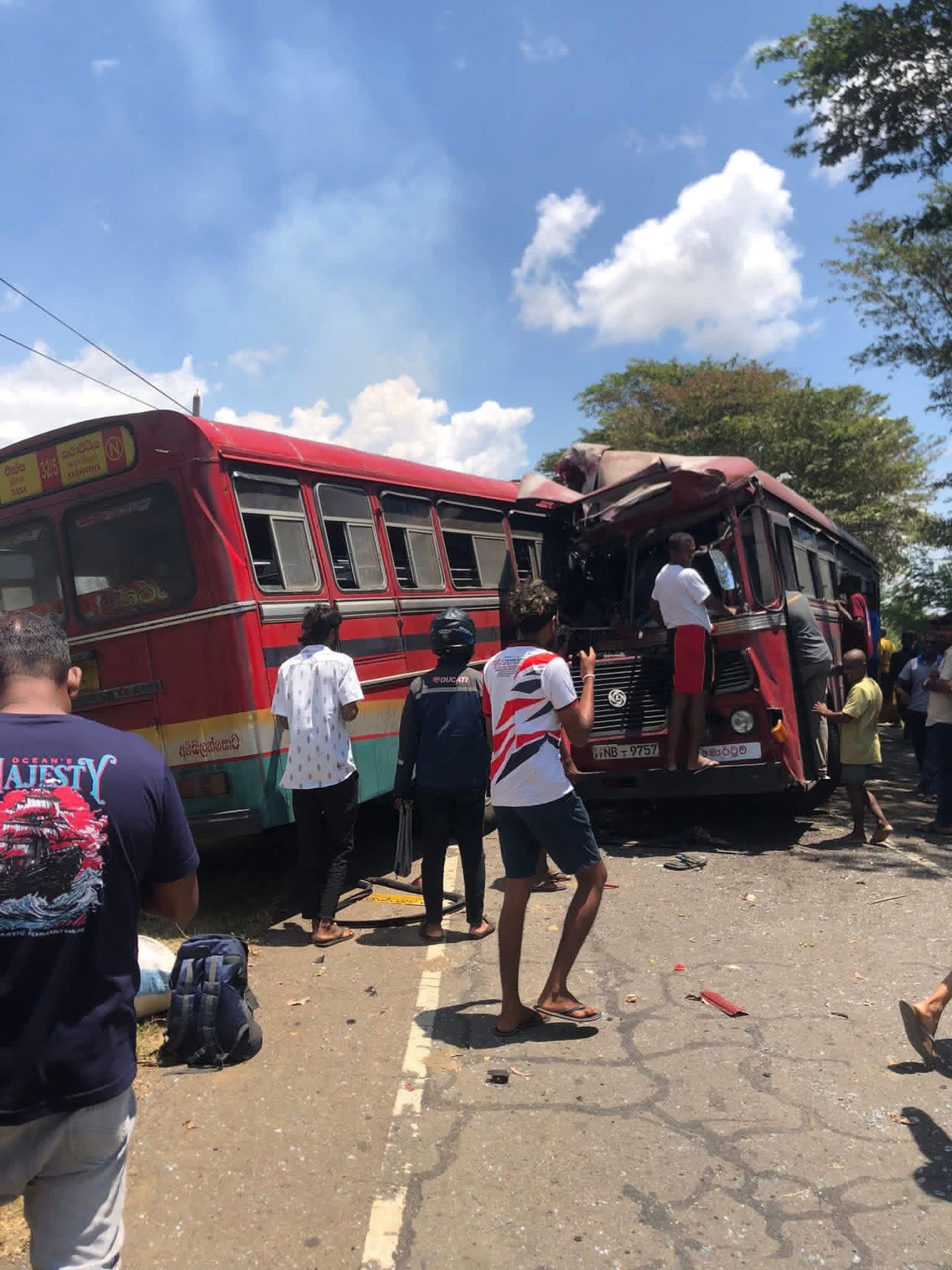
Four persons including a Budhist monk died and 32 others were injured when two SLTB buses collided head on at Weerawila at arond 12 noon today (18).
Three of the deceased were women. 22 of the injured were admitted to the Hambanthota Hospital while 10 others have been admitted to the Debarawewa hospital.

King Charles praises ‘living bridge’ with Nigeria at glitzy banquet

Our objective is to ensure that the Commission to Investigate Allegations of Bribery or Corruption operates as an independent institution, free from any external influence – PM

Showers above 50 mm can be expected at some places in the Central, Sabaragamuwa and Uva provinces and in Ampara district.

Oil nears $110 a barrel after gas field strike

Iran’s intelligence minister Esmail Khatib killed in air strike

Heat Index at ‘Caution Level’ in the Western, Sabaragamuwa, North-central, Southern and North-western provinces and in Monaragala, Mannar, Vavuniya and Mullaitivu districts

‘Dates have the highest sugar content to fight Coronavirus’

Sunday Island 27 December – Headlines

#SundayIsland 17th December – Headlines

Sunday Island – 28th March

Sunday Island Headlines – 21 March

Sunday Island – 21st February – Headlines
-

 Business3 days ago
Browns EV launches fast-charging BAW E7 Pro at Rs. 5.8 million
-

 Life style4 days ago
From culture to empowerment: Indonesia’s vision for Sri Lanka
-

 News1 day ago
CIABOC questions Ex-President GR on house for CJ’s maid
-

 Opinion6 days ago
M. D. Banda: Memories of Appachchi – II
-

 Business5 days ago
Sri Lanka Institute of Information Technology raises the bar for academic excellence
-

 Latest News4 days ago
QR code system will be implemented for fuel with effect from 06.00 a.m. today (15th)
-

 News2 days ago
Australian HC debunks misleading travel risk claims for Sri Lanka
-

 Life style4 days ago
Ranjith Fernando celebrates cricketing journey with Hob Nails to Spikes