
Latest News
Nearly one-third of women worldwide faced partner or sexual violence: WHO


Nearly one in three women – totalling about 840 million around the world – have experienced intimate partner or sexual violence in their lifetimes, the World Health Organization (WHO) said in a new report.
Released on Wednesday, it also found 316 million women and girls aged 15 and older were subjected to physical or sexual violence by an intimate partner over the past year.
That amounts to about 11 percent of all women and girls in that age bracket globally.
“Violence against women is one of humanity’s oldest and most pervasive injustices yet still one of the least acted upon,” WHO Director-General Tedros Adhanom Ghebreyesus said in a statement accompanying the findings.
“No society can call itself fair, safe or healthy while half its population lives in fear. Ending this violence is not only a matter of policy; it is a matter of dignity, equality and human rights. Behind every statistic is a woman or girl whose life has been forever altered.”
Released in advance of the UN’s International Day for the Elimination of Violence Against Women and Girls later this month, the WHO report analysed data from 168 countries collected between 2000 and 2023.
Despite the stark findings, the UN agency warned violence against women remains “a deeply neglected crisis” with efforts to address the problem “critically underfunded”.
It said only 0.2 percent of global aid was allocated to programmes focused on preventing violence against women in 2022.
That funding fell even further this year, the report said, as United States President Donald Trump slashed his country’s foreign aid and development contributions.
The WHO also warned that women and girls in conflict zones or living in other vulnerable situations are particularly at risk of experiencing intimate partner and sexual violence.
“In recent years, the rising number of armed conflicts, protracted crises and environmental degradation and disasters have underscored the increasing risk of violence against women living in these fragile contexts,” the report said.
“The risk of exposure to this violence is heightened by the resulting displacement and insecurity.”
[Aljazeera]

We are more than a week into this tour, and it feels like it’s barely begun. The first ODI went off without too much of a hitch, but the next two were washed out without a ball bowled, Kingston rains crashing the party. Unfortunately, the threat of rain hangs over this opening T20I too – with thunderstorms threatening on Thursday afternoon, which could affect the viability of the Sabina Park outfield later in the day (8.30pm local time is the start).
Unlike with ODIs, this is a format in which one of these teams is the favourite. West Indies were one victory away from knocking India out of their own home World Cup, while Sri Lanka spent much of the Super Eight in the recent global tournament fighting merely to prove they belonged. In India, West Indies showed their six-hitting strategy could still make waves. On top of which they have a much more successful franchise T20 product in the CPL than Sri Lanka has had with the LPL. Over many seasons, these sorts of advantages add up.
While West Indies clearly have the batting pedigree heading into this series, Sri Lanka will hope that their bowlers can make the contest more even. Wanidu Hasaranga has wreaked T20 havoc before in the Caribbean. In Dushmantha Chameera, they have a bowler who has shown he is in good rhythm on tour.
West Indies have excellent T20 bowlers too, Gudakesh Motie and Akeal Hosein especially. But the kind of firepower they possess in the batting order Shimron Hetmyer, Rovman Powell, Jason Holder and the like – Sri Lanka have rarely ever had, even at their T20 pinnacle.
Shimron Hetmyer had a pretty abysmal IPL with Rajasthan Royals, hitting only 78 for them from his seven innings. This is strange, because in the T20 World Cup preceding the IPL, he had crashed 248 runs at a strike rate of 186, and was legitimately the batting star in the West Indies line-up as they threatened to make a deep run in the tournament. He had not been selected in the only ODI West Indies played against Sri Lanka, but coach Darren Sammy and Co. would be hoping he rediscovers some of his World Cup form in this series.
Wanindu Hasaranga remains one of Sri Lanka’s most prized white ball assets. But over the years, as the franchise contracts have piled up, so have the kilograms, and as a consequence, the injuries. He’s one of the few top spinners in the world, for example, who has recurring hamstring complaints. His bowling record in the West Indies is genuinely spectacular, though, but perhaps it’s getting to the stage of his career when he is required to produce the kinds of performances that remind fans – and selectors – what makes him a special white ball cricketer.
West Indies may revert to their preferred World Cup XI to get some momentum into this tour.
West Indies (possible): Shai Hope (capt, wk), Roston Chase, Shimron Hetmyer, Sherfane Rutherford, Rovman Powell, Jason Holder, Romario Shepherd, Matthew Forde, Gudakesh Motie, Akeal Hosein Shamar Joseph
Sri Lanka may continue to trial Kamindu Mendis at the top of the order. Fast bowler Eshan Malinga is likely to get into the XI after a good IPL. Dasun Shanaka will probably reclaim a spot in the lower-middle order as well. The state of the surface may also determine whether they play a spin-bowling allrounder (likely Dunith Wellalage) or a seam-bowling allrounder (Milan Rathnayake).
Sri Lanka (possible): Pathum Nissanka, Kamindu Mendis, Kusal Mendis (capt, wk), Pavan Rathnayake, Charith Asalanka, Dasun Shanaka, Wanindu Hasaranga, Dunith Wellalage/Milan Rathnayake, Dushmantha Chameera, Eshan Malinga, Nuwan Thushara
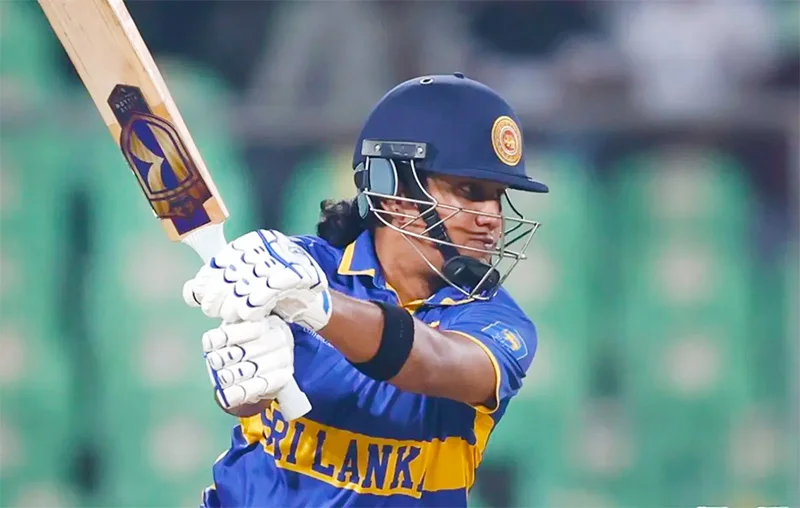
Hosts England will take on Sri Lanka at Edgbaston. The match is set to begin at 6.30pm local time (5.30pm GMT).
England hold an advantage in this contest, having won 10 out of the 12 T20Is between the sides. Sri Lanka though will draw confidence from recent history, having won the last two T20Is against England in 2023. This will be just the fourth time these two sides meet in the T20 World Cup.
England arrive at the tournament having won four out of the six matches since the start of the year, while Sri Lanka come in with momentum on their side, riding on five consecutive T20I wins that include series wins against West Indies and Bangladesh.
England (probable): Danni Wyatt-Hodge, Amy Jones, Nat Sciver-Brunt (capt), Alice Capsey, Heather Knight, Freya Kemp, Dani Gibson, Charlie Dean, Sophie Ecclestone, Linsey Smith, Lauren Bell
Sri Lanka (probable): Vishmi Gunaratne, Chamari Athapaththu (capt), Hasini Perera, Harshitha Samarawickrama, Hansima Karunaratne, Kavisha Dilhari, Nilakshika de Silva, Kaushini Nuthyangana (wk), Malki Madara, Sugandika Kumari, Kawya Kavindi/Chetana Vimukthi
Lauren Bell has been in spectacular form all year, starting with the WPL where she finished with 12 wickets in nine games and was often a handful with the new ball. After picking three wickets in two games against New Zealand, she bagged seven wickets in three matches in the T20I series win against India. She’s bowled at an economy of 7.4 this year, and the home conditions are likely to suit her perfectly.
All eyes will once again be on Chamari Athapaththu for Sri Lanka. In what will be her 10th T20 World Cup the 36-year old will be expected to do the heavy lifting for her side. She heads into the tournament in excellent touch, highlighted by a blistering 94 off 58 balls in the warm up against Pakistan. Her contributions with the ball could prove just as important – she picked up four wickets in three matches in the series against Bangladesh in May.
Weather and conditions
The forecast points to clear skies in Birmingham on Friday evening. There was however some rain in the area on the eve of the match.
[Cricinfo]

President Donald Trump says that the US will strike Iran “very hard tonight” in a new post on Truth Social.
Here’s what the president says:
“The United States will be hitting Iran (Whose Navy, Air Force, Radar, Anti Aircraft, and all other forms of Defense, together with most of its offensive capability, are GONE!), VERY HARD TONIGHT
“At some point in the not too distant future, we will be taking Kharg Island, and other oil infrastructure points, and assume total control of their Oil and Gas Markets, much like we have with Venezuela, which is working out brilliantly for both Venezuela and the United States of America.”
Since the beginning of the conflict, Trump has repeatedly threatened to seize Kharg Island, a small island off the coast of Iran that is home to a major oil terminal.
[BBC]

Wife, counsel seek regular access to ex-Spy Chief Sallay held under President’s detention order

CIABOC summons Yoshitha over his participation in British Navy training programme

Communist Party condemns ill-treatment of Sallay, calls for review of PTA

Justice Minister responds to social media claims he represented Easter Sunday ringleader

Several SLTB Depots suffer losses due to their remote locations

Three Lankans among seven suspects arrested in Kuwait for alleged drug links

‘Dates have the highest sugar content to fight Coronavirus’

Sunday Island 27 December – Headlines

#SundayIsland 17th December – Headlines

Sunday Island – 28th March

Sunday Island Headlines – 21 March

Sunday Island – 21st February – Headlines
-
 News5 days ago
Women’s T20 World Cup 2026 warm-up: Chamari Athapaththu’s 94 helps Sri Lanka beat Pakistan
-

 News6 days ago
Asst. Manager, security officer arrested over Rs 30 mn snatch at Horana PB branch
-

 Editorial4 days ago
Probe Sallay’s complaint
-

 News5 days ago
Lankan-Canadian inducted to Toronto Sports Hall of Fame
-
 News2 days ago
Local firms move millions of dollars overseas for phantom imports: Govt.
-

 Editorial5 days ago
Prez in the dock
-

 Features5 days ago
Entering MIT for my Ph.D program, coping with harsh Boston winter and breasting the tape
-

 News6 days ago
No blanket ban on musical performances; only those promoting LTTE