
Sports
Nawaz-Talat stand takes Pakistan over the line in first ODI


An unbeaten 104-run partnership between debutant Hasan Nawaz and Hussain Talat – playing his second game – helped a nervous Pakistan overcome a stutter to chase down 281 in the penultimate over and take a 1-0 lead in the ODI series with a five wicket win.
West Indies had put up 280 through three half-centuries in the first innings, but Pakistan’s spinners contained them to keep them to a below-par score with Shaheen Shah Afridi (4 for 51) and Naseem Shah (3-55) mopping the hosts up at the death.
Pakistan’s pursuit was far from convincing, struggling to pace the innings too. Babar Azam (47) and Mohammad Rizwan (53) each fell after promising, if placid, starts, and West Indies found themselves burrowing into the lower order when Rizwan fell with 101 still to get. But Nawaz overcame early struggles and briefly rode his luck with a couple of dropped chances to turn the game around with 63 not out, eventually finishing it at a canter alongside the more solid Talat, who made an unbeaten 41 in 37 balls.
Much of Pakistan’s ODI success over the past year depended on Saim Ayub getting them off to a flyer, so it felt significant West Indies neutralised that threat early, Jayden Seales extracting rubber-ball bounce that took his edge and flew on command into the keeper’s gloves. While Babar took his time to settle, Abdullah Shafique looked classically pretty through an even-paced knock, but found himself undone by slightly lower bounce that excited Shamar Joseph enough to force his captain’s hand into a successful review.
Initially, it appeared the worst of Babar and Rizwan was on display in that third-wicket partnership. At one point early on, they would play sixteen successive dot balls as the asking rate crept above six. They began, as they so often do, to catch up, finding regular boundaries and running a few twos, and the asking rate gradually eased back down into the fives. Whether that redeemed their slow start or made them even more culpable is by now an intractable question to answer.
But West Indies trusted their pace bowlers longer than Pakistan had, only delivering one over of spin until the 20th over. But that wasn’t a commentary on Gudakesh Motie’s skills, who began to trouble the pair, ultimately sending Babar packing when he ventured out for a slog and was deceived by the turn three runs short of his half-century.
Salman Ali Agha was more proactive, but threw away a decent start when he scooped a ball that gripped right back into a grateful Roston Chase’s hands. The value of Rizwan’s wicket was growing with each passing wicket, and he’d eased himself past a half-century by once more, Joseph found a way to rap him in front of the pads, this time securing the on-field decision that put West Indies on top.
Nawaz and Talat, one ODI in 2019 the sum total of their 50-over international experience, seemed unlikely saviours at that point. Hasan scored just three off his first 12 balls, and looked vulnerable against spin. Shai Hope dropped him early as a nick off an attempted slog couldn’t nestle into his gloves, and with the asking rate rising, he was the one Pakistan required out there until the very end.
The tide began to turn in the 39th over by which time the dew was making the ball hard to grip. Talat smacked Chase for two boundaries, before a rare errant over from Joseph saw five wides and 17 runs scored which brought the asking rate to just above seven. It was the break Pakistan needed to pace the innings on their terms, with each player finding the boundary anytime the equation became uncomfortable.
With four overs to go and Nawaz on 49, Motie put down an unforgivably easy chance at short third, and as Seales went down on his knees in disbelief, the fate of the game was sealed. Talat plundered 15 off the following over, and five balls later, Nawaz had sealed the win.
Earlier, West Indies were put in to bat partially because of the uncertainty of conditions both overhead and underfoot, and once they’d brushed off the customary first-over wicket Afridi tends to take so often, Evin Lewis and Keacy Carty began to set a platform in the powerplay. Shaheen and Naseem struggled to find bite with the new ball, and by the eighth over, Rizwan had turned to the spin of Ayub. On a surface that has seen just the one ODI played, no one really knew how successful that would be, but the next two and a half-hours answered that question.
With the surface gripping, each of Pakistan’s three spinners – Ayub, Agha, and Sufiyan Muqim – were thrust in immediately. The following 27 overs saw just one over of seam bowled as West Indies found themselves bleeding the occasional wicket while the run-rate Lewis and Carty had helped keep around six dipped below five. It was telling that the one over of seam – from Faheem Ashraf, saw Lewis pillage a six and a four bringing up his half-century in the process.
But Lewis – on 60 – felt Ayub was the spinner to target, and having dispatched him for a boundary, opted to heave the final ball of his third over into the air. Shaheen spun himself around a couple of times before improbably holding onto it. A tortured innings from Sherfane Rutherford then concluded when he spooned Agha to cover-point.
Chase (53) and Hope (55) put together a stand for the fifth wicket, but with no break from the stifling spinners, the run-rate began to fall. The 64 they added came off 89 deliveries, and with just one ball after the 34th over, Shaheen and Naseem began to find reverse swing. It took them a couple of overs to find their accuracy, during which Chase brought up his half-century. But he holed out to Naseem almost immediately afterwards, and just as the ball began to reverse, West Indies’ tail was exposed.
The yorkers began to land, and West Indies had no answer. Naseem and Shaheen found pinpoint accuracy, and any runs West Indies scored had luck attached to them. At one point, the matting for the stump-mic helped lift the ball over Rizwan for four byes, and the following over a 140kmph yorker from Naseem hit leg stump, but without dislodging the bails.
Even so, the last three were cleaned up by Pakistan’s two frontline quicks hitting the base of the stumps, and bowling West Indies out with an over to spare. Later, Pakistan would achieve their own target with seven balls to go.
Brief scores:
Pakistan 284 for 5 in 48.5 overs (Babar Azam 47, Hasan Nawaz 63*, Mohammed Rizwan 53, Hussain Talat 41*; Shamar Joseph 2-65) beat West Indies 280 in 49 overs (Evin Lewis 60, Keacy Carty 30, Shai Hope 55, Roston Chase 53,Gudakesh Motie 31; Shaheen Shah Afridi 4-51, Naseem Shah 3-55) by five wickets
[Cricinfo]

We are more than a week into this tour, and it feels like it’s barely begun. The first ODI went off without too much of a hitch, but the next two were washed out without a ball bowled, Kingston rains crashing the party. Unfortunately, the threat of rain hangs over this opening T20I too – with thunderstorms threatening on Thursday afternoon, which could affect the viability of the Sabina Park outfield later in the day (8.30pm local time is the start).
Unlike with ODIs, this is a format in which one of these teams is the favourite. West Indies were one victory away from knocking India out of their own home World Cup, while Sri Lanka spent much of the Super Eight in the recent global tournament fighting merely to prove they belonged. In India, West Indies showed their six-hitting strategy could still make waves. On top of which they have a much more successful franchise T20 product in the CPL than Sri Lanka has had with the LPL. Over many seasons, these sorts of advantages add up.
While West Indies clearly have the batting pedigree heading into this series, Sri Lanka will hope that their bowlers can make the contest more even. Wanidu Hasaranga has wreaked T20 havoc before in the Caribbean. In Dushmantha Chameera, they have a bowler who has shown he is in good rhythm on tour.
West Indies have excellent T20 bowlers too, Gudakesh Motie and Akeal Hosein especially. But the kind of firepower they possess in the batting order Shimron Hetmyer, Rovman Powell, Jason Holder and the like – Sri Lanka have rarely ever had, even at their T20 pinnacle.
Shimron Hetmyer had a pretty abysmal IPL with Rajasthan Royals, hitting only 78 for them from his seven innings. This is strange, because in the T20 World Cup preceding the IPL, he had crashed 248 runs at a strike rate of 186, and was legitimately the batting star in the West Indies line-up as they threatened to make a deep run in the tournament. He had not been selected in the only ODI West Indies played against Sri Lanka, but coach Darren Sammy and Co. would be hoping he rediscovers some of his World Cup form in this series.
Wanindu Hasaranga remains one of Sri Lanka’s most prized white ball assets. But over the years, as the franchise contracts have piled up, so have the kilograms, and as a consequence, the injuries. He’s one of the few top spinners in the world, for example, who has recurring hamstring complaints. His bowling record in the West Indies is genuinely spectacular, though, but perhaps it’s getting to the stage of his career when he is required to produce the kinds of performances that remind fans – and selectors – what makes him a special white ball cricketer.
West Indies may revert to their preferred World Cup XI to get some momentum into this tour.
West Indies (possible): Shai Hope (capt, wk), Roston Chase, Shimron Hetmyer, Sherfane Rutherford, Rovman Powell, Jason Holder, Romario Shepherd, Matthew Forde, Gudakesh Motie, Akeal Hosein Shamar Joseph
Sri Lanka may continue to trial Kamindu Mendis at the top of the order. Fast bowler Eshan Malinga is likely to get into the XI after a good IPL. Dasun Shanaka will probably reclaim a spot in the lower-middle order as well. The state of the surface may also determine whether they play a spin-bowling allrounder (likely Dunith Wellalage) or a seam-bowling allrounder (Milan Rathnayake).
Sri Lanka (possible): Pathum Nissanka, Kamindu Mendis, Kusal Mendis (capt, wk), Pavan Rathnayake, Charith Asalanka, Dasun Shanaka, Wanindu Hasaranga, Dunith Wellalage/Milan Rathnayake, Dushmantha Chameera, Eshan Malinga, Nuwan Thushara
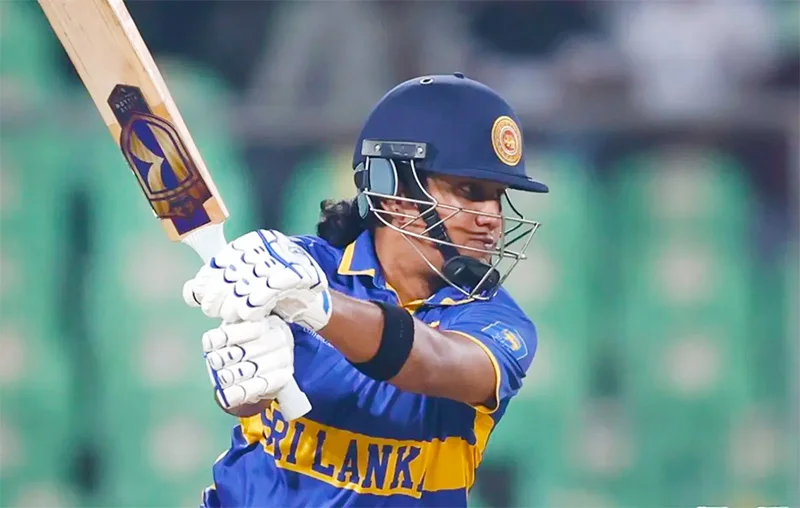
Hosts England will take on Sri Lanka at Edgbaston. The match is set to begin at 6.30pm local time (5.30pm GMT).
England hold an advantage in this contest, having won 10 out of the 12 T20Is between the sides. Sri Lanka though will draw confidence from recent history, having won the last two T20Is against England in 2023. This will be just the fourth time these two sides meet in the T20 World Cup.
England arrive at the tournament having won four out of the six matches since the start of the year, while Sri Lanka come in with momentum on their side, riding on five consecutive T20I wins that include series wins against West Indies and Bangladesh.
England (probable): Danni Wyatt-Hodge, Amy Jones, Nat Sciver-Brunt (capt), Alice Capsey, Heather Knight, Freya Kemp, Dani Gibson, Charlie Dean, Sophie Ecclestone, Linsey Smith, Lauren Bell
Sri Lanka (probable): Vishmi Gunaratne, Chamari Athapaththu (capt), Hasini Perera, Harshitha Samarawickrama, Hansima Karunaratne, Kavisha Dilhari, Nilakshika de Silva, Kaushini Nuthyangana (wk), Malki Madara, Sugandika Kumari, Kawya Kavindi/Chetana Vimukthi
Lauren Bell has been in spectacular form all year, starting with the WPL where she finished with 12 wickets in nine games and was often a handful with the new ball. After picking three wickets in two games against New Zealand, she bagged seven wickets in three matches in the T20I series win against India. She’s bowled at an economy of 7.4 this year, and the home conditions are likely to suit her perfectly.
All eyes will once again be on Chamari Athapaththu for Sri Lanka. In what will be her 10th T20 World Cup the 36-year old will be expected to do the heavy lifting for her side. She heads into the tournament in excellent touch, highlighted by a blistering 94 off 58 balls in the warm up against Pakistan. Her contributions with the ball could prove just as important – she picked up four wickets in three matches in the series against Bangladesh in May.
Weather and conditions
The forecast points to clear skies in Birmingham on Friday evening. There was however some rain in the area on the eve of the match.
[Cricinfo]
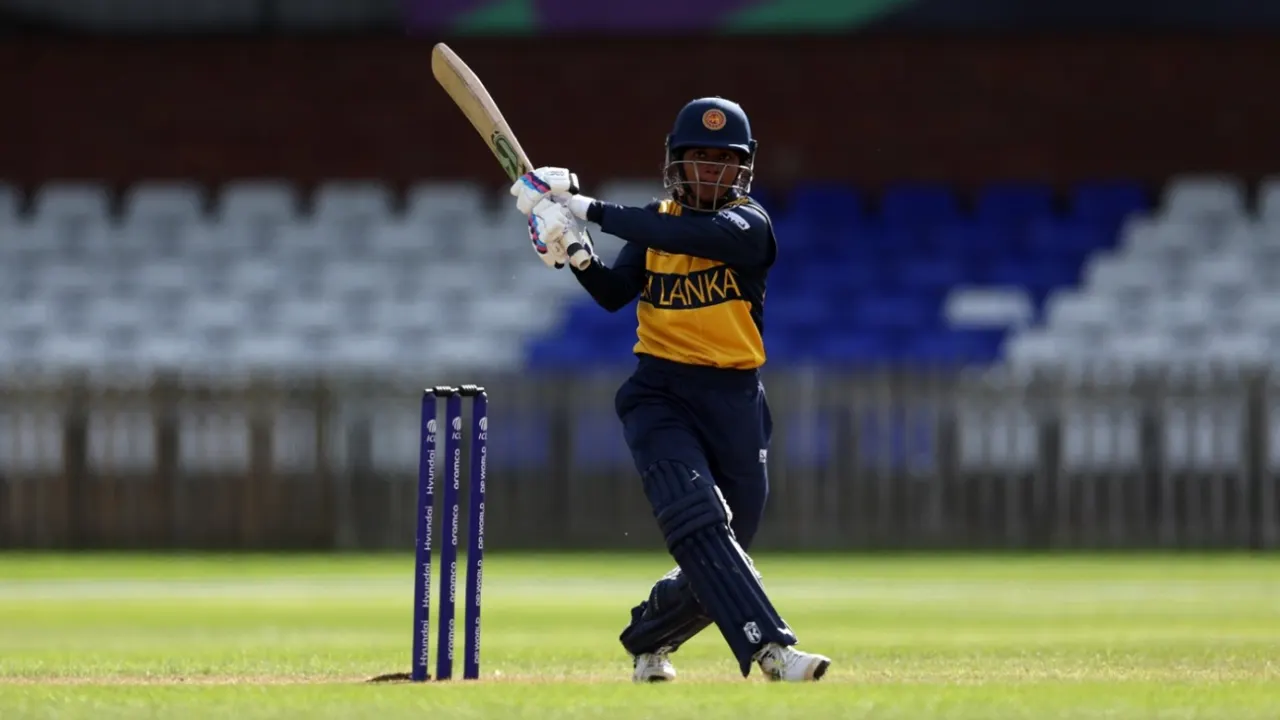
Harshitha Samarawickrema was 14 when Sri Lankan women’s cricket first pricked the national consciousness. She had already been playing cricket for her school, Gothami Balika Vidyalaya, but had largely pursued cricket merely for the sake of playing a sport, and also because she had enjoyed watching the men’s team play. But watching Sri Lanka defeat England in a thriller at the 2013 World Cup stirred up a deeper yearning.
“I’d watched all of the matches at that World Cup actually – that was the first time those kind of matches were telecast,” Samarawickrama said once. “That’s when I decided I was going to play and win matches for Sri Lanka one day.”
That victory against England was a new dawn for Sri Lanka’s women for two reasons. First up it was the highest-profile victory on their ledger until then, marking an unexpected high point in a World Cup in which little was generally expected of the team. But it also marked the rocket-powered arrival of Chamari Athapaththu, who top-scored with 62 to help set up the chase.
Thirteen years later, Samarawickrama has not only fulfilled her promise to herself, she has also helped Sri Lanka bring to life the promise of that 2013 campaign. Athapaththu, who has since has become the superstar around which Sri Lanka’s cricket orbits, has never known a more consistent batting collaborator than Samarawickrama. In T20Is, the pair have put on 1,202 runs together – easily the best for Sri Lanka. Though both are lefties who revel in pressure, that’s about where the similarities end – Athapaththu having grown up idolising the big-hitting of Sanath Jayasuriya, while Samarawickrama had been a disciple of the Kumar Sangakkara school of left-handed batting. (Samarawickrama still tries to replicate that famous bent-kneed cover drive, though she invariably sprinkles a little of of her own flair to the endeavour.) Oppositions have found this combination difficult to contend with, Athapaththu commanding through the legside and brutal on errors of length, while Samarawickrama flits around the crease and carves boundaries through cover and point.
It has been clear for years now that Sri Lanka’s chances in pretty much any match depend primarily on Athapaththu runs. But Samarawickrama’s advance as a T20 batter has now opened up a new frontier in the team’s batting performance. Ideally, what Sri Lanka want is not merely big runs from their captain, but a strong partnership between Athapaththu and Samarawickrama. In victories, the Athapaththu-Samarawickrama stand averages 41.38.
More tellingly, a good Samarawickrama innings has become as reliable a predictor of a strong Sri Lanka showing as a good Athapaththu innings. In T20I wins, Athapaththu averages 40.18 and strikes at 131, in comparison to 17.94 and a strike rate of 94 in losses. Samarawickrama’s corresponding numbers are even more stark. In Sri Lanka victories, Samarawickrama averages 44.08 with a strike rate of 109. In losses those numbers are 16.94 and 87. Other Sri Lanka batters have leveled up in recent years too – Kavisha Dilhari, Nilakshika Silva and Hasini Perera having become more frequent contributors, while 20-year-old Vishmi Gunaratne has also showed promise. But 11 years into her international career, Samarawickrama now has a serious body of work.
Samarawickrama had been modest in the shortest format in 2025, but she arrives at the Women’s T20 World Cup 2026 having had a good six months. Against Bangladesh in April, Samarawickrama had cracked 61 off 35, then 49 off 29, in back-to-back matches that Sri Lanka won (Samarawickrama was top-scorer on both occasions). This was in addition to having put up good numbers in the ODI series that preceded the T20Is. Her 36 not out off 34 in a comfortable warm-up win against Netherlands suggests she is still riding on that form.
This is the first T20 World Cup in which serious runs are expected of Samarawickrama, and if history is much to go by, she is not the sort to be daunted by occasion. Samarawickrama’s finest moments as a Sri Lanka cricketer had come in their most-celebrated win of all, in the Asia Cup final of 2024, against India. Typically, that chase of 166 in Dambulla had been propelled by an 87-run Athapaththu-Samarawickrama stand, but when Athapaththu was dismissed, Samarawickrama ensured she remained at the crease until the winning moments, hitting 69 not out off 51, ultimately collecting the Player-of-the-Match award.
If 2013 was a new dawn inspiring a fresh generation of Sri Lanka cricketers, 2024 was the year in which the team hammered its stake into the ground, breaking through into an entirely new galaxy of recognition and acclaim at home. Frequently batting in the shadow of Athapaththu, but always charting her own path, Samarawickrama has grown into a leader.
[Cricinfo]
Sri Lanka look to their bowlers against big-hitting West Indies

Edgbaston takes center stage as England, Sri Lanka kick off T20 World Cup

Trump says US will hit Iran ‘very hard tonight’

Firefighters on scene at Pentagon during ‘hazardous materials incident’

Samarawickrama’s rise gives Sri Lanka a second pillar

Prabhsimran, Gaikwad, Tilak score fifties in DLS loss to Afghanistan A

‘Dates have the highest sugar content to fight Coronavirus’

Sunday Island 27 December – Headlines

#SundayIsland 17th December – Headlines

Sunday Island – 28th March

Sunday Island Headlines – 21 March

Sunday Island – 21st February – Headlines
-

 Features7 days ago
Power crept into the Sangha and is now tearing it apart
-

 Features7 days ago
Kondachchi wind farm and battery storage project to boost energy security, says Power Ministry Secretary
-
 News5 days ago
Women’s T20 World Cup 2026 warm-up: Chamari Athapaththu’s 94 helps Sri Lanka beat Pakistan
-

 Features7 days ago
Saudi Arabia sets new benchmark in Hajj management as 1.7 million pilgrims complete sacred journey
-

 News6 days ago
Asst. Manager, security officer arrested over Rs 30 mn snatch at Horana PB branch
-

 Editorial4 days ago
Probe Sallay’s complaint
-

 News5 days ago
Lankan-Canadian inducted to Toronto Sports Hall of Fame
-

 News2 days ago
Local firms move millions of dollars overseas for phantom imports: Govt.