
Business
Nawaloka College of Higher Studies celebrates the convocation of a fresh batch of graduates


Leading Sri Lankan tertiary education provider Nawaloka College of Higher Studies (NCHS) felicitated a fresh batch of graduates at its sixth graduation ceremony on the 13th of February 2022 at BMICH Main conference Hall Colombo.
Among the students who earned their cloaks at the event, were 258 of those who had successfully completed the Foundation Diploma in Business or ‘Science/Engineering’ as well as 482 students who had secured a (UniLink) Diploma in Business, Information Technology, Health Science, Engineering or Hospitality and Event Management. All 482 of these Diploma holders will go on to commence their second year of studies in Australia or Malaysia. Further, the event also celebrated the graduation of 18 students who were engaged in USA degree program, looking to commence their sophomore year in the upcoming months.
Commenting on the critical importance of an educated workforce within the nation, the event’s Chief Guest Ajith Nivard Cabraal, Governor of the Central Bank of Sri Lanka stated, “Education is a primary tool in the building and improvement of our nation. I congratulate all the new graduates who are on their way to use the exemplary education afforded by NCHS to put their minds to work to further this cause.”
Nawaloka College of Higher Studies Chairman Dr. Jayantha Dharmadasa remarked, “As a leading tertiary education provider, we work hard to ensure that the experiences and high value given to our students during their time with us prepares them to successfully face any challenge and bring continuous value to any role in their chosen sectors both locally and internationally. Our graduates are confident of this fact, and this is demonstrated and proven by the professional success that scores of our past students enjoy today.”
Further reflecting on the event, Nawaloka College of Higher Studies, Dean of studies Dr. Alan Robertson stated, “I offer my congratulations to the graduates of 2022 who have worked hard with passion and dedication to fully earn and deserve the cloaks they don today. At NCHS, we pride ourselves on delivering high quality, work-ready qualifications well-accepted both here and abroad. Our partnership with top tier universities in Australia and the United States were borne as a part of this vision to better equip Sri Lankan students to find value and success in their professional journeys and contribute towards nation building efforts.”
Apart from the students and their families, NCHS’ chairman, directors and staff, members of the Australian High Commission, were present at the graduation, while the dean and several faculty members from the SUT participated online.
All programs offered by NCHS are provided in partnership with the global leaders in education, United State Universities and the institute’s exclusive partner, Swinburne University of Technology (SUT), guaranteeing a high-quality and strictly regulated standard of education. The trusted education services provider provides an 8-month Diplomas in Business, IT, Engineering, Hospitality and Event Management and Health Sciences, an 8-month Foundation program in fields of Business and Science/Engineering, USA-degree transfer programs upon credit basis. Further, NCHS operates a Regional Office in Kandy to better support prospective students in the region.
NCHS is in the heart of Colombo and provides students with world-class facilities, including purpose-built engineering and computer laboratories as well as a resource-rich library. NCHS’ Kandy campus provides students from the area with access to a conveniently located academic platform along with experienced academic staff and cutting-edge technological facilities that allow them to competently pursue their preferred academic discipline. The campus also offers additional support by providing students with relevant information and facilitating all their administrative and VISA requirements.

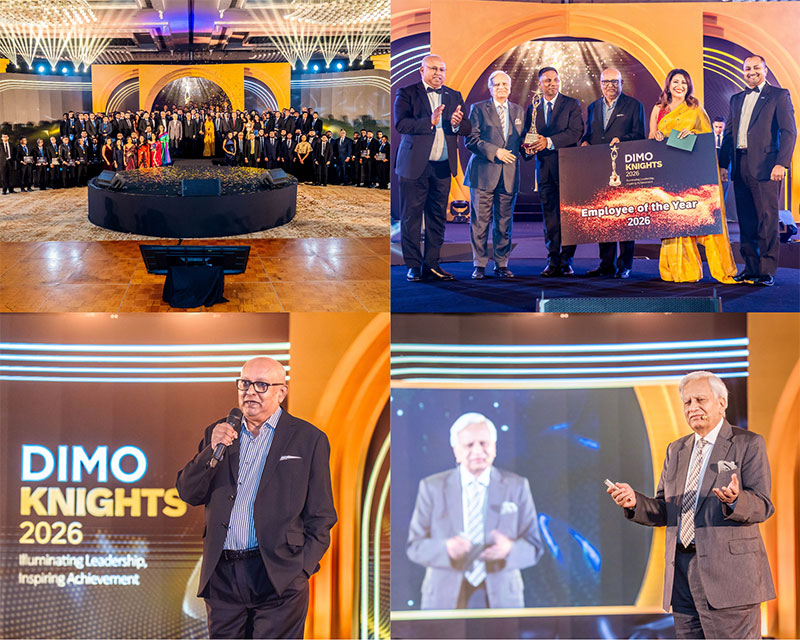
DIMO celebrated DIMO KNIGHTS 2026, recognizing employees whose exceptional dedication, leadership, innovation, and commitment continue to shape the organization’s success. More than an employee recognition event, DIMO KNIGHTS reflects DIMO’s unwavering commitment to cultivating a workplace where people are empowered to thrive, reinforcing the Employee Value Proposition of ‘Making Work Enjoyable and Rewarding’ while bringing its Corporate Purpose of Fuelling Dreams and Aspirations to life.
Held under the theme “Illuminating Leadership, Inspiring Achievement,” the event celebrated individuals who exemplify DIMO’s values and inspire excellence across the organization. By recognizing those who consistently go above and beyond, DIMO continues to foster a high-performance culture where people are empowered to innovate, lead, and create meaningful impact.
A highlight of the evening was the keynote address delivered by Mr. Ravi Kant, former Managing Director and Vice Chairman of Tata Motors India, who shared valuable insights on leadership, organizational transformation, and building resilient organizations capable of sustaining long-term success.
Commenting on the event, Ms. Dilrukshi Kurukulasuriya, Executive Director / Chief Human Resources Officer of DIMO, said: “Our Tribe is the driving force behind DIMO’s continued success. DIMO KNIGHTS is more than a celebration of outstanding performance; it is a reflection of the culture we strive to build every day. By recognizing and empowering our people, we reinforce our Employee Value Proposition of ‘Making Work Enjoyable and Rewarding’ while bringing our Corporate Purpose to life. When our people grow, innovate, and thrive, they create lasting value for our customers, partners, and the communities we serve.”
DIMO KNIGHTS reinforces the organization’s people-first philosophy by fostering a culture of appreciation, continuous learning, and purposeful leadership. The programme reflects DIMO’s conviction that when employees are empowered, recognized, and inspired to excel, they shape the future of the organization through innovation, collaboration, and sustained excellence, strengthening a high-performing culture that delivers lasting value, drives sustainable business success, and reinforces DIMO’s position as an employer of choice.
The evening recognized employees across a wide range of categories, celebrating outstanding performance, innovation, collaboration, customer focus, and leadership. The ceremony culminated with the presentation of the prestigious Innovator of the Year and Employee of the Year awards, with the Employee of the Year accolade presented to Mr. Chathura Gunasekera.
As DIMO continues to invest in developing exceptional talent, initiatives such as DIMO KNIGHTS reaffirm the organization’s belief that sustainable business success begins with its people. By creating an environment where individuals are recognized, empowered, and inspired to achieve their full potential, DIMO continues to cultivate a purpose-driven, high-performing workforce that is equipped to shape the future of the organization while delivering lasting value to all stakeholders.
By Sanath Nanayakkare
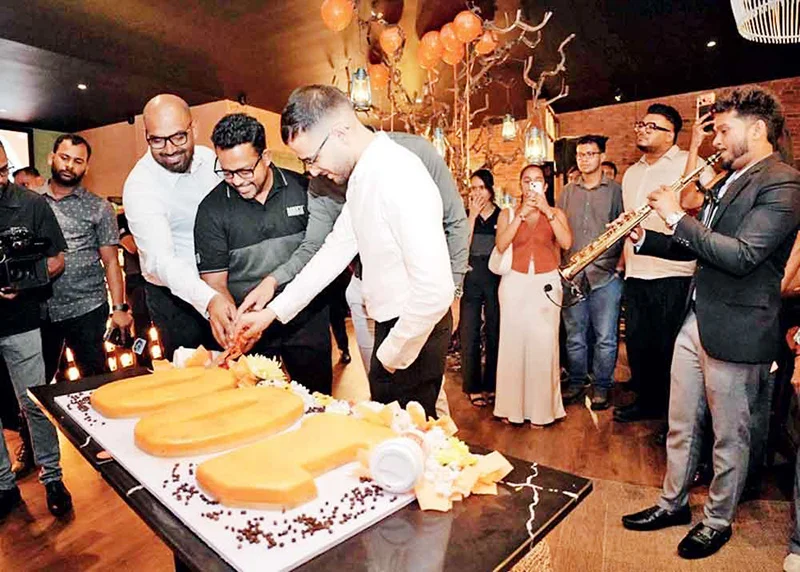
On Baseline Road in Colombo, Barista Coffee recently opened its 100th outlet. For a modern café culture spreading across shopping centers, office districts, and provincial towns, this milestone is a major commercial success. It shows a thriving urban service sector and a growing class of lifestyle consumers who use coffee shops as places to work, socialise, and meet.
This is a curious new picture emerging from Sri Lanka’s post-crisis economic recovery: the coffee cup is getting bigger, even as the household tea cup tells a very different story.
Yet, looking past the espresso machines, a different reality unfolds in the country’s kitchens.
International financial institutions note that while Sri Lanka’s macro-economy is recovering, household welfare and employment remain below pre-crisis levels. Poverty rates sit at roughly double what they were in 2019, and food prices doubled over a three-year span, forcing families to cut back on essentials.
This creates a striking local paradox, especially given Sri Lanka’s proud heritage as a global tea producer. While the world pays top dollar for Ceylon Tea, local market studies and industry reports have long pointed out an unfortunate disparity: many ordinary families find high-quality tea too expensive, often settling for lower-grade alternatives at home.
The growth of a 100-outlet coffee network does not mean prosperity has spread evenly across the island. Instead, it proves that there is a specific, well-resourced segment of consumers with the purchasing power to sustain a premium lifestyle economy, even as many other households carefully calculate the cost of everyday groceries.
Barista’s 100th store is not a bad-news story; it is a testament to acute entrepreneurial grit, shifting consumer behavior, and the vital revival of the nation’s urban service sectors. But it serves as an uncompromising reminder that macroeconomic stabilisation is not synonymous with household recovery.
As Colombo’s coffee culture looks toward its next hundred outlets, the true pulse of the nation’s economic health will not be measured by the espresso machines humming in sleek urban hubs, but by the quiet arithmetic happening in millions of kitchens beyond its doors – where the fundamental question remains whether a family can comfortably afford a better cup of Ceylon Tea.
Aitken Spence Hotel Holdings PLC announced that its maiden listed, rated, unsecured, senior
redeemable debenture issue was oversubscribed on its opening day, 15th September 2026.
The Company sought to raise Rs. 3 billion through an initial issuance of 30 million debentures at Rs.
100 each, with an option to issue a further 20 million debentures in the event of oversubscription of the initial issue, increasing the total issue size to Rs. 5 billion.
The Company said it had received applications for more than 50 million debentures, the full amount on offer, prompting the issue to close at 4:30 p.m. on the opening day (15).
The basis of allotment will be announced to the Colombo Stock Exchange as per regulatory requirements in due course.

Zimbabwean Tavengwa Mukuhlani appointed Deputy Chair of the ICC until November 2027.

DIMO KNIGHTS 2026 Reinforces a Culture of Recognition and Growth

Isle of Man teenage all-rounder Lucy Barnett ICC Women’s Player of the Month for August 2026

Sonal Dinusha named the ICC Men’s Player of the Month for August 2026.

USA midfielder sues doctors after on-pitch cardiac arrest

River home to 500 crocodiles chosen as Olympic rowing venue

‘Dates have the highest sugar content to fight Coronavirus’

Sunday Island 27 December – Headlines

#SundayIsland 17th December – Headlines

Sunday Island – 28th March

Sunday Island Headlines – 21 March

Sunday Island – 21st February – Headlines
-

 Sports7 days ago
DDS set to lose Test captaincy
-

 News7 days ago
Sri Lanka faces new grid challenge as rooftop solar surges: former CEB GM
-

 Latest News6 days ago
Shafali, Deepti power India into sixth T20 Asia Cup final
-

 Latest News6 days ago
Sri Lanka thwart Fatima Sana challenge to secure Asia Cup final spot
-

 News5 days ago
Gnanasara Thero absconding after SC ruling
-

 News6 days ago
Ammunition cache found in old Kandy bungalow
-

 Editorial7 days ago
A flight of fancy
-

 News5 days ago
Green Climate Fund (GCF) Regional Dialogue for East and South Asia will be held from 14 to 17 September 2026 at Cinnamon Life at City of Dreams Hotel, Colombo