
Business
Multi-sectoral collaboration vital for Sri Lanka to achieve Universal Health Coverage


The Institute of Policy Studies of Sri Lanka (IPS) together with the Sri Lanka Medical Association (SLMA) and the Center for Policy Impact in Global Health (CPIGH) of the Duke University, USA organised a virtual policy dialogue on ‘Planning for Universal Health Coverage amidst the 4Ds of Health Transitions’ on 25 August 2021. The dialogue was structured around a recent IPS study aimed at understanding how government, donors and key country stakeholders in the health sector perceive these transition challenges and their impact on the progress towards UHC, where they see the biggest gaps emerging, and what actions can help to address these challenges and gaps.
Health sector experts who spoke at the Dialogue flagged the need for multi-sectoral collaboration to achieve universal health coverage (UHC) in Sri Lanka.
Commencing the discussion, Dr Nisha Arunatilake, Director of Research, IPS explained that there are four major, inter-linked transitions in diseases, demography, development assistance for health and domestic health financing – the “4Ds” of global health transition – that complicate Sri Lanka’s efforts to achieve UHC. The associated challenges of these have been worsened by the COVID-19 pandemic. In this context, IPS and Duke University have conducted research that brings into focus the importance of achieving UHC and the sustainable development goals (SDGs).
Speaking next, Dr Padma Gunaratne, President, SLMA reflected on some of the achievements of the national health system including increased life expectancy and quality of healthcare. She noted that while these achievements are commendable, inequities and inefficiencies in healthcare continue to persist and a meaningful dialogue on planning for UHC is most timely.
Delivering the keynote address thereafter, Dr S Sridharan, Deputy Director-General (Planning), Ministry of Health pointed out that donor support for the health sector is declining. Meanwhile, there is rising demand for health services, an ageing population, and inadequate domestic financing for health. He recommended seven steps to address the challenges: (1) strengthening community response systems; (2) supporting reproductive health – adolescence, maternity and new-born health; (3) supporting platforms for integrated service delivery; (4) strengthening country population and supply chain; (5) investing in human resources (HR) for health and data systems for health; (6) strengthening and aligning national and global strategies; and (7) strengthening financial management and oversight.
The next speaker, Ipchita Bharali, Policy Associate, Duke University provided the audience with evidence on health transitions in an international context. She stated that many Middle-Income Countries (MICs) are expected to transition away from concessional multilateral and bilateral development assistance soon. However, they still face several health sector challenges such as high mortality rates, weak health systems, and large pockets of poverty in the countries. These challenges are intensified with the onset of the COVID-19 pandemic.
Session 1: Knowledge, capacity, and policy gaps that hinder UHC progress in Sri Lanka in the context of the 4Ds of health transitions and potential opportunities to tackle these gaps.
Knowledge gaps and opportunities
Ashani Abayasekara, Research Economist, IPS presented a summary of the study findings identifying the knowledge gaps. One of the findings highlighted was the rising burden of NCDs, as there was an acute focus on curing such illnesses by only considering drugs as the solution and understanding them as disease issues and not health issues. Prominence was also given to the gender disparities regarding NCDs. Lack of detailed and accurate data, poor research and development (R&D), and knowledge dissemination were some of the many gaps that were further identified as areas that needed immediate action.
Dr Susie Perera, Deputy Director-General (Public Health Services II), Ministry of Health in her reflections explained that one of the ways of alleviating the gaps is by targetted investments and incentivising stakeholders to conduct proper R&D, data collection, and knowledge dissemination. She noted that Sri Lanka has had many opportunities to strengthen its primary health and education systems with donor support, both of which are relevant to reducing the NCD burden. “A whole of government, multi-sector approach is needed,” she emphasised adding that digital literacy needs to be fostered in the health sector, along with a culture of innovation.
Prof. Amala De Silva, Professor in Economics, University of Colombo shared similar sentiments and noted that NCDs have an indirect relationship with economic performance. She flagged the need for multidisciplinary studies and proper accountable agency in research activities to achieve UHC in Sri Lanka.
Capacity gaps and opportunities
Thisali de Silva, Research Assistant, IPS presented the findings of the study on the capacity gaps that hinder UHC in the country. Poor financial and HR capacity was found to be the notable gaps in Sri Lanka. Some of the financial capacity gaps included inefficiencies in financial allocation, and financial management issues to name but two. On the other hand, the lopsided distribution of medical professionals and the lack of engagement in the financial side of the health sector have made for concerning capacity gaps in labour.
First to give thoughts on the study was Dr Dileep de Silva, Head of Human Resource Department, Ministry of Health. On the HR front, he explained that the issue in the lopsided distribution of medical professionals was due to the low applicants especially when looking at nurses, therapists, midwives and PHIs. Furthermore, one of the major reasons for the financial capacity gaps is a result of the underutilisation of capital budgets for the health sector.
Dr Anuji Gamage, Senior Lecturer in Community Medicine, Sir John Kotelawala Defence University identified healthcare migration as a problem driven by economic factors, unsatisfactory work environment, and professional career opportunities. She stated that a way of solving the uneven distribution of labour is a mechanism that would assure safety, and this is particularly important in a time of a global pandemic. “It is important to use strategies to keep the workforce safe and improve their wellbeing,” she affirmed.
Policy gaps and opportunities
The frequent changes made to the number of ministries, reversal of implemented policies and several other implementation hurdles, especially at the provincial level were shown to be some of the major policy gaps identified through the study. Ashani Abayasekara highlighted several opportunities to focus amid all these gaps such as creating a knowledge hub, and collaboration and coordination with non-state sectors.
Dr Ruvaiz Haniffa, Past President, SLMA in his reflections, called for a grassroots level approach through family doctors and homecare. “Too many people are currently missing out on health coverage in the primary preventive care sector. We have not put in policies in the primary curative sector,” he said stressing that the need of the hour is to provide holistic primary curative care. Uditha Palihakkara (Past Chairman of the Finance Commission), speaking in his personal capacity, expressed the view that the policy gaps are a result of low national budgets to the health sector as a whole.
Session 2: Multi-sectoral collaboration for Sri Lanka’s health systems – reflections from development partners, private sector, academia and civil society.
Based on the study, Dr Deepika Attygalle, Senior Health Specialist, World Bank and Ms Shiranthi Rathnayake, Additional Director General, Department of National Planning asserted that multi-sectoral collaboration is vital for Sri Lanka’s goal of achieving UHC of which, collaboration between the finance and medical sectors is particularly important. Dr Olivia Nieveras, Public Health Administrator, World Health Organization spoke about how donors should more agile in their activities. Sampath Manthreenayake, Additional Director-General, Department of External Resources added that there should be a collective system for better results on donor financing.
Way Forward
Moderated by Dr Nisha Arunatilake, a fruitful question and answer session took place with several important questions raised from participants around the world. The proceedings were wrapped up with an iteration on the need for a strong primary curative healthcare system and multi-sectoral collaborations as the way forward.
Link to original blog: https://www.ips.lk/talkingeconomics/2021/08/27/multi-sectoral-collaboration-vital-for-sri-lanka-to-achieve-universal-health-coverage/

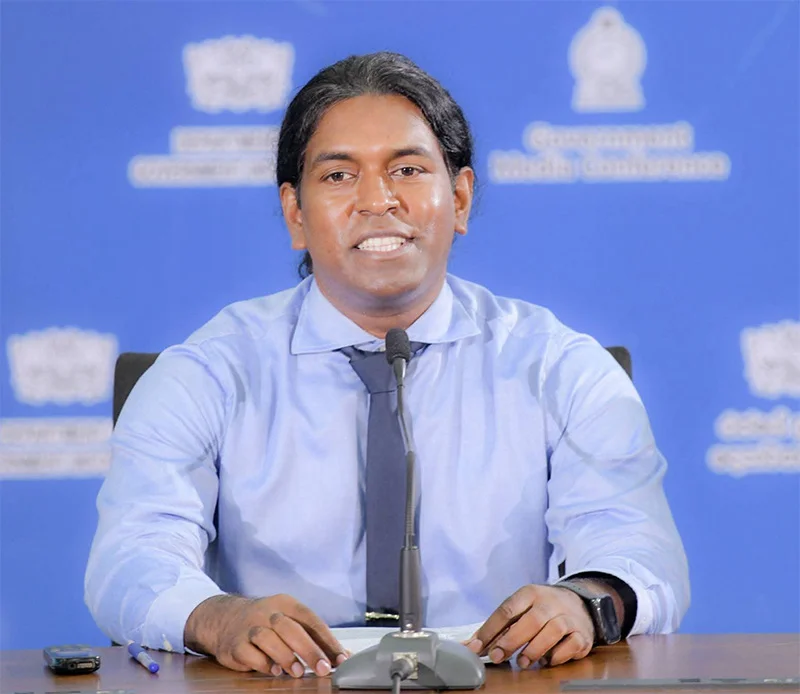
The government’s proposal to raise fines on manufacturers of substandard plastic products to as much as Rs. 1 million is expected to trigger a major compliance shift within Sri Lanka’s plastics industry, correcting long-standing market distortions caused by weak enforcement.
Environment Deputy Minister Anton Jayakody said the move targets producers who continue to bypass approved standards, undercutting compliant manufacturers and exacerbating environmental damage.
Environment Ministry Advisor Dr. Ravindra Kariyawasam said the initiative represents a structural market correction rather than a purely environmental intervention.
“Non-compliant producers have enjoyed an artificial cost advantage for years, distorting pricing and discouraging legitimate investment,” Kariyawasam told The Island Financial Review. “Meaningful penalties are essential to restore fairness and industry discipline.”
He said the widespread circulation of low-grade plastic products has eroded consumer confidence and delayed the sector’s transition towards higher-value and sustainable manufacturing.
Industry analysts note that a Rs. 1 million fine would significantly alter risk calculations for marginal operators, forcing upgrades in machinery, testing and compliance or pushing weaker players out of the market.
Kariyawasam stressed that the policy is intended to support responsible businesses rather than suppress industry growth.
“Manufacturers investing in recycling, biodegradable alternatives and quality assurance should not be penalised by competing with environmentally damaging, low-cost products,” he said.
The Deputy Minister indicated that tighter enforcement will be paired with policy support for sustainable packaging and circular-economy initiatives, aligning the sector with emerging global trade and environmental standards.
From a business perspective, the proposed regulation is likely to impact pricing, supply chains and capital investment decisions, while improving the long-term credibility of Sri Lanka’s plastics industry in both domestic and export markets.
By Ifham Nizam

First Capital Holdings PLC (the Group), a subsidiary of JXG (Janashakthi Group) and a pioneering force in Sri Lanka’s investment landscape, is set to host the 12th edition of its renowned ‘First Capital Investor Symposium’ on 22 January 2026 at Cinnamon Life Colombo, starting from 5.30 pm onwards.
The 12th Edition will focus on Sri Lanka’s Economic Outlook for 2026, offering attendees a comprehensive analysis of market forecasts, investment strategies and emerging opportunities in the capital markets. The symposium serves as a crucial gathering for investors seeking insights to navigate the evolving economic landscape and make sound, strategic decisions.
As a leading investment institution, First Capital remains committed to promoting informed decision-making through comprehensive research and market analysis. By hosting this annual symposium, the organisation reinforces its role as a trusted partner in Sri Lanka’s capital markets, providing a premier platform for investors, professionals, and industry leaders to exchange knowledge, explore opportunities and build meaningful connections.
A key highlight of this year’s agenda will be First Capital’s presentation on the Economic and Investment Outlook, outlining market conditions and investment strategies for the period ahead. The presentation will be delivered by Ranjan Ranatunga, Assistant Vice President – Research of First Capital Holdings PLC.
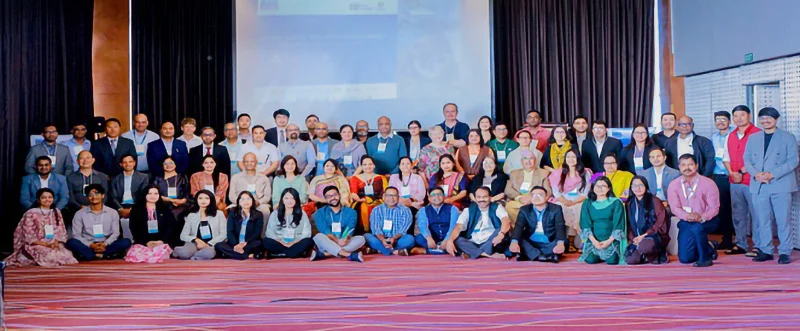
Oxfam in Asia commenced the Rivers, Rights, Resilience Forum (RRRF) 2026, a three-day regional forum bringing together water experts, policymakers, civil society, researchers, and community leaders from across South Asia and beyond to strengthen cooperation on shared river systems and climate resilience.
The Forum is part of the Transboundary Rivers of South Asia (TROSA) programme, supported by the Government of Sweden, which works on the Ganges–Brahmaputra–Meghna (GBM) river basins, while also encouraging cross-basin learning at the regional and global levels. This year’s theme is “Building Resilient Communities and Ecosystems.” The Forum is co-organised by Oxfam in Asia and Dev Pro, Sri Lanka.
The forum opened with a welcome address by John Samuel, Regional Director, Oxfam in Asia, who highlighted the deep connection between rivers, politics, climate change, and sustainability. He underlined how rivers shape both environmental and social outcomes across South Asia and called for stronger collaboration between governments and civil society.
“Today building resilience is important in terms of climate and politics, and when civic space is shrinking, we should all work in solidarity,” he said.
Speaking at the Forum, Chamindry Saparamadu, Executive Director of DevPro shared examples of how communities in Sri Lanka have taken actions to ensure equitable access to water resources through catchment protection initiatives, community-based water societies etc. She further highlighted that learning exchanges would be useful to further strengthen inter-provincial water governance in Sri Lanka.
The Chief Guest, Syeda Rizwana Hasan, Advisor, Ministry of Environment, Forest and Climate Change and Ministry of Water Resources, Bangladesh, in her video message, emphasised the need for regional cooperation among South Asian countries beyond the upstream–downstream identity.
“Climate change will make water scarce, so South Asian countries have to come together to work on the common interest of their communities. Rivers are not just ecology but economics as well for communities. Forums like this help us to share our experience and learn from each other,” she said.

Red-hot Royal Challengers Bengaluru stay perfect ain 20nd march into playoffs

Zadran, Rasooli power Afghanistan to commanding win over West Indies

Italian fashion designer Valentino dies aged 93

U – 19 World Cup: Sri Lanka beat Ireland by 106 runs

U – 19 World Cup: Rowles, Bulbulia star in South Africa’s big win over Tanzania

U – 19 World Cup: Raza, Usman steer Pakistan to victory over Scotland

‘Dates have the highest sugar content to fight Coronavirus’

Sunday Island 27 December – Headlines

#SundayIsland 17th December – Headlines

Sunday Island – 28th March

Sunday Island Headlines – 21 March

Sunday Island – 21st February – Headlines
-

 Editorial2 days ago
Illusory rule of law
-
 News3 days ago
UNDP’s assessment confirms widespread economic fallout from Cyclone Ditwah
-

 Business5 days ago
Koaloo.Fi and Stredge forge strategic partnership to offer businesses sustainable supply chain solutions
-

 Editorial3 days ago
Crime and cops
-
 Features2 days ago
Daydreams on a winter’s day
-

 Editorial4 days ago
The Chakka Clash
-
 Features2 days ago
Surprise move of both the Minister and myself from Agriculture to Education
-

 Features1 day ago
Extended mind thesis:A Buddhist perspective