
Business
Multi-sectoral collaboration vital for Sri Lanka to achieve Universal Health Coverage


The Institute of Policy Studies of Sri Lanka (IPS) together with the Sri Lanka Medical Association (SLMA) and the Center for Policy Impact in Global Health (CPIGH) of the Duke University, USA organised a virtual policy dialogue on ‘Planning for Universal Health Coverage amidst the 4Ds of Health Transitions’ on 25 August 2021. The dialogue was structured around a recent IPS study aimed at understanding how government, donors and key country stakeholders in the health sector perceive these transition challenges and their impact on the progress towards UHC, where they see the biggest gaps emerging, and what actions can help to address these challenges and gaps.
Health sector experts who spoke at the Dialogue flagged the need for multi-sectoral collaboration to achieve universal health coverage (UHC) in Sri Lanka.
Commencing the discussion, Dr Nisha Arunatilake, Director of Research, IPS explained that there are four major, inter-linked transitions in diseases, demography, development assistance for health and domestic health financing – the “4Ds” of global health transition – that complicate Sri Lanka’s efforts to achieve UHC. The associated challenges of these have been worsened by the COVID-19 pandemic. In this context, IPS and Duke University have conducted research that brings into focus the importance of achieving UHC and the sustainable development goals (SDGs).
Speaking next, Dr Padma Gunaratne, President, SLMA reflected on some of the achievements of the national health system including increased life expectancy and quality of healthcare. She noted that while these achievements are commendable, inequities and inefficiencies in healthcare continue to persist and a meaningful dialogue on planning for UHC is most timely.
Delivering the keynote address thereafter, Dr S Sridharan, Deputy Director-General (Planning), Ministry of Health pointed out that donor support for the health sector is declining. Meanwhile, there is rising demand for health services, an ageing population, and inadequate domestic financing for health. He recommended seven steps to address the challenges: (1) strengthening community response systems; (2) supporting reproductive health – adolescence, maternity and new-born health; (3) supporting platforms for integrated service delivery; (4) strengthening country population and supply chain; (5) investing in human resources (HR) for health and data systems for health; (6) strengthening and aligning national and global strategies; and (7) strengthening financial management and oversight.
The next speaker, Ipchita Bharali, Policy Associate, Duke University provided the audience with evidence on health transitions in an international context. She stated that many Middle-Income Countries (MICs) are expected to transition away from concessional multilateral and bilateral development assistance soon. However, they still face several health sector challenges such as high mortality rates, weak health systems, and large pockets of poverty in the countries. These challenges are intensified with the onset of the COVID-19 pandemic.
Session 1: Knowledge, capacity, and policy gaps that hinder UHC progress in Sri Lanka in the context of the 4Ds of health transitions and potential opportunities to tackle these gaps.
Knowledge gaps and opportunities
Ashani Abayasekara, Research Economist, IPS presented a summary of the study findings identifying the knowledge gaps. One of the findings highlighted was the rising burden of NCDs, as there was an acute focus on curing such illnesses by only considering drugs as the solution and understanding them as disease issues and not health issues. Prominence was also given to the gender disparities regarding NCDs. Lack of detailed and accurate data, poor research and development (R&D), and knowledge dissemination were some of the many gaps that were further identified as areas that needed immediate action.
Dr Susie Perera, Deputy Director-General (Public Health Services II), Ministry of Health in her reflections explained that one of the ways of alleviating the gaps is by targetted investments and incentivising stakeholders to conduct proper R&D, data collection, and knowledge dissemination. She noted that Sri Lanka has had many opportunities to strengthen its primary health and education systems with donor support, both of which are relevant to reducing the NCD burden. “A whole of government, multi-sector approach is needed,” she emphasised adding that digital literacy needs to be fostered in the health sector, along with a culture of innovation.
Prof. Amala De Silva, Professor in Economics, University of Colombo shared similar sentiments and noted that NCDs have an indirect relationship with economic performance. She flagged the need for multidisciplinary studies and proper accountable agency in research activities to achieve UHC in Sri Lanka.
Capacity gaps and opportunities
Thisali de Silva, Research Assistant, IPS presented the findings of the study on the capacity gaps that hinder UHC in the country. Poor financial and HR capacity was found to be the notable gaps in Sri Lanka. Some of the financial capacity gaps included inefficiencies in financial allocation, and financial management issues to name but two. On the other hand, the lopsided distribution of medical professionals and the lack of engagement in the financial side of the health sector have made for concerning capacity gaps in labour.
First to give thoughts on the study was Dr Dileep de Silva, Head of Human Resource Department, Ministry of Health. On the HR front, he explained that the issue in the lopsided distribution of medical professionals was due to the low applicants especially when looking at nurses, therapists, midwives and PHIs. Furthermore, one of the major reasons for the financial capacity gaps is a result of the underutilisation of capital budgets for the health sector.
Dr Anuji Gamage, Senior Lecturer in Community Medicine, Sir John Kotelawala Defence University identified healthcare migration as a problem driven by economic factors, unsatisfactory work environment, and professional career opportunities. She stated that a way of solving the uneven distribution of labour is a mechanism that would assure safety, and this is particularly important in a time of a global pandemic. “It is important to use strategies to keep the workforce safe and improve their wellbeing,” she affirmed.
Policy gaps and opportunities
The frequent changes made to the number of ministries, reversal of implemented policies and several other implementation hurdles, especially at the provincial level were shown to be some of the major policy gaps identified through the study. Ashani Abayasekara highlighted several opportunities to focus amid all these gaps such as creating a knowledge hub, and collaboration and coordination with non-state sectors.
Dr Ruvaiz Haniffa, Past President, SLMA in his reflections, called for a grassroots level approach through family doctors and homecare. “Too many people are currently missing out on health coverage in the primary preventive care sector. We have not put in policies in the primary curative sector,” he said stressing that the need of the hour is to provide holistic primary curative care. Uditha Palihakkara (Past Chairman of the Finance Commission), speaking in his personal capacity, expressed the view that the policy gaps are a result of low national budgets to the health sector as a whole.
Session 2: Multi-sectoral collaboration for Sri Lanka’s health systems – reflections from development partners, private sector, academia and civil society.
Based on the study, Dr Deepika Attygalle, Senior Health Specialist, World Bank and Ms Shiranthi Rathnayake, Additional Director General, Department of National Planning asserted that multi-sectoral collaboration is vital for Sri Lanka’s goal of achieving UHC of which, collaboration between the finance and medical sectors is particularly important. Dr Olivia Nieveras, Public Health Administrator, World Health Organization spoke about how donors should more agile in their activities. Sampath Manthreenayake, Additional Director-General, Department of External Resources added that there should be a collective system for better results on donor financing.
Way Forward
Moderated by Dr Nisha Arunatilake, a fruitful question and answer session took place with several important questions raised from participants around the world. The proceedings were wrapped up with an iteration on the need for a strong primary curative healthcare system and multi-sectoral collaborations as the way forward.
Link to original blog: https://www.ips.lk/talkingeconomics/2021/08/27/multi-sectoral-collaboration-vital-for-sri-lanka-to-achieve-universal-health-coverage/



The Asian Development Bank (ADB) has approved a $100 million results-based loan to help Sri Lanka transform its technical and vocational education and training (TVET) system, equip more young people with industry-relevant skills, and strengthen the country’s competitiveness and inclusive growth.
The Skills Development System Transformation Program will support the Government of Sri Lanka’s efforts in improving the quality and relevance of skills training, strengthening links between training providers and industries, and expanding employment opportunities for youth. The program will increase women’s employment opportunities in nontraditional jobs in fields including automotive technology, engineering, information and communications technology, construction, and renewable energy.
“A skilled workforce is essential to Sri Lanka’s long-term economic transformation and competitiveness,” said ADB Country Director for Sri Lanka Shannon Cowlin. “This program will help create stronger pathways from education to employment by making training more responsive to industry needs, expanding opportunities for young people and women, and ensuring that graduates have the skills required by a modern and evolving economy.”
Though Sri Lanka’s economy is recovering, it faces skills shortages in priority sectors, high youth unemployment, and low female labor force participation. Many employers report difficulty finding workers with the skills needed in a changing economy.
Aligned with the Government of Sri Lanka’s Technical and Vocational Education and Training Sector Strategic Framework 2026–2035, the nationwide program will be implemented from 2027 to 2031 and is expected to directly benefit more than 100,000 young people through improved access to quality, employment-oriented training.
By Ifham Nizam
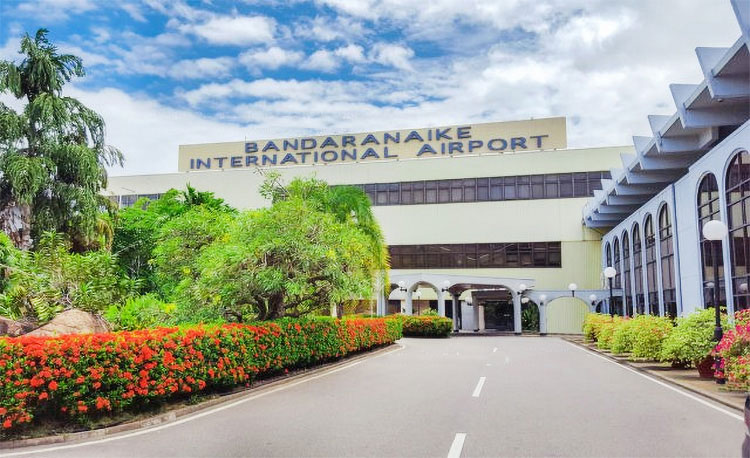
The government has cleared a USD 40.84 million and Rs. 8,548.75 million contract to build a dedicated aviation fuel pipeline from Muthurajawela to Bandaranaike International Airport (BIA), alongside a massive new fuel storage facility with a capacity of 92,000 cubic metres.
Energy Minister Anura Karunatilaka said the project represented a major investment in strengthening the infrastructure underpinning Sri Lanka’s aviation fuel supply and ensuring more reliable fuel availability at the country’s main international airport.
‘This project will provide the infrastructure required to strengthen the reliability and continuity of aviation fuel supplies to Bandaranaike International Airport, Karunatilaka said.
The contract has been awarded to China Petroleum Pipeline Engineering Company Limited, following an international competitive procurement process in which three bids were received.
The project will see a new aviation fuel storage tank complex constructed at Muthurajawela, together with the associated infrastructure required for handling and transferring aviation fuel.

By Hiran H Senewiratne
Trading activity on the Colombo Stock Exchange (CSE) gathered pace yesterday as global fuel prices began to show signs of easing, according to market analysts.In this context, both indices moved upwards. All Share Price Index up by 67.97 points while S and P SL20 up by 8.30 points.
Turnover stood at Rs 1.4 billion with seven crossings. Those crossings were reported in Sampath Bank 1.7 million shares crossed to the tune of Rs 238 million and its share price traded at Rs 140, Access Engineering two million shares crossed to the tune of Rs 159 million and its share price traded at Rs 79.50, LOLC one million shares crossed to the tune of Rs 129 million and its share price traded at Rs 129, HNB 100,000 shares crossed to the tune of Rs 38.4 million and its share price traded at Rs 384, JKH 1.9 million shares crossed to the tune of Rs 35 million and its share price traded at Rs 18.60, Hayleys 100,000 shares crossed to the tune of Rs 22.50 million and its share price traded at Rs 225 and Richard Pieris 847,000 shares crossed to the tune of Rs 22 million and its share price traded at Rs 25.50.
In the retail market top seven companies that have mainly contributed to the turnover were Sampath Bank Rs 114 million (813,000 shares traded), JKH Rs 100 million (5.3 million shares traded) LB Finance Rs 49 million (325,000 shares traded), HNB Finance Rs 30 million (27 million shares traded), HNB Rs 27 million (70000 shares traded), NTB Rs 25 million (82000 shares traded ) and Lanka IOC Rs 21 million (666,000 shares traded). During the day 65 million shares volumes changed hands in 10433 transactions.
The Banking and manufacturing sector counters performed well. In the banking sector Sampath Bank let the market while manufacturing sector especially JKH also significantly performed well. With the fuel revision Land IOC also a significant stock at the floor.
Meanwhile, First Capital Treasuries said that Ramesh Schaffter resigned as a Non-Independent Non-Executive Director with effect from October 1, to facilitate the restructuring of the company’s board.
Yesterday the Central Bank announced the US Dollar rate as against rupee. The rupee was quoted flat at Rs 330.65/80 to the US dollar in the spot market , while bond yields dropped, dealers said.

Ambassador of the UAE to Sri Lanka meets with the Prime Minister

EU rejects Trump’s diesel demand amid Iran war shortages

Sineth Jayawardena, Vijayakanth Viyaskanth in Sri Lanka squad for Pakistan T20Is

Bronze at stake as Bangladesh, Sri Lanka look to bring cheer to Asian Games contingents

Wanderers to host 2027 men’s ODI World Cup final as well as India vs Pakistan

Prime Minister joins Gandhi Jayanti Commemoration

‘Dates have the highest sugar content to fight Coronavirus’

Sunday Island 27 December – Headlines

#SundayIsland 17th December – Headlines

Sunday Island – 28th March

Sunday Island Headlines – 21 March

Sunday Island – 21st February – Headlines
-

 Editorial7 days ago
Birth of a bad law
-

 News5 days ago
Police remove Thileepan statue in Jaffna
-

 News7 days ago
TIN mandatory for key transactions from Nov. 1
-

 Features5 days ago
The 22nd Amendment, constitutional recovery and illiberal slippage
-

 Features5 days ago
Of foreigners as CEOs of Lankan ventures
-

 Latest News3 days ago
Gold winner Tharanga gets brand-new Honda Vezel from SLAAJ
-

 News5 days ago
Sajith rejects Jt. Opp. protest sabotage claim; SJB TU chief demands remedial action
-

 Features4 days ago
Thailand’s biggest new global star …