
Sports
MS Dhoni retirement leaves a void in world cricket

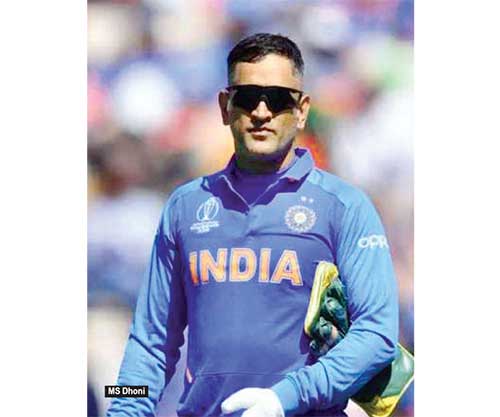
The uncertainties leading up to the retirement of Mahendra Singh Dhoni will be forgotten soon enough, and what will remain are the certainties and the pride of performance over the years.
Should he have retired earlier? Or at least should he have cleared the air earlier?
It does not matter. Dhoni was under no compulsion to make it easier for everybody else, especially those whose job it is to tie up careers neatly and move on to the next big thing.
It is likely that Dhoni might continue to play in the IPL. It is a tournament he enjoys, playing for a team he loves whose fans return the love many times over.
A man who has played 90 Tests, 350 one-dayers and 98 T20s will, naturally, be missed.
This in addition to being the country’s most successful captain, taking India to the No 1 ranking and leading them to a World Cup win after 28 years (2011), the World T20 (2007) which set up the IPL revolution and the Champions Trophy (2013).
In white ball cricket he is one of the all-time greats, his 84 undefeated innings pushing his average above 50 in one-day internationals. Only Ricky Ponting has led his team, Australia, to more wins. Dhoni has led in and won more matches than any other captain in T20 internationals.
He led India in the most number of Tests, 60, and was only recently overtaken by Virat Kohli as the most successful.
Dhoni’s reign had a profound impact on Indian cricket, and not just in terms of statistics.
He rose from what was then a backwater of Indian cricket – the eastern city of Ranchi – and continued the work begun by a predecessor, Sourav Ganguly, who turned to the non-traditional cricketing centres and discovered players of international standard.
Dhoni’s elevation as captain continued a process begun with the aristocrats – the maharajahs and nawabs – who led in the early years, the middle-class players (often bankers) who followed and then the small-town talent who spread the game; this in some ways reflecting the evolution of Indian society itself.
He was eight years old when Sachin Tendulkar made his Test debut, and within months of his taking over Tendulkar was saying, “I am delighted with the way Dhoni has conducted himself. He is a balanced guy with a sharp brain.”
Dhoni was easily accepted by the seniors in the side, a tribute both to his potential and fairness.
He learnt from his predecessors. From Rahul Dravid under whom he played 19 Tests and Anil Kumble under whom he played 10. These two men from the southern state of Karnataka brought to the job a rare intelligence, tactical nous and man management skills. “I want a team,” Dhoni once said, “that can stand before an advancing truck.” And he worked at building just such a team.
As a player, the amazing thing about Dhoni was what might look inadequate in another player, a gimmick even, worked well for him.
Ex-India keeper Syed Kirmani said initially he lacked “copybook basics” as a wicketkeeper and criticised his habit of standing on his heels to receive the ball rather than on his toes. The corkscrew on-drive or “helicopter” shot was uniquely Dhoni’s. It was seldom imitated because it was inimitable.
Retirement is a difficult thing, both for the player and his team.
In the first Test following Sunil Gavaskar’s retirement, India were bowled out for 75 by the West Indies and went on to lose by five wickets. It was another 19 Tests before India had a century opening partnership. That’s one side of the coin.
Here’s the other: after Tendulkar was caught at slip in his final Test innings, the new batsman Virat Kohli struck the next ball for four.
The symbolism was inescapable. The king is dead, long live the king.
Dhoni, as he prepares to leave the international scene, can take comfort in the fact that his successors are already in place.
He leaves Indian cricket in a good place – back as the best team in the world with a captain who is as hot (if one might be pardoned that expression) as he himself was cool, but just as successful; and new wicketkeepers ready to take over.
He will be missed for his remarkable self-control, his ability to change the tempo of a match either through sustained hitting or dour defence, and his manner of encouraging the bowlers, especially the spinners, from behind the wicket.
In the latter half of his career, he appeared at times to have eyes in the back of his head with his ability to run out batsman behind him without looking at the stumps.
He also patented a way of avoiding the recoil with his practised manner of either taking the edge from the bat or the throw from the field without wasting time having to take his hands back with the ball. It is a significant contribution to the art of wicketkeeping. Anything that saves time.
In 15 years, Dhoni played 538 internationals, scored over 17,000 runs, averaged 45 with a strike rate of nearly 80, held 634 catches and effected 195 stumpings.
Only five players in the history of the game have played more internationals; only one of them was a wicketkeeper, and none of them led in as many matches as Dhoni did.
His will be tough boots to fill. But Dhoni’s legacy goes beyond figures and reflects the arc of India’s societal transformation.
It will include the self-confidence he brought to large hitherto ignored sections of the population, and emphasise the old-fashioned dignity and respect he brought to the game and its players.
(BBC)







Today is a red-letter day for Rangiri Dambulla International Cricket Stadium. Exactly 25 years ago, to this very day, the venue hosted its maiden international, Sri Lanka locking horns with England and in the quarter-century since, the ground has grown from a bold gamble into one of the country’s prized cricketing possessions.
From Sachin Tendulkar’s silken drives to Dale Steyn’s thunderbolts, the game’s greats have left their imprint here. Dambulla has seen it all, high-octane contests, spin clinics and finishes that have gone down to the wire.
The brainchild of former SLC President Thilanga Sumathipala, Dambulla was not built on a whim but on a clear game plan. Sri Lanka, weary of rain playing spoilsport and washing games down the drain, needed a venue in the dry zone. A study into the country’s driest regions pointed squarely to Dambulla, centrally located, easily accessible and, crucially, less at the mercy of the weather gods.
If location was the first box ticked, aesthetics were the icing on the cake. Perched along the Colombo – Sigiriya road, the ground offers a view that can take your breath away. Climb up to the main stand and you are greeted by a sea of green, with the serene Ibbankatuwa Tank glistening in one corner. Sunsets here are straight out of a postcard. In another corner looms the historic Dambulla Rock, where King Valagamba, in exile, regrouped before marching back to reclaim his kingdom from south Indian invaders. Cricket here, quite literally, is played in the shadow of history.
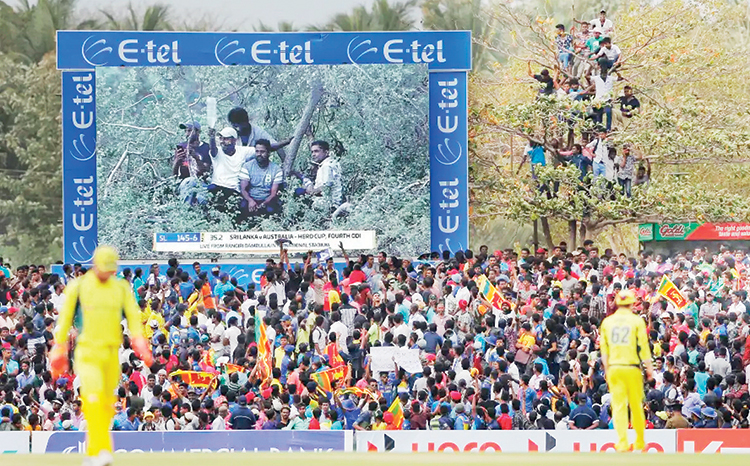
Dambulla isn’t just a cricket ground. This is part of Thilanga’s visionary thinking. He wanted the game to trickle down to the grassroots, to take cricket out of Colombo’s comfort zone and into the heartland. The response has been overwhelming. Whenever the big boys roll into town, the stands are packed to the rafters and when space runs out, fans perch on nearby trees just to catch a glimpse, a reminder that cricket, in this part of the country, is more than a game; it is a way of life.
The stadium itself was built in double-quick time, a project fast-tracked with military precision. Former captains Bandula Warnapura and Duleep Mendis, then part of the SLC set-up, oversaw the construction, ensuring the ground was ready to host top-flight cricket without missing a beat. Sujeewa Godaliyadda, now SLC Treasurer, has been part of the furniture here from day one, guarding the venue like the apple of his eye.
Back in 2001, the surrounding area was little more than a quiet outpost. Fast forward to today and the landscape has changed beyond recognition, hotels, restaurants and supermarkets have sprung up, proof that cricket has been a catalyst for economic growth. The ripple effect has been unmistakable; livelihoods have improved and the region has been put firmly on the map.
Of course, the journey has not always been smooth sailing. At times, Dambulla was left out in the cold, sidelined due to petty politics while other venues were given the nod. Hambantota’s Suriyawewa had its moment in the sun, but when rain threatens to play havoc, Dambulla remains the trump card. Unlike some white elephants, this ground delivers when it matters.
In recent years, the venue has come back into its own. Floodlights have been upgraded, state-of-the-art training facilities have been added and Dambulla is now being groomed as a Centre of Excellence. A new media centre is in the pipeline, while expansion plans are on the drawing board to meet the ever-growing demand from fans eager to soak in cricket in this picturesque setting.
by Rex Clementine
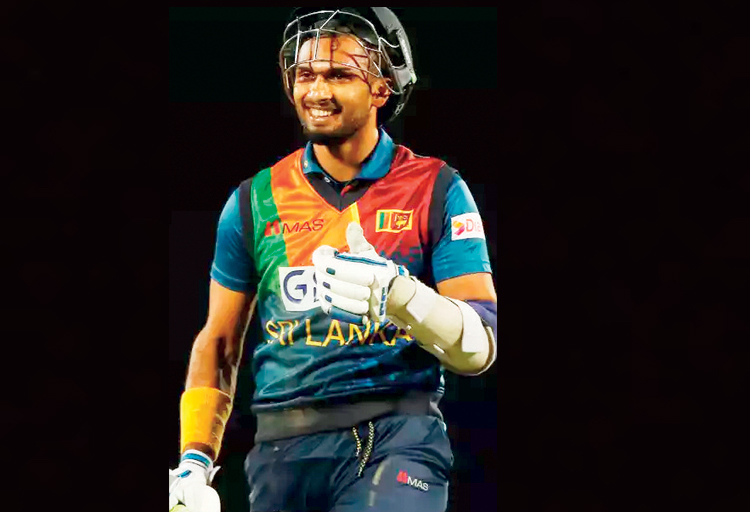
There is another defection from the Pakistan Super League (PSL), with Dasun Shanaka moving to the Indian Premier League (IPL). Shanaka is set to be signed by the Rajasthan Royals for the upcoming season, coming in as a replacement for the injured Sam Curran, who was earlier ruled out of IPL 2026.
A top Royals official confirmed the signing to Cricbuzz. “Yes, we’re close to signing him,” an official of the franchise told this website. “A few formalities are pending. He has to complete some paperwork with Sri Lankan Cricket (SLC)”
Shanaka had remained unsold at the Abu Dhabi mini-auction last December following which he enrolled for the PSL auction, where he was bought by Lahore Qalandars for PKR 75 lakh.
Shanaka is the second player in recent times to shift to the IPL from the PSL. Blessing Muzarabani of Zimbabwe pulled out of his contract with Islamabad United to join Kolkata Knight Riders, who signed him in place of Mustafizur Rahman. The famous case of PSL to IPL jump, of course, was of South Africa’s Corbin Bosch last year, when he had spurned a Peshawar Zalmi gig to join Mumbai Indians last year.
The PSL reacted strongly, banning him for a year. However, its policy of scheduling the league concurrently with the IPL – ostensibly to ensure the availability of overseas players – appears to be backfiring, with foreign players opting to withdraw from the PSL when an IPL opportunity came their way. Cricbuzz reached out to the Lahore Qalandars for a comment.
The choice of Dasun Shanaka by the Rajasthan Royals is hardly surprising. Head coach Kumar Sangakkara is a Sri Lankan, while assistant coach Vikram Rathour worked with Sri Lanka as batting coach during the T20 World Cup, where Shanaka was the country’s captain. Though the co-hosts failed to reach semifinals, Shanaka impressed with two half-centuries in the tournament.
Meanwhile, Pakistan Cricket Board chairman Mohsin Naqvi addressed the media in Lahore on Sunday regarding changes to the PSL operations and venues and hinted that the board may initiate legal action against players who have breached their PSL contracts. (Cricbuzz)
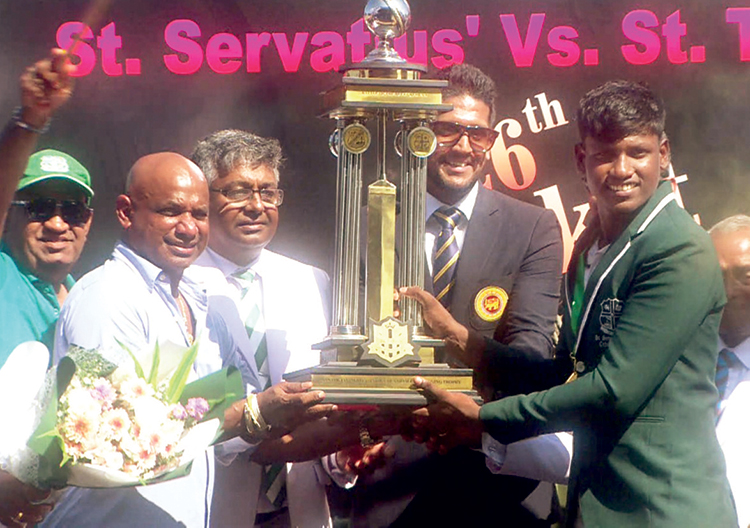
St. Servatius’ College ended more than five decades of frustration when they defeated arch rivals St. Thomas’ College by five wickets in the annual Battle of the Blues encounter concluded at the Uyanwatta Stadium on Sunday.The victory marked a historic moment for the Servatians as they recorded their first big match win in 55 years, the previous triumph coming in 1971 under the captaincy of Nimal Munaweera.
Sri Lanka Under-19 player Viran Chamuditha played a decisive role in the thrilling run chase, producing a superb knock of 81 runs to guide his team towards the target of 178. His innings laid the foundation before an unbroken sixth wicket partnership of 64 runs between Thathsilu Bandara and skipper Chamarindu Nethsara sealed the memorable victory.
Despite entering the encounter as favourites, St. Servatius’ struggled in their first innings and were bowled out for 118 runs in reply to St. Thomas’ total of 158.
However, the Servatian bowlers turned the game in the second innings. Lasindu Ramanayake ripped through the Thomian batting line-up with a brilliant seven-wicket haul, while Chamuditha supported well with three wickets as St. Thomas’ were dismissed setting a target of 178.
The run chase began shakily for St. Servatius’ as they lost wickets at regular intervals and were reduced to 29 for four at one stage. Chamuditha then steadied the innings with a crucial fifth-wicket stand of 87 runs with Bandara.
Chamuditha’s fighting knock of 81 came off 92 balls and includeeven boundaries before he was eventually dismissed. Bandara held firm at the other end and remained unbeaten on 42 off 149 deliveries, while skipper Nethsara contributed an unbeaten 34 as the pair calmly guided their side to a famous win.
The victory sparked jubilant scenes among Servatian supporters as the team finally broke a 55-year deadlock in the prestigious Matara big match. (RF)

Showers may occur at several places in the Western and Sabaragamuwa provinces and in Galle, Matara and Nuwara-Eliya districts after 2.00 pm.

Fuel price hikes trigger transport disruptions and calls for fare increases

Prof. Peiris honoured by International Institute of Rehabilitation

CMC resumes parking fees

Substandard coal deepens energy crisis, warns former CEB Chief

Sri Lanka, ICRC to develop unified national database for missing persons

‘Dates have the highest sugar content to fight Coronavirus’

Sunday Island 27 December – Headlines

#SundayIsland 17th December – Headlines

Sunday Island – 28th March

Sunday Island Headlines – 21 March

Sunday Island – 21st February – Headlines
-

 News5 days ago
CIABOC questions Ex-President GR on house for CJ’s maid
-

 News6 days ago
Sri Lankan marine scientist Asha de Vos honoured at UNGA opening
-

 News6 days ago
Australian HC debunks misleading travel risk claims for Sri Lanka
-
 News4 days ago
Bailey Bridge inaugurated at Chilaw
-

 Latest News6 days ago
Wednesdays declared a government holiday with effect from 18th March
-

 News4 days ago
Pay hike demand: CEB workers climb down from 40 % to 15–20%
-

 News3 days ago
CIABOC tells court Kapila gave Rs 60 mn to MR and Rs. 20 mn to Priyankara
-

 Editorial5 days ago
Couple QR-based quota with odd-even rationing