
Foreign News
Monster iceberg ‘A23a’ just shy of a trillion tonnes

Scientists now have good numbers to describe the true scale of the world’s biggest iceberg, A23a.
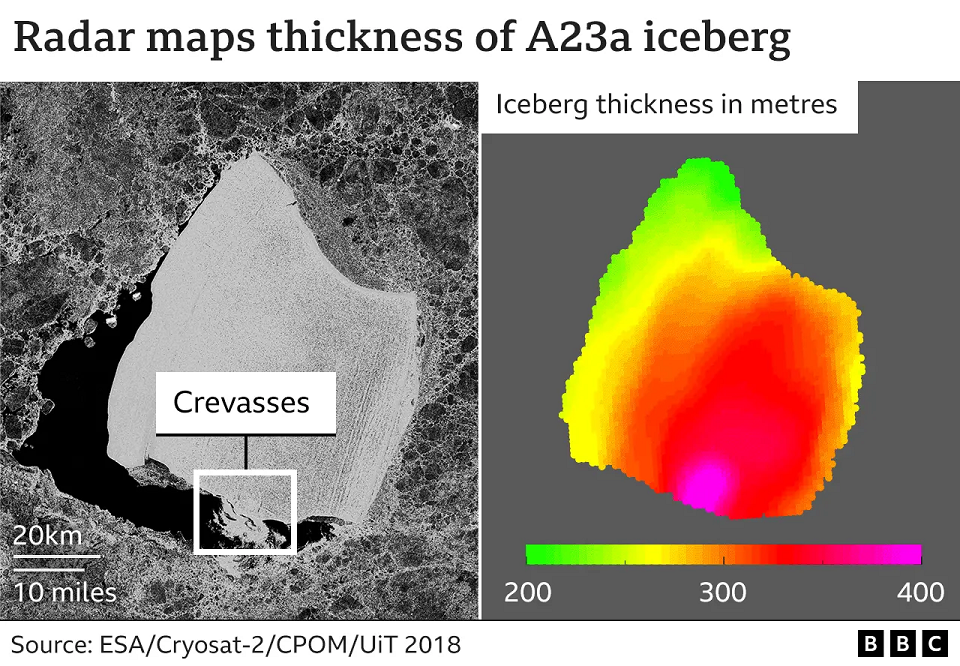
Satellite measurements show the frozen block has a total average thickness of just over 280m (920ft).
Combined with its known area of 3,900 sq km (1,500 sq miles), this gives a volume of roughly 1,100 cubic km and a mass just below a trillion tonnes.
The iceberg, which calved from the Antarctic coast in 1986, is about to drift beyond the White Continent. It has reached a critical point in its journey, researchers say, with the next few weeks likely to decide its future trajectory through the Southern Ocean.

To put the new thickness data in some context, London skyscraper 22 Bishopsgate is 278m tall – bettered, in the UK, by only the 310m Shard tower.
But A23a is also more than twice the area of Greater London, giving it an overall profile much like that of a credit card.

The measurements of A23a come from the European Space Agency’s CryoSat-2 mission. This veteran spacecraft carries a radar altimeter able to sense how much of a berg’s bulk is above the waterline.
Using information about the density of ice, it is then possible to determine how much must be submerged.
“Altimetry satellites like CryoSat-2, which measure the distance to the iceberg surface and to the sea surface, allow us to monitor iceberg thickness from space,” Dr Anne Braakmann-Folgmann, from the University of Tromsø – The Arctic University of Norway, told BBC News.
“They also enable us to watch the iceberg thinning as it gets exposed to warmer ocean waters. “And together with knowledge of the sea-floor topography, we know where an iceberg will ground or when it has thinned enough to be released again.”

When the berg started moving, after 2020, it became increasingly difficult to obtain broad thickness measurements. But assuming an area of 3,900 sq km and an average total thickness of 285m, then A23a has a volume of 1,113 cubic km and a mass of 950 billion tonnes.

Born in a mass breakout of bergs from the Filchner Ice Shelf, in the southern Weddell Sea, A23a was almost immediately stuck in shallow bottom muds to become an “ice island” for more than three decades. And the CryoSat data can now explain why.
The berg is not a uniform block – some parts are thicker than others.
CryoSat indicates one section in particular has a very deep keel, which in 2018, had a draft – the submerged portion of an iceberg – of almost 350m and it is this section that anchored A23a for so long.
Satellite images show crevasses directly above the keel.
“This is likely the surface expression of the damage that was caused when A23a hit the seabed,” Prof Andrew Shepherd, from Northumbria University and the Natural Environment Research Council Centre for Polar Observation and Modelling (CPOM), said.

And in the years that followed, A23a gradually lost mass to eventually free itself and start moving.
“Over the last decade, we have seen a steady 2.5m per year decrease in thickness, which is what you would expect given the water temperatures in the Weddell Sea,” Dr Andy Ridout, a CPOM senior research fellow from University College London, explained.
A23a has now reached the tip of the Antarctic Peninsula, where there is a convergence of various streams of fast-moving water that turn clockwise around the continent.
How it interacts with these and the westerly winds that dominate in that part of the world will control where the behemoth goes next.
But it is expected take a track called “iceberg alley” that points in the direction of the British overseas territory of South Georgia.

Scientists will follow its progress with interest.
Bergs this big have a profound influence on their environment. “They’re responsible for very deep mixing of seawater,” Prof Mike Meredith, from the British Antarctic Survey, told BBC News. “They churn ocean waters, bringing nutrients up to the surface, and, of course, they also drop a lot of dust.
“All this will fertilise the ocean – you’ll often see phytoplankton blooms in their wake.”
(BBC)

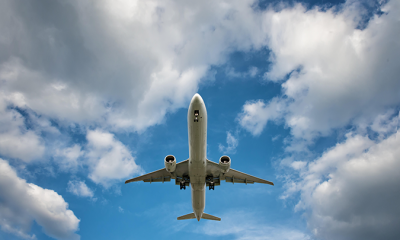


A court in Malta has acquitted businessman Yorgen Fenech of masterminding the murder of prominent anti-corruption journalist Daphne Caruana Galizia.
Fenech, 44, was acquitted on Wednesday at the end of a jury trial. He had been tried on charges of complicity to murder and for the lesser charge of criminal association to commit murder.
If found guilty, Fenech could have faced life in prison.
Caruana Galizia’s family were seen weeping in the packed courtroom in Valletta after the businessman was cleared of both counts by an 8-1 margin following eight hours of deliberation by the jury.
“Nine years after Daphne’s brutal assassination, the institutional failures that enabled her murder remain unaddressed and unreformed,” the slain reporter’s family said in a statement.
“Lasting justice means no person should ever face the same risks again. Our country failed to protect Daphne’s life. It owes it to her to prevent other lives being lost.”
Fenech’s family members were seen celebrating the jury’s decision.
The killing of Caruana Galizia in October 2017 shocked Europe’s journalist community and set off a political firestorm in Malta, focusing international attention on its police and judiciary.
Dubbed a “one-woman WikiLeaks”, Caruana Galizia had exposed corruption at the highest level in the Mediterranean island country, shining a spotlight on links between Malta’s business and political elites. She was 53 when she was killed.
Prosecutors argued that Fenech had wanted Caruana Galizia killed because she was about to reveal information about him.
Fenech has denied the accusations. His defence instead pointed fingers at his one-time friend Keith Schembri, the former chief of staff of then-Prime Minister Joseph Muscat and a target of Caruana Galizia’s blogs.
Muscat, who was never linked to the murder, stepped down in January 2020 due to the political fallout from the assassination.
Police told the court that Schembri had never been a suspect. He has denied any role in the murder.
An independent inquiry in 2021 found that officials in Malta had failed to protect Caruana Galizia from threats to her life before her death.
[Aljazeera]
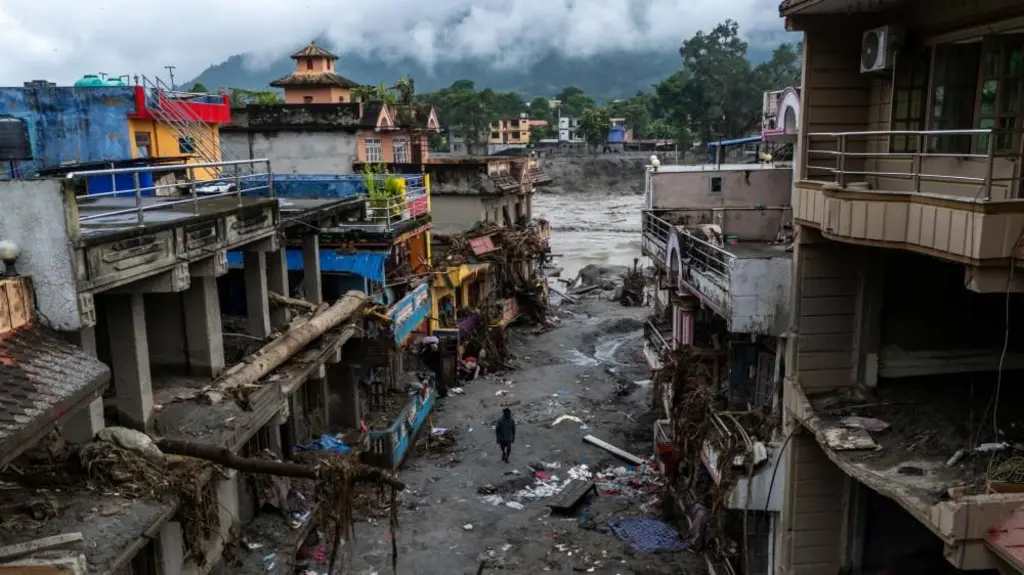
A head teacher’s quick decision to evacuate his school saved 900 pupils from deadly flash floods along the Nepal-Tibet border
Rajendra Dawadi tells the BBC he was tipped off about incoming flood waters and moved students to higher ground with just minutes to spare. One pupil says she and her friends survived by just 10 seconds and watched as a nearby bazaar was swept away
Wednesday’s disaster has killed at least 794 people and more than 2,500 people are missing in Nepal, local officials say
In Tibet, the official death toll is 16, with 546 reported to be missing, according to Chinese state media –
[BBC]

A ferry carrying around 260 people has capsized off the coast of northern Cyprus with a search underway for survivors, according to local media.
The catamaran-style boat was travelling from the port of Kyrenia, also known as Girne, and started sinking a few kilometres off the coast of the island state on Sunday.
There were no immediate reports of casualties.
[Aljazeera]

22A: SC urged to suspend hearing, appoint full bench

Govt. seeks NATO assistance

Recent ‘Ice’ detection at the Colombo Port made on US intelligence – Embassy

Sri Lanka launches National Food Safety Policy with support from FAO and EU

Mendis, Nissanka return for England white ball series

Janashakthi Life delivers 36% revenue growth, ‘outperforming the industry’

‘Dates have the highest sugar content to fight Coronavirus’

Sunday Island 27 December – Headlines

#SundayIsland 17th December – Headlines

Sunday Island – 28th March

Sunday Island Headlines – 21 March

Sunday Island – 21st February – Headlines
-

 News6 days ago
Eight politicians in drug kingpin probe
-

 Features4 days ago
“Wrap Me Up in My Blazer”— A Gentlemanly Bradby Reminiscence
-

 Business6 days ago
Sri Lanka opens up: A new season of direct connectivity
-

 Features3 days ago
When Sri Lankan stories find their own voice
-
 Latest News7 days ago
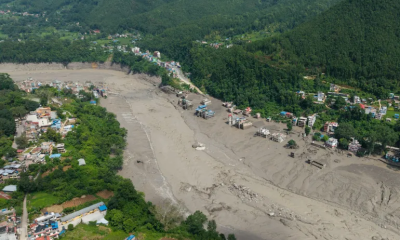
Nepal-Tibet floods: What happened, what caused them and who is missing?
-

 Features6 days ago
Redefining ageing in Sri Lanka
-

 Editorial6 days ago
The toxic legacy of two lakes
-
 Business6 days ago
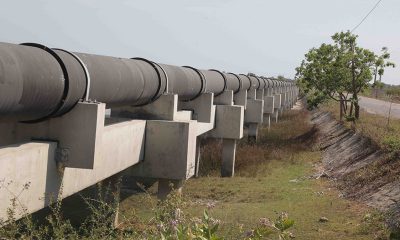
Jaffna Teaching Hospital secures lifeline water supply via ADB-funded Thalaiyadi sea water desalination plant