
Life style
Moments which Take your Breath Away


The Phi Phi Islands
by SinhaRaja Thammitta Delgoda
Limestone mountains climb out of the sea. Rearing up suddenly before us, great ridges slope down into the water. Their sides are crusted with clinging trees and bushes, their cliffs riddled with caves and gushing streams. Lying between the island of Phuket and the western coast of Thailand, these are the Phi Phi Islands.
Easing down, the speedboat glides round the rocky peaks. Skimming through openings we had not seen, it emerges into the sheltered bays and hidden coves of Koh Phi Phi Ley. There are many boats and many people, yet the sound of birds is in our ears. There is also another sound, the noise of rushing water. Pouring down the mountainside in streams of sparkling silver, it falls into the sea. In the distance we could see caverns opening, tunnels running into the mountainside. In one corner, a sliver of sand curves round the corner of the bay.
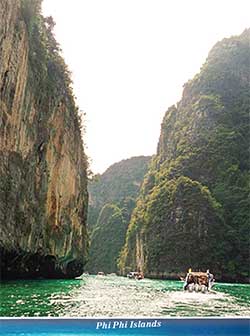 On the way out I had found myself near the prow. Finding an empty space I sat and mused, trying not to dream. Another passenger beamed at me. I felt self-conscious.
“Do you mind if I sit here and talk to myself,” I asked.”Not at all,” she said, “I hope you get good answers.”
Her name was Brenda Waterbury, a teacher from Canada. She and her friends would meet every evening, to watch sunset on the top most deck. Her friend Wendy was lugging a large mysterious bag, which she had brought on board. “What on earth is she carrying,” I wondered politely to myself, ” and why on earth is she carrying it here.” It turned out that she had the only flippers in the group. I watched in envy as she swam effortlessly across the bay, beneath the shadow of the looming rock.
In places the water is dark and blue, shaded by the towering cliffs. Elsewhere it is green with the shadow of the trees; clear and light in places where the sun shines through. There are no waves here, just a deep and languid swell. Beneath our feet were massive domes and moulds like brains, huge blooming flowers and sprouting cabbage leaves. Darting between them were moving forms, bursts of colour, stripes and spots, Parrotfish, Angel Fish and Butterfly Fish, Wrasses and Groupers.
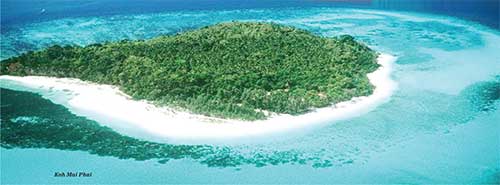
North of Phi Phi, is Koh Mai Phai. In Thai, it is Bamboo Island. Here there are no looming limestone crags, just white sand and a lapping turquoise calm. Nature here is less dramatic; softer and more gentle. The water here is not so clear, shallow and full of sand. It is also full of boats and people.
Swimming out, the spell began to fade. All I could see was a murky haze. The floor was littered with coral pieces, some were broken, others were bleached and lifeless. Swimming out further I passed the throng. The water here was deeper. All of a sudden, there was a flurry of activity. Two large fish loomed out of the sandy blur, they were feeding or trying to feed. Snapping in gulping movements, they were pecking at another fish. Surrounding them were swarms of smaller fish. Nipping and tearing in furious rushes, they fought back in numbers, holding the larger fish at bay. It was the first fight I had ever seen underwater. A glimpse of magic, a world of make believe. It seems only to exist in films and documentaries but there it was in front of us: a moment which we could reach out and touch. All of a sudden we were there, we were a part of it and it was part of us.
 Crowding back into the boat, we clustered near the bows. As the bow lifted out of the water, we thrilled to the glow of speed, the sheer romance of rushing towards the sunset. The speedboat was a torpedo, cutting through the water like a streak of light. When we looked to see, we saw that we were travelling along a carefully defined path, along a channel marked in the sea.
They were other boats too, all travelling home along different paths. Trundling fishing boats, wide, wallowing catamarans and long tailed boats with curving fan shape prows, which swayed from side to side. In the distance the islands glowed and smouldered, aflame with falling light.
Flying back through the setting sun, Brenda recalled these words.
“Life is not measured by the number of breaths we take, but by the moments which take your breath away.”


By Ifham Nizam
The sixth edition of the “Beauty of Sri Lanka” Photography Exhibition is set to unfold across North America this April, transforming the power of visual storytelling into a compelling platform for cultural diplomacy, environmental advocacy and nation branding.
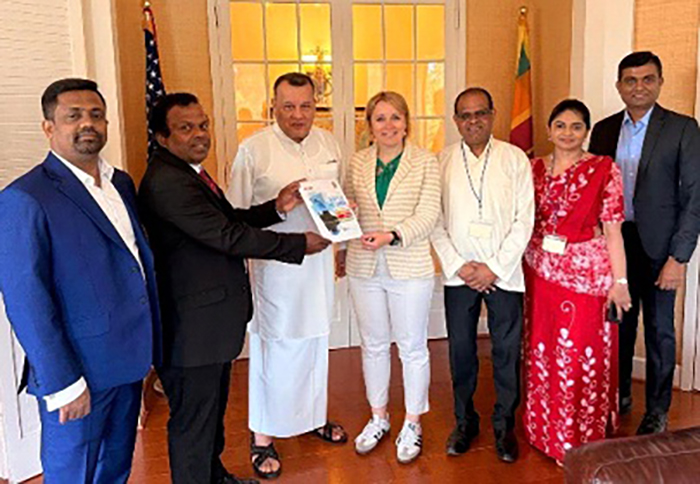
Organised by the America Sri Lanka Photographic Art Society in collaboration with key diplomatic and institutional partners, including the Embassy of Sri Lanka in Washington, D.C., the Permanent Mission of Sri Lanka to the United Nations, the Consulate General of Sri Lanka in Los Angeles and Toronto, and the Sri Lanka Tourism Promotion Bureau, the exhibition will run from April 22 to May 4 across Los Angeles, Toronto, New York and Washington, D.C.
Held in conjunction with Earth Day, the exhibition continues to evolve as a globally recognised initiative that brings together art, conservation and international engagement. What began as a photography showcase has now matured into a dynamic soft-power platform that tells Sri Lanka’s story to the world—through its landscapes, biodiversity, and deeply rooted cultural heritage.

Photographers from Sri Lanka at Nigara State Park
The 2026 tour will feature prestigious venues that reflect its growing international stature. These include the iconic Church of Scientology Celebrity Centre International, Metro Hall in Toronto—marking the exhibition’s debut in Canada—the Permanent Mission in New York, and the Sri Lankan Embassy in Washington, D.C., as part of the widely celebrated Passport D.C. event. Each venue represents not only a geographic expansion but also a widening of the exhibition’s global audience and influence.
Exhibition
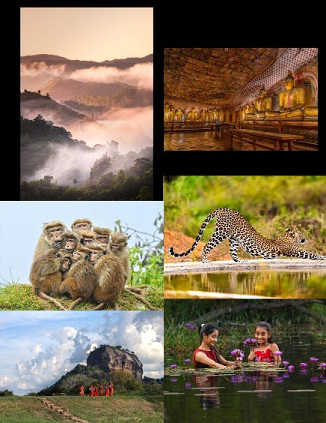
At its heart, “Beauty of Sri Lanka” is a vivid narrative of a nation’s natural and cultural wealth. From the mist-covered central highlands and pristine coastal belts to dense rainforests teeming with endemic wildlife, the exhibition captures Sri Lanka’s ecological richness through the lenses of talented photographers. These images serve as both an invitation to explore and a reminder of the urgent need to protect fragile ecosystems.
This year’s programme takes a significant step further by integrating real-world environmental action. The “ReTree Los Angeles” initiative, launched in line with Earth Day, focuses on tree planting, urban restoration and community engagement. It also includes a children’s painting competition aimed at fostering environmental awareness among the younger generation. Organisers believe that nurturing creativity at an early age can instil a lifelong commitment to conservation.
Adding a scientific dimension to the event, Dr. Sarath Gunapala will deliver the keynote address on “The Journey of Infrared Photography,” exploring how advanced imaging techniques can reveal unseen dimensions of the natural world. His participation highlights the exhibition’s interdisciplinary approach, where art meets science to deepen understanding and appreciation.
The exhibition will also feature a vibrant cultural segment designed to immerse international audiences in Sri Lanka’s living traditions. A carefully curated lineup of performances—including the sacred Wes Pooja, the dramatic Naga Raksha mask dance, the rhythmic Thelme ritual dance and the light-hearted Salu Paliya—will bring to life the island’s folklore, rituals and performing arts heritage. These performances are expected to add colour, rhythm and emotional depth to the visual experience offered by the photographic displays.
ASPAS President Suria Perera emphasised that the exhibition is more than a display of images. “It is a celebration of Sri Lanka’s identity—its natural beauty, its cultural vibrancy, and its responsibility to future generations,” she said. “Through photography and community engagement, we aim to inspire a deeper connection between people and the environment.”
Over the years, the exhibition has drawn a diverse audience, including diplomats, policymakers, conservationists, art collectors and members of the Sri Lankan diaspora. Its ability to connect these varied groups underscores its role as a bridge between cultures, fostering dialogue and mutual understanding while strengthening Sri Lanka’s global presence.
The continued support of diplomatic missions, cultural institutions and tourism authorities has been instrumental in elevating the exhibition’s profile. Their collaboration reinforces the role of art as a powerful tool in shaping perceptions, building partnerships and promoting sustainable tourism.
As the 2026 edition prepares to open its doors, “Beauty of Sri Lanka” stands as a testament to the island nation’s enduring appeal and its commitment to conservation. It is not merely an exhibition, but a movement—one that celebrates beauty, inspires responsibility and connects Sri Lanka to the world through the universal language of art.
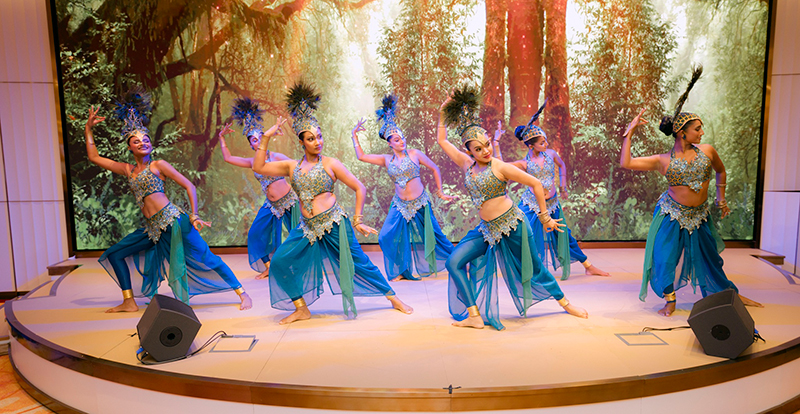
This holiday season, City of Dreams Sri Lanka invites guests to step into the heart of a truly Sri Lankan celebration with Signature Avurudu—a four-day cultural experience taking place.
Blending time-honoured traditions with contemporary flair, the festivities promise to capture the spirit of the Aluth Avurudda (Sinhala and Tamil New Year) in all its colour, rhythm, and warmth. From the moment guests arrive, they will be welcomed into a space transformed with festive décor, echoing the charm of a village celebrations brought to life in the city.
At the centre of the celebration is the Pahan Pujava, a symbolic lamp lighting ceremony led by the management, setting a tone of unity, prosperity, and new beginnings. This meaningful ritual reflects the essence of the New Year—a time to pause, reflect, and step into the new year with hope and positivity.
Throughout the four days, guests can experience the rich cultural heritage of Sri Lanka through a series of traditional performances. The rhythmic beats of raban and drums, alongside vibrant dance acts, will fill the air, creating an atmosphere that is both nostalgic and celebratory. Adding to the experience are elegantly dressed Sri Lankan hostesses, offering a warm, authentic welcome that embodies the island’s renowned hospitality.
No Avurudu celebration is complete without its flavours, and City of Dreams Sri Lanka delivers a feast to remember. Guests can indulge in an array of traditional sweets and savouries, alongside curated Avurudu-themed buffets and creative beverages inspired by local ingredients. Passing canapés and festive treats ensure there is something to enjoy at every turn—whether you’re reminiscing over childhood favourites or discovering new twists on beloved classics.
Designed as a celebration for all, Signature Avurudu brings together families, friends, and visitors from around the world to share in the joy of the season. It is a reminder that Avurudu is more than a festival—it is a feeling of togetherness, renewal, and shared happiness.
This April, celebrate the sights, sounds, and tastes of Avurudu at City of Dreams Sri Lanka—where tradition meets modern celebration, and every moment feels like home.

Students of S. Thomas’ College recently demonstrated commendable performance at two international sailing events held in India: the inaugural Indian Sailing Regatta and the 4th North-East Regatta. Both events featured participation from foreign teams, including Sri Lanka, Taiwan, Malaysia, Russia, Great Britain, South Korea, Singapore, and India.
The inaugural Indian Sailing League (ISL), held at Umiam Lake, Shillong, India, marked a significant milestone in the sport and was prominently featured in The Times of India. The ISL is a first-of-its-kind franchise-based sailing league, bringing together 14 teams, 182 sailors, and 58 international participants from eight countries.
The ISL follows a concept similar to the Cricket Indian Premier League, where top sailors are “bid” and selected into franchise teams representing different regions. The competition introduced an innovative team-based format in which the best sailor from each team in each category competed, combining multiple race formats such as fleet racing, team racing, marathon races, and rig-and-race challenges. This pioneering structure, widely regarded as a first in global sailing history, has significantly enhanced the spectator appeal and competitive depth of the sport, while promoting youth, women, and high-performance sailing on a single platform.
At the first Indian Sailing Regatta, in the Boys’ Optimist category, Haren Wickramatillake secured 3rd place and was also awarded a special medal for his courage during the rig and race event. Dhiren Perera achieved 3rd place in the rig and race event alongside his team member.
At the 4th North-East Regatta, performances continued to be noteworthy. In the Main Optimist Boys category, Haren Wickramatillake was placed 6th, while Shem Fernando secured 19th place out of 32 participants. In the Junior Green Fleet Optimist Boys category, Anuruth Tennakoon achieved 2nd place and Dhiren Perera was placed 4th out of 10 participants. In the ILCA 4 Boys category, Akaine Ubayasiri was placed 11th out of 22 participants.
These achievements highlight the high level of skill, determination, and sportsmanship demonstrated by the young sailors, while also reflecting Sri Lanka’s strong presence in an emerging and globally significant sailing platform.
Upcoming international sailing events, featuring students of S. Thomas’ College, include the Asian Beach Games 2026, to be held in China ,in April 2026, and the International Optimist Dinghy Association (IODA) competition, scheduled to take place at Port City, in Sri Lanka, in December 2026. These events will provide valuable international exposure and further opportunities for the young college sailors to compete at a high level.

Sanju Samson and Jamie Overton deliver first points for Chennai Super Kings

Arya, Prabhsimran and Shreyas help Punjab Kings ace another 200-plus chase

Beauty of Sri Lanka in focus: Global showcase blends art, diplomacy and conservation

Showers expected in the Western, Sabaragamuwa, Central, Southern, North-western and Uva provinces and in Ampara, Batticaloa and Polonnaruwa districts after 1.00 p.m.

Heat index likely to increase up to ‘Caution level’ at some places in the Northern, North-central, North-western, Western, Sabaragamuwa, Southern and Eastern provinces and Monaragala district

Sun directly overhead Cheddikulam, Kebithigollewa, Gomarankadawala and Nilaveli about 12:11 noon. today [12]

‘Dates have the highest sugar content to fight Coronavirus’

Sunday Island 27 December – Headlines

#SundayIsland 17th December – Headlines

Sunday Island – 28th March

Sunday Island Headlines – 21 March

Sunday Island – 21st February – Headlines
-

 News5 days ago
Lankan-origin actress Subashini found dead in India
-

 News3 days ago
AG: Coal procurement full of irregularities
-

 Business2 days ago
Israeli attack on Lebanon triggers local stock market volatility
-

 Business3 days ago
Hayleys Mobility introduces Premium OMODA C9 PHEV
-

 Business2 days ago
HNB Assurance marks 25 years with strategic transformation to ‘HNB Life’
-

 Sports3 days ago
DS to face St. Anthony’s in ‘Bridges of Brotherhood’ cricket encounter
-

 News5 days ago
UN Regional Director launches SL’s first Country Gender Equality Profile during official visit
-

 News4 days ago
AKD admits import of substandard coal, blames technicalities and supplier