
News
Ministry of Education has introduced a five-pillar plan for the proposed education reforms – Prime Minister

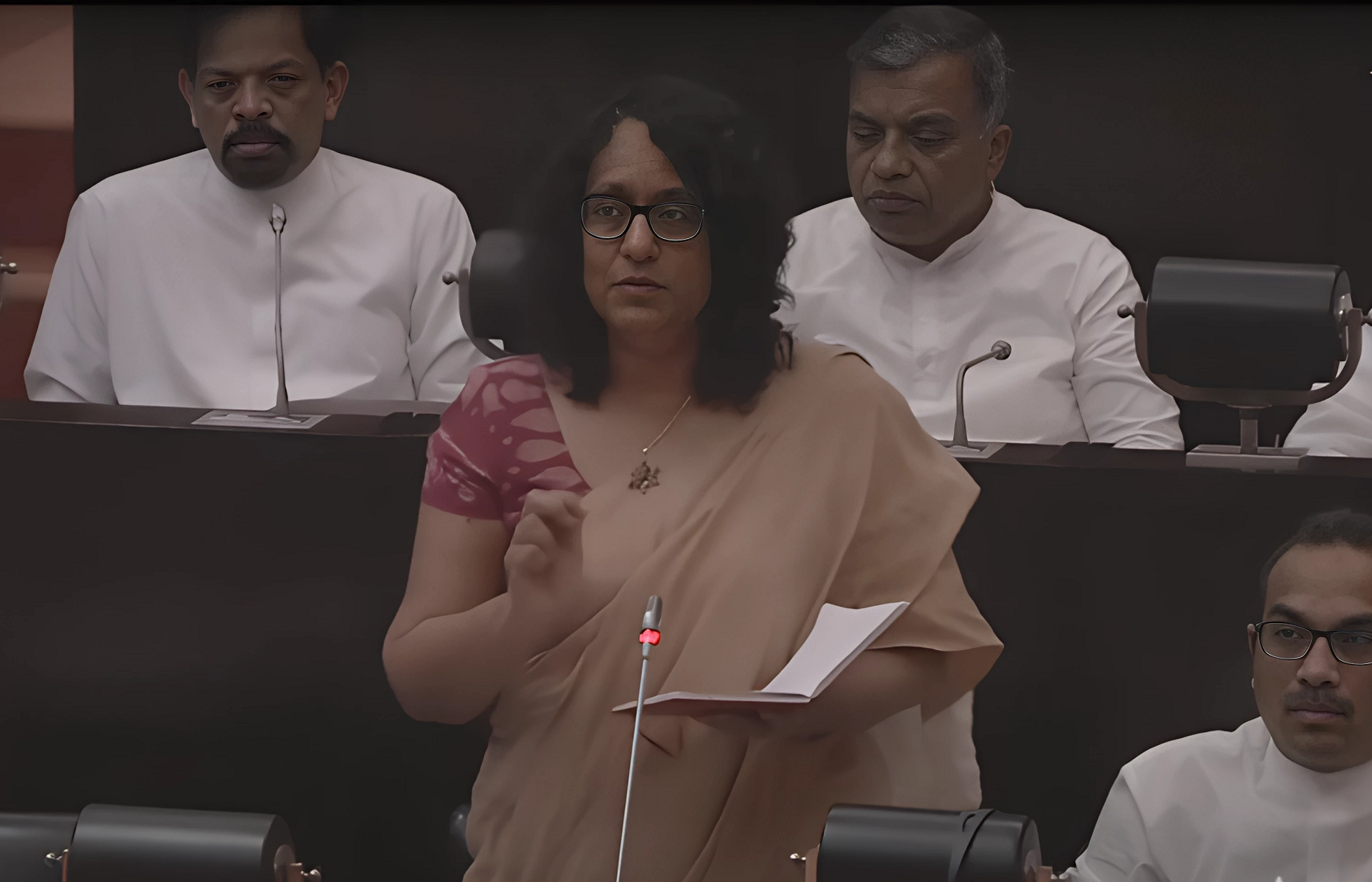
Prime Minister Dr. Harini Amarasuriya stated that the 2025 budget of the present government has allocated the highest amount ever in the history for education and the Ministry of Education has introduced a five-pillar plan for the proposed education reforms.
The Prime Minister Dr. Harini Amarasuriya made these remarks in Parliament on March 10 during the budget debate on expenditure allocation for the Ministry of Education.
“Today, we are represented by fourteen members who entered Parliament through the university system. However, I would like to take a moment in remembering a close colleague of ours, Dr. Janaki Jayawardena, who tragically passed away in a road accident just a few days ago. While my primary reason for mentioning Dr. Jayawardena at the beginning of this speech is to express my deepest condolences, I would take this moment to appreciate her exemplary figure as a model of dedication, integrity, and service that we can all look up to as Janaki embodied that ideal. Her students had immense love and respect for her. Beyond that, she was an exceptional colleague who worked dearly and inspired us greatly. Losing such university academics is a significant loss to the nation. That is why the speech is started in the memory of her.
The protest led by the Federation of University Teachers’ Associations during 2011-2012 marked a significance turning point. It was able to build the confident that the leadership can be initiated in societal movement beyond addressing the professional demands.
The protest which was held during 2011-2012 was not solely a protest held by the trade unions but it also concerned on addressing education. This protest was collectively supported by both the trade unions and the community who felt deep empathy towards the cause of education and it brought together other trade unions, teachers’ unions, civil society, and the concerned citizens and who resonated out a valuable message that together we can advocate and protest for achieving a common cause. Dr. Janaki Jayawardena was one of the key figures who led this movement. She led this movement silently, without seeking the spotlight. However, the struggle would not have been successful without her. You may recall that the five-day march from Galle to Colombo was launched during this movement. University academics participated in wearing black and orange T-shirts marked with ’6%’. We did not even have enough funds to print these T-shirts. Dr. Janaki Jayawardena sold a piece of her land to find funds for that purpose. That was the kind of person she was, someone who is willing to sacrifice anything for what she believed in, someone who was unafraid to lead. Her absence is deeply felt at a time like this. We need such leads.
What the universities and the society is needed at time like this is an exceptional role who see beyond their professional identities, who take responsibility for their students, their field, and their community, and who provide leadership and commitment. Her absence greatly grieved us and I extend my deepest condolence to her family, students, colleagues, and the many friends who stood by her. The primary reason for mentioning Dr. Jayawardena at the beginning of this speech was not to grieve by her absence but to commemorate her exemplary figure as a model of dedication.
The highest amount ever allocated for education in the history has been set out in this year’s budget by the present government. A total of LKR 619 billion has been allocated for the next eight months of period with the allocation of LKR 21 billion specifically designated for capital expenditure and it marks the highest amount allocated for educational infrastructure in recent history.
A clear system for utilizing these funds is also presented. Without properly reforms for education, the societal transformation we envision cannot be achieved. Only through education reform we can bring about the social, political, and economic transformations. Therefore, the 2025 budget has been presented with careful consideration along with a strategic planning for education reforms.
The education reforms are expected to be achieved through five key pillars by the Ministry of Education. The first pillar is centered on the modernization of curriculum. It is expected to intrude a new curriculum that involves updating the existing curricula and designing an education system that nurtures the human resources that are needed for social transformation, and LKR 250 million has been allocated for this purpose. Further, an additional LKR 160 million has been allocated for related projects.
Educational reforms have been discussed in the past, but despite various efforts, they have not been effectively implemented for years. The primary reason addresses that the changes to curriculum alone is not enough. That is why we have identified five key pillars in our education reforms. The curriculum is just one of them, and apart from that the implementation of necessary human resources for the educational reforms has been also focused on the 2025 budget. It is focused on improving the capacity of teachers, principals, educationists, and education administrators and it is addressed by the second pillar. The budget has allocated an amount of LKR 1.64 billion which is the highest amount ever allocated in the history to develop the capacity and I am pleased that we have been able to do so.
The teachers are usually appointed to surpass the cadre of the teachers who are currently occupied in the teaching service or related fields, along with a special focus was drawn to the training teachers in training colleges and universities.
In reality, the current state of our national colleges of education is extremely concerning. I recently visited the colleges of education in Polonnaruwa and Jaffna. The students, who are expected to become teachers in the future, have no proper facilities. They lack proper accommodation, water, and even basic necessities. While we discuss smart classrooms in schools, the teachers who are supposed to conduct those lessons are learning on blackboards in underprivileged conditions. They lack electricity and essential infrastructure. That is why special attention was drawn on this matter. For years, infrastructure projects have been implemented in schools. Since 2016, under the “Nearest School is the Best School” program initiated by the previous government, many initiatives have been undertaken. However, even today, some of the unfinished and unsafe buildings are located in schools. Many schools have impressive gates, fences, and signboards, but once you went inside, the students do not have proper facilities. Some of the schools are not processed by clean drinking water including basic sanitation facilities. Therefore, an amount of LKR 11,000 billion has been allocated to complete these unfinished school projects, with a special focus on sanitation facilities.
Starting this year, we are committed to ensuring that no Sri Lankan child has to attend a school without proper sanitation facilities. We have also allocated LKR 11.126 billion through the line ministry and LKR 14.896 billion through provincial councils to address these issues in estate schools. It is addressed by the third pillar.
The fourth pillar is ensuring that students are receiving education as well as undergoing proper assessment. The responsibility for assessment lies with the Department of Examinations, which has faced significant challenges over the years. When I first entered Parliament, I inquired about the capital expenditure allocated to the Department of Examinations. It was significantly low. This year, we have allocated LKR 12.36 billion to strengthen the evaluation process and enhance capacity within the Department of Examinations.
The greatest challenge faced by the education system is the mental pressure that put on children due to the exam-centered approach. In order to overcome this, we must strengthen the institutions that are primarily responsible for evaluation.
According to the fifth pillar, education cannot be solely restricted to the responsibility of the Ministry, the children, the teachers, or the schools alone. It should be a transformation within society as a whole. A social discussion is essential in order to make this a reality. It is during times like this that I remember Dr. Janaki Jayawardena. Social activists are needed in establishing this discussion and the discussion has been already included in the roadmap of the government. Further, funds have been allocated specifically for the well-being of children.
Specifically I would like to remark on the higher education. We have established a top priority on the quality of higher education. Simply establishing universities is not enough; creating a university is not just about establishing a board. We have numerous examples of universities, faculties, and programs that were initiated primarily due to political reasons, with little regard on the quality of education. Moreover, the benefits for students or the impact on their education was never addressed. That is why we are giving special attention to improving the quality of higher education.
Similarly, the well-being of students is also a priority. Many young people have lost confidence in their education and future. This student community deserves to be treated with respect. While the student population has grown, yet the facilities they deserved have never been addressed. I was in Ampara yesterday and visited a local institution. I was truly shocked. This institution, which has made a significant contribution to the field of higher education since 1955, had students living under deplorable conditions. There are wires used as fences, no proper roofs, no lights, and rats everywhere. I was astonished when I saw the conditions under which these children are expected to cook and eat. They only have one meal a day, and it’s only in the evening that they get to eat. There is a farming facility, but I only saw two workers there. This is the institution that was established to develop human resources for the agricultural sector in South Asia in 1955. Yet, none of this has been addressed. Similarly, I visited the German Tech institution in Kilinochchi, where there are no hostels for the students. They use makeshift offices with toilets as classrooms. Without these basic facilities, how can students feel any sense of education, dignity, or pride? We have allocated LKR 36.841 million for higher education infrastructure. We are requesting all higher education institutions to prioritize providing the necessary facilities for students. We need to ensure that we understand how they are living, how they are eating, and how they are learning.
Allocations have been made for vocational education. We aim to transform vocational education into a modern, relevant field that aligns with the needs of today’s world. This will help us create a skilled workforce that meets the demands of the future labor market. By doing so, we will develop and create educational fields that provide value and skills for young people, offering them real career paths.
We urge everyone to look into this issue without any party or division. This is a crucial sector that needs to be addressed for the future of our country. Through this, we can shape our nation and our children to be fit for the world. It is not just about shaping minds, but about creating individuals with humanity, a refined and complete society. To achieve this, we must transform our education system. It must be achieved through the participation of humans. This transformation is something we are committed to bringing forward.
[Prime Minister’s Media Division]


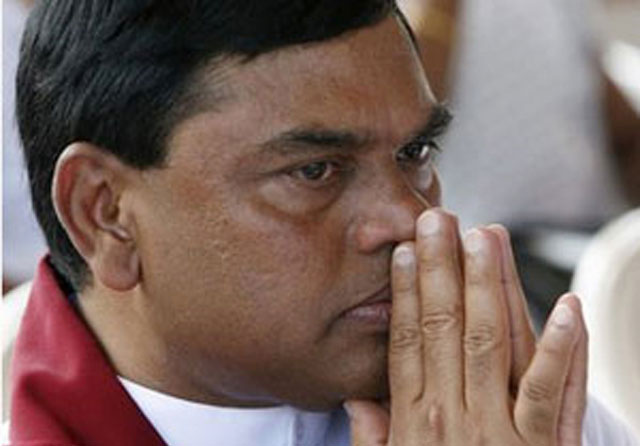
Govt. is finalising extradition proceedings against Basil to have him stand trial here in respect of several cases
By Norman Palihawadane
The process of having former Minister Basil Rajapaksa extradited from the US to Sri Lanka was being finalised, Police Headquarters sources disclosed yesterday.
The government has formally sought assistance from the United States government to extradite former Minister Basil Rajapaksa, as multiple courts have reissued arrest warrants over his failure to appear before them in connection with two separate criminal cases, a senior police officer told The Island.
The officer, speaking on condition of anonymity, said matters pertaining to obtaining US government authorities’ assistance to extradite Rajapaksa were now being finalised.
Police headquarters sources said law enforcement agencies were currently evaluating red notices, which request the location and provisional arrest of a person pending formal extradition.
The CID and Police Headquarters earlier initiated steps to seek INTERPOL assistance to secure Rajapaksa’s return to Sri Lanka to face court proceedings relating to the two cases in which arrest warrants have been issued against him.
Rajapaksa is believed to be residing in Los Angeles, United States.
The Matara Chief Magistrate’s Court on July 21, 2026, reissued an arrest warrant for Rajapaksa after he failed to appear before court for the second time in connection with a case involving the alleged purchase of a 1.5-acre coconut estate on Eliyakanda Road in the Brown’s Hill area of Matara.
The case relates to the purchase of the property for Rs. 60 million.
The case was filed by the Police Financial Crimes Investigation Division and names Basil Rajapaksa and several other accused, including Ayoma Galappaththi, identified in court reports as the sister of Rajapaksa’s wife, Tissa Galappaththi, and Muditha Jayakody.
However, officials acknowledged that seeking US assistance would only begin a formal international process and would not automatically result in Rajapaksa’s arrest or return to Sri Lanka. Sri Lankan authorities would need to submit court orders, details of the alleged offences, and other supporting documents through the appropriate diplomatic and judicial channels. Any request would then be considered by the relevant US authorities under American law and applicable legal arrangements.
Sources at the Foreign Ministry said sealed correspondence had been exchanged between Sri Lanka’s Ministry of Foreign Affairs and the Legal Department of the US State Department relating to corruption allegations against members of the Rajapaksa family residing in the United States.
The legal foundation for any extradition is the bilateral treaty between Sri Lanka and the United States signed in Washington on September 30, 1999. The treaty applies the principle of dual criminality, meaning authorities must show that the underlying conduct amounts to a crime in both countries. Rajapaksa’s status as a United States citizen would not, on its own, make him immune from a valid request under the treaty’s provisions.

Non-communicable diseases (NCDs) account for 80% of all deaths in Sri Lanka, with high blood pressure and diabetes among the leading causes, Secretary to the Ministry of Health and Mass Media, Dr. Anil Jasinghe, said early this week.
Dr. Jasinghe pointed out that the two conditions were interrelated and could lead to a range of serious health complications, with heart attacks being among the most severe consequences.
Dr. Jasinghe made these remarks while attending the commencement of construction of a modern Cardiac Care Complex at the Anuradhapura Teaching Hospital on Wednesday (16).
The Health and Mass Media Ministry Secretary said:
“The main issue is that these two diseases are interconnected and cause a range of complications in a person’s health. Looking at the current situation in Sri Lanka, only around 50% of those suffering from high blood pressure are under effective control. Similarly, only around 25% of diabetic patients are under proper control. As a result, this has now become a major problem in society.
“The most serious complication associated with both these diseases is Myocardial Infarction (MI), or a heart attack. This has also become the
leading complication. So, how do we control this modern epidemic? This is the biggest challenge before us.
“While establishing modern facilities across the country, our health system must also recognize the changes that have taken place in the demographic structure of our population and disease patterns. Accordingly, our health system must be adapted to suit these changing circumstances.
“Under the policies of the government led by the President and the guidance of the Minister of Health, the Ministry of Health and Mass Media is currently implementing a major programme in this regard. Its three main components are Arogya, Cluster Systems and High-End Care Institutions, which need to be developed to suit the requirements of our health system.”
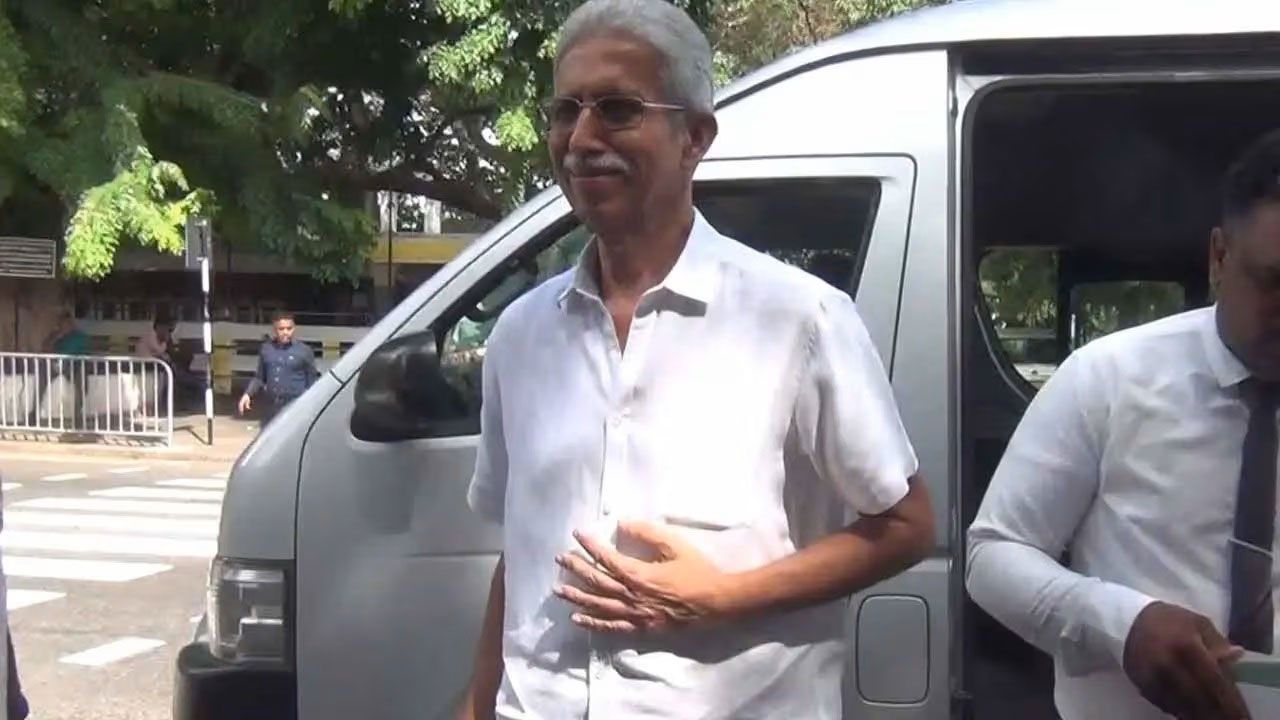
Former National Transport Commission (NTC) Chairman Renuka Perera was remanded until September 29 by the Colombo Magistrate’s Court after being arrested by the Commission to Investigate Allegations of Bribery or Corruption (CIABOC) over alleged corruption in the issuance of bus route permits.
Colombo Chief Magistrate Asanga S. Bodaragama issued the remand order after considering submissions by CIABOC officials and defence counsel.
According to CIABOC, Perera was arrested over allegations that he unlawfully issued route permits during his tenure as NTC Chairman, causing a financial loss to the government while conferring an unlawful benefit on an outside party.
Perera was arrested around 9.55 am yesterday (17) over allegations that he issued 56 passenger transport service permits for buses to operate on the Southern Expressway in violation of prescribed procedures and without collecting the applicable annual fees as a single payment.
CIABOC said the alleged offences were committed in contravention of the National Transport Commission Act No. 37 of 1991 and recommendations contained in a Cabinet decision dated September 19, 2014.
Perera, a senior member of the SLPP, currently serves as the party’s Administrative Secretary. He previously served as Chairman of state-owned dairy producer and marketer MILCO.

Abhishek Sharma hits record T20 ton as India beat Afghanistan by 127 runs

Trump administration approves sale of F-35 jets to Saudi Arabia

Banton steers England into unassailable 2-0 series lead

Showers expected in the Western, Norrh-western and Sabaragamuwa provinces and in Galle, Matara, Kandy and Nuwara-Eliya Districts.

Bid for Basil’s extradition nears final stage: Police

High blood pressure, diabetes lead to about 80% of deaths in Sri Lanka

‘Dates have the highest sugar content to fight Coronavirus’

Sunday Island 27 December – Headlines

#SundayIsland 17th December – Headlines

Sunday Island – 28th March

Sunday Island Headlines – 21 March

Sunday Island – 21st February – Headlines
-
 Latest News6 days ago
Sri Lanka thwart Fatima Sana challenge to secure Asia Cup final spot
-

 News5 days ago
Gnanasara Thero absconding after SC ruling
-

 News6 days ago
Ammunition cache found in old Kandy bungalow
-

 News6 days ago
Green Climate Fund (GCF) Regional Dialogue for East and South Asia will be held from 14 to 17 September 2026 at Cinnamon Life at City of Dreams Hotel, Colombo
-

 News6 days ago
Prof. Pieris says Buddha Dhamma recognised as source of law under Constitution
-

 News7 days ago
Bambalapitiya Railway Station renovated under the “Dream Destination” project opened to the public
-

 Latest News6 days ago
ITS Giuseppe Garibaldi’ departs Colombo
-

 Opinion4 days ago
From Galkissa (Mount Lavinia) to Tambuttegama