
News
Minister warns of emerging racism ahead of elections

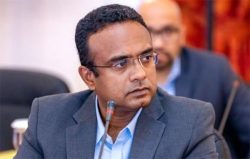
ECONOMYNEXT –A Minister warns of emerging racism in the island nation targeting ethnic minorities ahead of 2024 elections while regretting the past racism-led events including riots and insurrections since the 1948 independence.
Sri Lankan politicians have historically used racism to divide the country and win elections with the help of their own ethnicities and religious groups.The island nation is expected to hold presidential and parliament polls next year. A parliamentary election is likely in March, sources close to President Ranil Wickremesinghe have told EconomyNext.
The country saw the first racism led division when the island nation’s former Prime Minister S W R D Bandaranaike implemented “Sinhala only” policy which deprived state jobs for well educated Tamils in 1956.
That was followed by abolishing the merit system in university selection in 1972 which later deprived thousands of Tamil youth of being deprived of university entrance despite having higher marks than many others.Racism-led politics has always been the trump cards of some political parties specially when they are in opposition.
“When we are trying to do away with racism, some are trying to trigger the racism,” Manusha Nanayakkara, Minister of Labour and Foreign Employment told reporters in Colombo at a media briefing.
“Everybody blames the country for not progressing for the last 75 years since independence. The main reason for that is racism.”
“From the 1956 Sinhala-only event to each racism event had been used by politicians for their own benefits. People also hung in that string of racism, which could be easily triggered,” he said.
“All anti-Tamil riots, anti-Muslim riots, JVP crisis, LTTE crisis are the reasons that have taken this country backward.”
Sri Lanka’s majority Sinhala politicians use anti-minority sentiment to win votes among Sinhala Buddhists saying that the country’s main religion Buddhism is in danger because of minority Tamils, Muslims, and Catholics.
Similarly, ethnic minority Tamils and Muslims also use racism to say their community is in danger because of majority Sinhalese. Such moves have led to riots and killings across the country, mainly before elections.
“It is highly regrettable even today the racism is being used, ” Nanayakkara said.
Referring to an ongoing growing concern of Tamil people in the Eastern province being deprived of their land rights, the minister said he saw nothing wrong in giving lands to Tamils.
“What is wrong with giving their land to them? All Sri Lankans have come to this country from outside. How can one group say others can’t own lands? We are against this,” he said.
“This country is owned by all. This country is not owned only by Sinhalese or Tamils or Muslims. This is the country we all live in. That is our concept, and we are not scared to tell that.”










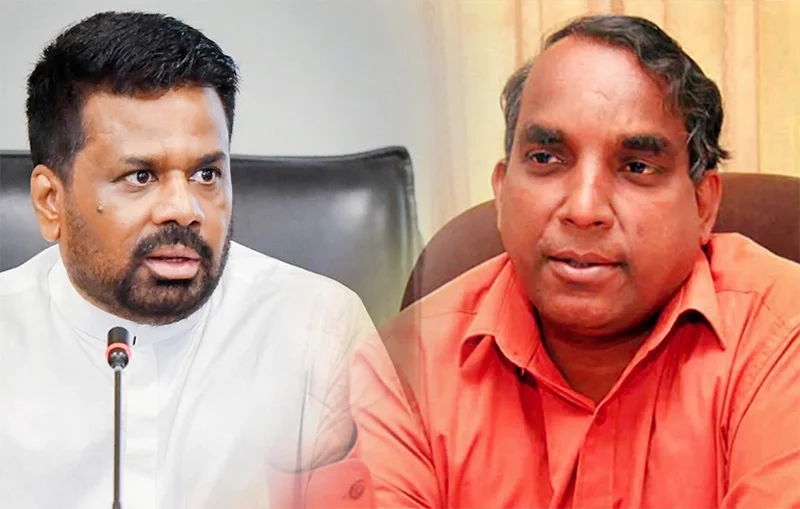
Executive Director of People’s Action for Free and Fair Elections (PAFFREL) Rohana Hettiarachchi yesterday (28) said that there were three major concerns regarding the Anti-Corruption (Amendment) Bill 2026. Acknowledging the recent Supreme Court determination, in respect of the above-mentioned Bill, that three of the provisions were not consistent with the Constitution, requiring a special majority in Parliament, with one clause requiring approval by the people at a Referendum, Hettiarachchi said nonetheless PAFFREL had decided to bring their concerns to the notice of President Anura Kumara Dissanayake.
Responding to The Island queries, Hettiarachchci said that PAFFREL sent a letter, dated 24 Sept., to President Dissanayake, regarding the issue at hand.
Petitions against the Bill was heard before a three-judge Bench of the Supreme Court, comprising Justices Shiran Gooneratne, Mahinda Samayawardena and Sampath Wijeratne.
PAFFREL and Transparency International Sri Lanka (TISL) were among the petitioners who challenged the proposed amendments to the Anti-Corruption Act No. 9 of 2023. “We did so in public interest,” Hettiarachchchi said, adding that three major concerns were (i) the breadth of the proposed redaction power and the proposed criminalisation of certain uses of publicly accessible redacted asset declarations, particularly in relation to freedom of expression, and the public’s right to meaningfully receive and impart information (ii) raising of the State or public-corporation shareholding threshold for certain asset declaration obligations from 25% to 50%, as this could exclude officers of State-linked entities in which the State holds less than 50%, in spite of such entities exercising public functions and managing public resources and (iii)role of the Director General Ranga Dissanayake.
Hettiarachchchi emphasised that though the PARREL appreciated the way CIABOC DG handled his responsibilities, centreing of power on one person was not acceptable.
Hettiarachchi urged President Dissanayake and the 159-member government parliamentary group to pay attention to concerns raised by those who moved court against the controversial Bill and address their concerns though the Parliament received the SC determination.
An International Monetary Fund mission that visited Colombo recently warned that the proposed amendments could weaken the country’s anti-corruption framework.
The mission, led by Evan Papageorgiou, was in the country from 10 to 23 September for discussions on the seventh review of the Extended Fund Facility and the 2026 Article IV consultation. (SF)
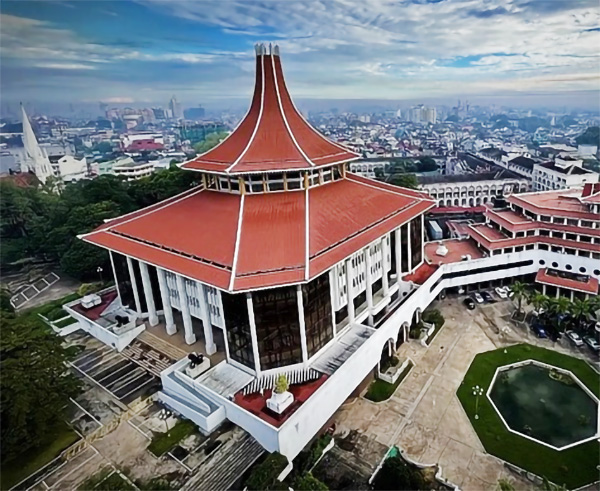
The Supreme Court yesterday (28) dismissed two petitions filed by retired Flight Lieutenant Shantha Jayathilake against Deputy Inspector General of Police of the Criminal Investigation Department (CID) Shani Abeysekara and Secretary to the Ministry of Public Security Ravi Seneviratne, and Rev. Father Cyril Gamini, alleging them of committing contempt of court.
They were the first cases dealt by the Supreme Court after the enactment of the 22nd Amendment to the Constitution.
The recipient of gallantry medal alleged that contempt of court had been committed through an affidavit previously submitted to the Supreme Court by Shani Abeysekara and Ravi Seneviratne.
The other petition alleged that contempt of court had been committed through the contents of a complaint submitted to the Criminal Investigation Department by Rev. Father Cyril Gamini.
The Supreme Court ordered that both petitions be dismissed without being taken up for hearing.
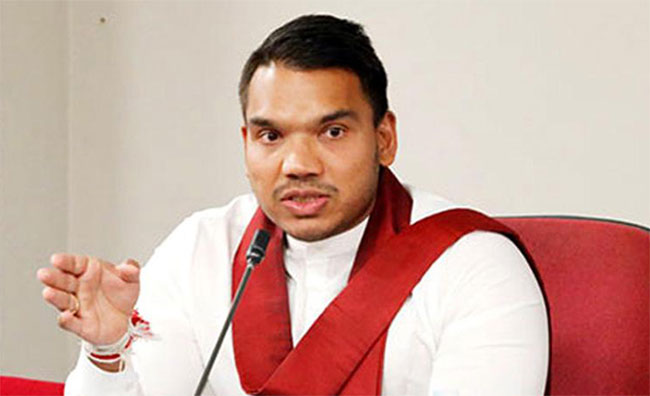
The Commission to Investigate Allegations of Bribery or Corruption (CIABOC) yesterday (28) named former Minister and leader of the SLPP parliamentary group Namal Rajapaksa as the fourth suspect in the Krrish case before the Colombo Chief Magistrate’s Court.
The MP was named as the fourth suspect in the wake of the arrest and remanding of former Executive Officer and Director of the Krrish Group, Janaki Siriwardena, regarding the payment of Rs. 70 mn to Namal Rajapaksa to facilitate the land transaction. Police arrested Ms. Siriwardena on 24 September and she was remanded till 6 Oct. pending investigations.
The investigation focuses on 4.3 acre land development in the Fort area that began in the 2013-2014 period. Investigations were launched in 2016 by the Yahapalana government, following a complaint lodged by Wasantha Samarasinghe, now a Minister in the current Cabinet.
The Indian company in this controversy is Krrish Transworks Colombo (Pvt.) Ltd .
The CIABOC named Namal Rajapaksa as a suspect in the Krrish case while he was remanded over two cases in respect of Airbus bribery probe. (SF)

PAFFREL raises concerns over Anti-Corruption (Amendment) Bill

First cases taken up by SC after enactment of 22A dismissed

Now NR named 4th suspect in Krrish case

Sri Lanka Red Cross Society honoured with Friend of Singapore Red Cross Award

Eastern University and the making of a culture of peace

Tharanga seals remarkable season with Asian Games gold

‘Dates have the highest sugar content to fight Coronavirus’

Sunday Island 27 December – Headlines

#SundayIsland 17th December – Headlines

Sunday Island – 28th March

Sunday Island Headlines – 21 March

Sunday Island – 21st February – Headlines
-

 News6 days ago
Mastermind Naufer Moulavi among 15 found guilty
-

 Midweek Review6 days ago
Thileepan’s fast unto death: An authentic narrative that many missed
-

 Latest News5 days ago
Showers above 100 mm are likely at some places in the Western, Sabaragamuwa, Central and North-western provinces and in Galle and Matara Districts
-

 Editorial6 days ago
Big Bad Bills
-
Editorial5 days ago
Crimes punished and unpunished
-

 Features4 days ago
Beyond traditional jobs: Why Sri Lanka needs to facilitate the gig economy
-

 News6 days ago
No referendum needed for passage of 22 A: SC
-
 Latest News6 days ago
Ms. P. M. Jayadeera (Engineer) appointed Director General of Irrigation