
Features
Meet governance challenges with deeds not only words


By Jehan Perera
The arrest of parliamentarian and leader of the Tamil National People’s Front Gajendrakumar Ponnambalam highlights two areas of particular concern. The first is the high level of surveillance that continues in the former war zones of the north and east. The visitors to those parts of the country would not fail to see the large presence of uniformed personnel in these two provinces, even at tourist sites. They remain as a visible reminder of the unsettled and violent conditions that prevailed since the late 1970s and which ended in May 2009. The failure on the part of the country to overcome the legacy of its violent past despite the passage of 14 eventful years is epitomised by the large spending still taking place on the security forces even in the midst of the general economic collapse.
The latest update by Verite Research has shown that according to the 2023 budget estimates, of the total state salaries, the defence sector claims 48 percent. The military takes up 32 percent of the total payroll expenditure and 16 percent goes for other defence services. According to World Bank (WB) data, the size of Sri Lanka’s armed forces was at its highest between 2017 and 2019 with 317,000 personnel. According to a publication by the Institute of South Asian Studies (ISAS), 2021, Sri Lanka’s military force is the 17th highest in the world, exceeding even that of the United Kingdom. The largest contingents of the military would continue to be deployed in the north and the east which provides a fertile ground for anti-government sentiment.
One of the strong public sentiments in the north and the east is that the security forces are involved in various schemes of undermine the Tamil people, including through being supportive of land grabs and encouraging drug addiction in youth. The problem of high levels of drug addiction and criminality are, however, not limited to the north and the east but are to be found in all other parts of the country, especially the capital city of Colombo. Unlike in the north and east, the root of suspicion in the south of the country is that the main problem lies in the venality of all-powerful politicians who may be using the security forces as their tools. It was this sentiment that popularised the widely used slogan during the time of the Aragalaya that all 225 in parliament should go.
COUNTRYWIDE SURVEILLANCE
The incident involving parliamentarian Ponnambalam centres around the issue of surveillance in the north. According the parliamentarian, he was having a meeting with some of his constituents from a sports club numbering about 20 in a public park. When he was talking to them, two unknown men on a motorbike had come, stopped their vehicle 10-15 feet away and, when challenged, declined to provide their identity cards. It later transpired that these were plainclothes policemen who had come to collect intelligence for their reporting purposes. This is a common occurrence in the north and the east, but also takes place in other parts of the country as well, much to the discomfort of participants at those events.
Sri Lanka is unfortunately today a post-war country that has still failed to find a political solution to the war that would address the roots of the conflict. It is also a post-Aragalaya society in which the economy has collapsed and continues to slow down, imposing immense hardships on the general population. Making matters worse is the government’s refusal to conduct elections that would permit the people to express themselves and what they want from their rulers. In these circumstances, surveillance in the north and east also exists in other parts of the country to ensure early warning to the government of potential points of unrest. The difference is that it is more blatant and overt in the north and east. It is unlikely that police intelligence officers would come on their motorbikes to within 10-15 feet of parliamentarians in the south addressing their constituents to eavesdrop on their conversations.
The second issue that arises from parliamentarian Ponnambalam’s arrest was the lack of deference shown to him as an elected member of parliament. It confirms to the Tamil people that the security forces in the north and the east are acting like an “army of occupation.” The incident itself took place in the north where the police wanted him to come and make a statement at the police station. He did not wish to do so on account of his concern that the environment in the police station would be hostile to him, as he had alleged that a gun had been taken out during the altercation in the park. The police had thereafter come to Colombo to where the parliamentarian had returned home, arrested him and taken him all the way back to the north to make a statement and to produce him before the court. An invidious comparison could be drawn between the differential treatment meted out to other parliamentarians in the recent past who have not been treated in a comparably harsh manner by the police despite their provocations.
EQUAL CITIZENSHIP
The strong Tamil nationalist stances the TNPF leader has stood for, including having close links with more hardline sections of the Tamil Diaspora, has estranged him from the south and the Sinhalese polity. The Hindu newspaper reported, “Few MPs from the southern, Sinhala majority areas commented on the development.” However, the manner in which parliamentarian Ponnambalam expressed himself in the Sinhala language at the point of being arrested was an indication of his commitment to fight for justice for the Tamil people in Sri Lanka. This should be encouraged and not suppressed. Jaffna parliamentarian from the Tamil National Alliance M.A. Sumanthiran said in a tweet: “Police insisting that @GGPonnambalam should go to #Maruthankerni today itself to make a statement or threatening to #arrest him is totally #illegal and violates his #privilege as an #MP. He is being prevented from attending the ongoing #Parliament sessions today. #repression.”
The solidarity that TNA spokesperson Sumanthiran showed to a rival Tamil parliamentarian is a positive development. There is a need for unity among Tamil political parties if they are to achieve a reasonable bargaining power in their negotiations with the government. Contradicting Tamil media reports that there had been relatively little support for parliamentarian Ponnambalam from his fellow parliamentarians was the response of Opposition leader Sajith Premadasa to the arrest. He said, “We have differences with the ideology and standpoints of MP Ponnambalam but he is entitled to be treated as any other MP in this House. He was taken into police custody today while he was on his way to attend Parliament. That is illegal as per the law. We urge the government to respect the law. This is an illegal arrest.” The opposition leader demonstrated the spirit of national unity and equal citizenship that is necessary to make Sri Lanka the common home of all communities.
The present period in which President Ranil Wickremesinghe and Opposition leader Premadasa are at the helm of national affairs, though on the opposite sides of parliament, offers the best chance to correct the problems of the past as well as existing problems. With the next session of the UN Human Rights Council set to take place next week in Geneva, President Wickremesinghe summoned a meeting of senior state officials where they discussed a reconciliation action plan. During the meeting the President had instructed the relevant departments to expedite the drafting of legislation necessary for the plan’s implementation. The progress of initiatives within five key areas of legislation, institutional activities, land issues, prisoner release, and power decentralization were also reviewed. So far little has happened on the ground though much has been said in words. The manner in which the government deals with the issue of parliamentarian Ponnambalam’s arrest will be one evidence of change.



Sri Lanka is witnessing the dismantling of the culture of impunity that dominated public life for decades. This is happening through the courts, police investigations and legal process. It is not an easy task and requires strong leadership as it is generating strong resistance. The ongoing revelations about the nexus between politicians, including those at the highest levels, and criminal networks show that the government’s electoral mandate with regard to corruption and crime is now being translated into action through the legal system. The vote of the people at the last national elections was for a corruption free country and an end to the climate of impunity that had prevailed for decades. They voted for a system change that would replace impunity with accountability under the rule of law. They expected those who had looted the country and brought it to the point of bankruptcy to be held accountable through the due process of law.
The cases that are being investigated by the police, in tandem with the Attorney General’s Department, and adjudicated by the judiciary are based on hard evidence. Much of the evidence that is now receiving publicity had been available several years ago and had even entered the legal process. In the past those cases failed to reach fruition. Investigations lost momentum, prosecutions failed to marshal the available evidence and many cases were dismissed, some on technical grounds. Between 2019 and 2024, a total of 102 cases were withdrawn from the courts by the government authorities. The public knew, or strongly believed, that corruption and serious crimes had taken place. The inability to establish wrongdoing before a court of law and hold those responsible accountable created a climate in which political power appeared to provide protection from legal accountability.
A countrywide study titled Factors Guiding Voter Preference in Elections in Sri Lanka was commissioned by the National Peace Council prior to the 2024 elections under the European Union funded project Active Citizens for Elections and Democracy and conducted by researchers Dr Mahesh Senanayake and Ms Crishni Silva of the University of Colombo. It found overwhelming public support for accountability and good governance. While 93 percent of respondents identified resolving the economic crisis as their foremost electoral concern, an equally striking 83 percent said they prioritised candidates committed to fighting corruption. The mandate given to the government can, therefore, be interpreted to mean to restore integrity to public life and end the long standing culture of impunity.
Different Approach
Today, it can be seen that the police, the Commission to Investigate Allegations of Bribery or Corruption, the Attorney General’s Department and the judiciary are approaching matters of impunity in respect of corruption and crime in a manner that is markedly different from the past. Several persons who formerly occupied high office have now been subjected to due legal process and, in a number of cases, convicted after judicial scrutiny at different levels of the court system. This is an important difference from earlier years when cases involving politically prominent persons frequently failed to proceed or collapsed before reaching their conclusion. The strength of the present accountability process lies not only in the convictions that have been secured but also in the growing public confidence that no one is above the law. It is in this context that reports of a government proposal to extend by two years the retirement age of judges of the Supreme Court and the Court of Appeal have generated support from those who wish to see the present accountability process continue and opposition from those who see it as an attempt to influence the judiciary.
Many countries have increased judicial retirement ages in recognition of longer life expectancy and the value of retaining experienced judges. This has not only been limited to the judiciary but also the academia and the public service. However, the controversy in Sri Lanka is due to the context and as the proposal for an extension of the period of service of judges of the superior courts comes at a time when the courts are hearing politically significant corruption and criminal cases. The Bar Association of Sri Lanka has taken the lead in questioning the proposed constitutional amendment. The BASL has stated that it “notes with grave concern” reports that the government is considering increasing the retirement age of judges of the Supreme Court and the Court of Appeal. It has warned that extending the tenure of sitting judges at this point of time is likely to be viewed by the public as an attempt to interfere with the independence of the judiciary.
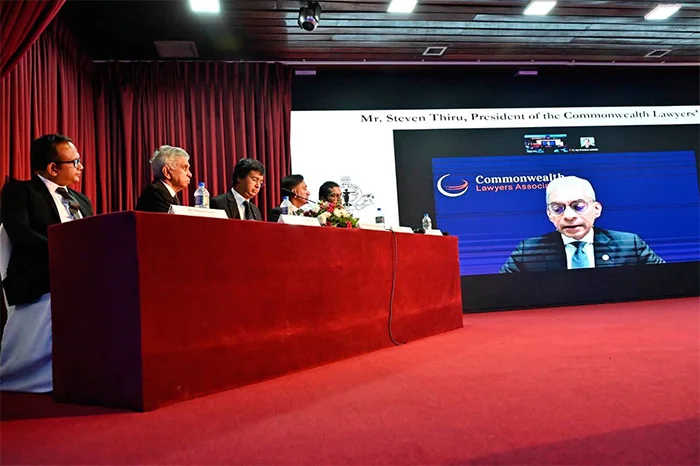
The main issue raised by the BASL is therefore one of preserving public confidence in the administration of justice. A discussion organised by the BASL also highlighted that this issue has implications beyond Sri Lanka. Representatives of the Commonwealth Lawyers Association and LAWASIA acknowledged that many countries have increased the retirement age of judges in recognition of greater life expectancy and the value of retaining experienced judges. Their concern was not with increasing the retirement age itself but with changing the tenure of sitting judges while politically significant corruption cases are before the courts. In such circumstances, even well intentioned reform could create a public perception that the judiciary is being influenced to take forward the government’s mandate in a partisan manner.
Maintain Confidence
The challenge before the government is to preserve two equally important objectives. The first is to continue implementing the people’s mandate to hold the corrupt and those responsible for grave crimes accountable before the law. The second is to ensure that nothing is done which could diminish public confidence in the independence and impartiality of the judiciary that is entrusted with carrying out that responsibility. The strength of the present accountability process lies in the confidence it has generated among the public that investigations, prosecutions and judicial decisions are being made according to law as in the convictions that have been secured. Sri Lanka has come a long way from the days when politically sensitive cases rarely reached a successful conclusion. It would be unfortunate if doubts regarding the independence of the judiciary were to overshadow what has otherwise been a significant institutional achievement.
In the face of the concerns expressed by the BASL, opposition political parties and international legal organisations, it would be prudent for the government to widen the discussion on the proposed amendment. If there is a compelling case to increase the retirement age of judges of the superior courts, that case should be placed before the public and parliament and debated openly. Such a constitutional amendment should not rest solely on the government’s parliamentary majority, even if it has the numbers to secure its passage. Simply utilising the numbers that the government on its own to make changes to the constitution will not increase its legitimacy or credibility. Those values will be strengthened if they were preceded by public consultation and supported across party lines in Parliament. Bipartisan political support can be expected from those in the opposition, of whom there are many, who have shown an inclination to practice responsible politics in the national interest.
The people voted not only to change a government but to change a system. They expected those who abused public trust to be held accountable through institutions that commanded public confidence. That expectation is beginning to be fulfilled. It should not be placed at risk by constitutional change that lacks broad public acceptance. If the government believes there is a compelling case to extend the retirement age of the judges of the superior courts, it should first make that case to the people and seek bipartisan support in Parliament with those in the opposition who are also sincere about anti-corruption and good governance. The challenge is to protect the independence of the judiciary while ensuring that no one is above the law. Overcoming this challenge is the surest way to make Sri Lanka’s transition from a culture of impunity to one of accountability a lasting one.
by Jehan Perera

In an increasingly volatile and interconnected world, the strength of a nation is no longer determined solely by the size of its military, the abundance of its natural resources, or the growth of its economy. The true measure of national strength lies in the resilience of its institutions, the confidence of its people, the effectiveness of its governance, and its ability to anticipate and respond to emerging challenges before they become national crises.
The twenty-first century has introduced a security landscape that is far more complex than ever before. Nations today confront not only conventional military threats but also terrorism, organised crime, cyber-attacks, economic instability, disinformation, climate change, pandemics, energy insecurity, irregular migration, financial crimes, and geopolitical competition. These challenges are interconnected and demand integrated responses rather than isolated solutions.
To navigate this evolving environment successfully, every nation requires a shared strategic vision supported by strong institutions working in harmony. At the centre of this vision should be a modern, professional, and intelligence-led system of governance that enables informed decision-making, protects democratic values, and promotes sustainable national development.
A Shared Strategic Vision
Every successful nation should aspire towards a common national vision:
A Sovereign Nation Happy People Peaceful Society Prosperous Economy A Respected Global Partner
These are not independent aspirations but interconnected national outcomes. Achieving them requires every State institution to work collectively under a common strategic framework rather than as isolated entities pursuing individual objectives.
A sovereign nation is one that possesses not only secure borders but also strong institutions, economic resilience, social cohesion, and the confidence to make independent national decisions. Sovereignty today extends beyond territorial integrity to include economic security, cyber resilience, energy security, food security, environmental sustainability, and protection against external influence.
Good Governance: The Cornerstone
The foundation of every successful nation is good governance.
Transparency, accountability, integrity, professionalism, and efficient public administration create an environment where citizens trust their institutions and investors have confidence in the country’s future. Corruption, political interference, inefficiency, and weak institutions undermine national resilience and weaken sovereignty from within.
Good governance is not merely an administrative principle; it is a national security imperative.
When public institutions function efficiently, public services improve, economic opportunities expand, and social grievances diminish. This reduces vulnerabilities that extremist groups, organised criminals, and foreign actors often exploit.
The Rule of Law and Judicial Independence
An independent judiciary is one of the strongest pillars of democracy.
Justice must be administered impartially and without fear or favour. Citizens must have confidence that the law applies equally to everyone, regardless of social status or political influence.
Judicial independence strengthens public confidence, attracts foreign investment, and reinforces national stability. Investors are more likely to invest in countries where contracts are enforceable, disputes are resolved fairly, and property rights are protected.
Likewise, professional law enforcement agencies play a vital role in safeguarding public order. Intelligence-led policing, supported by modern investigative techniques, community engagement, and technological innovation, enables law enforcement to prevent crime rather than merely react to it.
Human Rights: A Strategic Asset
There is often a misconception that national security and human rights exist in opposition. In reality, they reinforce one another.
Respect for human dignity, equality before the law, freedom of expression, religious freedom, and constitutional rights strengthens national unity and social cohesion. Citizens who trust their institutions are more willing to cooperate with authorities, report suspicious activities, and participate in community safety initiatives.
Communities become the first line of defence against extremism, organised crime, and social unrest when mutual trust exists between citizens and the State.
Human rights should therefore be viewed not as obstacles to security but as essential components of sustainable national security.
Intelligence: The Strategic Nerve Centre
At the heart of modern governance lies an effective national intelligence network.
Traditionally, intelligence was associated primarily with military operations and counter-terrorism. Today, its responsibilities extend much further.
Modern intelligence supports political leadership by providing timely, accurate, objective, and actionable information that enables informed decision-making. It anticipates threats, identifies opportunities, and supports strategic planning across all sectors of government.
An effective intelligence system should be:
* Predictive rather than reactive.
* Preventive rather than investigative alone.
* Integrated rather than fragmented.
* Technology-driven rather than paper-based.
* People-centred rather than institution-centred.
Artificial intelligence, big data analytics, cyber intelligence, financial intelligence, geospatial intelligence, satellite imagery, behavioural analysis, digital forensics, and open-source intelligence are transforming the intelligence profession worldwide.
Countries that fail to modernise their intelligence capabilities risk strategic surprise and reduced competitiveness in an increasingly data-driven world.
Intelligence Beyond National Security
Modern intelligence should no longer be confined to counter-terrorism or espionage.
Its role should extend to supporting national development through the protection of critical infrastructure, monitoring economic trends, securing supply chains, safeguarding maritime interests, protecting natural resources, and assessing climate-related risks.
Intelligence should assist policymakers in areas such as:
* Economic planning
* Public health preparedness
* Disaster risk reduction
* Cybersecurity
* Energy security
* Food security
* Environmental protection
* Artificial intelligence governance
* Foreign policy
* Investment protection
An intelligence-led government anticipates future challenges instead of merely responding after crises emerge.
Whole-of-Government Cooperation
One of the greatest weaknesses in many developing nations is institutional fragmentation.
Government agencies often collect valuable information independently but fail to share it effectively. This creates duplication, delays, and missed opportunities.
A National Intelligence Fusion Centre should integrate information from intelligence services, police, armed forces, immigration, customs, financial intelligence units, cyber security agencies, disaster management authorities, health services, and environmental agencies.
Such integration provides decision-makers with a comprehensive national picture and significantly improves crisis management and strategic planning.
Economic Prosperity Through Security
Economic development depends fundamentally upon stability.
Foreign investors seek countries where governance is predictable, corruption is controlled, contracts are enforceable, infrastructure is secure, and political stability is maintained.
An effective intelligence system quietly protects these conditions by identifying threats to investment, monitoring organised crime, preventing financial fraud, protecting critical infrastructure, and safeguarding strategic industries.
Security and economic development are therefore mutually reinforcing.
Investment creates employment.
Employment reduces poverty.
Reduced poverty strengthens social stability.
Social stability reinforces national security.
International Partnerships
No nation can successfully confront modern threats alone.
Transnational organised crime, cybercrime, narcotics trafficking, terrorism, money laundering, illegal migration, and environmental crimes operate across borders.
Regional and global intelligence cooperation has therefore become indispensable.
Information sharing, joint investigations, coordinated maritime surveillance, and collaborative cyber defence significantly enhance national capabilities while strengthening diplomatic relationships.
Strong intelligence supports effective diplomacy.
Effective diplomacy enhances trade, investment, tourism, education, and technological cooperation.
Ultimately, international confidence contributes directly to national prosperity.
The Relationship Between National Stakeholders
National success depends upon collaboration among all stakeholders.
Government provides leadership and policy direction.
The judiciary safeguards justice.
Law enforcement protects public safety.
The intelligence community provides foresight and early warning.
Civil society strengthens social cohesion.
Educational institutions develop future leaders.
The private sector generates investment and innovation.
International partners facilitate trade, cooperation, and knowledge sharing.
Citizens themselves remain the most important stakeholders.
When these institutions operate with mutual trust, shared objectives, and effective coordination, they create a resilient State capable of responding confidently to both domestic and international challenges.
The Strategic Path Forward
Every nation requires a long-term vision rather than short-term political agendas.
That vision should place national interest above partisan interests and institutional collaboration above bureaucratic competition.
The pathway is straightforward:
Good Governance Independent Judiciary Professional Law Enforcement Protection of Human Rights Effective National Intelligence Network Political Stability Investor Confidence Economic Growth Foreign Direct Investment Peaceful Society Happy People A Sovereign Nation
This strategic chain demonstrates that sovereignty is not achieved through military strength alone. It is the cumulative outcome of good governance, justice, intelligence, economic resilience, and public confidence.
The future belongs to nations that can anticipate change, adapt rapidly, and make informed strategic decisions. Intelligence must therefore evolve from being viewed solely as a security function to becoming a central pillar of national governance and development.
A modern intelligence network should serve as the strategic nervous system of the State—connecting governance with justice, justice with security, security with economic prosperity, and prosperity with international respect.
A sovereign nation is ultimately one where institutions are trusted, citizens are protected, rights are respected, opportunities are created, and decisions are guided by knowledge rather than assumption. When all stakeholders work in harmony under a shared strategic vision, the result is a nation that is secure, prosperous, peaceful, and respected on the global stage.
The challenge before every developing nation is therefore not simply to strengthen its security apparatus but to embrace Intelligence-Led Governance as a national philosophy—one that integrates good governance, rule of law, human rights, innovation, and strategic foresight into a unified framework for sustainable national development. Such a vision will not only safeguard sovereignty but also ensure that future generations inherit a nation defined by stability, prosperity, and enduring peace
By Mahil Dole, SSP (Rtd.)

 It has been almost two months since the judgement of Abeyasinghe v Tilakaratne and others by the Supreme Court. Since then, I have often been asked a simple question, which I, too, have asked myself. “Has anything actually changed?” My answer is both yes and no. Judgements can uphold the law, direct institutions and clarify principles. But they cannot, by themselves, change cultures.
I shall take the liberty of writing this piece because, in the weeks following the judgment, I have found myself reflecting less on the outcome of the case and more on what it reveals about our institutions. Yet institutions do not change simply because a court has spoken. They change only when they are willing to question long-held assumptions, reflect honestly on their procedures and practices, learn from their shortcomings and act decisively to foster a culture that places accountability at its centre.
The myth of the perfect victim
One such assumption is about the conduct of the Ideal or Perfect victim. The concept of the “ideal victim” was first articulated by the Norwegian criminologist Nils Christie in 1986. Interestingly, Christie was not concerned with identifying those most likely to become victims of crime. Instead, his question was who is most readily recognised and accepted by society as a “real” victim? Society is often more willing to extend sympathy and credibility to victims who fit a particular stereotype. According to Christie, the “ideal victim” is someone perceived to be weak and vulnerable, engaged in a respectable activity, in a place where they have every right to be, harmed by someone clearly viewed as “big” or “bad,” and, importantly, a stranger rather than someone they know. These characteristics continue to influence how victims are perceived today. Although we may not consciously apply such criteria, they often shape our instinctive judgments about who deserves to be believed.
In the context of sexual violence within universities, the assumptions surrounding the ideal victim quickly begin to unravel. Power relationships within universities are often complex, and professional relationships may have existed before the misconduct. The alleged perpetrator may not be a stranger but a lecturer, supervisor, colleague, or fellow student. The complainant may continue interacting with the alleged perpetrator because academic progression or employment leaves little choice. When a victim does not fit the mould of the “perfect victim,” attention shifts away from the conduct of the alleged perpetrator and towards the conduct of the complainant.
What should be kept in mind is that victims respond to trauma differently. Some report immediately; many do not. Some become emotional; others appear composed. Some resign from their workplace, while others continue to work because they have no realistic alternative or because they wish to confront the violence head on. Some preserve every piece of evidence; others delete messages simply because they cannot bear to see them again. Yet these perfectly human responses are often interpreted as reasons to doubt credibility.
Universities provide a particularly complex setting for this phenomenon. Most complainants do not initially seek justice. More often, they simply want the harassment to stop so that they can continue their education or employment in an environment where they feel safe. Sometimes victims make anonymous complaints, not because they wish to avoid accountability, but because anonymity provides the only sense of security they have. During preliminary inquiries/ fact finding processes, confidentiality can often be maintained. However, if the matter proceeds to a formal disciplinary process, complainants are usually required to reveal their identities. It is at this point that many decide not to proceed further, not because the harassment did not occur, but because the personal cost of pursuing justice becomes overwhelming.
Perhaps this should prompt us to ask a different question. Instead of asking why anonymous complaints exist or why complainants don’t come forward (sooner), should we not ask why so many complainants feel unsafe engaging with the institutional process?
The subject of scrutiny
When survivors do come forward, they frequently encounter another familiar phenomenon, victim blaming.
“Why didn’t you complain earlier?”
“Why didn’t you go to the police?”
“If you were sexually harassed, why are you still working there?”
“Why did you continue interacting with him?”
“The reason this happened is because you showed positivity towards him.”
“There is no smoke without fire.”
Although these questions appear different, they have something in common. They all examine the behaviour of the complainant. Very few begin by asking why the alleged perpetrator behaved in the way described. The familiar proverb, “There is no smoke without fire,” is often used to suggest that the complainant must have done something to invite the misconduct. Yet perhaps we have misunderstood where the fire lies. The fire is not the complainant’s behaviour. The fire is the conduct of the alleged perpetrator. The complaint is the smoke that finally becomes visible.
These responses also reveal another contradiction. If a victim complains immediately, some might question their motives. If they delay, the delay becomes the issue. If they resign, they may be described as unstable or unable to cope. If they remain in employment, their continued presence is taken as evidence that the misconduct could not have been serious or that it never had happened. If they show emotion, they risk being dismissed as irrational. If they remain composed, they may be accused of exaggerating. In truth, there is often no version of events in which a complainant can satisfy every expectation placed upon them. If our systems only work for the “perfect victim,” then they were never truly designed for victims at all.
The silence that speaks
The recent judgment also prompted me to reflect on another aspect of institutional culture, silence. Within academia, even discussing judgments concerning one’s own institution may be framed as bringing the institution into disrepute. Such framing places academics in an impossible position. Those who speak are sometimes portrayed as being disloyal or as failing to respect the institution they serve. Yet genuine respect for an institution should not require silence in the face of injustice. Universities are places that encourage academic freedom, critical inquiry, evidence-based reasoning, and intellectual debate. They should, therefore, be places where uncomfortable conversations are not avoided but embraced.
The relative silence surrounding the judgment in academia raises important questions. Does silence reflect satisfaction that justice has been served? Does it reflect concern about damaging the reputation of one’s university? Does it reflect uncertainty about whether difficult institutional conversations are welcome? Or does it reflect a real or perceived fear of professional consequences for speaking openly? These are questions that deserve thoughtful reflection.
Post judgement reflections
At the same time, my experience in the weeks following the judgment has also been one of hope. Individuals who have experienced different forms of abuse have quietly come forward to share their own stories with me. Some have sought legal advice. Others have simply wanted someone to listen. Their experiences remind me that judgments do more than resolve disputes between parties. They send messages to those who have remained silent, that seeking justice remains possible. Perhaps that is one answer to the question I posed at the beginning of this article. Has anything actually changed? For some victims, I believe the answer is yes. A judgement can restore hope and encourage those who had previously felt that their voices would never be heard.
Yet judgments alone cannot erase trauma, restore lost years, or undo the personal and professional consequences that many victims endure. Courts can interpret the law, but they cannot, by themselves, transform institutional culture. Culture changes only when institutions and university communities are willing to learn from judgments rather than merely comply with them. It changes when realities of power imbalances are recognised, when credibility is assessed through evidence rather than stereotypes, and when the question “Why did the victim not come forward sooner?” is replaced with “What conditions made it so difficult for the victim to come forward?” Ultimately, the true value of a judgement lies not only in the orders it makes, but also in the conversations it inspires and the institutional self-reflection it demands. Whether anything truly changes will not depend on the judgement itself, but on whether institutions have the courage to learn from them.
(Udari Abeyasinghe is attached to the Faculty of Dental Sciences at the University of Peradeniya)
Kuppi is a politics and pedagogy happening on the margins of the lecture hall that parodies, subverts, and simultaneously reaffirms social hierarchies.
by Udari Abeyasinghe

Commander of the Navy pays courtesy call on Speaker of the Parliament

Woman suspected of Monaco bomb attack found dead in Ukraine

Balogun reprieve in vain as Belgium beat USA to set up Spain quarterfinal

Trump confirms he asked Fifa to review Balogun ban

Late Spain goal eliminates Portugal, ends Ronaldo’s international career?

Nyamhuri and Ngarava stun Bangladesh by defending 141

‘Dates have the highest sugar content to fight Coronavirus’

Sunday Island 27 December – Headlines

#SundayIsland 17th December – Headlines

Sunday Island – 28th March

Sunday Island Headlines – 21 March

Sunday Island – 21st February – Headlines
-

 News3 days ago
Singapore-based Buddhist monk marks nearly four decades of humanitarian service
-

 News4 days ago
Freedom 250: US Embassy celebrates America’s 250th Independence Day through magic of American cinema
-

 News5 days ago
CIABOC to question Harak Kata on Rs. 200 mn bribery allegation
-

 News5 days ago
SLAF conducts successful rescue mission under UN command in Central African Republic
-

 Midweek Review7 days ago
H’tota port’s strategic status remains focal point of geopolitical scrutiny
-

 News2 days ago
AI concerned over proposed SL military deployment in Haiti
-

 News4 days ago
UNEP support pledged to strengthen Sri Lanka’s Environmental Priorities
-

 Features3 days ago
The NPP’s New Challenge: Balancing Easter Lawfare and Economic Welfare