
News
March 09 poll in the balance: Opp slams Govt. Printer, Treasury Secy. for not cooperating with EC

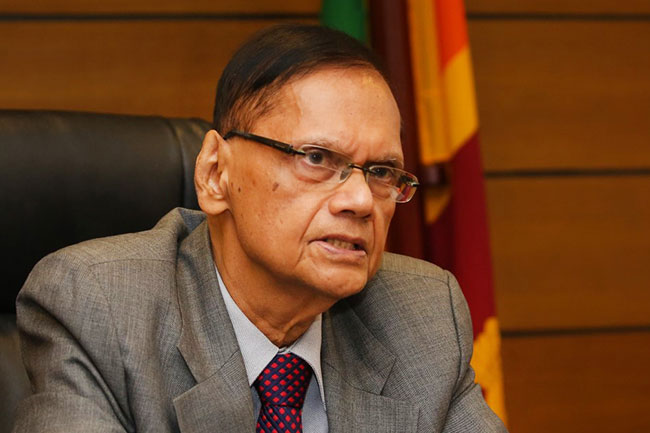
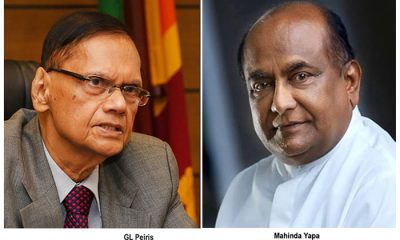
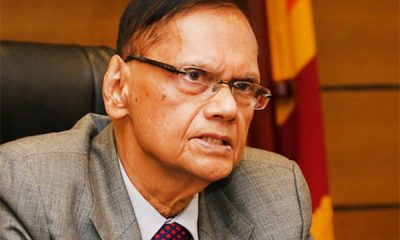
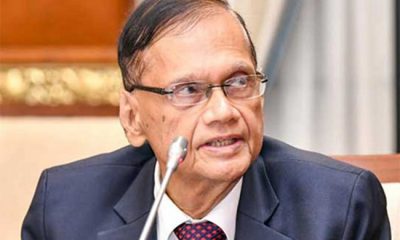
Nidahas Janatha Sandhanaya spokesman Prof G. L. Peiris, MP, yesterday (15) urged the Election Commission (EC) to summon Government Printer Gangani Liyanage over her refusal to cooperate with the independent commission.
Alleging that the Government Printer had deliberately undermined the conduct of Local Government polls on March 09, the former External Affairs Minister stressed that Liyanage owed an explanation. Prof. Peiris said so addressing the media at Nawala.
Prof. Peiris said that the Government Printer’s sudden declaration that she wouldn’t undertake printing until her department received the full payment should be examined against the backdrop of the assurance given by the EC to the Supreme Court that Local Government poll would be held as scheduled.
The former minister lambasted Finance Secretary Mahinda Siriwardana for depriving the EC of funds required to conduct the election. Stressing the responsibility on the part of relevant government officials to cooperate with the EC, Prof. Peiris questioned the rationale in Secretary to the Treasury refusing to release funds in spite of this year’s budget allocating Rs 10 bn for the EC.
Referring to earlier attempt made by Public Administration Secretary Neil Bandara Hapuhinna to interfere with electoral process, Prof. Peiris pointed out that SJB Mayoral candidate for Colombo Municipal Council Mujibur Rahuman recently moved court against Hapuhinna.
Meanwhile, at the meeting convened by the EC on Tuesday (14 February) morning to inform secretaries of political parties contesting LG poll, EC Chairman Nimal Punchihewa expressed concerns relating to holding the election as expected due to financial constraints. Punchihewa has said that the Government Printer has informed him in writing she was unable to continue printing of the ballot papers due to the lack of funds. Most of the participants present expressed their displeasure over the attempts made by the government to disrupt the election.
It was pointed out by many party leaders that the Election Commission has the necessary powers to conduct the election even if the government tries to stop the election by influencing various agencies that come under it, namely, the Finance Ministry, Government Printing Department and Police. It was even suggested that the finance secretary and the government printer be summoned by the Commission and questioned as to their lackadaisical approach and even to take legal action against them.
When the possibility of utilising the deposits made by the political parties towards the conduct of election was raised, it was revealed that 186 million rupees was collected as deposits and that has been dispatched to the treasury.








The Ministry of Industries and Entrepreneurship Development has recommended the establishment of Sri Lankan Standards, i.e. the import testing methodology for imported tires used for passenger cars and pneumatic tires for three-wheelers with the aim of ensuring a fair competitive environment for local
manufactures and ensuring consumer safety and security.
Taking into the said recommendations, “Import and Export (control regulations N0.08 of the 2026)” has been enacted to amend the existing regulations by means of the Extraordinary Gazette Notification No. 2508/27 dated 2026-10-01, prescribing Sri Lanka standard 1212 for the import of passenger types (HS Code 4011.10.90) and Sri Lanka standard 1347 for the import of
pneumatic tires for three – wheeled vehicles (HS Code 4011.90.10).
Accordingly, the Cabinet of Ministers has approved the resolution furnished by the President in his capacity as the Minister of Finance, Planning, and Economic Development to submit the aforementioned regulations to Parliament for approval.
Approval of the Cabinet of Ministers was granted at their meeting held on 02.06.2025 to introduce a new act to promote and providing legal provisions for facilitating the Public Private Joint Enterprises within Sri Lanka as well as the establishment of the National Agency for Public Private Partnership Joint Enterprises.
Accordingly, the Legal Draftsman has formulated the relevant draft bill and the Attorney General has given his clearance to the said draft bill.
The Cabinet of Ministers approved the resolution furnished by the President in his capacity as the Minister of Finance, Planning and Economic Development to publish the said
draft bill in the government gazette notification and thereby submit it to the Parliament for its concurrence.
Regulation, development and control of indigenous medical sector in Sri Lanka comprised of Ayurvedha, Sidhdha, Unani, Local Therapies are carried out under the provisions of Ayurvedha Act No. 31 of 1961.
Although amendments were made to the act from time to time as per the requirements, the necessity of further amending the Ayurvedha Act has been identified to enable efficiently maintaining all activities of local medical field productively, further formalizing the regulation of the sector, taking actions to providing licenses applicable to export of local medicines, and achieving the progress and sustainable development goals in the local medical sector.
Based on the said factors, the Cabinet of Ministers granted approval to the resolution furnished by the Minister of Health and Mass Media to direct the Legal Draftsman to formulate a draft bill to amend the Ayurvedha Act No. 31 of 1961.

Import and Export (Control) Regulations No. 08 of 2026
Draft Bill of the Public Private Partnership Enterprises Act to be gazzetted
Amendment of the Ayurvedha Act No. 31 of 1961

Cabinet nod to amend the Sri Lanka Development Administration Institute Act No. 9 of 1982
Establishment of the National Higher Performance Centre
State patronage for the cremation ceremony of the late deputy prelate (Anu Nayaka Thero) of the Sri Laka Ramangya Maha Nikaya, Gatambe Rajopawanramadhipatha, Siri Chandawimala Wanshalankara, Chandrakeerthi Sri Amarawansha, Sadhdharmawageeshwara, Shasanashobhanna Most Venerable Keppetiyagoda Siriwimalabhidhana Thero

‘Dates have the highest sugar content to fight Coronavirus’

Sunday Island 27 December – Headlines

#SundayIsland 17th December – Headlines

Sunday Island – 28th March

Sunday Island Headlines – 21 March

Sunday Island – 21st February – Headlines
-

 Features3 days ago
Kotahena:A Small Enclave, An Extraordinary Legacy
-

 News7 days ago
Sri Lanka, India caught in US-Iran ship crisis
-

 News4 days ago
Asgiri Mahanayake calls for immediate release of Gnanasara Thera
-

 Latest News7 days ago
Missiles intercepted near Riyadh after Saudi coalition hits Yemen fuel depot
-

 Latest News7 days ago
Kusal Mendis’ unbeaten 87 hands Sri Lanka consolation win
-

 News3 days ago
Record 1,600 students take Russian Classical Ballet examination in Sri Lanka
-
 News6 days ago
AC President recuses himself from hearing prison attire case pertaining to Gnanasara Thera
-

 Latest News7 days ago
Heavy showers above 100 mm are likely at some places in the Western, Sabaragamuwa, Southern, Central, and North-western provinces and in Anuradhapura district.