
News
Marambe in President’s delegation at UN Climate Change Conference despite ‘sacking’


Sujeeva Nivunhella reporting from London
Senior Prof Buddhi Marambe of the Agriculture Faculty of the Peradeniya University, removed from all positions held under the Agriculture Ministry for his stance on the fertilizer issue, was in Glasgow this month as a member of a delegation headed by President Gotabaya Rajapaksa attending the 2021 UN Climate Change Conference (COP26).
Marambe was removed last week from advisory positions held under the Agriculture Ministry over his stance on the fertilizer imports, according to a media statement from the ministry. But this had not been officially communicated to him when he was interviewed here last week.
He was a member of the expert committee to formulate a National Agriculture Policy, the Sri Lanka Agriculture Sector Modernization Project and the Smallholder Agribusiness Partnership Program. An Agriculture Ministry statement accused Marambe of rallying the university community, civil society and the public against government’s policy banning the import of chemical fertilizers and of opposing the previous glyphosate ban.
Excerpts of an interview with Prof. Marambe in London:
Q: You have been accused of criticising the government. If that is the case, then how come you were in the government delegation headed by President Gotabaya Rajapaksa at the the COP26 summit in Glasgow?
A: I did not criticise the government or its concept but only the path it has chosen and methods employed to achieve certain objectives in this effort to switch from chemical to organic fertilisers. As an academic, it’s not my job to be a ‘Yes-man’ when I’m convinced that something is wrong and impractical as in this case.
Food security is a main element of national security. The approach and methods of the government on the basis of wrong advice from vested interests will impact the country’s agriculture sector detrimentally. I wanted to ensure a course correction. Hundred percent organic fertilisers targeted without scientific data and a proper plan is not possible. Precedents of practical experience from Bhutan, Cuba and even the EU where this had been attempted is available.
I’ve been attending climate change summits in my scientific capacity for the past seven years. I am representing my country in negotiations with UN officials and other countries. President Rajapaksa leads this delegation as Head of State of Sri Lanka. There are about 134 countries from the developing world attending this summit. My job there is to present the SL point of view on climate change. If someone says that I am expressing anti-government sentiments, that’s his or her problem, not mine.
Q: There are reports quoting an Agriculture Ministry press release stating that you have been removed from all positions you held at the ministry. What actually happened?
A: I saw those reports and learned of such a move then only. So far I’ve not been officially informed. I am not an official of the Ministry of Agriculture for them to sack me. I am a professor a the Faculty of Agriculture at the University of Peradeniya. That is my permanent job. I still work there and am attending this conference officially. The University granted me paid leave to attend this summit. This year I’ve been invited to make a formal presentation which is a rare opportunity because only a very few countries are invited to do so.
With regard to sacking or removal, I will tell you what happened and how. Experts and university professors are invited to be in committees in both public and private sectors. In this case, the said expert must possess technical knowledge at a comparatively higher level and he or she is expected to share that knowledge with other committee members, focussing particularly on the terms of reference of that committee.
University academics are invited to such committees in an honorary capacity. They are not paid jobs. I was invited by the Minister of Agriculture to be on the committee that formulated the national agriculture policy, starting from December last year. We worked for about nine months as a team. We had large number of engagements with stakeholders, participated in consultation programmes and also prepared the final draft of the policy last month and submitted it to the Minister. Incumbent Secretary to the Ministry of Agriculture, Prof Udith Jayasinghe, too was on that committee before he was appointed to his present position. After handing over the final report that committee’s functions are over. That was my association with the ministry. I cannot understand how anyone could remove a person from a non-existent committee. That may be why I was not told of any removal.
Q: There are press releases attributing the removal for being an advisor to CIC Holdings PLC. Your response?
A: Sri Lanka is a small country. We have people who specialised in different areas. Once a capability of a person is established, he/she is in demand. I have been appointed to several committees in different ministries as a resource person expecting my scientific contribution. The private sector does the same. In 2009, the chairman of the CIC requested my services from the Vice-Chancellor of my University to advice their board on agricultural development. You cannot expect a medical officer or a member of Maha Sangha to do that. It’s a job for an agricultural scientist. The Vice Chancellor approved my serving on that board. I attended a maximum of six meetings per year. I was a non-executive director on that board. I was the Assistant Secretary of the Lanka Organic Agriculture Movement from 2001 to 2003 and worked with Dr. Keerthi Mohotti and Dr. Sarath Ranaweera to make sure that the national agriculture development policy 2003 had an organic component.
Q: Would you like to comment on President Gotabaya Rajapaksa’s decision to ban chemical fertilisers?
A: If you ask me whether we can grow organic, the answer is yes. If you really want to make Sri Lanka 100 percent organic, you can do that. But why? What are we trying to achieve? Going 100 percent organic is a kind of romantic idea very natural in modern times because a lot of people nowadays are trying to romanticise agriculture.
You cannot expect the head of the state or the minister of agriculture to know everything about agriculture. They are politicians and are here to run the country and make sure it prospers. There are people who advise them during these processes. Since independence our agriculture evolved positively. Anything that would hinder that positive process would be detrimental to our food security.
I don’t blame personally the President or the Minister for what has happened. There are some people who misled them. The president and the minister are at fault because they got advice from wrong people.
To give advice on agriculture you need to have agriculture specialists, not only theoreticians but also those who have worked in the field who know the theory and practice. They should be people who believe in science and do science. Now, please don’t ask me who the advisors I am referring to. State Minister Dayasiri Jayasekera said in public that it was Dr. Anuruddha Padeniya of the GMOA and Prof. Priyantha Yapa from the Sabaragamuwa University who gave the advice. May be there are more. Whoever did, they took the country and its people for a ride.
Q: If we were to adopt to 100% organic agriculture overnight what would happen to the country?
A: Overnight or in years, if you want to change to organic agriculture, you can do it. There are people even now doing organic agriculture and making good money. There are companies engaged exclusively in organic agriculture. They produce organic food, sell their produce overseas and to bring foreign exchange home. That’s fine. We have to promote that segment.
But the present scenario is a different kettle of fish. This is about food security which could be achieved in two ways – one is that we produce food on our own, and the second is to import food to fill any shortfall. To import we need foreign exchange. That’s where our cash crops such as tea become important. Under the present scenario, many agriculture products including tea, rubber and coconut have been affected. In my view, even in the long run we cannot achieve 100 percent organic farming without placing our food security in jeopardy.
Q: What is your view on the fertilizer consignment from China allegedly contaminated with harmful bacteria?
A: We have well-set regulations covering fertiliser imports. Regulations under the Fertiliser Act No 68 of 1988 are very strong and protective. If the fertiliser imported is organic, it means that they contain plant and animal matter. Such imports are covered by provisions of the Plant Protection Act No 35 of 1999. These prescribe mandatory procedures to be followed that are designed to ensure that agencies under the Ministry of Agriculture prevent invasive plants and disease coming into the country. There is a National Fertiliser Secretariat and a Director of Fertiliser but when organic fertiliser is imported it is the Director General of Agriculture who holds the authority, not the Director of the Fertiliser Secretariat. Samples of any organic fertiliser imported must go through tests and analysis at the National Plant Quarantine Service (NPQS). The NPQS is not a stand alone body but is also governed by the provisions of the International Plant Protection Convention of the UN and linked to plant quarantine services of 184 countries.
According to these regulation, a sample of any organic fertiliser to be imported must be first analysed at the NPQS. In this particular instance NPQS found very clearly that there are microorganisms present which are harmful to crops.
When organic fertilisers are imported there is another set of standards set by the Sri Lanka Standard Institute that apply. This stipulates that any such organic import must be sterilised. Whenever a sample fails to pass muster, the supplier has a right to appeal and send another sample for analysis. That’s a well-accepted procedure. So in this particular instance, another sample was brought on Sept 23 and that too failed.
According to testing by the German lab, Schutter Global Inspection & Survey Co Ltd, the sample contains Coliform bacteria. E Coli and Erwinia are Coliform bacteria both of which are harmful to humans and plants. Erwinia was detected by the NPQS in an earlier test done here. The Director General of Agriculture has not issued a permit for this ship to come to Sri Lanka. The ship came in without an import permit covering this cargo. Fertilisers imported to the country cannot contain pathogenic microorganisms that are harmful to animals, plants, and humans. If allowed this consignment would cause irreversible damages to our ecosystem.

Latest News
PM departs Sri Lanka to participate in the 56th World Economic Forum Annual Meeting in Davos-Klosters, Switzerland.

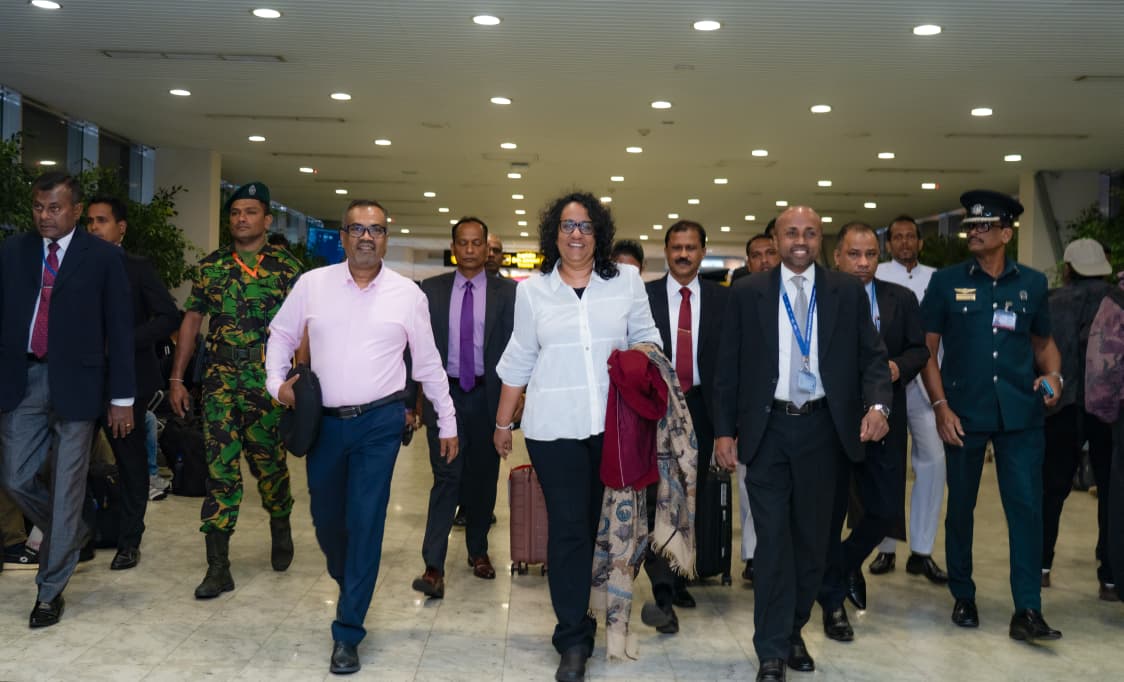
Prime Minister Dr. Harini Amarasuriya departed Sri Lanka on this morning (19 January) to participate in the 56th Annual Meeting of the World Economic Forum (WEF), to be held in Davos-Klosters, Switzerland, from 19 to 23 January 2026.
The World Economic Forum 2026 will be convened under the theme “A Spirit of Dialogue” and will bring together over 3,000 global leaders, including heads of state, government leaders, chief executive officers of leading multinational corporations, policymakers, and technology innovators.
During the visit, the Prime Minister is scheduled to hold a series of high-level bilateral meetings with key international leaders, heads of global institutions, and other distinguished dignitaries.
(Prime Minister’s Media Division)

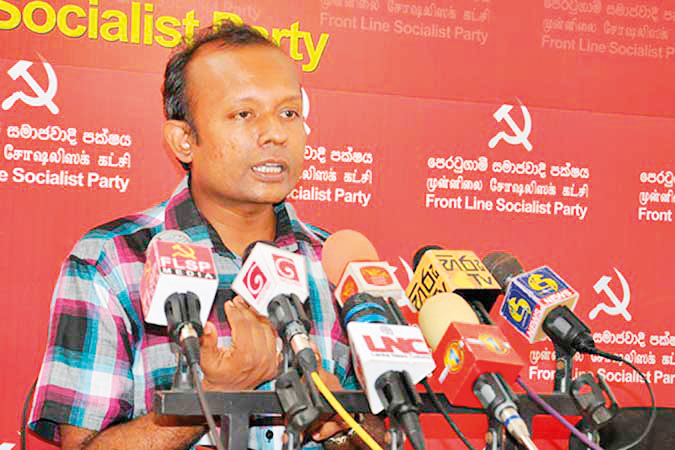
The government is under mounting pressure to release a foreign laboratory report on the controversial coal consignment imported for the Lakvijaya Power Plant, with the Frontline Socialist Party (FSP) accusing the authorities of political interference and tender manipulation.
Speaking to the media after a party meeting in Homagama yesterday, FSP Education Secretary Pubudu Jagoda demanded an immediate explanation for the delay in disclosing the report from a Dutch laboratory, Cotecna, which was commissioned to test samples of the coal stocks in question after doubts were raised about an earlier local laboratory assessment. Jagoda said Cabinet media spokesperson Dr. Nalinda Jayatissa had announced that the report would be submitted by 16 January, but it had yet to be made public.
“The Sri Lankan lab confirmed the coal was substandard and could damage both the environment and power plant machinery. The foreign lab has independently verified the same results, we are told. Yet, political pressure appears to be delaying the release of the report.” He warned that any attempt to issue a false report would eventually be exposed and urged the government and the laboratory to maintain transparency.
SLPP MP D.V. Chanaka told Parliament last week that while 107 metric tonnes of coal were normally required per hour to generate 300 megawatts, but as many as 120 tonnes of newly imported coal were needed to produce the same amount of power due to its lower calorific value. Tests showed the first two shipments had calorific values of 5,600–5,800 kcal/kg, below the required minimum of 5,900 kcal/kg, said.
Jagoda accused the government of tailoring procurement rules to benefit an Indian supplier, citing a drastic reduction in reserve requirements—from one million metric tonnes in 2021 to just 100,000 tonnes in 2025—and alleged previous irregularities by the company, including a 2016 Auditor General finding regarding a rice supply contract and the 2019 suspension of a key agent of the company by the International Cricket Council over match-fixing.
He further criticised systemic manipulation of the coal tender process, including delays in issuing the tender from the usual February-March window to July, and progressively shortening the submission period from six weeks to three, giving an advantage to suppliers with stock on hand.
The Ministry of Energy recently issued an amended tender for 4.5 million metric tonnes of coal for the 2025/26 and 2026/27 periods, following the cancellation of an earlier tender. Jagoda warned that procurement delays and irregularities could trigger coal shortages, higher spot-market purchases, increased electricity costs, and potential power cuts if hydropower falls short.
Jagoda called for urgent investigations into the procurement process, insisting that any mismanagement or corruption should not be passed on to the public.Denying any wrongdoing, the government has said it is waiting for the lab report.
by Saman Indrajith ✍️
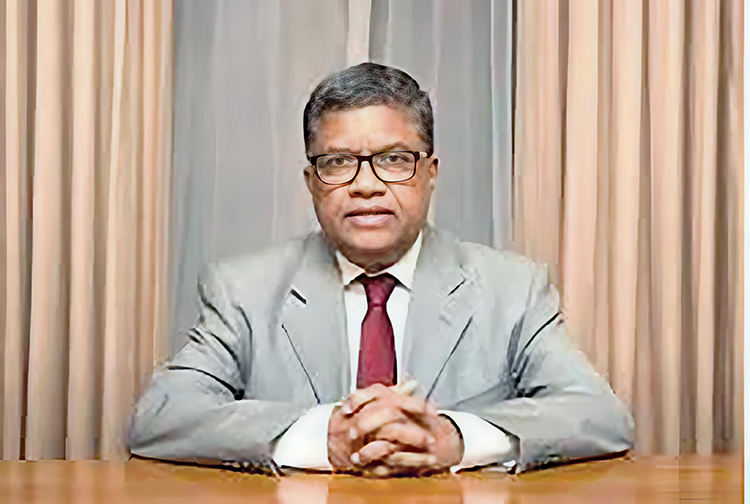
The Communist Party of Sri Lanka yesterday (18) alleged that the US was terrorising countries with unfair tariffs to compel them to align with its bigot policies.
CPSL General Secretary Dr. G. Weerasinghe said so responding to The Island query regarding European countries being threatened with fresh tariffs over their opposition to proposed US take-over of autonomous Danish territory Greenland.
US President Donald Trump has declared a 10% tariff on goods from Denmark, Norway, Sweden, France, Germany, the UK, the Netherlands and Finland with effect from 1 February but could later rise to 25% – and would last until a deal was reached. Targeted countries have condemned the US move.
Dr. Weerasinghe pointed out that none of the above-mentioned countries found fault with the US imposing taxes on countries doing trade with Russia and Iran. Now that they, too, had been targeted with similar US tactics, the CP official said, underscoring the pivotal importance of the world taking a stand against Trump’s behaviour.
Referring to the coverage of the Greenland developments, Dr. Weerasinghe said that news agencies quoted UK Prime Minister Keir Starmer as having said that the move was “completely wrong”, while French President Emmanuel Macron called it “unacceptable.
Dr. Weerasinghe said that Sri Lanka, still struggling to cope up with the post-Aragalaya economic crisis was also the target of discriminating US tariff policy. The top CPSL spokesman said that the recent US declaration of an immediate 25% increase in tariff on imports from countries doing business with Iran revealed the prejudiced nature of the US strategy. “Iran is one of our trading partners as well as the US. Threat of US tariffs on smaller countries is nothing but terrorism,” Dr. Weerasinghe said, stressing the urgent need for the issue at hand to be taken up at the UN.
Responding to another query, Dr. Weerasinghe cited the US targeting India over the latter’s trade with Russia as a case in point. He was commenting on the recent reports on India’s Reliance Industries and state-owned refiners sharply cutting crude oil imports from Russia. The CPSL official said that the EU wouldn’t have even bothered to examine the legitimacy of US tariff action if they hadn’t been targeted by the same action.
Perhaps, those who now complain of US threats over the dispute regarding Greenland’s future owed the world an explanation, Dr. Weerasinghe said. The reportage of the abduction of Venezuela’s President and the first lady underscored that the US intervened because it couldn’t bear the Maduro administration doing trade with China and other countries considered hostile to them, Dr. Weerasinghe said.
The CPSL official said that the NPP couldn’t turn a blind eye to what was happening. Just praising the US wouldn’t do Sri Lanka any good, he said, adding that the Greenland development underscored that the US under Trump was not concerned about the well-being of any other country but pursued an utterly one-sided strategy.
The US dealings with the NPP government, particularly the defence MoU should be examined taking into consideration US tariffs imposed on Sri Lanka at the onset of the second Trump administration and ongoing talks with the US, Dr. Weerasinghe.
By Shamindra Ferdinando ✍️

PM departs Sri Lanka to participate in the 56th World Economic Forum Annual Meeting in Davos-Klosters, Switzerland.

Several killed in Kabul blast, Afghan Interior Ministry says

Senegal beat hosts Morocco to win AFCON 2025 after farcical walk-off

At least six killed in Pakistan as fire rips through Karachi shopping mall

Chile declares ‘state of catastrophe’ as deadly wildfires menace cities

At least 21 killed in Spain after crash involving high-speed trains

‘Dates have the highest sugar content to fight Coronavirus’

Sunday Island 27 December – Headlines

#SundayIsland 17th December – Headlines

Sunday Island – 28th March

Sunday Island Headlines – 21 March

Sunday Island – 21st February – Headlines
-

 Editorial2 days ago
Illusory rule of law
-
 News3 days ago
UNDP’s assessment confirms widespread economic fallout from Cyclone Ditwah
-

 Business5 days ago
Koaloo.Fi and Stredge forge strategic partnership to offer businesses sustainable supply chain solutions
-
 Editorial3 days ago
Crime and cops
-
 Features2 days ago
Daydreams on a winter’s day
-

 Editorial4 days ago
The Chakka Clash
-
 Features2 days ago
Surprise move of both the Minister and myself from Agriculture to Education
-
 Business5 days ago
SLT MOBITEL and Fintelex empower farmers with the launch of Yaya Agro App