
Life style
Malini – Forever in bloom

Langa dunuke malakai- dura manel malaki
Udawediya malaki- mal meda mal landaki….Malini was many exotic flowers in full bloom as revered by her many lovers on the screen. She was very much a Bandura in every sense. While scores of film-makers would keep wanting her over and over in their creations, thousands of Malini-fans would be forever ‘trapped’ in her alluring persona. It was not the historically predictable voluptuousness or sensuality in an actress which won Malini the love of an entire nation, but it was essentially her softness, tenderness which put her on a different pedestal.
BY RANDIMA ATTYGALLE
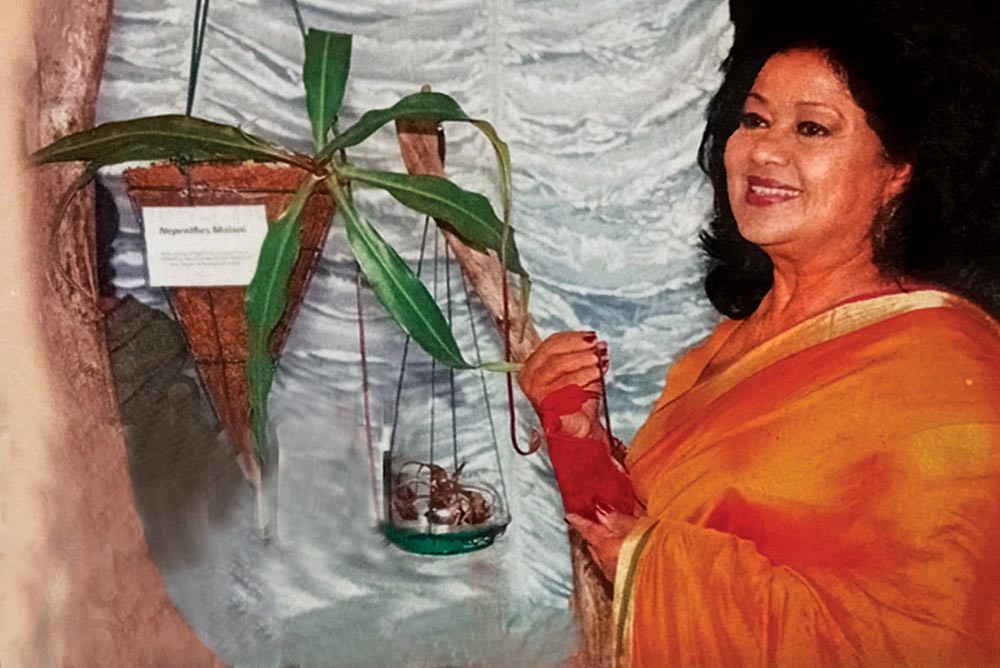
Clad in a pulsating orange sari, Malini Senehelatha Fonseka, the quintessential Queen of Sinhala cinema blended in perfect harmony with Nepenthes Malani-when a new cultivar of Nepenthes (Pitcher plant) or Bandura, as it is locally known, was named in her honour more than ten years ago.
The globally reputed leader in production and export of artificially propagated Nepenthes, Borneo Exotics, led by Robert Cantley and his partner Diana Williams, both British citizens, honoured Malini at an event which took place at the trade fair, Reflection of Sri Lanka, held parallel to Commonwealth Heads of Government Meeting (CHOGM) at Ape Gama in Battaramulla in November 2013. Two years earlier in 2011 Borneo Exotics had named their gold-medal winning exhibit after Oscar-winning actress Dame Helen Mirren at the Royal Horticulture Flower Show at Hampton Court Palace.
Robert Cantley (who first arrived here in 1997), would draw parallels with Dame Helen in whose name he launched Nepenthes Helen, and observe: “Since her debut in the early 60s, Ms. Fonseka’s contribution to the Sri Lankan cinema has been exceptional. So, I thought why not honour an iconic artiste whose cinematic journey span five decades.”
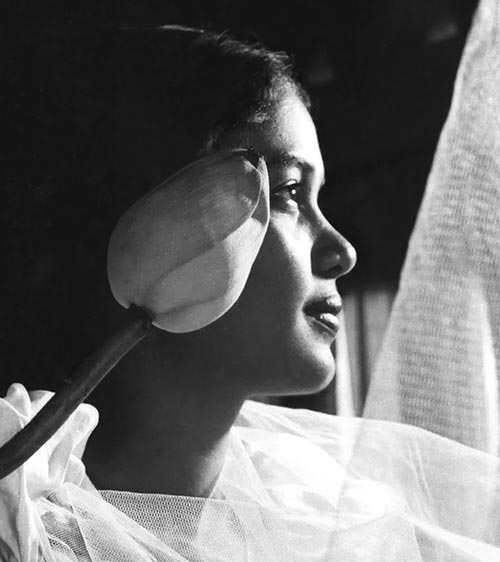
Malini – the exotic Bandura
Watching Malini lying amidst white roses as the nation bid her a teary farewell a few days ago, I look 12 years back when I was fortunate to have been privy to the momentous moment of her being immortalized beyond the world of cinema; in horticultural circles as well.
“I feel that I have blended with mother nature today,” Malini would say flashing her trademark smile which captivated several generations of Lankans. In her typical unassuming way and in her beautifully modulated ‘screen voice’, Malini would go on to remark: “naming a Bandura in my honour after 50 years in the film industry is not just a milestone in my life.
The gesture is also a tribute to the Sinhala cinema and its fans as much as a personal compliment to me.” She would recall a bright green Bandura from her childhood and add, “with its beauty comes its snaring nature, trapping insects which it digests in the pitchers, making bandura exotic in every sense.”
In the film Thushara, Sampath (Vijaya Kumaratunga) would raphsodize about the beauty of Thushara (Malini) : langa dunuke malakai- dura manel malaki
Udawediya malaki- mal meda mal landaki ….
Malini was many exotic flowers in full bloom as revered by her many lovers on the screen. She was very much a Bandura in every sense. While scores of film-makers would keep wanting her over and over in their creations, thousands of Malini-fans would be forever ‘trapped’ in her alluring persona. It was not the historically predictable voluptuousness or sensuality in an actress which won Malini the love of an entire nation, but it was essentially her softness, tenderness which put her on a different pedestal.
A woman of warmth
At her funeral which pulled crowds from near and far, it was this very tenderness which her fans celebrated through tears. Her middle-name ‘Senehelatha’ translating to ‘a woman of empathy and kindness’ further validated it and she lived up to it.
Her contemporaries, film-critics and many others who knew her would testify to this. As a young journalist when I first got the opportunity of talking to her many years ago, I personally experienced the kindness and warmth she radiated. Malini was a star in every sense but stardom hardly moved her.
When I recollect my first newspaper interview with Malini, questioning on what it meant to her to be dubbed as the ‘Queen of Sinhala cinema’, she would broadly smile and say: “people and cinema may have branded me as the queen, but personally I have never felt so big nor do I feel that way even now. I was very fortunate never to have felt that way because if it had gone too much to my head I would have never come this far.”
-

- Malini with Ravindra Randeniya in Aradhana
-

- Vijeya and Malini from a scene in Thushara
-

- With Gamini Fonseka in Awa soya adare
-

- With Tony Ranansinghe in Adarawanthayo
Stamp of femininity
American singer Dolly Parton once remarked, ‘If your actions create a legacy that inspires others to dream more, learn more, do more and become more, then you are an excellent leader.” Our own Malini was all this and more. Beyond her cinematic feats which are well documented, Malini mirrored traits of a true leader which would inspire both women and men alike. She would exemplify the cornerstones of mentoring, empathy and above all, carving a path for several generations to charter.
As H.R. Jothipala would croon in the backdrop, koi yanne banda nalawala- lesi gamane inga solawala- pawena sulage wada mala wage in the Lenin Moraes film Edath Sooraya Adath Sooraya, Malani (playing Kanthi) would walk across the giant screen snubbing her co-star Gamini Fonseka’s advances, disguised as a young lad. Sporting a cap, a shirt and a shapeless pair of trousers, Malini’s sheer femininity cannot be concealed. She remained essentially a wada mala.
All time heart-throb Marylyn Monroe would once say. “Beauty and femininity are ageless and can’t be contrived, and glamour, although the manufacturers won’t like this, cannot be manufactured. Not real glamour; it’s based on femininity.’
Be it her iconic role as Irene in Nidhanaya, Helen in Bambaru Evith, Thushara or Susi to name a few, Malini’s feminine stamp was unmistakable. And this she achieved effortlessly in dissimilar roles from the lover, the matriarch (in Wekanda Walauwa) to the bikkuni (in Uppalawanna). Once in an interview, Malini would candidly admit that if she could turn back the clock, she would have played all of them once more. “However, some of them, I may have even played better,” she would look back.
Delicate beauty
Playing opposite Gamini Fonseka, Vijaya Kumaratunga, Tony Ranasinghe and Ravindra Randeniya- acclaimed as the ‘classical lovers’ of the Sinhala cinema, Malini would capture the imagination of a nation. Many women of the 60s and 70s- the golden era of the Lankan cinema, would have no doubt longed to be in her shoes at least for a day. Malini’s exquisite screen voice rendered her even more special. Her nuances in characterization were subtle. Her beauty was delicate.
Malini would once say: “In our heyday, we too would follow fashion trends, put make-up on, but we knew where to draw the line. By blindly following the so-called trends, you cannot maintain your image. Make-up and all the other externals are temporary, what is important is your strength of character.’ She walked the talk to her end. Despite her prolonged battle to regain her health, Malini remained strong in her will power.
In her career spanning nearly six decades, Malini acted in over 150 films, directed and produced some and even left her footprint on the mini-screen, proving her versatility and adaptability. Malini bridged generations exploring diverse media. “The test of real talent is the ability to capture an audience through different media,” she would once say and she was a living testimony to it.
A love like no other
Malini experienced the best and the worst in life. Although she was larger than life, Malini was very much human. Despite her failing health, the love she received from many, transcending social standing kept her flame burning until the end. “When you realise you are loved by thousands, that feeling itself has a lot of healing power,” she would reflect. At the felicitation ceremony which marked her 78th birthday a few weeks before her passing, Malini would tell a full-house, “I have come looking for love,” echoing the words of one of her best-known films Awa soya adare. Malini fired a nation’s imagination to dream as she would say, “artistes are essentially dream-makers.”
Watching Malini going on her final journey last Monday was an exemplification of renowned British actress Vivien Leigh’s words: ‘Dear Lord, I’m so grateful I’m still loved.’ Malini loved well she will forever be loved by a nation that will continue to hum the much-loved lyrics from the film Adare hithenawa dekkama:
Dese wiman dorin
Sihina ruwan thiren
Nikmi golu basin
Parewi rejina lesin
Oba piyamba gosin….

Ramani Fenando’s new Image and Etiquette Academy
In a world where first impressions speak before words, Sri Lanka’s beauty icon Ramani Fernando has taken a bold step beyond the salon chair to shape confidence from within. Her newly launched Etiquette and Image Academy is designed to refine not only appearance, but presence, poise and personal power.
Step into a space where confidence meets sophistication, Ramani Fernando Academy is redefining how Sri Lankans approach personal branding ,offering a unique blend of ettiquette, style and communication mastery.
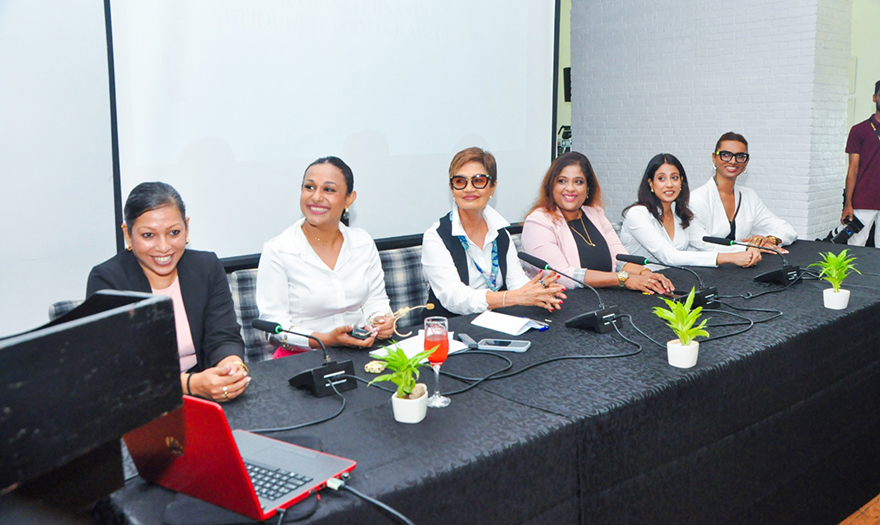
Her newly launched personal branding and EtiquetteAcademy was unveiled in a simple ceremony at the Galle Face hotel. This marks a bold and timely step into the realm of confidence leadership, presence and modern social grace.
Colombo’s social elite, corporate leaders, fashion insiders and longtime clients gathered in celebration of a vision that seeks to shape not just appearance but cofidence building.
Ramani, in her opening speech, said “our courses are carefully designed to meet with international standards, ensuring participants recieve training that meets both local and global expectations.
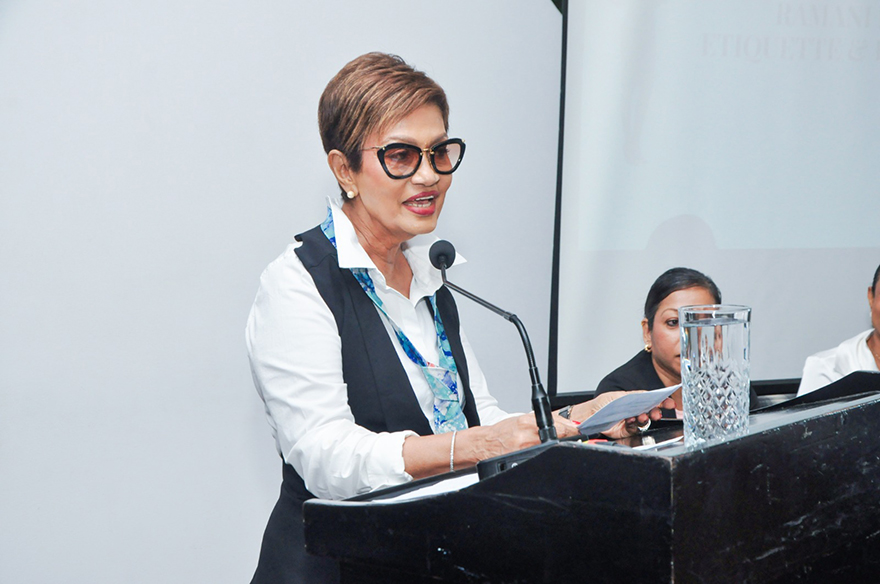
Ramani Fernando – shaping confidence
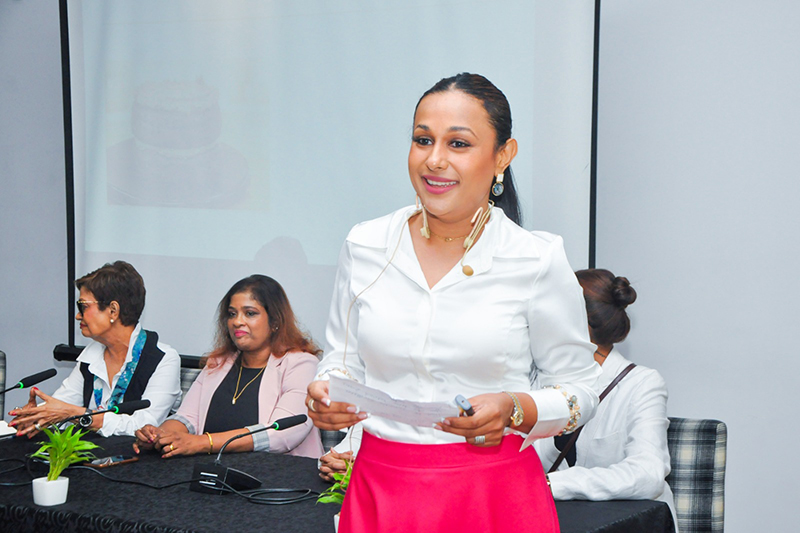
Professional face of etiquette training
Faith Launders who is the Director of Etiquette and Protocol in the Academy pointed out this personal branding and etiquette programmes will help participants cultivate grace, confidence and refined personal style through expert guidance. A former Miss Sri Lanka beauty queen, with experience in aviation, will contribute a creative and professional lens to the Academy’s curriculam.
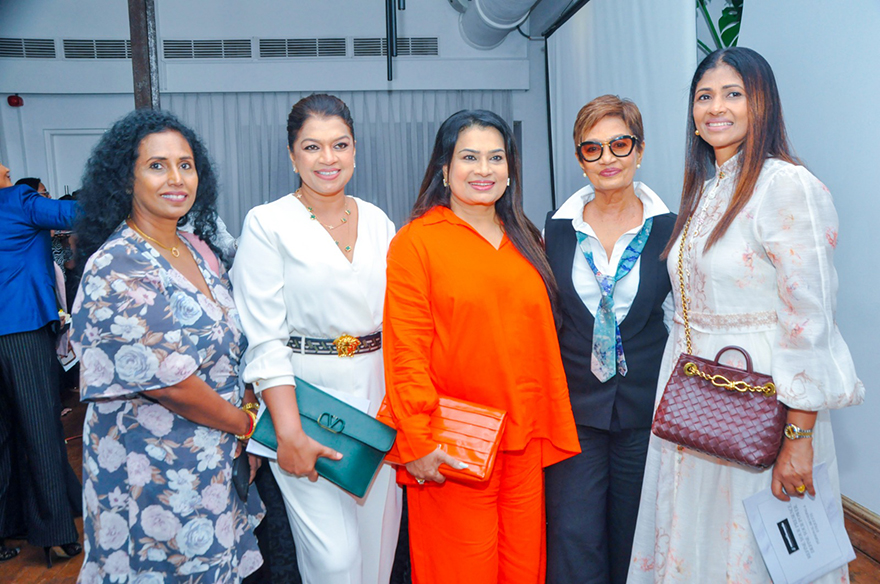
Invitees from the world of fashion gathered to celebrate the occasion
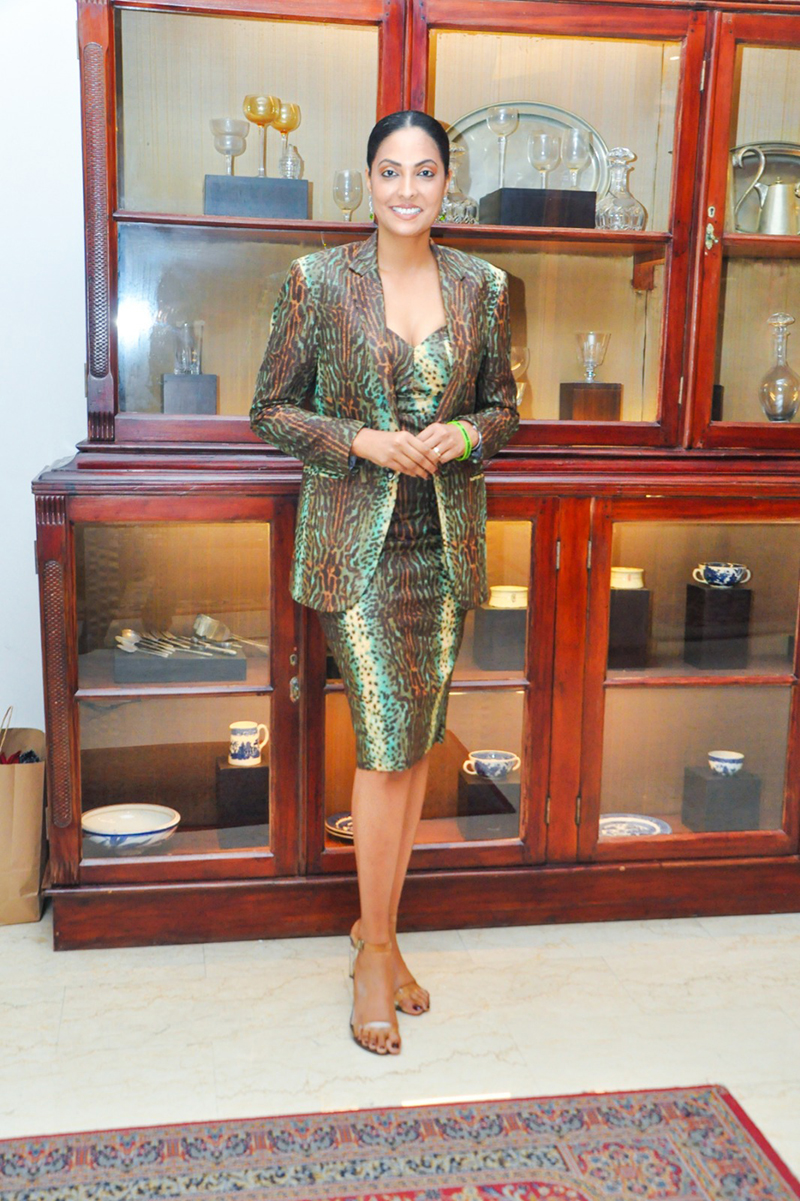
Carolyn Jurie

Chalana at the helm of beauty
She brings professionalism, poise and a strong commitment to cultivate confidence and promote refined social skills among students. Known for her approachable style and inspiring presence, she strives to create an inclusive learning space where students can transform into confident individuals to navigate life with dignity and elegance.
For decades, Ramani has been a transformative force in Sri Lanka’s beauty industry.
and now this venture signals a natural evolution from external refinement to the art of personal distinction.
The programme blends traditional etiquette with contemporary relevance, offering personal branding and professional image building both in social and corporate etiquette. These are some of the programmes:
= Communication skills and body language, grooming, style and wardrobe alignment.
= Digital image and social media conduct.
= Platforms or in social events the ability to command attention with confidence has to become an important tool.
In today’s hyper connected world, impressions are formed in seconds often long before a handshake, whether in boardrooms, diplomatic circles or in the media.
The teaching staff consists of industry experts trainers amd adminitrators led by othe senior professionals
The Managing Director, Lakmini Lenagala, Training and Administrative Manager, Ramono, Navaratnarajah, Personal Assistant, Merisha Aserappa and Chalana Munasinghe are all industry professionals who have experience, theoretical knowledge and practical skills.
They are experienced instructors with hands on expertise in grooming, etiquette, image building and communication.
While the vision of the Personal Branding and Etiquette Academy belongs to Ramani Fernando, its strength lies in the collective expertise of the professionals who bring the programmes to life.
By bringing together specialists from diverse fields, the Academy offers participants a rare opportunity to refine every dimension of their public and private persona under one roof.
Sessions cover skin care, hair, make up, wardrobe planning and colour coordination.
Communication and public speaking recognising that presence is also conveyed though voice and expression, the Academy offers training in articulation tones, posture and body language.
The training also includes table manners, event conduct, professional courtesy and cross cultural awareness. This Etiquette Academy us designed for both women and men offering guidance on grooming, communication, professional conduct and social confidence.
The Academy acts as a transformative space – one that equips individuals not merely to succeed but to stand out with authencity and grace. The institution reflects Ramani Fernando’s belief that true elegance is a way of being not simply a way of dressing!.
By Zanita Careem
Pix by Thushara Athapatu
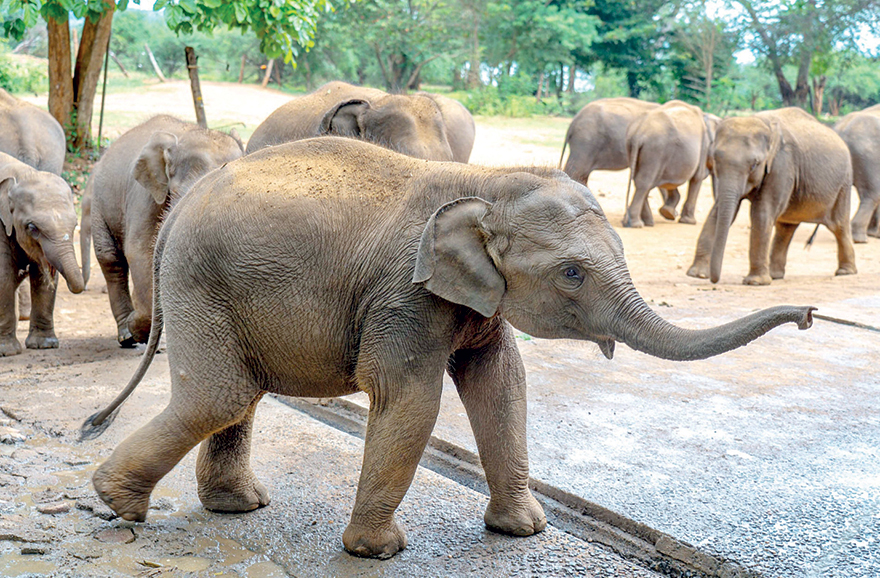
World Wildlife Day 2026:
He arrived at the Elephant Transit Home in Udawalawe on March 23, 2024, barely eight months old. Kalo had spent an unknown number of days trapped at the bottom of an abandoned well near Galenbidunuwewa in Sri Lanka’s Anuradhapura District, separated from the herd he had lost. When wildlife officers from the Department of Wildlife Conservation pulled him out, they found a frightened calf, but also something else: resilience.
Today, nearly two years after his rescue, Kalo is no longer the fragile elephant calf who arrived at the Transit Home alone. He is growing steadily, eating well, and has fully integrated into a group of calves preparing for eventual release. His progress is measured not only in size, but in behaviour like social bonding, herd interaction, and independent foraging skills that will determine his readiness for life beyond human protection. Since his arrival, Kalo has grown from 125 kilograms to over 300 kilograms. The wounds he sustained before rescue have fully healed, and he is no longer on any specific medical treatment instead routine management only. He is, by every measure, active, playful, and thriving.
The Elephant Transit Home, also known as Ath Athuru Sevana, has operated within Udawalawe National Park since 1995. It is not an orphanage in the traditional sense. There are no rides, no performances, no human dependency. Human contact is limited strictly to feeding and veterinary care. The rest of the time, the calves are left to bond with one another.
That philosophy is intentional. Elephants are deeply social animals, and calves that grow too attached to humans struggle to survive in the wild. The daily play, the hierarchy, and the formation of peer bonds are all part of a structured rehabilitation process designed to prepare them for rewilding.
Since its establishment, more than 200 orphaned elephants have passed through the Elephant Transit Home. Over 100 have been successfully released back into the wild. In July 2025 alone, six young elephants were returned to Udawalawe National Park during the facility’s 26th release. If all continues as planned, Kalo will follow that path in 2029.
On May 8, 2024, less than two months after Kalo’s rescue, Sun Siyam Pasikudah formalised its long-term commitment to his care through the CarePhant initiative under Sun Siyam Care. The resort pledged ongoing monthly contributions to support Kalo’s nutrition, veterinary care, and daily rehabilitation needs through to his planned release.
Sun Siyam Care is the group’s overarching sustainability programme that integrates environmental stewardship, biodiversity conservation, community engagement, and long-term socio-economic value creation across all Sun Siyam Resorts in the Maldives and Sri Lanka. Through Sun Siyam Care, we invest in initiatives that protect marine and terrestrial ecosystems, reduce waste and single-use plastics, improve resource efficiency, support renewable energy and local sourcing, and promote awareness and participation among guests and communities alike. Kalo’s journey from rescue to rewilding is one example of how Sun Siyam Care extends beyond hospitality, connecting responsible tourism with meaningful environmental and wildlife conservation impact.
“We are delighted to embark on the CarePhant project and become stewards of Kalo’s well-being. Sri Lanka’s elephants are not just a conservation issue; they are part of the living identity of this island, and we feel a genuine responsibility to play our part in protecting them,” said Arshed Refai, General Manager, Sun Siyam Pasikudah.
For Chaminda Upul Kumara, Sustainability Project Manager at Sun Siyam Resorts, the commitment reflects the deeper purpose of Sun Siyam Care. “Conservation is not a single moment. It is a process that requires patience and consistency. With Kalo, we committed to being part of that journey from rescue to release. Every month of support is an investment in his return to the wild,” said Upul.
In the month that marks World Wildlife Day, observed on 03rd March, Kalo’s story serves as a reminder that conservation is not abstract. It is individual. It is long term. And it depends on partnerships between public institutions and responsible private sector actors. In a landscape where habitat loss and human–elephant conflict continue to threaten Sri Lanka’s wild elephant population, sustained commitments like CarePhant demonstrate how responsible tourism can contribute to tangible, measurable conservation outcomes.
Sun Siyam Pasikudah, which holds Travelife Gold Certification and operates under the broader Sun Siyam Care sustainability framework, integrates conservation, local sourcing, and community engagement into its daily operations. The CarePhant project builds on that foundation by linking responsible hospitality directly to wildlife protection.
Three years from now, in 2029, Kalo is expected to walk beyond the protective boundaries of the Elephant Transit Home and into Udawalawe National Park as a young wild elephant. Every veterinary check, every month of nutritional support, and every bond formed within his herd brings him closer to that moment.
“When Kalo walks back into the forest in 2029, it will mark the completion of a journey that began in crisis but was sustained through commitment,” added Arshed Refai. “We are proud that Sun Siyam Care is part of that long-term promise.”
Until then, Kalo continues doing what young elephants at Ath Athuru Sevana are meant to do: growing, learning, and preparing quietly for a life in the wild.

The High Commission of the Islamic Republic of Pakistan and the Pakistani community based in Sri Lanka celebrated the 86th National Day of Pakistan with traditional flavour and resolve to make Pakistan a strong, vibrant and progressive democratic welfare state.
The day commemorates a defining moment that led the foundation for the creation of Pakistan.
The ceremony commenced with the raising of their national flag, fluttering proudly against the morning sky, symbolising faith, unity and discipline, the ideals upon which the nation was built. Dignitaries, members of the diplomatic corps, community leaders and guests gathered in silence as the national anthem resonated creating an atmosphere charged with emotion and national pride .
Cultural elegance added a distinctive charm to the occasion, with traditional attire and warm exchanges reflecting the rich heritage of Pakistan. Guests were later invited to partake in light refreshments, providing an opportunity for cordial interacton and celebration.
Acting High Commissioner of Pakistan, Zunaira Latif unfurled the Pakistani flag to the tune of Pakistan’s national anthem in a ceremony held at the Pakistan High Commission
The National Day of Pakistan is celebrated on 23rd March every year in remembrance of the historic 1940 resolution passed in Lahore, calling for a separate homeland for Muslims of the subcontinent that ultimately led to the creation of Pakistan on August 14, 1947.
Special messages by the President and the Prime Minister of Pakistan were readout, in which both the leaders highlighted the importance of the day and paid tributes to Quaid-e-Azam Muhammad Ali Jinnah.
The Acting High Commissioner of Pakistan in her message on the occasion said that Pakistan and Sri Lanka continue to maintain their traditionally close and mutually beneficial relations, based on mutual respect and trust. She said that the strength of the Pakistan – Sri Lanka relationship lies in diversified engagement in many fields such as trade, defence, science, culture, and education. She also extended sincere greetings and best wishes on behalf of the government and people of Pakistan to the government and people of Sri Lanka.
-

 Features6 days ago
A World Order in Crisis: War, Power, and Resistance
-

 News3 days ago
Tariff shock from 01 April as power costs climb across the board
-

 News6 days ago
Minister Jayakody indicted in Colombo High Court over alleged corruption
-
 News4 days ago
Inquiry into female employee’s complaint: Retired HC Judge’s recommendations ignored
-

 News6 days ago
Police look for male partner of Chinese woman found stabbed to death at an apartment in Kohuwala
-

 Features4 days ago
New arithmetic of conflict: How the drone revolution is inverting economics of war
-
 Business2 days ago
Hour of reckoning comes for SL’s power sector
-

 Features5 days ago
When seabed goes dark: The Persian Gulf, cable sabotage, and race for space-based monopoly