
Editorial
Making sense of the U.S. election

To many of us in Sri Lanka, born and bred in the Westminster tradition of ‘One Man One Vote’, the Electoral College system of electing the President of the United States makes little sense. The USA is a country that prides itself as the cradle of democracy, condemning other systems of elections as inferior, authoritarian, even dictatorial. Proponents of the Electoral College claim, according to a Google search, that “the nationally popular system promotes political stability, preserves the Constitutional role of the states in presidential elections; and fosters a broad-based, enduring and generally moderate political party system”.
This theory does not seem to reflect the real problems of a system which was created in a bygone era with a vastly different political and racial climate. The Electoral College is not only unique to the United States, but the system is only used to elect the presidency, and is the only election in the US in which the candidate who gets the highest number of votes does not necessarily win. They have in 90% of the elections, proponents claim. But who can forget Trump won last time round after polling nearly three million fewer votes than Hillary Clinton.
The origin of the system is also unique in its purpose, which was hardly democratic. It was designed to ensure that the president of the United States would come from the then largest state, Virginia, and the slave states would be able to use their slave population to influence the election of the president. The Electoral College is made up of representatives of each of the 50 states, and the District of Columbia. When the American voter casts his ballot for his choice of the president, he is really voting for a candidate of his party in the state, known as an elector. There are 538 such electors nationwide, who then cast their votes for the president on behalf of the voters in the state.
These electors are chosen on the basis of the number of congressional districts in each state, plus two additional votes representing the state’s Senate seats. Washington D.C., though not a state, is also assigned three electoral votes. The total number of electoral votes is supposed to reflect the populations of these states; however, the least populous states, like the Dakotas and the states of New England tend to be over-represented because of the mandatory minimum of three votes for each state. The most populous states, like California, Texas and Florida are under-represented in the electoral college.
Also, the Electoral College operates on a winner-take-all system, where the candidate with a majority of votes in the election in each state is awarded all of that state’s electoral votes. As an example, Donald Trump won Florida in 2016 with a margin of 2.2% over Clinton, and claimed all of Florida’s 29 Electoral College votes. Two of the four presidential elections held in this century have resulted in the candidate who won the popular vote losing the presidency; Clinton beat Trump by 2.9 million national votes and Al Gore beat Bush by approximately 500,000 votes. If the archaic Electoral College had been retired to the dustbin of history, Democrats would have very likely had consecutive presidents for the past 20 years.
The election of Donald Trump with a minority vote proved to be a tragic outcome, not only for the United States, but also for the world outside. Trump has earned universal contempt, and relinquished America’s mantle as the Leader of the Free World. Strangely, the 2020 elections which are currently in progress shows that Trump’s popularity in the United States has not been overly diminished. Biden currently has a popular vote lead of over four million votes, but Trump has also exceeded the 60 million votes he received in 2016. To paraphrase one of our regular columnists who makes no secret of his hatred for Donald Trump, the demographic composition of American society has been undergoing rapid changes, and the “brown invasion” touted by Trump has made for a large swathe of white Americans fearful of losing the white privilege they had enjoyed for centuries.
Although the official result of the election will be known only sometime next week, Biden’s success, both in terms of the popular vote and the Electoral College, have been accepted. Though not by Trump, who has been ranting and tweeting that the election was a fraud and has been rigged. He has demanded recounts in states like Michigan and Wisconsin, which Biden has won fairly comfortably. He has already filed a slew of lawsuits contesting the election in many of the battleground states, some of which have admittedly been very close. He is also inciting his “militia” of white supremacists and the alt-right Proud Boys to post-election violence, which some alarmists have predicted would end in a second civil war.
The strange concept of a Lame Duck presidency, also unique to the United States, where the defeated president remains in office, with all the awesome powers of the presidency from the date his defeat is announced to the inauguration of the newly elected president on January 21, 2021, may cause unforeseen legal problems, even violence. A hostile Republican Senate, with a pliant six/three majority in the Supreme Court, will only help Trump in his efforts to subvert and destabilize the political process. Sri Lanka has also had sporadic instances of post-election violence in the past. But the violence which could be wrought in the USA, with private militia armed to the teeth with military style weapons, will make anything we have encountered in the past seem like a walk in the park.



Monday 19th October, 2026
Buddhist monks’ Satyagraha at Viharamahadevi Park, seeking the release of Ven. Galaboda Atte Gnanasara Thera from prison, took a dramatic turn on Saturday evening with a confrontation between protesters and the police. Ven. Balangoda Kassapa Thera, one of the monks leading the protest, was rushed to the Colombo National Hospital. Subsequently, he had himself moved to a private hospital, claiming that he feared for his life. He has been in the government’s crosshairs due to his active involvement in protests.
Satyagraha activists insist that a group of policemen led by an ASP roughed up Kassapa Thera. Police Spokesman ASP F. U. Wootler lost no time in denying the allegation, claiming that Kassapa Thera had ‘slipped and fallen’. The police cannot expect the discerning public to buy into their claims, and cynics say they do not believe anything until the police deny it. It may be recalled that ASP Wootler has been found guilty of violating fundamental rights of a lawyer and ordered to pay compensation from his personal funds.
He that hath an ill name is half-hanged, as the old saying goes. One may recall that when rugby player Wasim Thajudeen was found dead in his car in 2012, the police promptly claimed that he had died in an accident. They ruled out foul play. But subsequently they admitted that Thajudeen had been murdered. In 2018, the CID blamed former LTTE combatants for the killing of two policemen on duty in Vavunathivu and made some arrests. Later, they admitted that the National Thowheed Jamaath, which carried out the Easter Sunday bombings, had murdered the two constables. Thugs armed with clubs and iron rods freely operated in full view of the police during President Mahinda Rajapaksa’s government, and when this was taken up at a media briefing, the then Police Spokesman had the chutzpah to deny the allegation, claiming that they may have carried ‘sticks’ to ward off street dogs. So much for the police and their claims.
It is often said that the truth is the first casualty of war. The same holds true for other conflicts as well. So, we can’t expect both sides to the current dispute between Buddhist monks and the government to tell us the truth, the whole truth and nothing but the truth. Only a thorough, impartial investigation will help ascertain what really happened on Saturday evening at Viharamahadevi Park, leading to Kassapa Thera’s hospitalisation. The government must order a probe into the alleged assault incident.
Self-righteous Opposition politicians are trying to dupe the public into believing that the police neither committed excesses nor engaged in political work under their watch. Crackdowns on protests are not of recent origin, and the police have acted like storm troopers under successive governments. The police have a shameful history of doing dirty work for all governments and allowing ruling party thugs to operate alongside them during previous governments. But the fact that police excesses are not unprecedented does not justify suppressing people’s right to stage peaceful protests under the incumbent administration.
The JVP thrived on protests and capitalised on the 2022 Aragalaya to propel itself to power. At the height of the uprising, it also sought to lead protesters in a bid to capture Parliament, but failed. Today, the JVP/NPP is practising the very antithesis of what it preached and did while out of power. Many of the monks engaged in the current Satyagraha at Viharamahadevi Park campaigned hard for the JVP/NPP, enabling its swift rise to power, in 2024.
The police have urged the public to refrain from sharing unverified videos of Saturday’s incident via social media to discredit them. One cannot but agree that social media must not be abused to disseminate disinformation. But shouldn’t the police first take action against government propagandists who are carrying out social media disinformation campaigns with impunity?
Coercive measures the current administration adopts to discourage protests and the aggressive manner in which the police enforce them could offer a foretaste of what is to come if the proposed Protection of State from Terrorism law, criticised by human rights groups for its draconian features, if enacted.

A group of Buddhist monks and laypersons were staging a sit-in near the Presidential Secretariat at the time of going to press. The police obtained a court order yesterday morning prohibiting the protest on the grounds that it was being held in a high-security zone. Speculation was rife that the police would be able to disperse the protesters. However, all indications are that the campaign for the release of Ven. Galagoda Aththe Gnanasara Thera from prison is unlikely to end, and the current protest may be shifted to some other venue.
Ironically, the monks’ staged their sit-in at the cradle of Aragalaya, which paved the way for the JVP-NPP’s meteoric rise to power. What began to unfold near the Presidential Secretariat yesterday is more than a protest; it is a test of strength for the government, which may try every trick in the book to prevail in the current dispute.
Opinion may be divided on the protesting monks’ demand for a presidential pardon for Gnanasara Thera, but the current crisis has stemmed from the government’s mishandling of the decision to produe him in court in lay attire. The government first sought to justify the prison officers bringing him to court, dressed in a sarong and shirt. Then, it made an about-turn and changed the prison rules and regulations, allowing monks in jail to appear in court, wearing saffron robes. The Opposition and independent legal experts have argued that there was no need for President Anura Kumara Dissanayake to appoint a committee to review prison regulations, and the Minister of Justice could have simply directed the prison authorities to do what the committee took days to recommend. The government’s delayed action drove the protesters to launch a march from Kandy to Colombo and escalate their demand, calling for the immediate release of Gnanasara Thera. This is what happens when governments overestimate their strength, ignore the ground reality and refuse to take prompt action to resolve issues.
Sri Lankan governments with two-thirds majorities paradoxically become their own enemies. Impervious to reason, they act according to the whims and fancies of their leaders and take unnecessary risks much like drunk drivers recklessly speeding across unprotected level crossings. The SLFP-led United Front government (1970-77) succumbed to the arrogance of power and its two-thirds majority became its undoing, as it were. President J. R. Jayewardene’s government (1977-88) plunged itself as well as the entire country into chaos by misusing its supermajority. President Mahinda Rajapaksa suffered a painful pratfall in 2015 as his government misused its two-thirds majority, and President Gotabaya Rajapaksa had to head for the hills, together with his siblings, and resign although his government had mustered a supermajority. The incumbent government has not learnt from the predicament of its predecessors.
Political rhetoric may be effective in the short term, but it cannot help suppress the truth or obscure reality. At a recent meeting with a group of representatives of the Maha Nayake Theras, who argued that Gnanasara Thera should be allowed to wear his robe, President Anura Kumara Dissanayake said he did not want to issue an order making an exception for one individual while prison regulations remained unchanged and he would appoint a committee to look into the matter and make recommendations. The committee recommended that Buddhist monks and other members of the clergy serving jail terms be permitted to appear in courts in their robes. It was obvious that the President had the prison regulations amended primarily to benefit Gnanasara Thera, while extending the same benefit to other imprisoned monks. The President said something similar when he met a delegation of the Bar Association of Sri Lanka over his government’s move to raise the retirement ages of the superior court judge. He insisted that it was not for the benefit of any particular individual that the 22nd Amendment (22A) would be enacted. But it was obvious that although the government moved to increase the retirement ages of all judges subsequently, 22A was primarily intended to benefit one particular judge who was reaching the age of 65.
The government may have thought trouble would end for it with Gnanasara Thera’s return to prison, but his imprisonment has become an even bigger problem, with President Dissanayake coming under increasing pressure to grant him a presidential pardon. If he gives in, the government will face serious questions over its reversal of policy on presidential pardons and what its supporters may view as a capitulation to the very forces it pledged to defeat. He thus finds itself in a dilemma.

Saturday 17th October, 2026
There seems to be no end in sight to controversies the JVP-NPP government creates. It has been reported that the ruling party parliamentary group has proposed that the no-confidence motion (NCM) submitted by the Opposition against Speaker Jagath Wickramaratne be referred to the Attorney General for his opinion and recommendations. Some Opposition politicians have claimed on social media that this move could be a bid to block the debate on the NCM. This is something that not even the SLPP-UNP government contemplated. The previous administration allowed an NCM to be moved against Speaker Mahinda Yapa Abeywardena in 2024 and defeated it.
Minister Bimal Rathnayake has gone on record as saying that the government is ready for a debate on the NCM against the Speaker. This is the government’s official position, but anything is possible in Sri Lankan politics characterised by about-turns. The government is wary of taking up the NCM at issue, which is a can of worms. Therefore, the possibility of the NPP doing everything possible to prevent a debate on it cannot be ruled out. It may have sent a trial balloon by leaking information about how it is planning to set about the task.
One may recall that in August 2025, the government effectively blocked an NCM against Deputy Defence Minister Aruna Jayasekara, with the Speaker ruling that the motion was out of order. Thirty-two Opposition MPs, including Opposition Leader Sajith Premadasa, had submitted that motion against Jayasekara, raising serious concerns about a potential conflict of interest arising from his former military role and the ongoing investigations into the 2019 Easter Sunday bombings. But the allegations against Jayasekera have not gone away.
If the government is planning to seek the Attorney General’s opinion as part of a strategy to scuttle the NCM against the Speaker, as reported, such action will be far more politically damaging than facing a debate on it. Legal experts inform us that there are no grounds on which the NCM at issue can be rejected.
Powerful governments have made a mockery of their commitment to upholding parliamentary traditions and good governance by playing politics with NCMs. One may recall that the JVP was among the political parties that condemned the J. R. Jayewardene government for abusing its steamroller majority to do something despicable to an NCM. In 1980, the Opposition sought to postpone the debate on an NCM it had moved against the then Speaker Bakeer Markar for backing President Jayewardene’s efforts to retain Abeyratne Pilapitiya as a UNP MP by nominating him to the Kalawana electorate despite a Supreme Court ruling that his election was void. Speaker Markar echoed President Jayewardene’s assertion that the Kalawana seat had not fallen vacant, and therefore a by-election was not warranted. The NCM against the Speaker was scheduled to be debated on 23 December, 1980, but the Opposition wanted it postponed in view of possible legal implications of the by-election the UNP was trying to avoid. But claiming that the NCM, moved by the Opposition, was of utmost national importance and therefore had to be debated urgently, the UNP government took it up, put it to the vote and defeated it! All UNP MPs, including the proposer and the seconder, voted against the NCM! The Opposition boycotted the NCM debate. The UNP will never be able to live down its shameful action.
The JVP-NPP government would do well to refrain from resorting to tactics that evoke memories of the governments the JVP vehemently condemned as dictatorial regimes and doing what not even its predecessors did. It is fervently hoped that the allegations about a move to block the NCM against the Speaker are not true.

Showers or thundershowers will occur in most parts of the island after 1.00 p.m

CTU: Teacher shortage casts doubt on govt.’s education reforms

Norochcholai to remain offline for several days after blackout

President links businessman held with arms to politicians

CID probe sought into tusker’s death amid fears of elephant-killing syndicate

Bill to allow remote witness testimony in courts

‘Dates have the highest sugar content to fight Coronavirus’

Sunday Island 27 December – Headlines

#SundayIsland 17th December – Headlines

Sunday Island – 28th March

Sunday Island Headlines – 21 March

Sunday Island – 21st February – Headlines
-

 Latest News6 days ago
Nissanka’s return headlines Sri Lanka’s Test squad against Pakistan
-

 News5 days ago
Sri Lanka, India caught in US-Iran ship crisis
-
 Latest News6 days ago
Imran Khan’s PTI braces to fight federal takeover of Khyber Pakhtunkhwa
-
 Latest News5 days ago
Kusal Mendis’ unbeaten 87 hands Sri Lanka consolation win
-

 Latest News5 days ago
Missiles intercepted near Riyadh after Saudi coalition hits Yemen fuel depot
-
 News6 days ago
Mahinda and Shiranthi hospitalised
-

 News6 days ago
Presidential pardons: Govt. studying Justice Thurairaja’s recommendations – Minister
-
 News2 days ago
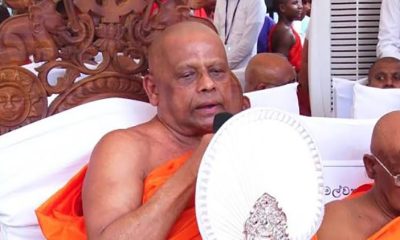
Asgiri Mahanayake calls for immediate release of Gnanasara Thera