
Features
Maitriya Hall – Its History and Heritage


by Prof Manouri Senanayake, President Servants of the Buddha
Nestled behind the Mettarama temple in Lauries Road Bambalapitiya and accessed through the gates of the hallowed temple, in the shade of a leafy environment sits the stately building “Maitriya Hall”. The tangible and physical character of this place is fully understood only if experienced. Walking in through the arched doorways of this historic building one is embraced by an immense sense of peace and quietude, which belies the fact one is the midst of the city with its hustle and bustle.
This week in April 2023, the Maitriya Hall completes 120 years of fulfilling the purpose it was built for – that of disseminating the Buddha’s teachings, in English. The anniversary event is an opportune moment to reflect on the significance and value of this Hall and its unique historical, architectural and spiritual aspects.
Historical details
In the late 1880s a few Buddhist families in Bambalapitiya were concerned their offspring were not exposed to the Buddha’s teachings and erected a “Bana Maduwa accessed through a narrow gravel path”.(1) The Dhamma Talks intermittently held here took a meteoric rise when this group invited a brilliant young scholarly monk, Pelene Vajiragnana Thera, to reside at the site. The transformation of this preaching hall or Dharma Sala to ‘Siri Vajiraramaya’, the world renowned bastion of the Buddha Sasana, is history well known.
As recorded by Dr. Ananda Soysa a son of a member of this history-making group, ‘within the small group of devotees it was Mr. J.E.R. Pereira who made the momentous invitation to the Most Venerable Pelene Vajiragnana Thera’. (1). Others in the group were G.J Silva, W.J. Soysa, W.A.de Silva, Simon Alwis and G.G.M. Silva.(1). As a young boy in the late 1920s Dr Soysa carried a lantern ahead of the monks as they traversed the footpath that was snake infested. Today this narrow path is the traffic burdened Vajira Road in Colombo 4.
A few years later, it was the same John Ellenson Richard Pereira (J.E.R. Pereira) who steered the construction of Maitriya Hall, a parallel venture to cater to the English educated residents of Colombo. Well preserved documents show that in 1899 Mr. J.E.R. Pereira founded the Buddhist Aid Association comprising of “thirteen like-minded Buddhists” who jointly funded the purchase of a piece of land in Lauries Road. Their aim was “to establish a school room to teach Western languages to Buddhist monks” and to provide a hall “for the study and promulgation of Buddhism, in English”.
Around this time, in 1900, Allan Bennett, a young scientist from London, arrived in Sri Lanka (Ceylon) in search of the Dhamma, having read the Light of Asia. He befriended Dr. Cassius Pereira, a son of the Pereira family. The dearth of monks with ability to teach in English was spotlighted when the need arose to find a teacher adept at imparting both Pali and the Dhamma to Allan Bennett. The search succeeded and the student made amazing progress under the tutelage of Venerable Weragampitiye Revata Maha Thera, an erudite monk in Kamburugamuwa. Allan Bennett who grasped Pali in the exceedingly short space of six months proceeded to get ordained. (2)
There is no doubt Allan Bennett played a major role in influencing Mr. J.E.R. Pereira to build a large Hall to replace the existing small thatched roofed building they had purchased. The new building cost Rs. 6,000. Mr and Mrs J.E.R. Pereira were the prime donors with Jeannie Mary Pereira, wife of J.E.R. Pereira laying its foundation stone.
The hall was ceremonially opened on April 25, 1903. As reported in Sarasavi Sandaresa Venerables Hikkaduwe Sri Sumangala, Mahagoda Gnanissara, and Dodanduwe Piyaratana Theras were at the head table. Having ordained in Myanmar, Allan Bennett returned as Bhikkhu Ananda Maitriya, and after paying obeisance to the three senior monks he addressed the gathering. Thereafter Bhikkhu Ananda Maitriya delivered talks every Sunday evening until he bid farewell to a tearful crowd after speaking on “Right Living”. The stirring speeches he delivered led Mr. J.E.R. Pereira to name the hall “Maitriya Dharma Sala” .
Elizabeth Harris author, researcher and Buddhist scholar reports “the audience was mesmerized at seeing a white person in robes”. Bhikkhu Ananda Maitriya, later also known as Ananda Metteyya and Ananda M was the second Englishman ever, to be ordained as a Buddhist monk. It is noteworthy that in 1908, Bhikkhu Ananda Maitriya went on to become the “First British Emissary of Buddhism to England” (3).
The hall functioned as a school for Ceylonese and Burmese monks with a specially engaged teacher and was open to the public on Sundays for a morning session at 8 am and at 6 pm in the evening. The world’s first international Buddhist Journal, the Illustrated Quarterly Review published in Rangoon Burma in 1903 states in its account on Ceylon:
“Some 25 Bhikkhus, Sinhalese and Burmese attend the school for monks in
Maitriya Dharmasala. The school is rapidly gaining in popularity amongst the
Bhikkhus who are quick to see the advantages to be obtained from the course of instructions. There are more applicants for studentship than can be admitted at
the present state of the finances, at their disposal. We would urge upon our
brothers in Ceylon the extreme importance of this work- for the preservation of
their Religion and the advancement of their Sanga”. (4)
A later issue of the same journal mentions :
” The Hall was willingly lent by the Trustees to the Director of Public Instruction for holding of the Government Examinations in Pali, Sinhalese and Sanskrit. These
Examinations are a new departure on the part of the Government and is to be
congratulated on at last embarked on this very important work”.
Mr. J.E.R. Pereira passed away in 1919. Two years later his son Dr. Cassius Pereira revamped Buddhist Aid Association and renamed it he Servants of the Buddha. This was on April 16, 1921. Maitriya Hall remained the headquarters of the Servants of the Buddha from its inception in 1921 to date i.e. for over 102 years.
The Founder and First President of Servants of the Buddha was Dr Cassius Pereira, son of J.E.R. Pereira, who later joined the Order as Ven. Kassapa; with both first and higher ordinations held on the same day at Vajiraramaya. Ven. Kassapa then became the Patron of Servants of the Buddha. The close friendship of Dr. Cassius Pereira and Bhikkhu Ananda Maitriya continued until the latter passed away in England at age 50 years.
The close ties the Pereira family had with the Hall and the Servants of the Buddha, spanned over three generations. J.E.R. Pereira created Maitriya Hall (1903); his son Cassius Pereira Founded the Servants of the Buddha (1921) and served as President for a total of 27 years. Next was Dr Cassius Pereira’s son, Crown Counsel Ananda Pereira who took up the mantle of President (1956) and rendered yeoman service for 12 years maintaining strong links with the Sanga, until his untimely demise in 1968.
The family grave of the Pereira family is in General Cemetery Kanatte in Colombo.
Although in the Christian section the Headstone has Buddhist Insignia. A swastika mounts the column bearing the names on both sides of the plinth, starting with J.E.R. Pereira. We are grateful to Dilky Pereira a direct descendent and a Buddhist domiciled in Australia, for the family photograph.
Architectural features
The Maitriya Dharmasala was built when the country was under British rule. At first glance it resembles a church. Given that many churches were built near Buddhist temples at the time, the uninitiated may think this building’s origin was as a church. Nothing could be further from the truth.
This Hall was purpose built as a House of Dhamma. Its resemblance to a church signifies the Universality of the Buddha’s Teachings which is not restricted to a race, colour or any other barrier. The Hall was also meant to attract and “wean Buddhists back to the religion of their forefathers”.
Human behaviour in Ceylon at the time, is described by Bhikkhu Ananda Maitriya as follows. “Westernised Ceylonese, who mostly wear European clothes, dislike going to hear the Dhamma preached in temples, where they have to sit on the ground. The Maitriya Dharmasala obviates this where benches are provided.”
Extracts from Deeds researched by Mr Sinha Basnayake state: “The building thus constructed in the architectural style of a church, replete with pews and an altar, has distinct features drawn from the Gupta period”. “The Maitriya Hall thus constructed symbolised the meeting of East and West and was named after Ven. Ananda Maitriya, the spiritual inspiration behind this historic endeavour”.
Chartered architect Shanta Gunaratna writes: “The style of architecture is English Gothic Revival; a style prevalent at the time. Moulded in plaster is the form of a chaitya on the keystone of the arch in the hall claiming the building as a Buddhist place of worship. Plaster moulded lotus-like flowers and leaves on the column capitals supporting the arch gently highlight the altar and statue of the Buddha. Oriental motifs are evident on the front façade. The Chaitya motif on the top parapet indicates it is a House of Dhamma” (5)
Spiritual significance
Dissemination of the Dhamma in English is the hallmark of the Servants of the Buddha; and has taken place unfailingly on a weekly basis for over a century. This unbroken record began at a time the Dhamma had still not taken root in the west. It is not incorrect to surmise that this is a world record held by the Servants of the Buddha and the Maitriya hall. The Discussions that followed Dhamma talks in English was another novelty at the time, that attracted the intelligentsia.
Formal teaching of the English language in a classroom setting has abated within the walls of Maitriya Hall, but a platform to hone one’s skills in communicating the Dhamma in English is available to monks and nuns who speak at the weekly sessions. This opportunity and its benefits have been clearly expressed by monks who improved English proficiency by speaking in the Hall. Ven Welimada Jinalankara Thera, a much sought after Dhamma teacher in New Zealand documents his ‘Dhamma Journey of crossing the oceans’ with the starting point as Maitriya Hall and how encouragement received from some listeners helped build confidence to impart the Dhamma in a foreign tongue. (6)
Another noteworthy mention is found in a ‘biographical sketch’ of Ven Narada Maha Thero an outstanding Dhammaduta of our times. It states “Narada thera joined the Servants of the Buddha society and actively participated in the weekly dhamma discussions. It was really here that the foundation was laid for the missionary activities of the young Bhikkhu”. (7) A book titled ‘English through Buddhism’ was launched at the Centenary event of the society, was pilot tested among monks in Vajiraramaya with positive reports of ‘very useful and recommended’ by the current Patron Ven Siri Vajiraramaye Nanasiha Thera. Furthering its use is underway.
This unique weekly meetings continued on Sundays until at some unspecified point in time, it shifted to Saturdays with equal regularity and commitment. It is said, even on Easter Sunday 1942, the day the ‘air raid’ took place over the Colombo jetty, a brief meeting was held in Maitriya hall and a few faithful devotees arrived. The ‘lockdown of the Covid pandemic’ caused the physical meetings to undergo a profound change by moving to the virtual platform.
With the Saturday talks entering the Internet Age it quickly attracted an international audience and international speakers. The noble aims of our Founders continue to flourish on the digital stage. The post-pandemic return to Maitriya Hall requires more equipment with expensive technology to ensure high quality Hybrid Events. This is a felt need at present.
The cornerstone for the success of the spiritual activities of the Society and the longevity of Maitriya Hall’s pristine physical condition is the selfless devotion, untiring commitment and hard work of successive generations of Presidents, Secretaries, Directors, and Members underpinned by the wise counsel of the Patrons. The strong links with Vajiraramaya is evident by the series of Patrons who were and still are from Vajiraramaya – Ven Kassapa, Ven Narada, Ven Piyadassi and at present the Ven Siri Vajiraramaye Nanasiha Thera.
May the Maitriya Hall continue to shine the Beacon of Light lit by the Founders for a further 120 years and more.
References
(1). Dr. AD.Soysa A great and benign influence on Sri Lankan culture. Daily News 11Nov2009
(2) Ven.Dr.H.MahindaThera. Ven.Ananda Metteyya’s Legacy.Budusarana 29 Jan 2010
(3) Elizabeth Harris1998 Ananda Metteyya; The First British Emissary of Buddhism BPS.
(4) Buddhist Activities :In Buddhism: An Illustrated Quarterly Review (1903) Vol 1 No 1
(5) S.Gunaratna Architectural Features of Maitriya hall – Dhamma Gems 2021 Pg 32
(6) Ven W.Jinalankara A Dhamma journey of crossing the oceans Dhamma Gems 2021
(7) Gunaseela Vithanage 1979 A Biographical Sketch Narada Felicitation Volume BPS


 ‘Adapt, shrink or die’ – thus runs the warning issued by the Trump administration to UN humanitarian agencies with brute insensitivity in the wake of its recent decision to drastically reduce to $2bn its humanitarian aid to the UN system. This is a substantial climb down from the $17bn the US usually provided to the UN for its humanitarian operations.
Considering that the US has hitherto been the UN’s biggest aid provider, it need hardly be said that the US decision would pose a daunting challenge to the UN’s humanitarian operations around the world. This would indeed mean that, among other things, people living in poverty and stifling material hardships, in particularly the Southern hemisphere, could dramatically increase. Coming on top of the US decision to bring to an end USAID operations, the poor of the world could be said to have been left to their devices as a consequence of these morally insensitive policy rethinks of the Trump administration.
Earlier, the UN had warned that it would be compelled to reduce its aid programs in the face of ‘the deepest funding cuts ever.’ In fact the UN is on record as requesting the world for $23bn for its 2026 aid operations.
If this UN appeal happens to go unheeded, the possibilities are that the UN would not be in a position to uphold the status it has hitherto held as the world’s foremost humanitarian aid provider. It would not be incorrect to state that a substantial part of the rationale for the UN’s existence could come in for questioning if its humanitarian identity is thus eroded.
Inherent in these developments is a challenge for those sections of the international community that wish to stand up and be counted as humanists and the ‘Conscience of the World.’ A responsibility is cast on them to not only keep the UN system going but to also ensure its increased efficiency as a humanitarian aid provider to particularly the poorest of the poor.
It is unfortunate that the US is increasingly opting for a position of international isolation. Such a policy position was adopted by it in the decades leading to World War Two and the consequences for the world as a result for this policy posture were most disquieting. For instance, it opened the door to the flourishing of dictatorial regimes in the West, such as that led by Adolph Hitler in Germany, which nearly paved the way for the subjugation of a good part of Europe by the Nazis.
If the US had not intervened militarily in the war on the side of the Allies, the West would have faced the distressing prospect of coming under the sway of the Nazis and as a result earned indefinite political and military repression. By entering World War Two the US helped to ward off these bleak outcomes and indeed helped the major democracies of Western Europe to hold their own and thrive against fascism and dictatorial rule.
Republican administrations in the US in particular have not proved the greatest defenders of democratic rule the world over, but by helping to keep the international power balance in favour of democracy and fundamental human rights they could keep under a tight leash fascism and linked anti-democratic forces even in contemporary times. Russia’s invasion and continued occupation of parts of Ukraine reminds us starkly that the democracy versus fascism battle is far from over.
Right now, the US needs to remain on the side of the rest of the West very firmly, lest fascism enjoys another unfettered lease of life through the absence of countervailing and substantial military and political power.
However, by reducing its financial support for the UN and backing away from sustaining its humanitarian programs the world over the US could be laying the ground work for an aggravation of poverty in the South in particular and its accompaniments, such as, political repression, runaway social discontent and anarchy.
What should not go unnoticed by the US is the fact that peace and social stability in the South and the flourishing of the same conditions in the global North are symbiotically linked, although not so apparent at first blush. For instance, if illegal migration from the South to the US is a major problem for the US today, it is because poor countries are not receiving development assistance from the UN system to the required degree. Such deprivation on the part of the South leads to aggravating social discontent in the latter and consequences such as illegal migratory movements from South to North.
Accordingly, it will be in the North’s best interests to ensure that the South is not deprived of sustained development assistance since the latter is an essential condition for social contentment and stable governance, which factors in turn would guard against the emergence of phenomena such as illegal migration.
Meanwhile, democratic sections of the rest of the world in particular need to consider it a matter of conscience to ensure the sustenance and flourishing of the UN system. To be sure, the UN system is considerably flawed but at present it could be called the most equitable and fair among international development organizations and the most far-flung one. Without it world poverty would have proved unmanageable along with the ills that come along with it.
Dehumanizing poverty is an indictment on humanity. It stands to reason that the world community should rally round the UN and ensure its survival lest the abomination which is poverty flourishes. In this undertaking the world needs to stand united. Ambiguities on this score could be self-defeating for the world community.
For example, all groupings of countries that could demonstrate economic muscle need to figure prominently in this initiative. One such grouping is BRICS. Inasmuch as the US and the West should shrug aside Realpolitik considerations in this enterprise, the same goes for organizations such as BRICS.
The arrival at the above international consensus would be greatly facilitated by stepped up dialogue among states on the continued importance of the UN system. Fresh efforts to speed-up UN reform would prove major catalysts in bringing about these positive changes as well. Also requiring to be shunned is the blind pursuit of narrow national interests.

 Hi! Great to be back after my Christmas break.
Thought of starting this week with egg white.
Yes, eggs are brimming with nutrients beneficial for your overall health and wellness, but did you know that eggs, especially the whites, are excellent for your complexion?
OK, if you have no idea about how to use egg whites for your face, read on.
Egg White, Lemon, Honey:
Separate the yolk from the egg white and add about a teaspoon of freshly squeezed lemon juice and about one and a half teaspoons of organic honey. Whisk all the ingredients together until they are mixed well.
Apply this mixture to your face and allow it to rest for about 15 minutes before cleansing your face with a gentle face wash.
Don’t forget to apply your favourite moisturiser, after using this face mask, to help seal in all the goodness.
Egg White, Avocado:
In a clean mixing bowl, start by mashing the avocado, until it turns into a soft, lump-free paste, and then add the whites of one egg, a teaspoon of yoghurt and mix everything together until it looks like a creamy paste.
Apply this mixture all over your face and neck area, and leave it on for about 20 to 30 minutes before washing it off with cold water and a gentle face wash.
Egg White, Cucumber, Yoghurt:
In a bowl, add one egg white, one teaspoon each of yoghurt, fresh cucumber juice and organic honey. Mix all the ingredients together until it forms a thick paste.
Apply this paste all over your face and neck area and leave it on for at least 20 minutes and then gently rinse off this face mask with lukewarm water and immediately follow it up with a gentle and nourishing moisturiser.
Egg White, Aloe Vera, Castor Oil:
To the egg white, add about a teaspoon each of aloe vera gel and castor oil and then mix all the ingredients together and apply it all over your face and neck area in a thin, even layer.
Leave it on for about 20 minutes and wash it off with a gentle face wash and some cold water. Follow it up with your favourite moisturiser.

 Superlatives galore were used, especially on social media, to highlight R&B singer Ne-Yo’s trip to Sri Lanka: Global superstar Ne-Yo to perform live in Colombo this December; Ne-Yo concert puts Sri Lanka back on the global entertainment map; A global music sensation is coming to Sri Lanka … and there were lots more!
At an official press conference, held at a five-star venue, in Colombo, it was indicated that the gathering marked a defining moment for Sri Lanka’s entertainment industry as international R&B powerhouse and three-time Grammy Award winner Ne-Yo prepares to take the stage in Colombo this December.
What’s more, the occasion was graced by the presence of Sunil Kumara Gamage, Minister of Sports & Youth Affairs of Sri Lanka, and Professor Ruwan Ranasinghe, Deputy Minister of Tourism, alongside distinguished dignitaries, sponsors, and members of the media.
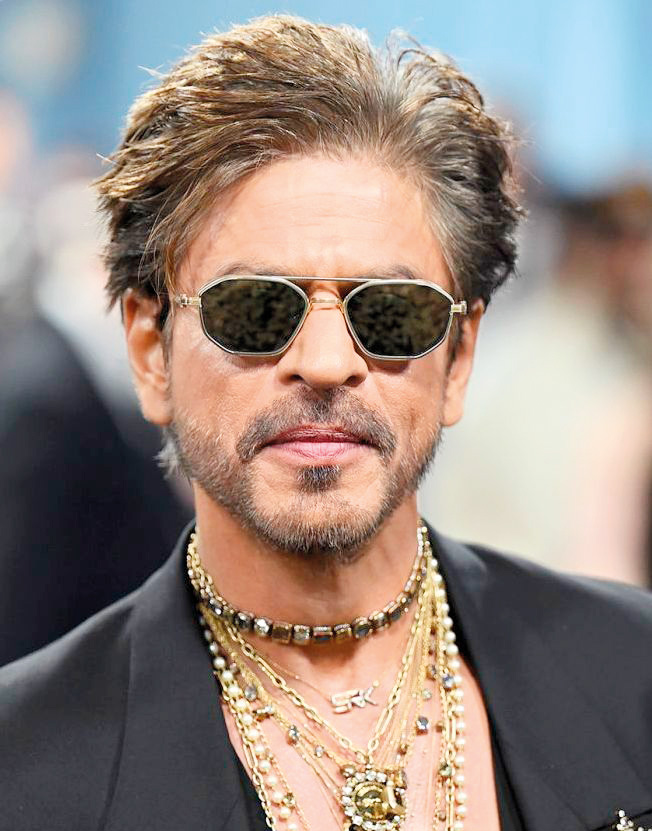
Shah Rukh Khan: Disappointed his fans in Sri Lanka
According to reports, the concert had received the official endorsement of the Sri Lanka Tourism Promotion Bureau, recognising it as a flagship initiative in developing the country’s concert economy by attracting fans, and media, from all over South Asia.

Nick Carter: His concert, too, was cancelled due to “Unforeseen circumstances
However, I had that strange feeling that this concert would not become a reality, keeping in mind what happened to Nick Carter’s Colombo concert – cancelled at the very last moment.
Carter issued a video message announcing he had to return to the USA due to “unforeseen circumstances” and a “family emergency”.
Though “unforeseen circumstances” was the official reason provided by Carter and the local organisers, there was speculation that low ticket sales may also have been a factor in the cancellation.
Well, “Unforeseen Circumstances” has cropped up again!
In a brief statement, via social media, the organisers of the Ne-Yo concert said the decision was taken due to “unforeseen circumstances and factors beyond their control.”
Ne-Yo, too, subsequently made an announcement, citing “Unforeseen circumstances.”
The public has a right to know what these “unforeseen circumstances” are, and who is to be blamed – the organisers or Ne-Yo!
Ne-Yo’s management certainly need to come out with the truth.
However, those who are aware of some of the happenings in the setup here put it down to poor ticket sales, mentioning that the tickets for the concert, and a meet-and-greet event, were exorbitantly high, considering that Ne-Yo is not a current mega star.
We also had a cancellation coming our way from Shah Rukh Khan, who was scheduled to visit Sri Lanka for the City of Dreams resort launch, and then this was received: “Unfortunately due to unforeseen personal reasons beyond his control, Mr. Khan is no longer able to attend.”
Referring to this kind of mess up, a leading showbiz personality said that it will only make people reluctant to buy their tickets, online.
“Tickets will go mostly at the gate and it will be very bad for the industry,” he added.

Fairly heavy showers about 75 mm are likely at some places in the Central and Uva provinces and in Batticaloa and Ampara districts

National Audit Office reveals NHSL lapses

NPP’s CMC budget passed after four Opp. members switch allegiance

600MW hit to national grid as two Norochcholai units go offline

Health Secy. alleges death threats, seeks police protection

India doubles financial commitment to housing projects in Sri Lanka

‘Dates have the highest sugar content to fight Coronavirus’

Sunday Island 27 December – Headlines

#SundayIsland 17th December – Headlines

Sunday Island – 28th March

Sunday Island Headlines – 21 March

Sunday Island – 21st February – Headlines
-
 News6 days ago
Street vendors banned from Kandy City
-

 Sports3 days ago
Gurusinha’s Boxing Day hundred celebrated in Melbourne
-

 News6 days ago
Lankan aircrew fly daring UN Medevac in hostile conditions in Africa
-
 News1 day ago
Leading the Nation’s Connectivity Recovery Amid Unprecedented Challenges
-

 Sports4 days ago
Time to close the Dickwella chapter
-

 Features6 days ago
Rethinking post-disaster urban planning: Lessons from Peradeniya
-

 Opinion6 days ago
Are we reading the sky wrong?
-

 Features2 days ago
It’s all over for Maxi Rozairo