
Latest News
Lucknow Super Giants splurge record INR 27 crore for Pant, Shreyas gets 26.75 crore from Punjab Kings


Rishab Pant has become the most expensive player in IPL history after he was sold to Lucknow Super Giants (LSG) for INR 27 crore (USD 3.21 million approx.) on the first day of the mega auction in Jeddah. He surpassed the mark set by Punjab Kings (PBKS), who had bid INR 26.75 crore (USD 3.18 million approx.) to buy Shreyas Iyer a few minutes earlier.
Both LSG and PBKS were in need of new captains this season and Pant and Shreyas will likely fill those roles for them. Both players surpassed the record INR 24.75 crore bid that Kolkata Knight Riders (KKR) had made for Mitchell Starc at the IPL 2024 auction.
LSG and Royal Challengers Bengaluru (RCB) began the bidding for Pant, with Sunrisers Hyderabad (SRH) joining the race once RCB dropped out. SRH and LSG took the bid to INR 20.75 crore, at which point SRH dropped out and Pant was sold to LSG. The auctioneer then asked Delhi Capitals (DC) if they wanted to use a right-to-match (RTM) option to buy back Pant, and DC said yes. According to the new RTM rules at this auction, the team that won the bidding was given another opportunity to raise their bid, which LSG did from INR 20.75 crore to INR 27 crore. DC said they did not want to match that bid, which meant Pant was sold to LSG for a record price.
“No matter how much you plan, things don’t always work out like that,” Shashwat Goenka, the LSG owner, said. “This [getting Pant for 27 crore] was very well to our plan. It wasn’t really a magic number, we just wanted a number so that the RTM doesn’t get exercised.”
Shreyas was the third player up for sale from the first set of marquee players and KKR opened the bidding in an attempt to buy back their title-winning captain. However, they dropped out of the bidding at INR 10 crore, after which DC and PBKS were competing for Shreyas, with both teams needing captains. PBKS, who came in with the largest purse of INR 110.5 crore, won the bid at INR 26.75 crore.
Ricky Ponting, the new PBKS coach, said he was delighted to work with Shreyas again, after their time together at DC. “I haven’t spoken to him yet, I tried to call him before the auction but he didn’t pick up,” he said when asked if Shreyas would be the new PBKS captain. “He’s been a successful captain in IPL before, I worked with him for 3-4 years in Delhi and he was the championship winner last season. I’m delighted to work with him again, if he can do that for us in the IPL I’ll be pretty happy.”
K L Rahul was the third major Indian batter in the marquee sets and while KKR, RCB and CSK all bid for him, he was eventually sold to DC for INR 14 crore ($1.67 million approx.) and could become their captain. Rahul’s previous franchise LSG did not use the RTM option on him.
Perhaps the biggest surprise on day one, however, was the fierce bidding for allrounder Venkatesh Iyer from KKR and RCB. He was eventually sold for a whopping INR 23.75 ($2.83 million approx.) crore to his former franchise KKR, whose most expensive retained player was Rinku Singh at INR 13 crore, followed by Andre Russell, Sunil Narine and Varun Chakravarthy at INR 12 crore each. Iyer was KKR’s first buy at the auction.
Rajasthan Royals (RR) tried to buy back Jos Buttler but were unsuccessful. After competition from PBKS and LSG, GT were able to buy Buttler for INR 15.75 crore (US$ 1.88 million), to partner Shubman Gill at the top of their order and keep wicket.
“Very happy to have Jos Buttler in our side. He can bat anywhere, he can keep as well, he can help Shubman also,” Parthiv Patel, GT’s assistant coach, said. “We wanted to buy our No. 1 bowler and No. 1 batter from the marquee set and we have both.”
GT began the auction with the third-largest purse of INR 73 crore and managed to buy a second player – South Africa fast bowler Kagiso Rabada – from the first marquee set, staving off competition from RCB and MI to buy him for INR 10.75 crore ($1.28 million approx.). They also picked up Mohammed Siraj from the second set of marquee players for INR 12.25 crore ($1.46 million approx.).
KKR and MI began the bidding for Starc, with RCB also showing interest before he was eventually bought by DC for INR 11.75 crore ($1.40 million approx.), which is a massive pay cut from his erstwhile record price of INR 24.75 crore last year ($2.98 million approx. at the time).
“Pretty elated with the buys. Both KL and Starc are world-class players. In fact, they’re battling each other right now in India versus Australia, so it’s pretty interesting,” DC head coach Hemang Badani said. “Starc is a match-winner, he’s a wicket-taker, and [we] couldn’t be happier. And with KL Rahul, again, somebody who we believe is a bankable player, will give you runs each season. For me, at the moment, this is the best buy of the auction. But having said this, there’s work to do.”

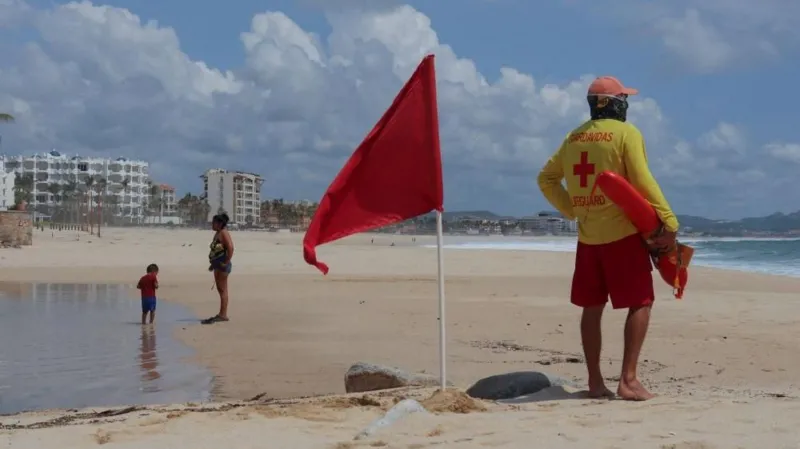
People living on the northern Pacific coast of Mexico are bracing for the arrival of Hurricane Polo, which is forecast to make landfall later on Monday or early on Tuesday.
The category three storm, with maximum sustained winds near 115 mph (185 km/h), is expected to move over the state of Baja California Sur, a region popular with tourists and home to the resort destination of Los Cabos.
Meteorologists at the US-based National Hurricane Center (NHC) have warned of heavy rainfall which could lead to life-threatening flooding and mudslides, especially in areas of steep terrain.
Residents on Sunday stocked up on essentials such as drinking water and food as the storm approached.
The NHC warned of the storm surge Hurricane Polo could unleash, which it said could be accompanied by large and destructive waves.
In Cabo San Lucas, famous for its natural rock arch, the authorities restricted access to the beaches. Some restaurants also closed in the town, which acts as a base for sport fishers and whale watchers.

The regional government of Baja California Sur has ordered schools to remain closed on Monday as a preventive measure.
Governor Víctor Manuel Castro Cosío said temporary shelters had been opened should residents need to be evacuated.
The federal authorities have also deployed thousands of members of the navy and the army along with specialised machinery.
Polo has been slowly moving towards Mexico’s coast line.
Meteorologists said it was being fuelled by extremely warm waters caused by the El Niño climate phenomenon.
(BBC)
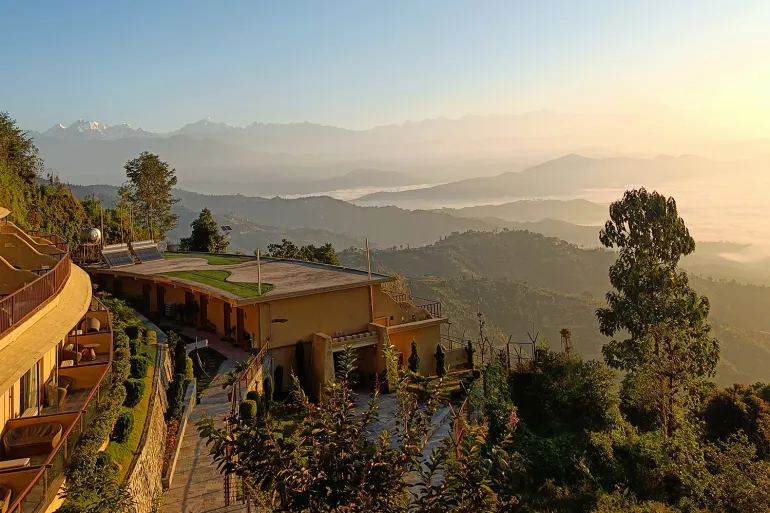
Like every year, Pushpraj Rimal, a tour planner and taxi driver in Nepal’s capital, Kathmandu, was looking forward to September for his business to boom.
But what he got instead was a series of cancellations by tourists after catastrophic floods last month killed more than 1,450 people and destroyed key highways, deeply impacting the Himalayan nation heavily dependent on tourism.
“It is still a lockdown kind of situation,” the 42-year-old told Al Jazeera nearly a month after the disaster.
Pushpraj, who speaks Nepali and Hindi, works on commission for several hotels and trekking companies in Kathmandu and the scenic town of Pokhara, known for its lake nestled in the Annapurna mountain range. Pokhara also serves as a base for Himalayan trekkers.
Nepal’s tourist season peaks after the monsoon ends in August and the skies are clearer. Tourism attracts thousands of international travellers, accounting for nearly 8 percent of Nepal’s gross domestic product and employs more than 1 million people.
Last year, Nepal saw more than 1.15 million tourists visiting the country, nearly a third of them during the September-November season.
But the floods this year, triggered by a glacial mountain collapse along the Nepal-Tibet border in the north, have pushed tourists away from the unaffected areas as well.
“I had rented two cars for two months, but I have done one fourth of the business I usually do in a season. Tourists generally start pouring in from September, but most of them have cancelled this year,” he said.
“I will get no commissions from the hotels or trek organisers, nor has the taxi business worked well. … I am now waiting for the season to end.”
Rimal has two children, Hema, 14, and Rahul, 12, whom he had promised a tablet this Dussain, a prominent Hindu festival that usually falls in October. “But it seems impossible now. I will have to break their hearts and my promise to them for the very first time.”
(Aljazeera)

World javelin leader Rumesh Tharanga lived up to his reputation to win Sri Lanka a highly anticipated gold medal, beating wet weather and track conditions at the Asia Games in Nagoya Japan a little while ago.
He took the lead with a massive 88.33 metres effort in his penultimate throw before sealing the contest with 88.55 metres throw.
He beat a strong field inclusive of reigning Olympic champion Arshad Nadeem of Pakistan. (Reemus Fernando)

Mexico’s Pacific coast braces for Hurricane Polo

Washout against Afghanistan sends India into semi-finals

‘Still a lockdown’: Deadly floods hit Nepal tourism as peak season begins

Tharanga wins highly anticipated Asian Games gold

Tharanga on cusp of Asian Games Gold

Rain threat looms over lopsided India vs Afghanistan quarter-final

‘Dates have the highest sugar content to fight Coronavirus’

Sunday Island 27 December – Headlines

#SundayIsland 17th December – Headlines

Sunday Island – 28th March

Sunday Island Headlines – 21 March

Sunday Island – 21st February – Headlines
-

 News6 days ago
Mastermind Naufer Moulavi among 15 found guilty
-
 Midweek Review6 days ago
Thileepan’s fast unto death: An authentic narrative that many missed
-
 News7 days ago
Protest against setting up of cement factory in highly populated area near BIA
-

 Editorial7 days ago
Trouble beginning in earnest
-

 Latest News5 days ago
Showers above 100 mm are likely at some places in the Western, Sabaragamuwa, Central and North-western provinces and in Galle and Matara Districts
-
Editorial6 days ago
Big Bad Bills
-
 News7 days ago
Police may seek clarification from US
-
 News7 days ago
Govt. confident of 2/3 majority despite NPP split speculation