
Latest News
Iran’s China envoy vows ‘special’ Hormuz treatment for ‘friendly’ countries

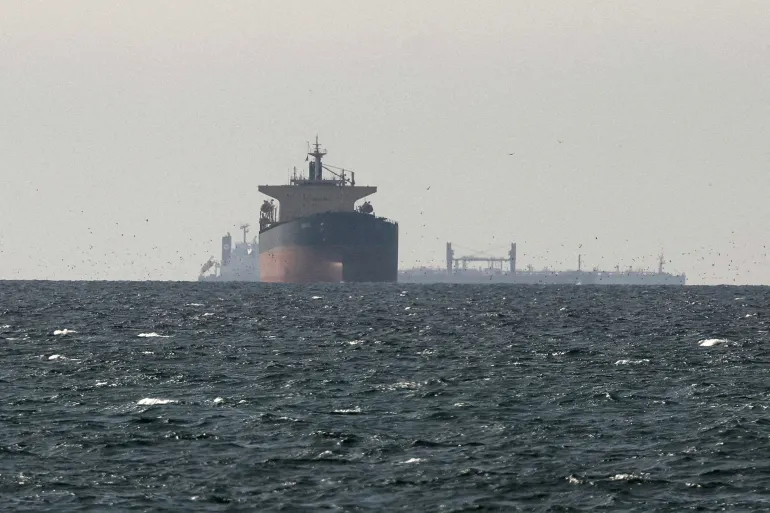
Iran’s ambassador to China says ships transiting the Strait of Hormuz would be charged new fees but added that China and other “friendly” countries would be granted “special considerations”.
An initial deal signed by Iran and the United States last month to halt hostilities stipulated that commercial ships would transit the key waterway free of charge for 60 days, but it remained unclear what policies will be in place after that period.
While negotiations on a permanent settlement are ongoing, the US has said Iran will not be permitted to charge tolls or fees for vessels transiting the strait under any final agreement.
Speaking to the World Peace Forum in Beijing on Saturday, Ambassador Abdolreza Rahmani Fazli said Iran was working in “collaboration and cooperation” with Oman on “new arrangements” for the strait.
“As a country where the Hormuz is part of its territorial waters, we will definitely charge service fees,” Fazli said in translated remarks while insisting that such fees would not be a “toll”.
“These new arrangements will be concerning guaranteeing the security of passage through the Straits of Hormuz, supervision of the passage of the vessels … and also guaranteeing and dealing with the environmental consequences of the massive number of ships,” he said, according to the AFP news agency.
Iran’s NourNews agency also quoted him as saying that “special considerations” would be applied to China and other friendly nations in determining the level and type of service fees for vessels passing through the waterway.
In peacetime, one-fifth of the world’s crude oil and liquefied natural gas was shipped through the strait, which was all but closed by Iran during the war launched by the US and Israel in late February, sending energy prices soaring.
In April, the US imposed a corresponding naval blockade on Iran’s southern ports in a bid to stem Iranian oil exports.
Fazli stressed that the strait has become a “security” issue since the four-month war waged by the US and Iran.
Fazli added that new arrangements concerning the Strait of Hormuz would be made in cooperation and partnership with Oman.
Iran and Oman, which sit on both sides of the strait, have established a joint committee to determine how this strategic waterway will be managed.
[Aljazeera]

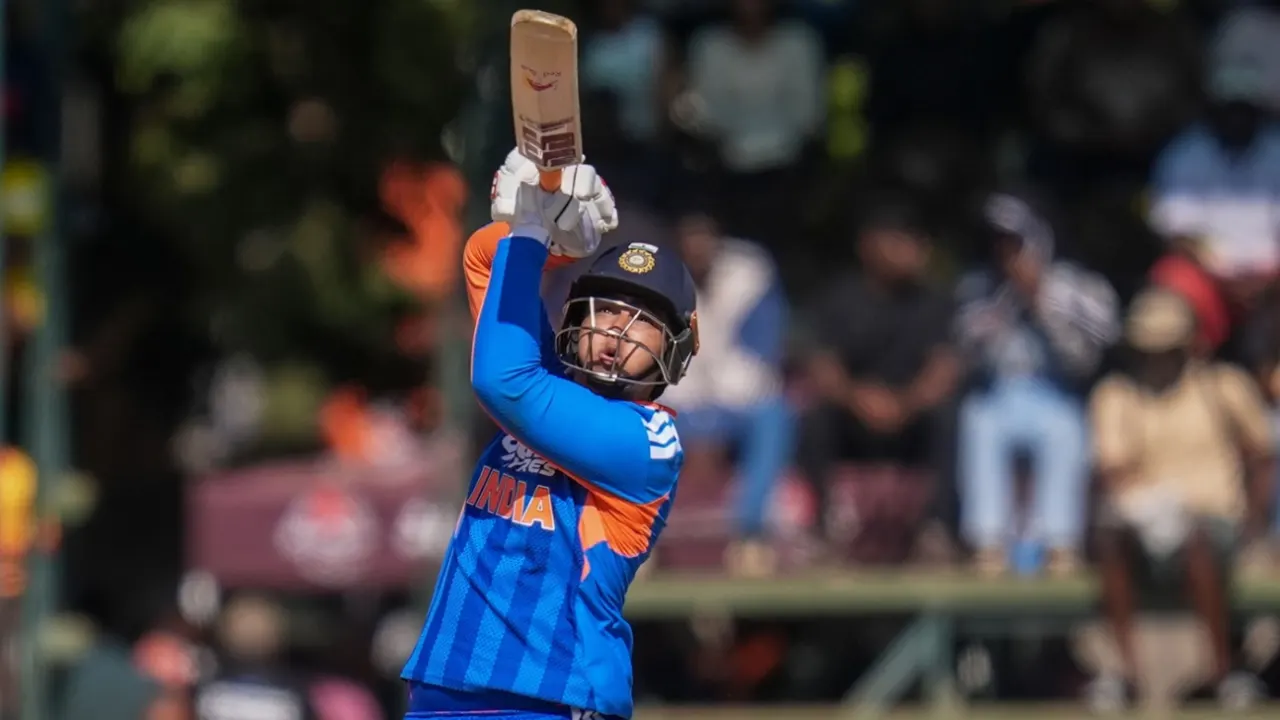
Vaibhav Sooryavanshi struck his second half-century of the series, Mayank Yaday returned three wickets and Yash Thakur two as India registered a comfortable 35-run win in the third T20I against Zimbabwe in Harare to complete a 3-0 series sweep. The win meant that India continued to hold their position at the top of the T20I rankings, having lost the spot during their series loss against England.
Batting first on a slowish surface – the same one as the second T20I – India lost Abhishek Sharma early but Sooryavanshi and Ishan Kishan added 75 runs off 50 balls for the second wicket. Sooryavanshi fell for 81 but contributions from Shreyas Iyer (27 off 18) and Rinku Singh (25 off 14) took India to an above-par 192 for 5.
In reply, Zimbabwe were never really in the chase. Mayank removed Brian Bennett with the first ball of the match for the second time in the series, while Thakur struck twice in two balls to hurt the hosts in the powerplay. Ryan Burl (54*) and Wessly Madhevere (28) were the only major contributors as Zimbabwe were restricted to 157 for 7. Mayank was once again rapid, picking up 3 for 29, while Thakur returned 2 for 45.
While most things went to plan for India, their shoddy fielding was under the microscope again. They dropped five relatively straightforward catches – three of Thakur’s bowling alone – something which has become a theme in recent times.
He began his innings with a fortunate thick outside edge off Sikandar Raza before going over covers in the opening over. Muzarabani, with his height generating the awkward bounce and angle, troubled Sooryavanshi but he still managed to smoke a gigantic pull over deep square leg and a four past deep third off him. Even when Brad Evans and Newman Nyamhuri went full to Sooryavanshi, he got into great positions, opening the face of the bat to steer the ball or generating enough power on his on-the-up punches in the V.
Sooryavanshi did slow down post the powerplay but a 103-metre six off Raza and a pull over deep midwicket off Madhevere helped him move into the 80s. It needed a screamer from Evans, running in from long-off to complete the catch inches off the ground, to send Sooryavanshi back for 81 off 49 balls, which included eight fours and four sixes.
Having conceded 78 in the first seven overs, another 200-plus chase was in the offing for Zimbabwe. But the spinners strung a few quiet overs to limit the scoring. Kishan struck a laborious 29 off 26 balls and was undone by a skiddy Raza delivery. Even Iyer found the going tough initially, before he laid into Madhevere, taking him for two consecutive fours in the 15th over. Evans’ change of pace got the better of Iyer, and while Rinku struck two fours and a six, India only managed 40 in the last four overs. With the slower balls gripping, Evans picked up 2 for 41 but a chase of 193 was always going to be a stretch for the hosts.
It was deja-vu for Bennett as Mayank steamed in first ball of the chase with a 147kph thunderbolt and caught his outside edge with an outswinger. The only difference between his dismissal in this game and the first was the position where he was caught. His thick outside edge hurried to the left of Sooryavanshi at first slip, who took a smart catch.
Mayank was nigh unplayable, his pace hurrying both Ben Curran and Dion Myers. Thakur reaped the benefits at the other end, first with Myers shovelling a length ball meekly to mid-off before the bowler took a spectacular catch, leaping to his left in his follow-through to take out Raza for a golden duck. Ravi Bishnoi’s opening over – and the last of the powerplay – went for 13 as Zimbabwe reached 53 in the powerplay.
Both batters were dropped once each, Madhevere at cover by Tilak Varma and Burl at deep square leg by Sooryanvanshi – the toughest of the five catches that went down. Mayank removed Madhevere for his second wicket, while Burl reached his fifty in the penultimate over with a leg glance. This was his fifth T20I fifty and came off 42 balls. Evans hit a six during his short stay but Zimbabwe barely threatened in the chase.
Scores:
India 192 for 5 in 20 overs (Vaibhav Sooryavanshi 81, Ishan Kishan 29, Shreyas Iyer 27, Tilak Varma 11*, Rinku Singh 25; Sikandar Raza 1-40, Blessing Muzarabani 1-33, Brad Evans 2-41, Wessleyy Madhevere 1-37) beat Zimbabwe 157 for 7 in 20 overs (Ben Curran 20, Dion Myers 19, Ryan Burl 54*, Wessley Madhevere 28, Brad Evans 14; Mayank Yadav 3-29, Yash Thakur 2-45, Ashok Sharma 1-20, Ravi Bishnoi 1-24) by 35 runs
[Cricinfo]
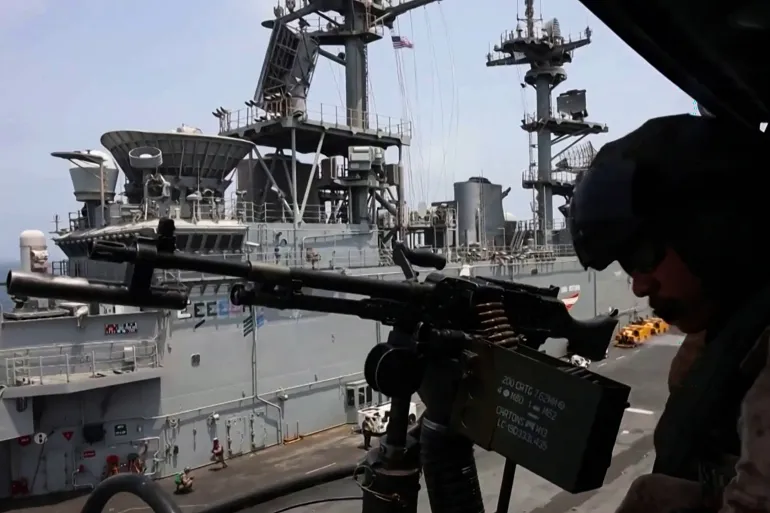
The United States and Iran have pressed pause for a second day on what had been an escalating conflict.
Reports on Sunday said neither the US nor Iran had launched strikes for a second day in a row. The sudden period of calm after two weeks of nightly attacks on Iran by the US, and Iranian retaliation on US allies in the Gulf comes amid hopes of a return to diplomacy.
US Ambassador to the United Nations Mike Waltz told Fox News on Sunday that President Donald Trump was “giving [the potential for] talks … a little bit of room”.
While noting that the president has said the US was “locked and loaded”, Waltz said negotiators have been engaged at every level over the past few weeks, and in particular, over the past few days.
US broadcaster CBS, quoting two regional sources, reported that the US decision to pause the bombing was made due to the arrival of an Omani delegation in Tehran.
The prospects for peace between Tehran and Washington remain hindered by lingering mistrust, however. Since the US and Israel began their war on Iran in late February, Iranian officials have been quick to note that they have been attacked by the US and Israel during periods of negotiation on several previous occasions.
Iranian Ministry of Foreign Affairs spokesperson Esmaeil Baghaei told the Austrian broadcaster ORF on Sunday that mediators, including Qatar and Pakistan, are exchanging messages between Iran and the US. But he added that Iran’s past efforts at diplomacy have been “betrayed”.
The New York Times reported that Trump paused plans to escalate attacks due to concerns about draining the Pentagon’s diminishing stockpile of missile interceptors and other air defence munitions in the Middle East.
[Aljazeera]
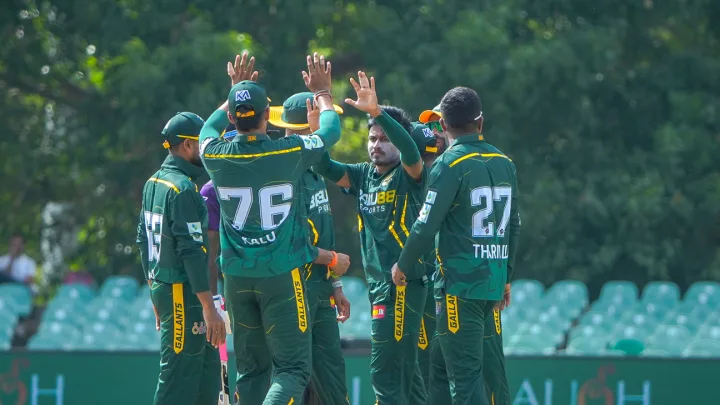
An unbeaten 72 off 34 balls from Chamika Karunarathne and a three wicket haul by Sachindu Colambage helped Galle Gallants register their fourth win in the Lanka Premier League by defeating Dambulla Sixers by 44 runs and consolidate their spot as table leaders
Scores:
Galle Gallants 220/6 in 20 overs [Sam Harper 41, Nurul Hasan 29, Charith Asalanka 31, Sahan Arachchige 28, Chamika Karunarathne 72*; Dushmantha Chameera 5-55, Mohammad Wasim 1-60]
Dambulla Sixers 176/7 in 20 overs [Niroshan Dickwella 32, Sahibzada Farhan 11, Dinesh Chandimal 15, Gulbadin Naib 15, Marques Ackerman 23, Ramesh Mendis 39*, Maheesh Theekshana 16*; Akif Javed 1-40, Eshan Malinga 1-32, Mohammad Nawaz 1-06, Sachindu Colambage 3-17]

Sooryavanshi the star as India complete 3-0 sweep

US and Iran hit pause on strikes for second day

Showers will occur in the Western, Sabaragamuwa and North-western provinces and in Galle, Matara, Kandy and Nuwara-Eliya districts

Chamika, Colambage help Galle Gallants consolidate top spot

BASL challenges NPP MP to repeat false claims outside Parliament

Judges’ retirement age row: Govt.-BASL powwow on the cards

‘Dates have the highest sugar content to fight Coronavirus’

Sunday Island 27 December – Headlines

#SundayIsland 17th December – Headlines

Sunday Island – 28th March

Sunday Island Headlines – 21 March

Sunday Island – 21st February – Headlines
-

 Features1 day ago
MBS: The Man of the Last Laugh
-
 Features1 day ago
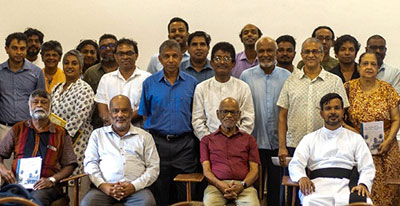
A Landmark Gathering of Minds: The Ceylon Journal Roundtable Revives the Spirit of Intellectual Dialogue
-
 Midweek Review5 days ago
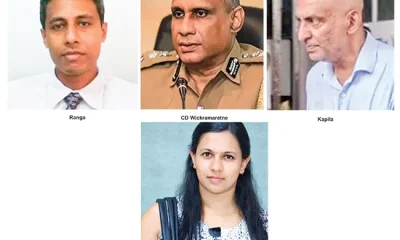
Three high-profile alleged suicides shaping key investigations
-
 Latest News2 days ago
Develop a programme to allocate underutilised state land for investment by returning migrant workers – President
-

 Life style1 day ago
A proud Sri Lankan voice in Australian Parliament
-

 News2 days ago
Fort Magistrate orders arrest of MP Archchuna
-

 Editorial1 day ago
‘Cockroaches’ tame a mighty regime
-

 Editorial2 days ago
An indictment of all parties