
Sports
Lost rugby crowds and a SLR President who plants trees!

by A Special Sports Correspondent
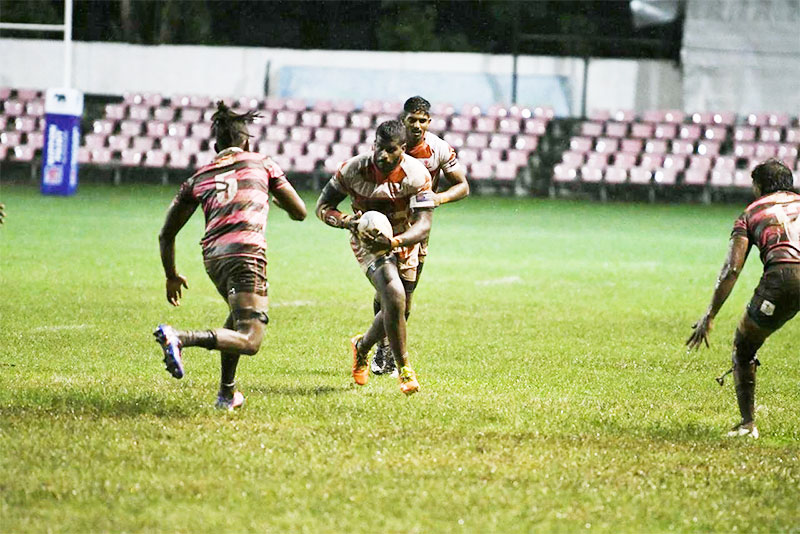
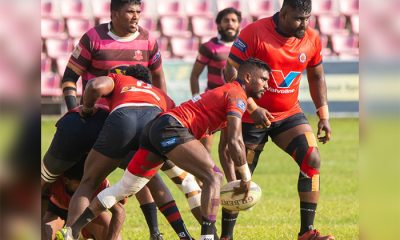
Rugby in Sri Lanka, despite producing some well-contested games, is struggling to attract crowds; especially at Havelock Park where games are played under floodlights.
Rugby can be easily rated as the second most popular sport after cricket in this little island. The rugby fraternity is now seeing four generations or more of rugby followers visiting stadiums to catch the action. Many years ago the crowds simply flocked to these grounds when the game was played by players in the likes of Michael Jayasekera, Hisham Abdeen, Chaminda Rupasinghe, Anjelo Wickremaratne, Marco de Silva, Kolitha Gunatilake, Priyantha Ekanayake, Imthie Marikar, Roger Rodrigo, Saman Kotalawela, Nizam Jamaldeen, Chandrishan Perera, Palitha Siriwardene, Lakshman Ekanayake, Norman Silva, Amjad Buksh, Sudath Sampath, Shamly Nawaz, Sithara Fernando, Len Silva, H.K. Sisira, Asanga Senewiratne, P.G Gunawardene, Nalin de Silva, Chandana Deepthi, Tony Wimalasuriya, Simon Hunter, Apisi Nagata, Tulagaese Tawita (Laga), Kiti Ratudradra, Bati Ponaia, Sajith Mallikarachchi, Fazil Marija, Radeeka Hettiarachchi, Sanjeewa Jayasinghe and Asoka Jayasena to name a few. These players were looked upon as celebrities or demi gods. (This writer’s apologies go out to readers for him not having the good fortune to be born earlier than the Abdeen era to witness the Sri Lankan greats who were at rugby before the above mentioned players; hence the omission of their names from this list). Rain or sunshine crowds were present at venues to watch their heroes at a time when playing competitive rugby was a lot simpler and players could take a ‘sip’ from the best things that life offered back then.
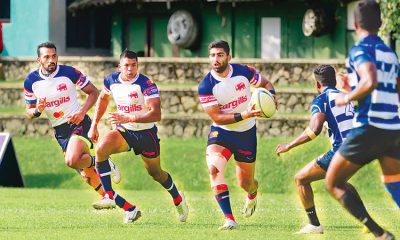
A positive factor about present rugby is that games are played faster, the players are stronger and can stretch the playing phases to more than ‘two’; which is how the game is played in other rugby playing nations which are rated above Sri Lanka. This writer remembers Milinda Jayasinghe (Former CH&FC scrum half) who got to play in New Zealand’s second division league rugby set-up. The moment the coach saw the player at his first practice session at the club he was welcomed with a warning “Welcome to the club, but the two hits ball out system adopted in Sri Lanka won’t work here mate. We go twenty-thirty hits before someone takes the ball over the try line and get ready for that”. Many years after Jayasinghe hung up his boots Sri Lanka rugby has come somewhere at least in terms of domestic rugby. There is plenty in rugby to ‘munch on’ and enough good players to entertain crowds. It certainly is not a colourless sport like present day badminton, table tennis, kabaddi, hockey and football. This colour is given to the sport when it has players of repute who maintain standards. In this aspect Kandy SC tops the list. When the Nittawela players travel to Colombo or venues in the Western Province we see the Kandy crowds following them. When loyalty at rugby is build it comes to stay (we are talking about spectators at least in this paragraph).
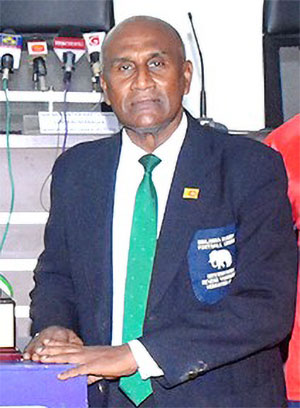
Sri Lanka Rugby’s President elect Nalin de
Silva. (Pic by Kamal Wanniarachchi)
You need the players, crowds and referees who are capable of handling knowledgeable players, who have decided to move to a semi-professional or a professional level of rugby after completing successful seasons with their schools. The referees at present look very confident on the field, but there have been occasions when they were wanting in tense situations in play during the school rugby season which concluded for the year 2023. These referees need time to settle down and mature and if this writer’s memory serves him right most of these referees (except Suranga Arunashantha) have not played any top level rugby like the referees of yonder. Many seasons ago we had referees who were also prominent national or domestic rugby players. A few good examples of referees who fell into this category were Denzil Kobbekaduwa, Daya Jayasundara, Nizam Jamaldeen, Aruna Jayasekara, Roshan Deen, Nimal Lewke and J.P.U.M. Jayawardene (Japana). Then we had an era where referees were officiating for the mere love of the game in an amateur set-up which gave no recognition or worthwhile remuneration to them. All that changed after the Sri Lanka Society of Rugby Football Referees started sending their members for training and charging professional fees for sending referees to officiating in matches.
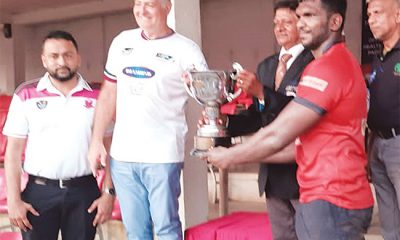
Coming back to Havelocks Sports Club, this is a venue which has produced some unforgettable memories for rugby fans. Then matches were not played under lights, but the power of rugby that was produced was simply good enough to promise a full capacity crowd on any day of the week. Sri Lanka Rugby’s President elect Nalin de Silva (of Air Force fame) is all out to play matches at the Park Club under lights. He told media representatives at a rugby launch held for the 2023/24 league rugby tournament that he believed that crowds would come if matches are played in such an environment even on a Friday. We have a rugby president who is very technical when he talks and underscores the importance of planting trees at rugby venues; especially at Havelock Park. This is because the floodlights produce carbon emission and only trees in large numbers can erase the negative factor associated with playing games under such conditions. The rugby president has also stressed the importance of planting trees going hand in hand with playing the sport because he believes that the former can reverse the effects of climate change. De Silva has stressed that the advancing of the commencing time for domestic club rugby matches from 4.30 pm to 3.30 pm was because the light fades faster these days due to the ill effects on the environment.
Havelocks SC is a top runner in the tournament and the floodlight facility it provides for games together with the atmosphere at the ‘park’ are really what any sports promoter would ask for if he is to initiate a campaign to bring back the lost crowds. Rugby badly needs those large crowds, generous sponsors and venues that have huge trees; the latter the more the merrier!







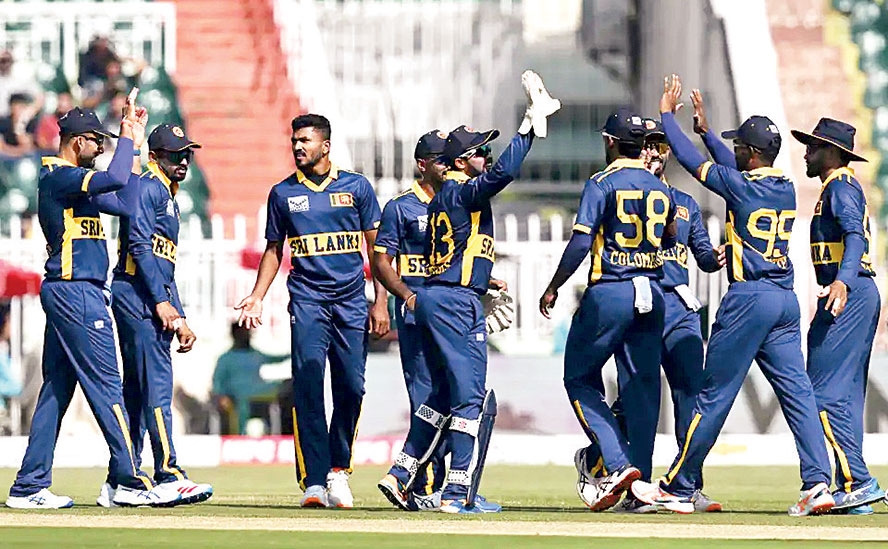
Eshan Malinga returned career best figures of four for 46, but his impressive spell could not prevent Pakistan from breaching the 300 run mark in the curtain-raiser of the ODI tri-nation series in Rawalpindi on Sunday.
Pakistan were bowled out for 305, with former captain Salman Ali Agha leading the charge with his fourth ODI hundred.
Agha struck a fluent 107 off 90 deliveries, peppering the boundary with ten fours and a six before falling to Asitha Fernando. The Sri Lankan seamer was equally impressive, returning tidy figures of three for 39.
Agha featured in a 97 run partnership with Hasan Nawaz and at 215 for four with 13 overs remaining, Pakistan appeared poised for a formidable total. However, Sri Lanka’s bowlers clawed their way back into the contest, applying the brakes just when the hosts threatened to run away with the game.
On a surface tailor made for batting, Sri Lanka’s late fightback could prove crucial, with the visitors fancying their chances of chasing down the target.
Left-arm seamer Dilshan Madushanka finished with two for 67, although his figures flattered him somewhat. He was guilty of straying onto the pads far too often, offering the Pakistan batters several scoring opportunities.
Sri Lanka went into the contest with just four specialist bowlers, leaving the part timers to shoulder a fair share of the workload. To their credit, the makeshift attack rose to the occasion, sharing ten overs between three bowlers without allowing Pakistan to completely dictate terms.
Dasun Shanaka did the lion’s share of the work, sending down seven overs, while Sahan Arachchige and Kamindu Mendis chipped in with the remaining three.
Sri Lanka also welcomed back top order batter Avishka Fernando, who returned to the ODI fold after spending several years on the sidelines.
England are the third team in the tri-nation competition, which serves as valuable preparation for next year’s World Cup.
The opening three matches will be played in Rawalpindi before the tournament shifts to Lahore for the remaining fixtures, including the final.
Sri Lanka are in the midst of a marathon 50 day tour of Pakistan. Having already completed a three-match T20I series, they will turn their attention to the tri-nation tournament before playing a First Class warm-up fixture followed by two Tests.
19 Division I – Tier ‘A’ Cricket
by Reemus Fernando
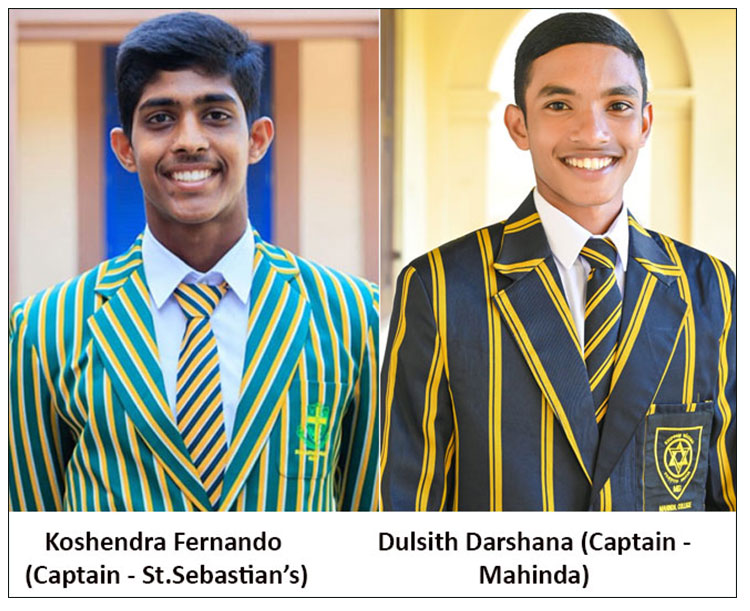
The top eight teams begin their battle for the Under 19 Division I Tier ‘A’ limited-overs title today, when Mahinda College, Galle, take on St. Sebastian’s College, Moratuwa, in the first quarter-final at Dombagoda.
Led by Dulsith Dharshana, Mahinda qualified for the knockout stage with wins over St. Anthony’s College, Katugastota (by five wickets), Royal College, Colombo (by six wickets) and Lumbini (by ten wickets). Their only defeat came against St. Peter’s College, Bambalapitiya, the only side to top 200 against them. In their other matches, Mahinda’s bowlers kept opponents to low totals.
That bowling unit, spearheaded by left-arm paceman Sadew Nethmina, appears to have peaked ahead of the crucial clash. They bundled Lumbini out for 40 in their last match, with Nethmina and Vishmitha Sathsara sharing nine wickets between them.
St. Sebastian’s reached the knockout stage on the back of wins over Maris Stella College, Negombo, and D. S. Senanayake College, Colombo. Their match against Sri Sumangala College, Panadura, ended without a result because of rain, while they lost by two wickets to Richmond, the eventual group champions.
St. Sebastian’s boast a strong batting line-up, with Hirusha Perera, Navinu Fernando, Lashen Fernando, Thivanka Fernando and Meshone Ferdinando all making notable contributions in the group stage. Skipper Koshendra Fernando is expected to lead the bowling attack with his spin, supported by Adeesha Lakshan, Lashen Fernando and Risinu Prabesh.
Teams
Mahinda (from):
Dulsith Darshana (Captain), Sadew Nethmina (Vice Captain), Randula Mabarana, Manitha Rajapaksha, Sehas Ashinsa, Kaveesha Githmal, Thiyon Helika, Kavindu Nimsata, Gesandu Bisas, Vishmitha Sathsara, Buddhima Tharupathi, Naviru Nishitha, Nihindu Sesitha, Anuga Palliyaguru, Senuja Vehan, Kevin Geemitha, Bakshara Jayarathne.
Officials: Denuwan Rajakaruna (Head Coach), Sandaru Nethmina (Asst. Coach), Y. Nishantha Kumara (Master in Charge)
St. Sebastian’s (from): Koshendra Fernando (Captain), Meshone Ferdinando, Nisila Dimath, Navinu Fernando, Hirusha Lochana, Lashen Fernando, Thejan Bandara, Chamath Wellalage, Risinu Prabesh, Sanoj Perera, Deneth Keshara, Adeesha Lakshan, Dilena Fernando, Thiwanka Fernando, Shenas Hashein, Pathiv Vehan, Dineepa Wickramsooriya.
Officials:
Lahiru Kanishka (Head coach), Nishantha Fernando (Asst. Coach), Sandaru Tharusha Perera (Master in Charge)
The other three quarter finals will be played on Tuesday as per the below schedule.
Mahanama Colombo V St. Joseph’s Darley Road at Mattegoda
Nalanda Colombo V St. Anthony’s Katugastota at Campbell Place
Richmond Galle V Wesley Colombo at Weeraketiya
Several big names fell at the first hurdle, including last year’s finalists Royal College, Colombo, as well as S. Thomas’ College, Mount Lavinia, Trinity College, Kandy, and St. Peter’s College, Bambalapitiya. Royal and St. Peter’s were in the same group and finished behind Mahinda and St. Anthony’s. S. Thomas’ were in Group ‘A’, where Mahanama and Wesley edged out the rest to book their places.
by Reemus Fernando
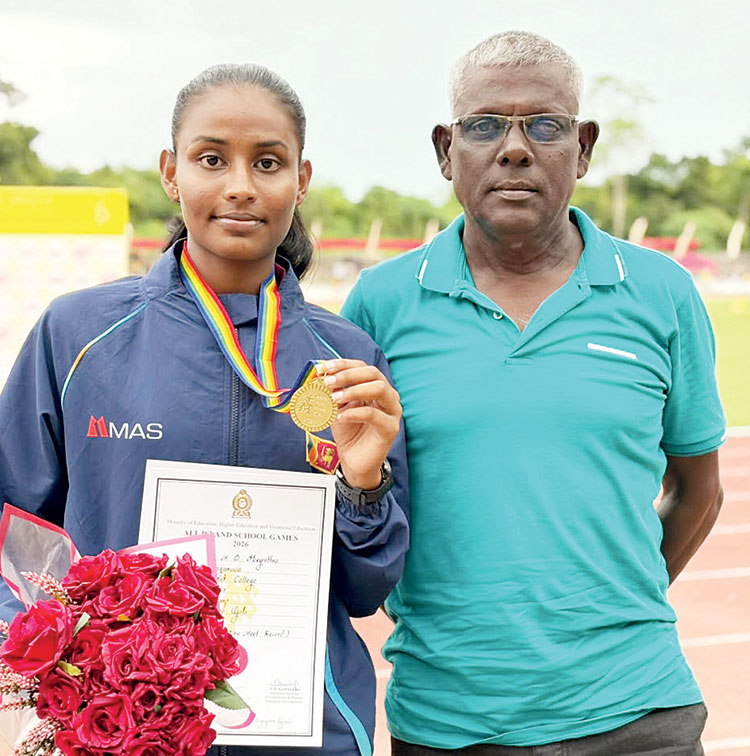
Asian Junior Championship medallist Mihinsa Dewmini Abeyratne broke a ten-year-old meet record to win the Under 20 high jump at the All Island Schools Games Athletics Championship at Diyagama on Sunday.
The President’s College, Embilipitiya, athlete cleared 1.75 metres, equalling her personal best, to erase the record of Poornima Gunarathne of Leeds International, Panadura. Gunarathne’s mark of 1.74 metres had stood since 2016.
Trained by retired sports officer Gamini Dias, Mihinsa was expected to achieve something special this season after setting a personal best of 1.75 metres at the same venue earlier this year. She followed that with a bronze medal at the Asian Junior Championship in Hong Kong.
Hers was one of six meet records to fall by the time this report was filed on day three of the meet.
In the girls’ category, Lyceum International School, Wattala, and Ave Maria Convent, Negombo, set new marks in relay events. In a closely contested Under 14 4×100 metres final, Lyceum clocked 51.35 seconds to erase Musaeus College’s 2019 record. Ladies’ College, who finished second in 51.52, also bettered the previous mark.
Ave Maria Convent edged Nimala Maria Balika in another tight finish to win the Under 16 girls’ 4×100 metres in a new meet record of 49.49 seconds. Nimala Maria Balika also bettered the old record.
In the boys’ category, Sadeesh Denuwan of Halmillaketiya MV stole the limelight with a new meet record of 11.22 seconds in the Under 14 80 metres hurdles. Maneesha Samarasinghe of Lyceum International, Wattala, set a new record of 13.09 seconds in the Under 16 100 metres hurdles.
Lyceum International, Wattala, also set a new meet record of 3:13.76 in the Under 20 4×400 metres relay.

Showers or thundershowers will occur in most parts of the island after 1.00 p.m

CTU: Teacher shortage casts doubt on govt.’s education reforms

Norochcholai to remain offline for several days after blackout

President links businessman held with arms to politicians

CID probe sought into tusker’s death amid fears of elephant-killing syndicate

Bill to allow remote witness testimony in courts

‘Dates have the highest sugar content to fight Coronavirus’

Sunday Island 27 December – Headlines

#SundayIsland 17th December – Headlines

Sunday Island – 28th March

Sunday Island Headlines – 21 March

Sunday Island – 21st February – Headlines
-

 Latest News6 days ago
Nissanka’s return headlines Sri Lanka’s Test squad against Pakistan
-

 News5 days ago
Sri Lanka, India caught in US-Iran ship crisis
-
 Latest News6 days ago
Imran Khan’s PTI braces to fight federal takeover of Khyber Pakhtunkhwa
-

 Latest News5 days ago
Missiles intercepted near Riyadh after Saudi coalition hits Yemen fuel depot
-

 Latest News5 days ago
Kusal Mendis’ unbeaten 87 hands Sri Lanka consolation win
-
 News6 days ago
Mahinda and Shiranthi hospitalised
-
 News2 days ago
Asgiri Mahanayake calls for immediate release of Gnanasara Thera
-

 News6 days ago
Presidential pardons: Govt. studying Justice Thurairaja’s recommendations – Minister