
Latest News
Logan van Beek’s career-best 4 for 24 vaults Netherlands into Super Sixes











Sri Lanka hold a slight edge over Pakistan heading into Sunday’s semi-final, although contests between the two sides have generally been close in this format. Their most recent meeting came in the Asia Cup semi-final, where Sri Lanka overcame Pakistan despite an all-round threat from Fatima Sana.
In the Asian Games quarter-final, Pakistan were pushed hard again, surviving a Thailand scare in a rain-affected chase of 92. They slipped to 47 for 4 before Sana came to their rescue, reinforcing the reliance on captain when their batting has faltered
Neither side has been entirely convincing with the bat of late. Pakistan suffered collapses against Thailand and India in the Asia Cup, while Sri Lanka struggled against Indonesia and Bangladesh. Sri Lanka, however, have been able to lean on their spinners to keep them in control of games.
For Pakistan, the challenge will be to find a way through Sri Lanka’s spin attack while avoiding another batting collapse. Can Pakistan avenge their Asia Cup semi-final defeat, or will Sri Lanka make it two wins in a row against them?
Sri Lanka and Pakistan have an even T20I record, with both teams winning 11 of their 25 meetings. One match ended in no result. Sri Lanka won their most recent meeting, in the Asia Cup semi-final on September 11.
It will be a battle of two captains. Fatima Sana has taken 29 wickets 8n 19 matches this year, while Chamari Athapaththu has 26 in 20 matches in the same period, making them the leading wicket-takers for their respective teams this year. With the bat, Sana has struck 475 runs at an impressive strike rate of 148.90, while Athapaththu has 638 runs at 143.04. Athapaththu is also coming off a 63 off 37 against Malaysia. Sana, meanwhile, was instrumental in Pakistan’s recent meeting with Sri Lanka, scoring an unbeaten 47 and taking four wickets in the Asia Cupmuneeba semi-final.
Pakistan wicketkeeper-batter Muneeba Ali is missing the Asian Games because of her mother’s illness. Gull Feroza kept wicket in Muneeba’s absence and opened the batting against Thailand.
Pakistan (probable): Shawaal Zulfiqar, Gull Feroza (wk), Ayesha Zafar, Fatima Sana (capt), Aliya Riaz, Eyman Fatima, Tuba Hassan, Eman Naseer , Umm-e-Hani, Tasmia Rubab, Nashra Sandhu
For Sri Lanka, Nilakshika Silva fractured her finger during the Asia Cup and was sidelined for the Asia Games. Vishmi Gunaratne was dropped from the squad, with Sri Lanka giving batter Hansima Karunaratne and seamer Rashmika Sewwandi a chance in the opening game.
Sri Lanka (probable): Imesha Dulani, Chamari Athapaththu (capt), Hasini Perera, Kavisha Dilhari, Harshitha Samarawickrama, Hansima Karunaratne, Kaushini Nuthyangana (wk), Rashmika Sewwandi, Mithali Ayodhya, Chamudi Praboda, Sugandika Kumari
(Crickinfo)
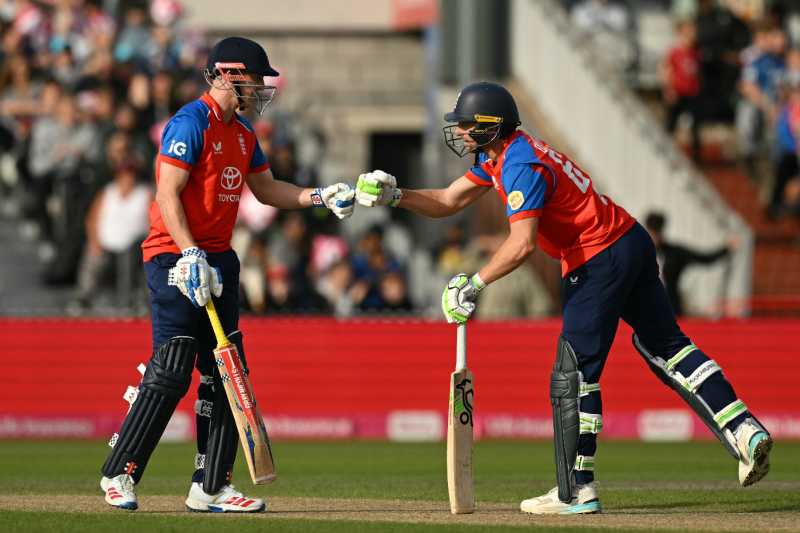
Sri Lanka saved their most dismal batting performance of the series for last as they were bowled out for 124, a target which England knocked off in just 9.4 overs. The result secured a 3-0 series sweep, and subjected Sri Lanka to a 15th consecutive loss in T20Is against England, who regained the ICC No. 1 ranking from India in the process.
It was Harry Brook and Jos Buttler once more in the thick of the chase, speeding to an 85-run partnership off just 39 deliveries. It meant that by the end of the powerplay England had comfortably squared away more than half of Sri Lanka’s total, as they surged to 82 for 1. By the end of the eighth over the 100 had come up, and not long after the chase was complete.
Buttler, fresh off reaching 15,000 T20 runs in the second T20I, racked up 62 more – off 32 deliveries – as he saw home the chase with a single-handed six over square leg. It was a fitting end to the series – England could have indeed wrapped this up with one hand behind their back.
Sri Lanka’s only moments of levity were when Aneurin Donald was stumped off Tharindu Ratnayake, and later a direct hit to run out Brook.
The visitors had brought in slinger Nuwan Thushara for Dushmantha Chameera but it made little difference with such a paltry total to defend. In any case he haemorrhaged 29 in a two-over spell, though his seam-bowling partners fared not much better; Eshan Malinga was hit for 34 in his 1.4 overs, while Dilshan Madushanka gave away 23 in two.
It was a display of batting that showcased precisely why this same surface had produced a total of 304 for England batting first against South Africa just last year. It also brought into sharp contrast Sri Lanka’s effort which had seen them plumb to the lowest first-innings T20I total at Old Trafford since 2018.
In the Lankan innings, it was once more Pathum Nissanka that provided any sort of spark during a brisk 36 off 24, and then as wickets fell in clumps Kamindu Mendis matched him with a 28-ball 35. But apart from those two acts of defiance, it was a veritable procession as England locked up run-scoring avenues and picked up wickets with alarming regularity.
With a heavy breeze blowing across the stadium there was considerable incentive to target one side of the ground, but Sri Lanka could only make use of the conditions sporadically. And even on the occasions they did clear the ropes, they were unable to supplement it sufficiently; of the seven sixes scored in the innings only on one occasion was there another boundary scored in that over, while on two occasions a wicket followed shortly after. And of the seven overs in which Sri Lanka scored sixes, only three produced a double-digit scoring rate.
It meant that despite Nissanka’s propulsion at the top, Sri Lanka could never really build any momentum – the most of which was funnelled into a 15-run second over, a tally Sri Lanka barely threatened thereafter.
The wickets were spread fairly evenly, with Sonny Baker, Jofra Archer and Will Jacks picking up two apiece, while there was one each for Liam Dawson and Jamie Overton. Only Adil Rashid went wicketless across a relatively expensive two overs that gave away 21 runs
Scores:
England 126 for 2 in 9.4 overs (Jos Buttler 62*, Aneurin Donald 13, Harry Brook 33; Tharindu Rathnayake 1-33) beat Sri Lanka 124 in 18.5 overs (Pathum Nissanka 36, Lahiru Udara 10, Charith Asalanka 16, Kamindu Mendis 35, Dasun Shanaka 12; Sonny Baker 2-17, Jofra Archer 2-23, Liam Dawson 1-17, Will Jacks 2-31, Jamie Overton 1-15) by eight wickets
(Cricinfo)
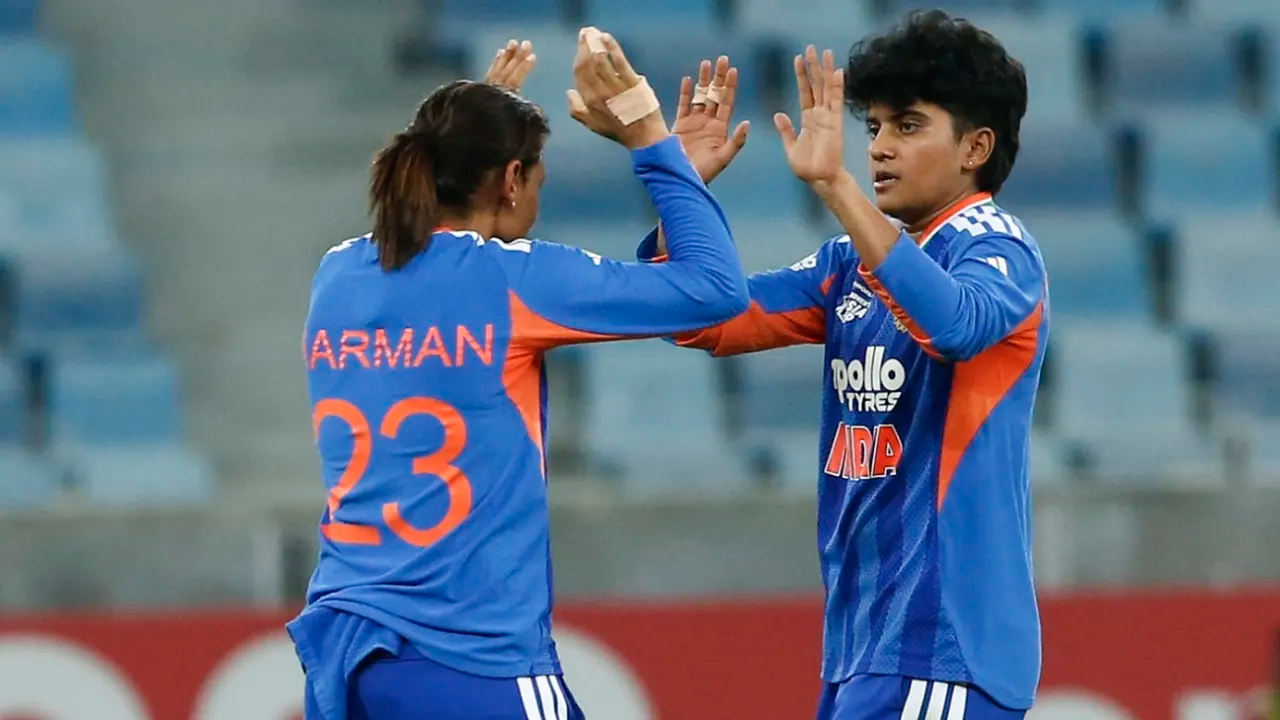
Defending gold-medal winners India overcame hosts Japan by eight wickets in the fourth quarter-final of the women’s cricket competition at the Asian Games in Nisshin on Friday. India chased down 58 in five overs to comfortably secure their place in the semi-finals. They will now face Bangladesh on September 20.
Japan did not exit the competition empty-handed. Their effort to bat as close to the full 20 overs as possible, their running between the wickets and their fielding effort were big positives. But they were bowled out for 57 in 19.5 overs after a solid start, leaving India with little to chase.
India, who opted to field, made the most of a pitch offering turn and bounce, which made stroke-making difficult for Japan. Shree Charani led the attack with another four-wicket haul, continuing an impressive run after taking 4 for 20 in the Women’s T20 Asia Cup final. She struck twice off consecutive balls in the seventh over, removing opener Haruna Iwasaki for 10 before having captain Mai Yanagida caught behind for a duck, but couldn’t convert it into a hat-trick.
Iwasaki and Ayaka Kato Stafford had put on 24 for the opening wicket, but Japan struggled to build partnerships once the stand was broken. Kato-Stafford top-scored with 25 off 47 balls, while Iwasaki made 10 off 22. Japan lost their last eight wickets for just 33 runs.
Charani finished with 4 for 10 from her four overs, while Shafali Verma took 2 for 13 and Deepti Sharma claimed 1 for 14.
Shrevanka Patil, returning to international cricket for the first time in three months after recovering from an ankle ligament injury suffered during the T20 World Cup in June, took 1 for 8 from 3.5 overs. Japan’s innings ended when Patil bowled Nonoha Yasumoto for a duck.
Chasing 58, Shafali opened the innings aggressively, smashing four boundaries in the first over to immediately put Japan under pressure. G Kamalini, who opened in place of Smriti Mandhana, and No. 3 Bharti Fulmali then threw their wickets away to fielders at long-on and point respectively. Left-arm seamer Yasumoto, who dismissed Kamalini, also delivered a wicket-maiden with the new ball.
Shafali finished the game with a six over long-on, staying unbeaten on 40 off just 15 balls. She struck six fours and two sixes at a strike rate of 266.66, as India won with 15 overs to spare.
Scores:
India Women 59 for 2 in 5 overs (Shafali Verma 40*, Richa Ghosh 12*; Nonoha Yasumoto 1-08, Ayaka Kato-Stafford 1-14) beat Japan Women 57 in 19.5 overs (Haruna Iwasaki 10, Ayaka Kato-Stafford 25; Shree Charani 4-10, Shreyanka Patil 1-08, Deepti Sharma 1-14, Shafali Verma 2-13) by eight wickets
[Cricinfo]

Showers expected in the Western, Uva, Sabaragamuwa and North-western provinces and in Galle, Matara, Kandy and Nuwara-Eliya Districts.

Namal Rajapaksa Buddhist gambit fails, bail denied

JR’s 17-year revolution transformed Lanka, says Ranil

Vehicle prices drop by up to Rs. 1 mn, says importers’ body

‘Dead’ man returns home nearly two months after his burial

When disaster strikes, dignity cannot wait

‘Dates have the highest sugar content to fight Coronavirus’

Sunday Island 27 December – Headlines

#SundayIsland 17th December – Headlines

Sunday Island – 28th March

Sunday Island Headlines – 21 March

Sunday Island – 21st February – Headlines
-

 Opinion6 days ago
From Galkissa (Mount Lavinia) to Tambuttegama
-

 News3 days ago
US embassy won’t comment on IGP’s probe into joint drug raid
-

 Features6 days ago
Sri Lanka’s university crisis: Brain drain and union action demand urgent reform
-

 Features5 days ago
The emptying university: why are academics leaving?
-

 Business3 days ago
All-new Bolero MaXX unveiled in Sri Lanka
-

 Editorial6 days ago
Muscle flexing, astroturfing and dog-and-pony shows
-

 Opinion6 days ago
Ashraff: From the SLMC towards the National Unity Alliance
-

 News2 days ago
Bid for Basil’s extradition nears final stage: Police