
News
Local clothing firm appeals to expat Lankans to help grow international sales to earn forex for Lanka


A 100% Lankan clothing brand competing with several global companies on e-commerce platforms appeals to the Sri Lankan expatriate community to help grow the company’s international sales volume and bring in much needed foreign currency to Sri Lanka at this crucial hour for the country.
Ranil Willaddarage, CEO and founder of GFlock says, “This is not a charity appeal. This is a win-win transaction for Sri Lankan expatriates across the world that offers value for their hard-earned foreign currency, and the money in turn being used to import essential commodities for their fellow countrymen. As a nation, we have hit rock bottom. The only way to go if we keep on fighting with each other is six feet under. We cannot start attacking each other again, destroy public property, set fire to private assets and fall even further. Everyone has to come together as a nation and overcome this terrible situation.”
When asked to elaborate on his solution to the foreign exchange crisis, he says, “Our company offers a sustainable solution that can help save this country. Most of our Sri Lankan expatriate community purchases their clothing from brands such as Zara, Mango, Myer, Uniqlo, H&M, and Shein. Most of these brands are based in Europe and other developed countries in the Asia-Pacific region. Sri Lankans living in the United States, Canada, Australia and Europe tend to spend an average amount of $300-$500 as their annual clothing budget on aforementioned foreign brands. My kind request to our Sri Lankan communities abroad is to spend their clothing budget at Gflock, and place orders through our global online store, which is brought to them through the efforts of the creative workforce in Sri Lanka.”
“We know that a fashion company is a business that can earn a lot of revenue. If we take Zara, another brand with a fast fashion business model like ours, their annual revenue is between $ 20-25 billion. H&M also has similar revenue. The Shein brand founded 14 years ago in Nanjing, China, now ships to over 220 countries. With highly competitive prices and their online-only B2C model, Shein’s annual revenue is now at a staggering USD 15 billion. With the arrival of the pandemic, their annual revenue increased exponentially within the course of three years and the $3.5 billion revenue in 2019 grew to a massive $15.7 billion by 2021.”
“Taking inspiration from this and with the help of Sri Lankan expats, within 5-7 years it should be possible for us to reach an annual income of USD 5 billion. The Gflock business model is established in a way that can be scaled up as needed. My team and I have the specialized knowledge, experience and integrity required for that. So I request our Sri Lankans living abroad to think about their home country that is on the verge of collapse when spending their monthly clothing budget and buy from GFlock, a brand founded and run by the creative younger generation in their home country. Apart from that, I appeal to them to be a brand ambassador for this business by promoting the goal of saving our country with at least five more expats and get them to buy clothes from us. If that can be achieved, we will be able to get rid of the oil and gas queues, the shortage of medicines, and the shortage of food and bring the country back to normalcy sooner than we think.”
“1/3 of the profit from our business is spent on providing a monthly essential goods package worth Rs. 8000 to our indirect employees who function as garment workers. Every week we practice gratitude by publishing photos of such acts on our Facebook page and thanking all our customers who contributed toward these worthy causes. Also, we initiated the project of giving away a free plant with every purchase on World Environment Day -2018. Within the course of four years, since its inception, we have managed to create over 30,000 such meaningful bonds that link our brand and customers together with Mother Nature.”
“When the customers realize their purchase contributes to a greater good that goes beyond just a piece of clothing, it gives them a high sense of self-satisfaction, and the next time they make a purchase they do it intending to support a greater good. As owner of GFlock, I am prepared to offer 51% of the business’s shares to the Sri Lankan public in 2025. By implementing this model combined with the expected income, we shall be able to create a strong public movement that can help achieve inclusive prosperity for Sri Lankans.”
Willaddarage said GFlock releases 40-50 new designs every week, categorized under casual wear, work wear, evening wear, menswear, linen and denim for local and international customers through their three retail stores in Sri Lanka and GFlock.com online store, where they ship their products globally.

News
PM opens ‘Silver Age Center,’ an Elder Care, Training and Research Centre built with modern facilities in Kataragama


Prime Minister Dr. Harini Amarasuriya stated that a society must be built where all senior citizens can lead lives of safety, freedom, happiness, health, mobility, and spiritual well-being, with their rights safeguarded. She further emphasized that this is a responsibility shared by both the government and society.
The Prime Minister made these remarks on Tuesday (31st of March) while virtually participating in the opening of the ’Silver Age Center,’ an Elder Care, Training and Research Centre constructed with modern facilities in Kataragama. The event was held at the Ministry of Rural Development, Social Security and Community Empowerment, located in the new Sethsiripaya building.
During the event, the Prime Minister was presented with a draft of regulations and guidelines related to the regulation of institutions that provide residential care for senior citizens, by representatives of the National Council for Senior Citizens.
Expressing her views further, the Prime Minister stated:
“This project, which commenced in 2022, had been halted due to various reasons. However, we have now resumed the project and are pleased to hand it over to the public today.
One of the key commitments of our policy is to create a society that ensures safety and protects the rights of all. Everyone, from the young to the elderly, deserves to enjoy these rights, freedom, and happiness.
A significant portion of our population is rapidly transitioning into senior age. However, the age of 60 still represents an active stage of life where individuals can contribute meaningfully to society and the economy. Senior citizens have needs, as well as abilities and valuable experience. We must recognize that they can continue to engage with society and remain active contributors.
Institutions that provide services for senior citizens play a vital role, and maintaining them is a social responsibility. It is essential to ensure the rights and provision of necessary services for all senior citizens, whether they live within families, independently, or in institutional settings.
We must ensure access to healthcare, transportation, lifelong learning, freedom, happiness, and spiritual well-being for senior citizens, while safeguarding their rights.
We should move beyond the traditional concept of ’elders homes’ and instead develop institutions that cater to the diverse needs of senior citizens, enabling them to spend their later years with dignity and respect.”
The opening of the ’Silver Age Center,’ Elder Care, Training and Research Centre, was carried out by Deputy Minister of Trade, Commerce, Food Security and Cooperative Development, R. M. Jayawardhana, along with regional public representatives and government officials. The occasion was attended virtually by the Minister of Rural Development, Social Security and Community Empowerment, Dr. Upali Pannilage; Secretary to the Ministry, Sampath Manthrinayake; and other ministry officials.
(Prime Minister’s Media Division)
Latest News
Heat Index at Caution Level in the Western, Sabaragamuwa, Southern, Eastern, North-western, Northern and North-central provinces and in Monaragala district

Warm Weather Advisory
Issued by the Natural Hazards Early Warning Centre
Issued at 3.30 p.m. on 01 April 2026, valid for 02 April 2026.
The Heat index, the temperature felt on human body is likely to increase up to ‘Caution level’ at some places in the Western, Sabaragamuwa, Southern, Eastern, North-western, Northern and North-central provinces and in Monaragala district.
The Heat Index Forecast is calculated by using relative humidity and maximum temperature and this is the condition that is felt on your body. This is not the forecast of maximum temperature. It is generated by the Department of Meteorology for the next day period and prepared by using global numerical weather prediction model data.

Effect of the heat index on human body is mentioned in the above table and it is prepared on the advice of the Ministry of Health and Indigenous Medical Services.
ACTION REQUIRED
Job sites: Stay hydrated and takes breaks in the shade as often as possible.
Indoors: Check up on the elderly and the sick.
Vehicles: Never leave children unattended.
Outdoors: Limit strenuous outdoor activities, find shade and stay hydrated.
Dress: Wear lightweight and white or light-colored clothing.
Note:
In addition, please refer to advisories issued by the Disaster Preparedness & Response Division, Ministry of Health in this regard as well. For further clarifications please contact 011-7446491.
News
Atmospheric conditions will be favorable for afternoon thundershowers in most parts of the island over the next few days from today (02 April)

WEATHER FORECAST FOR 02 APRIL 2026
Issued at 05.30 a.m. on 02 April 2026 by the Department of Meteorology
Atmospheric conditions will be favorable for afternoon thundershowers in most parts of the island over the next few days from today (02 April)
Misty conditions can be expected at some places in the Central, Sabaragamuwa and Uva provinces during the early hours of the morning.
Showers or thundershowers will occur at several places in the Western, Central, Sabaragamuwa, Southern, Uva, North-western and North-central provinces after 2.00 p.m. Fairly heavy showers above 50 mm are likely at some places in the Western, Central and Sabaragamuwa provinces and in Kurunegala district. Showers may occur in the Southern province and in Ampara, Batticaloa and Monaragala districts in the morning too.
The general public is kindly requested to take adequate precautions to minimize damages caused by temporary localized strong winds and lightning during thundershowers.

Sameer Rizvi arrives in the IPL to guide Delhi Capitals home in low-scoring chase

Trump to give primetime address on Iran war as questions swirl over his next move

PM opens ‘Silver Age Center,’ an Elder Care, Training and Research Centre built with modern facilities in Kataragama

Heat Index at Caution Level in the Western, Sabaragamuwa, Southern, Eastern, North-western, Northern and North-central provinces and in Monaragala district

Atmospheric conditions will be favorable for afternoon thundershowers in most parts of the island over the next few days from today (02 April)

Sri Lanka cannot procure Russian oil before US sanctions return – Champika

‘Dates have the highest sugar content to fight Coronavirus’

Sunday Island 27 December – Headlines

#SundayIsland 17th December – Headlines

Sunday Island – 28th March

Sunday Island Headlines – 21 March

Sunday Island – 21st February – Headlines
-

 Features5 days ago
A World Order in Crisis: War, Power, and Resistance
-

 News6 days ago
Energy Minister indicted on corruption charges ahead of no-faith motion against him
-

 Sports6 days ago
SLC to hold EGM in April
-

 Opinion6 days ago
When elephants fight, it is the grass that suffers
-

 Latest News7 days ago
A strong Technical and Vocational Education and Training (TVET) system equips individuals with practical, relevant, and future-oriented skills helping to innovate responsibly towards a greener and sustainable future – PM
-

 Features6 days ago
Lest we forget
-
 Business6 days ago
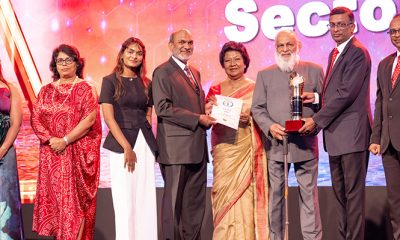
Pan Asia Bank empowers export sector as Strategic Partner of NCE Export Awards
-

 News2 days ago
Tariff shock from 01 April as power costs climb across the board