
Foreign News
Lisbon in shock after funicular crash leaves 15 dead

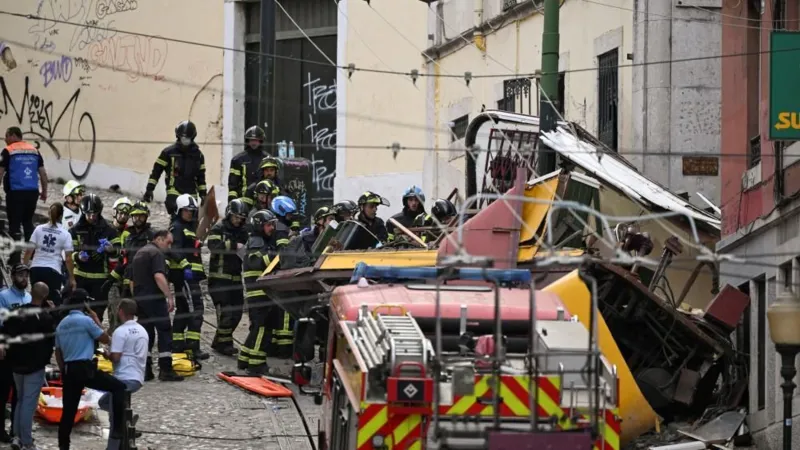
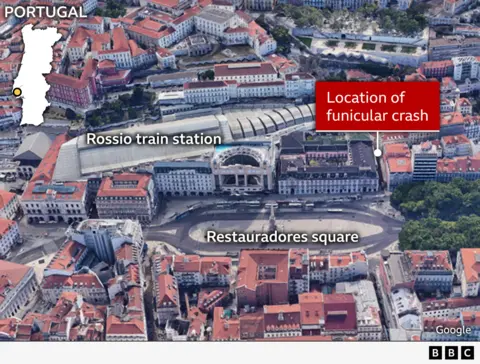
Portugal is in shock after 15 people lost their lives in the derailment of the 140-year-old Gloria funicular, a major tourist attraction in the capital Lisbon.
Another 18 people were taken to hospital, five of them in a serious condition, according to the emergency services.
Foreign nationals were among those killed in the crash, which took place around 18:05, although nationalities could not be confirmed, authorities said.
Lisbon’s mayor, Carlos Moedas, paid a visit to the hospital on Wednesday night. Calling it a “tragic moment for the city”. Portugal’s government, which will host the mayor at a cabinet meeting on Thursday, has declared a day of national mourning.
The country’s President Marcelo Rebelo de Sousa expressed his “sympathy and solidarity with the families affected by this tragedy”.
Police and other emergency workers spent many hours on the scene, as the various investigations into the incident – by the company that runs the funicular, by the national transport safety authority, and by the criminal police – got underway.
The boss of Lisbon’s public transport operator Carris visited the scene of the accident late on Wednesday, with the company issuing a statement to the effect that major four-yearly and interim biennial maintenance had been carried out on the funicular as required, as well as daily, weekly and monthly checks.
But reports from eye-witnesses suggested that the braking system on the cable-hauled funicular failed, sending it hurtling down the steep street and into a building.
Several people had to be freed after being trapped in the wreckage, authorities said.
It is unclear how many people were on board at the time of the cable railway crash, which occurred near the Avenida da Liberdade.
Footage shared widely on social media showed the bright yellow carriage overturned and almost entirely destroyed. People could be seen fleeing the area on foot as what appears to be smoke filled the air.
One witness told Portuguese newspaper Observador the vehicle was “out of control, without brakes”.
“We all started running away because we thought the carriage was going to hit the one below,” said Teresa d’Avó. “But it fell around the bend and crashed into a building.”
Another told Portuguese TV channel SIC that the funicular hit a building as it sped down the steep street “at full speed”. “It hit a building with brutal force and collapsed like a cardboard box; it had no brakes,” the woman said.
The Lisbon authorities say it is too early to determine the cause of this incident.
However, Observador reported that a cable came loose along the railway’s route, causing it to lose control and collide with a nearby building.
European Commission President Ursula von der Leyen sent her condolences to the families of the victims.
Spain’s Prime Minster Pedro Sánchez said he was “appalled by the terrible accident”.

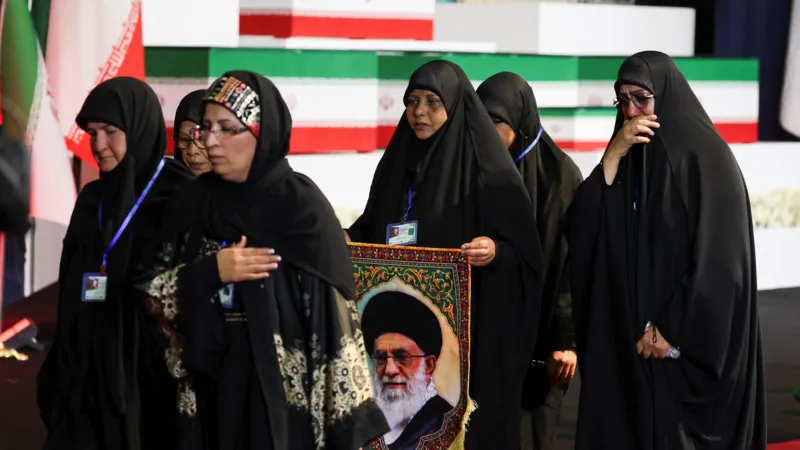
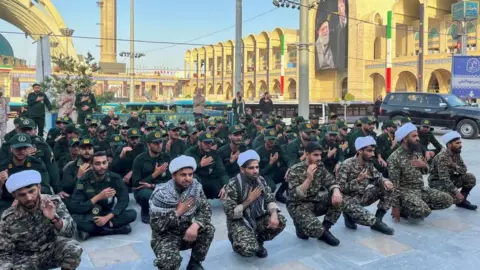
Iran has begun several days of public mourning and funeral processions for its former Supreme Leader, Ayatollah Ali Khamenei, more than four months after he was killed in strikes launched by the US and Israel.
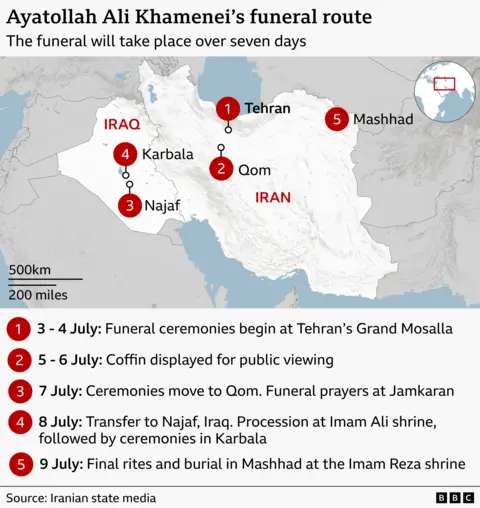
The former Ayatollah’s body will lie in state in Tehran’s Grand Mosalla from Friday, ahead of his burial in his hometown of Mashhad next Thursday.
Iranian authorities said 12 to 20 million people were expected to attend, which they are calling the “funeral of the century”.
It comes as Iran and the United States observe a fragile ceasefire after signing a preliminary deal to halt their conflict in June.
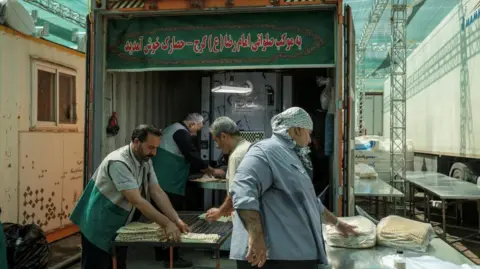
Six days of ceremonies will start at 06:00 (03:30 BST) on Saturday, at Tehran’s Imam Khomeini Mosalla, which visitors can visit to pay their respects until Sunday afternoon.
There will be an official funeral ceremony in Tehran on Saturday, which the Tehran-based Mohammad Rasulullah Corps is leading.
The group’s commander Hassan Hassanzadeh said Khamenei’s coffin would be displayed on an elevated platform, with crowd flows designed to allow visitors to enter and leave within 15 to 20 minutes.
Khamenei’s body will lie in the Grand Mosalla for three days, alongside the remains of family members who were also killed in the US and Israeli strikes in February.
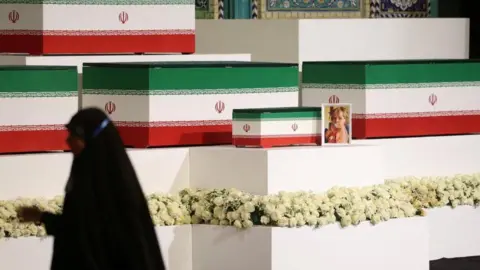
Authorities have ordered public and private offices in Tehran to close from Saturday through Monday, while traffic restrictions will shut down most of the city centre to private vehicles, AFP reported. The airspace over Tehran will be partially closed from Friday and fully closed on Monday.
On Tuesday, events will move to Qom, just south of Tehran, where a senior Shia cleric will lead funeral prayers at Jamkaran – one of Iran’s most prominent and symbolic religious sites.
Khamenei’s body will then travel to Najaf in Iraq on Wednesday. Following a procession at the shrine of Imam Ali, Shia Islam’s first imam, ceremonies will continue in Karbala before the body returns to Iran.
Iranian officials say the Iraq events follow requests from Iraqi groups, with some analysts seeing them as representative of Khamenei’s influence across the Shia Muslim world and Iran’s religious and political ties across the region.
Iranian Foreign Minister Abbas Araghchi visited Baghdad to coordinate the arrangements, saying the funeral had a “symbolic importance”.
On Thursday, Khamenei will be buried in the city of his birth, Mashhad, at the Imam Reza Shrine, the mausoleum of Shia Islam’s eighth imam and Iran’s most important pilgrimage site, which attracts millions of visitors each year.
Representatives from multiple countries are expected to attend the ceremonies, including Pakistan’s Prime Minister Shehbaz Sharif.
Ceremonies will continue across the country for 40 days, with commemorative events planned until the first anniversary of Khamenei’s burial.
Khamenei was succeeded by his son, Mojtaba, who has not been seen in public since becoming supreme leader.
Key questions around the ceremony centre on whether Mojtaba will attend the funeral.
Last week, secretary of the organising committee, Ali Akbar Pourjamshidian, said any decision on Mojtaba’s attendance would be announced by the offices of the armed forces commander-in-chief and the supreme leader.
Questions also remain about who will lead the funeral prayer, as in Shia tradition the role carries religious and political significance.
[BBC]
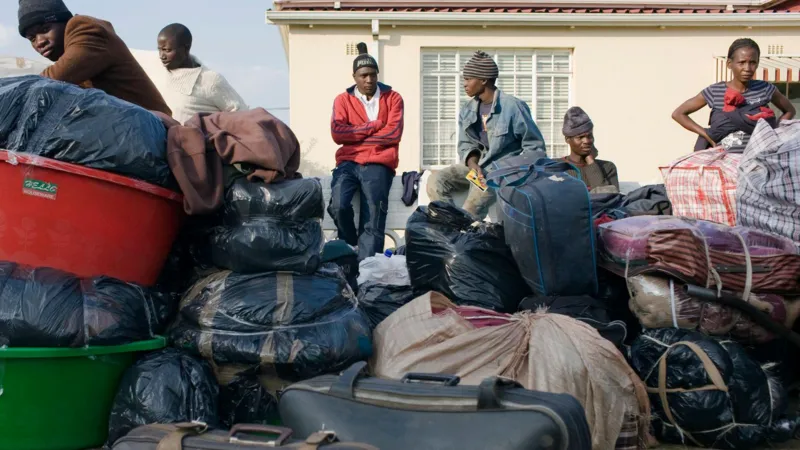
Nigeria says it will seek compensation from South Africa for its citizens who have left the country following recent protests targeting undocumented migrants.
Foreign ministry spokesperson Kimiebi Imomotimi Ebienfa told the BBC that the issue would be discussed between the two governments “at the highest levels”.
Acting High Commissioner to South Africa Alexander Ajayi said on local television on Tuesday that the government had begun documenting businesses and properties left behind by Nigerians.
One Nigerian trader waiting to be repatriated told the BBC he had lived in South Africa for nearly a decade and had abandoned his business and home because he feared for his safety.
Oghodero Erejor Wilson, 32, said he was losing “everything because of fear”.
“I left everything in my house including clothes.”
He is among hundreds of Nigerians still waiting to be evacuated from South Africa. More than 600 Nigerians have already been repatriated in recent weeks.
The South African authorities say those who have been flown home were in the country illegally – though this is disputed by Nigeria.
About 25,000 nationals of other African countries have left South Africa following a wave of protests in recent weeks by groups demanding that the government does more to curb illegal migration.
Some anti-migrant groups had given undocumented foreigners a deadline of 30 June to leave the country and organised marches attended by thousands of people on Tuesday. These were largely peaceful but there were isolated incidents of violence against foreigners.
The South African police say that about 900 people were arrested, mostly for immigration-related offences and looting.
The BBC has asked South Africa’s government for comment on Nigeria’s compensation demand.
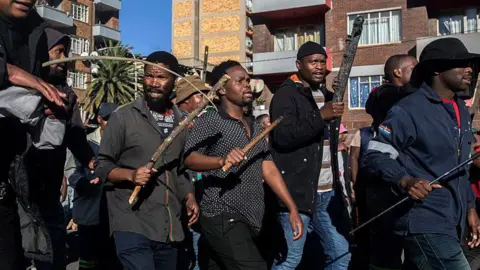
Nigeria’s acting high commissioner said he had asked all of those who had left South Africa “to document very accurately those things they were leaving behind in terms of businesses, in terms of even cars, movable and immovable properties”.
Foreign ministry spokesperson Ebienfa told the BBC that all claims would be verified before any formal request was made
“We have not severed ties with South Africa, we are still engaging them at the highest level, we will sort those details using our usual diplomatic channels,” he said.
Wilson, the trader, said he had run a clothing business in the South African city of Centurion in Gauteng province for several years.
But he said he had now closed his shop and fled to stay near the Nigeria High Commission in South Africa’s capital, Pretoria.
Scheduled to leave on the next repatriation flight to Nigeria on Friday, he estimates the goods left in his shop are worth more than 16,000 rand ($975; £735).
Wilson said his residency documents had expired in 2021 and he had been unable to renew them.
He said he was not very hopeful about the prospect of getting compensation.
“If South Africa government can compensate it, it will be nice, but I know they won’t,” he said.
(BBC)
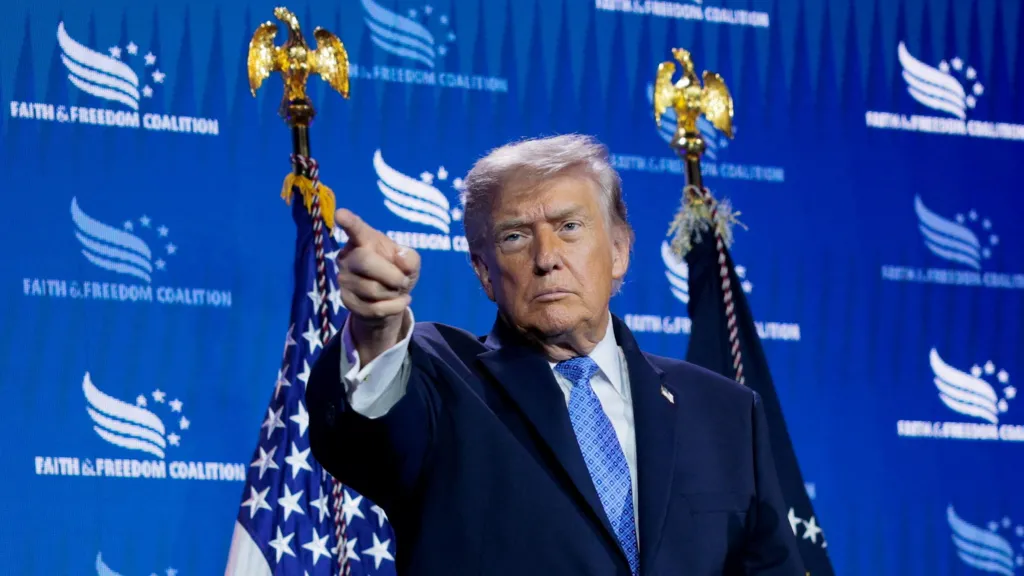
US President Donald Trump made more than $1bn (£750m) last year from business dealings in cryptocurrency, according to his mandatory financial report for 2025.
In a 927-page disclosure, he reported $635m in royalties from a Trump meme coin that has plunged in value since he launched it days before taking office.
He also reported over $500m in income from World Liberty Financial, a cryptocurrency firm founded by his own sons and the children of his special envoy, Steve Witkoff.
He earned millions more from real estate and Trump-themed items. But the White House denied he was profiting from the presidency.
The earnings from his latest financial disclosure far outpace the previous ones for 2024, when Trump disclosed over $600m in income.
But the White House, which has repeatedly emphasised that Trump has placed his business in a trust managed by his sons, again denied any conflict of interest.
White House deputy press secretary Anna Kelly said the president had proudly made the US “the crypto capital of the world”.
“Neither the President nor his family has ever engaged – or will ever engage – in conflicts of interest,” she said in a statement.
She added: “All actions by President Trump and his administration are taken in the best interest of the American people – and any so-called ‘reporters’ pushing otherwise are recycling the same, tired, false narrative that Democrats and the legacy media have been pushing for a decade.”
The president himself has also highlighted that he is not subject to federal conflict of interest laws.
Trump once criticised cryptocurrency, famously calling Bitcoin a “scam” and a “disaster waiting to happen”.
But Tuesday’s disclosure shows his crypto earnings far overshadow income from his real estate business, which first catapulted him to fame.
He earned around $77m from his Mar-a-Lago club and $122m from his golf club in Doral, Florida.
He also earned more than $30m each from golf clubs in Bedminster, New Jersey, and Jupiter, Florida, and Turnberry, Scotland.
Trump also earned millions from other business ventures, according to the financial disclosure.
These included $4.7m in royalties from Trump-branded watches, along with Trump-branded Bibles, trainers, fragrances and guitars.
First Lady Melania Trump also listed her income from 2025 in the disclosure. She made $10.7m from a “license agreement” related to the documentary about her that was released last year.
Another $6m in income is listed for her from the sale of NFTs, which are digital images sold online.
The president listed millions of dollars, too, in settlements from various legal actions.
These included $16m from a lawsuit against ABC, $16m from CBS Broadcasting and CBS Interactive, $24.5m from Meta, $22m from YouTube and $8m from X.
But the White House has said most of that money went towards Trump’s future presidential library or a nonprofit dedicated to the upkeep of park sites in the Washington DC area.
According to a list of the world’s richest people compiled by Forbes magazine, Trump has an estimated fortune of $6bn – up from $2.3bn in 2024. Bloomberg’s Billionaire’s Index puts the president’s net worth at $7.6bn.
After his return to the White House, Trump adopted a friendly approach to the crypto industry, even as companies linked to his family issued digital tokens.
The Trump-appointed head of financial regulator, the Securities and Exchange Commission, is also seen as an ally of the crypto industry.
Since taking office in April 2025, Paul Atkins has shifted the agency away from the strict, regulation-by-enforcement approach of his predecessor.
Last July, the president signed the GENIUS Act into law, to make “make America the undisputed leader in digital assets”.
(BBC)

Sai Sudharsan century, Padikkal 94* put India A in command

Iran begins public mourning for Ayatollah killed in February

Hope returns, Roach out for West Indies after injury-hit Sri Lanka bat

Juventus Training Camp from 6-10 July in Colombo

Wijesundara set for debut as injury-hit Sri Lanka struggle to make up XI

UNEP support pledged to strengthen Sri Lanka’s Environmental Priorities

‘Dates have the highest sugar content to fight Coronavirus’

Sunday Island 27 December – Headlines

#SundayIsland 17th December – Headlines

Sunday Island – 28th March

Sunday Island Headlines – 21 March

Sunday Island – 21st February – Headlines
-
 News5 days ago
LAWASIA warns against ad hoc initiative to increase judges’ retirement ages
-
 News6 days ago
Another 1,132 Sri Lankan Personnel to be deployed for United Nations Peacekeeping Missions
-
 News4 days ago
Chamuditha to seek removal of injunction on Youtube programme
-
 Features4 days ago
Climate action to bring South Asia together
-

 Business7 days ago
Month-end profit-takings drive stock trading; indices up
-
 Features6 days ago
People’s Bank expands digital banking network with 125th cheque deposit kiosk
-
 News4 days ago
CPRP alleges another death in custody, seeks protection for witness
-

 News7 days ago
FSP complains of irregularities in a Guinness World Record event held in Sri Lanka