
Latest News
’As responsible governments, we must ensure that public finance serves as a catalyst for advancing the rights of every child and securing their future.’ – Prime Minister

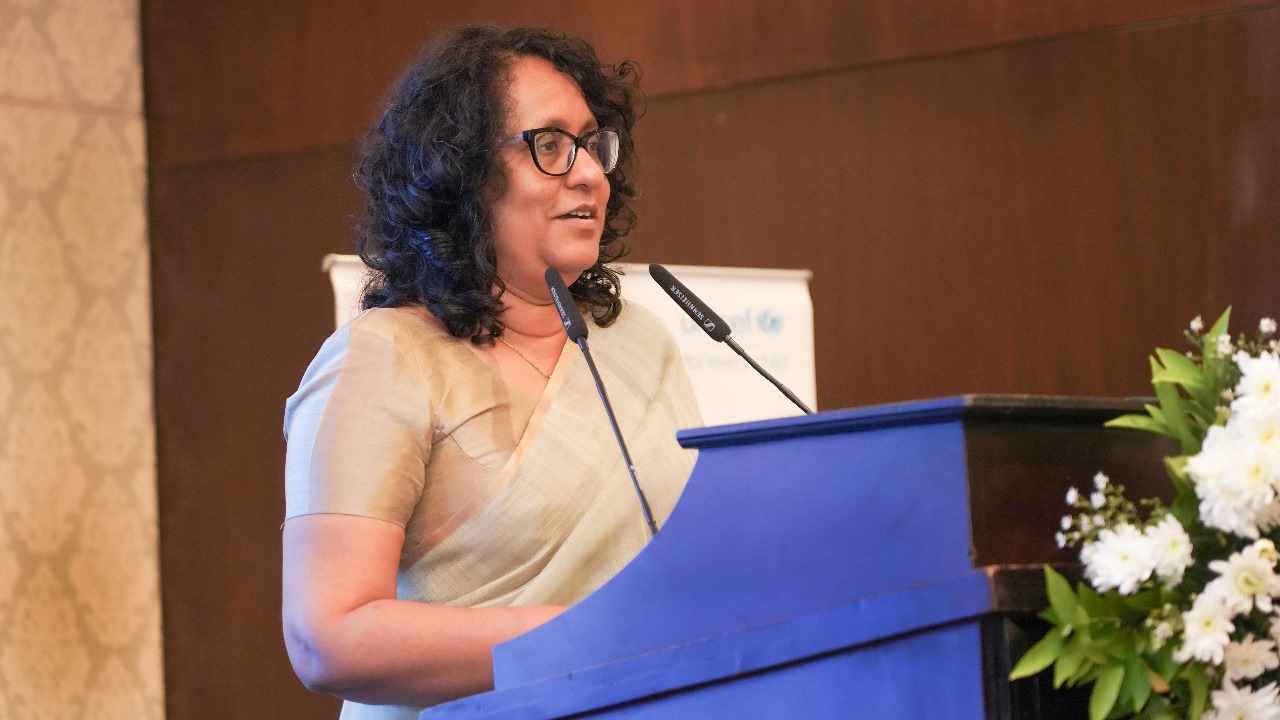
Prime Minister Dr. Harini Amarasuriya emphasized the critical importance of child-focused public financing, noting that “Government budgets are among the most powerful instruments for realizing the rights and well-being of children as enshrined in the Convention on the Rights of the Child. As responsible governments, we must ensure that public finance serves as a catalyst for advancing the rights of every child and securing their future.”
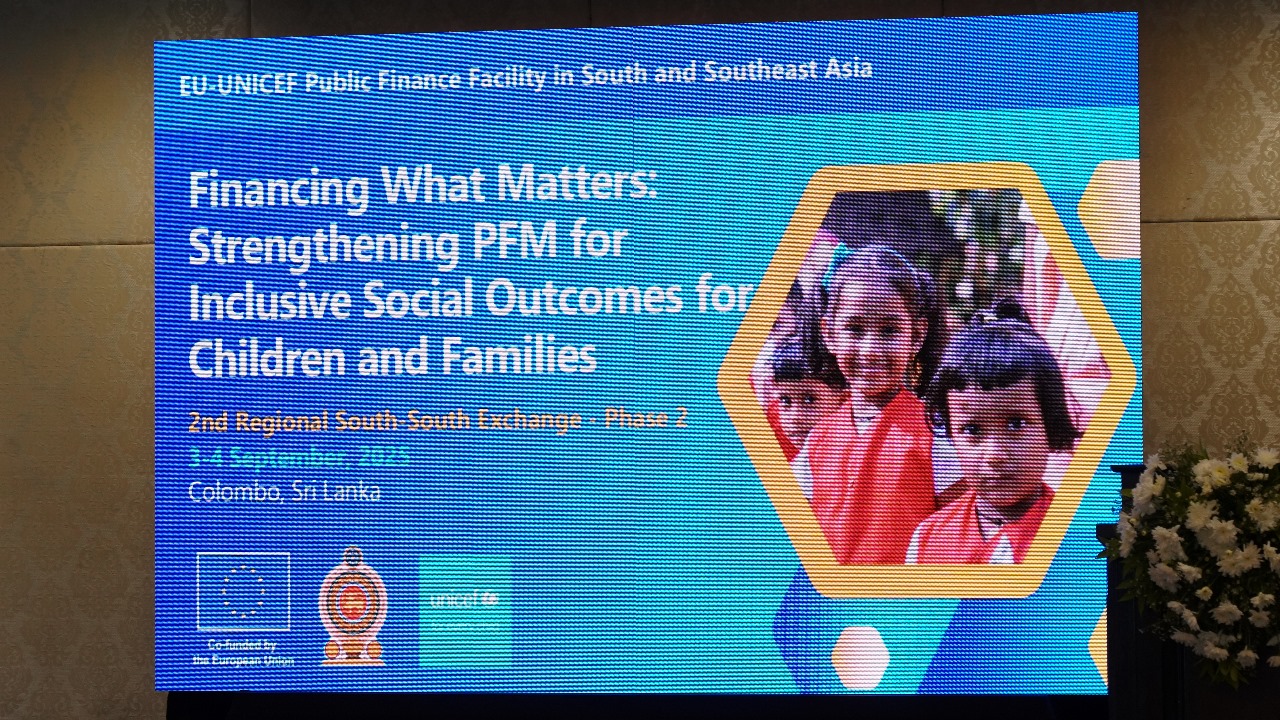
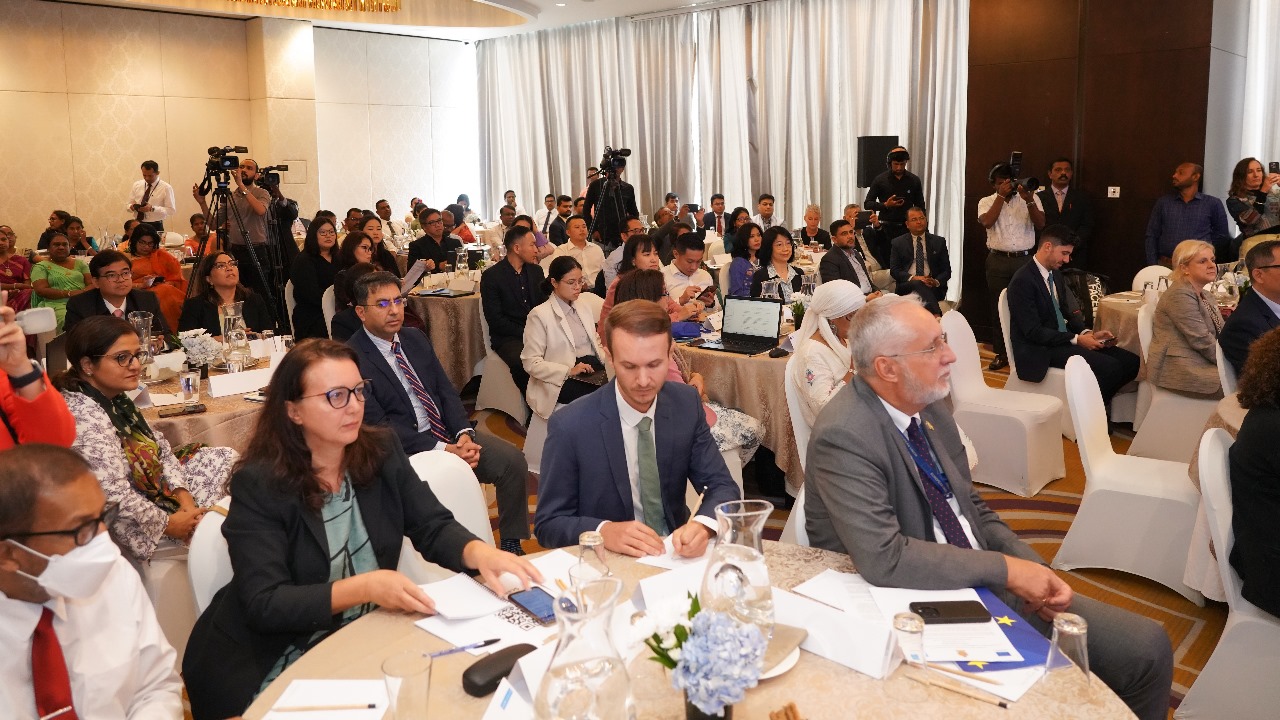
She made these remarks while addressing the two-day program on “Financing What Matters: Strengthening Public Financial Management for Inclusive Social Outcomes for Children and Families”, a Regional Knowledge Exchange held on 3rd and 4th September at NH Collection in Colombo under the EU-UNICEF Public Finance Facility. The event, implemented by UNICEF and supported by the European Union, served as a forum for dialogue between policymakers responsible for public financial management, budgeting, and expenditure processes across Asia, as well as international partners in this field.
In her address, the Prime Minister further stated:
“Our Government places children at the heart of our responsibilities, and as such, all our policies will reflect the best interests of the child. Being acutely aware of the continuing impact of economic challenges on our people particularly the most vulnerable, including our children the Government of Sri Lanka continues to pursue fiscal consolidation while prioritizing public investments in children and social protection.
In this regard, we have introduced specific child-focused budgetary measures in the 2025 budget. LKR 1 billion has been allocated to provide a monthly allowance of LKR 5,000 to children in institutional or guardian care—of which LKR 2,000 is credited to the child’s minor account, and LKR 3,000 provided to guardians for welfare expenses. LKR 500 million has been dedicated to improving capacity, infrastructure, and human resources in 379 certified child care institutions. A further LKR 1 billion has been proposed as a housing grant to support orphaned children in building stable homes or ensuring long-term security once they marry after the age of 18. In addition, LKR 250 million has been allocated to establish a child-friendly transport system, especially for institutionalized children required to travel to and from courts. LKR 200 million has been committed to establishing a specialized treatment center for children with Neuro-Developmental Disabilities (including autism) at the Lady Ridgeway Children’s Hospital, while LKR 250 million has been allocated to develop a model daycare center supporting inclusive early childhood development for children with NDD.
These allocations, together with historic increases in health and education budgets, reflect our Government’s commitment to protecting vulnerable children, strengthening families, and ensuring every child in Sri Lanka has access to education, nutrition, healthcare, and psycho-social support. By embracing innovation, supporting vulnerable populations, and aligning fiscal policy with sustainability, we aim to transform today’s challenges into opportunities for growth and resilience.”
Speaking at the event, Myo Zin Nyunt, Deputy Regional Director of the UNICEF East Asia and Pacific Regional Office, said: “By offering technical advice, training, and space for policy discussion, this Facility is helping countries like Sri Lanka make better budget choices, deliver services more effectively, and involve citizens including young people in decision-making.”
Carmen Moreno, Ambassador of the European Union to Sri Lanka and the Maldives, also addressed the gathering, highlighting the importance of prioritizing social sector spending, noting that without such investment societies will not be able to withstand future challenges.
The event was attended by the UN Resident Coordinator, Marc-André Franche, UNICEF Sri Lanka Representative, Emma Brigham, Dr. Harshana Sooriyapperuma, Secretary to the Ministry of Finance, Planning and Economic Development, officials from the EU and UNICEF regional offices in Bangkok, as well as senior officials from the Ministry of Finance Planning and Economic Development.
[Prime Minister’s Media Division]

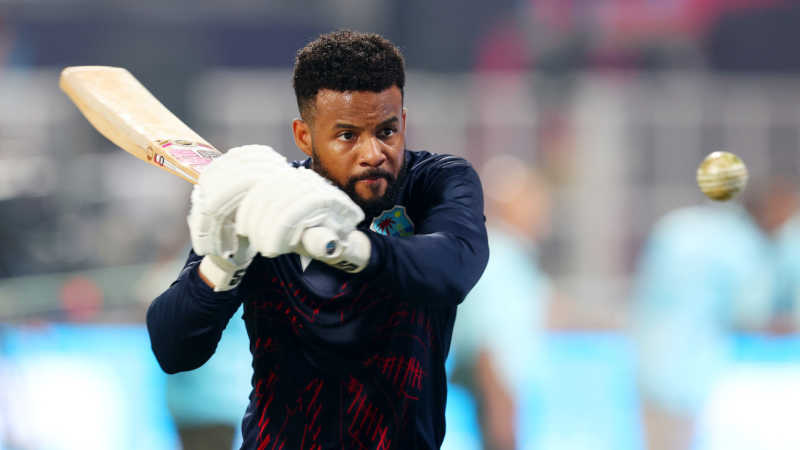
Sri Lanka won the toss and made the surprise call to bat first on a North Sound surface with a fair covering of grass. West Indies lead the two match series 1-0.
Dhananjaya de Silva’s focus at the toss was on picking up 20 wickets and Sri Lanka’s inability to do so in the first Test, which he cited as a primary reason for their heavy defeat. Roston Chase was quite happy to bowl first, stating that it was what he would have done had he won the toss.
There were changes for both teams, with several of those injury-enforced. West Indies welcomed back Shai Hope with Joshua Da Silva making way. Kemar Roach also missed out with an injury, with Anderson Phillip replacing him to keep four pacers in the playing XI.
Sri Lanka made three changes, as Pathum Nissanka, Lahiru Kumara and Kasun Rajitha missed out. Nissanka underwent a wrist surgery, while Kumara suffered a hamstring injury in the first Test. Lahiru Udara, Prabath Jayasuriya and debutant pace-bowling all-rounder Isitha Wijesundera all came in.
With the pitch described as even, with a fair covering of grass with a tinge of green on it, Sri Lanka’s decision to bat first caught a few off-guard. West Indies’ four-pronged pace attack will once more look to test the Lankan top order – particularly in the first hour of play. The pitch was also expected to show some uneven bounce with a few cracks on it. Sri Lanka do have the extra spinner in their lineup, and will be hoping that when it comes time for them to bowl there will be some assistance for the slower bowlers.
The weather remained dry, but there was some forecast for rain.
West Indies: John Campbell, Brandon King, Kavem Hodge, Amir Jangoo Shai Hope (wk), Roston Chase (capt), Justin Greaves, Jayden Seales, Alzarri Joseph, Shamar Joseph, Anderson Phillip
Sri Lanka: Lahiru Udara, Nishan Madushka, Dinesh Chandimal, Kamindu Mendis, Dhananjaya de Silva (capt), Kusal Mendis (wk), Sonal Dinusha, Prabath Jayasuriya, Milan Rathnayake, Isitha Wijesundara, Asitha Fernando
(Cricinfo)
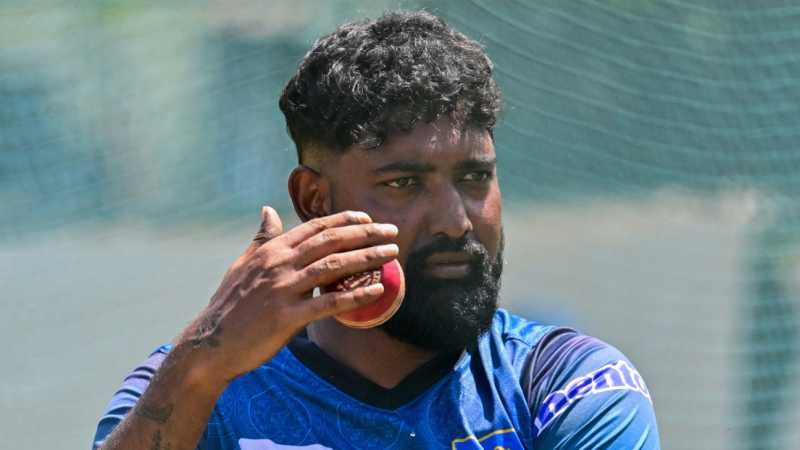
Sri Lanka have been hit by a spate of injuries and an illness ahead of the secondbTest against West Indies, in North Sound, a game they must win to take something away from the series after suffering an innings defeat in the first.
The injuries have forced the team management to pick from a squad of 13, rather than the 17 they took on tour. The seam-bowling department has been especially hard hit, with Lahiru Kumara and Vishwa Fernando both going down with injuries.
The most serious injury, however, seems to be that of opener Pathum Nissanka, who left the squad on June 30 to undergo surgery on an injured wrist in the United Kingdom. Lahiru Udara will take Nissanka’s place at the top of the order for the second Test. Nissanka’s surgery casts a cloud over his Lanka Premier League participation as well.
Vishwa, meanwhile, has not sufficiently recovered from back and side pain to become available for the second Test. And Sri Lanka’s quickest bowler in the squad, Kumara, remains unavailable after having walked off the field with a hamstring complaint (a recurring injury) having delivered just one over in the previous Test.
These injuries, plus Kasun Rajitha’s modest performance in the first Test, have paved the way for seamer Isitha Wijesudera’s Test debut.
In addition, offspin-bowling allrounder Ramesh Mendis has contracted a bacterial infection on tour. As such, he is also unavailable for selection. Prabath Jayasuriya – Sri Lanka’s top specialist spinner over the last three years – will enter the XI.
(Cricinfo)

Substitute Goncalo Ramos’s headed goal edged Portugal into the last 16 of the FIFA World Cup 2026 after a gripping 2-1 win against Croatia.
Ramos connected with a superb pass from Rafael Leao in the fourth minute of stoppage time on Thursday to snuff out a Croatia team that had created the lion’s share of the chances in sapping evening heat in Toronto.
In a dramatic ending, Croatia thought they had equalised in the dying seconds, but Josko Gvardiol’s goal was chalked off for offside.
The Croatians were left stunned by the decision, while Portugal’s players celebrated.
Cristiano Ronaldo played his role in the victory, stroking home a penalty that cancelled out Ivan Perisic’s opener.
It was Ronaldo’s first-ever goal in the knockout phase of the World Cup, and his remarkable international career will have another chapter when Portugal face Spain in Dallas on Monday.
Perisic had stunned the Portuguese by slotting the ball under the advancing Portugal goalkeeper Diogo Costa in the 53rd minute.
Within minutes, Ronaldo had the ball in the net after controlling a long pass, but his effort was disallowed for offside.
But Portugal got level when Renato Veiga was grabbed by Croatia’s Nikola Vlasic in the penalty area, and after a VAR check, the referee pointed to the spot.
Ronaldo stepped up to convert the penalty with ease, hitting the ball straight down the middle of the goal and pumping his fists with joy afterwards.
In a pulsating game, Manchester City forward Mateo Kovacic’s low shot was pushed onto a post by goalkeeper Costa’s fingertips.
Still, Croatia pushed, and Petar Sucic had the ball in the net, but the assistant referee’s flag was up for a clear offside.
Ronaldo was withdrawn in the 81st minute to allow Ruben Neves to come on.
Croatia continued to create more chances than their opponents, and Mario Pasalic came so close to winning the game with a header at the far post, but it bounced just wide.
But when Ramos connected, the net bulged, and Portugal were through.
(Aljazeera)

Sai Sudharsan century, Padikkal 94* put India A in command

Iran begins public mourning for Ayatollah killed in February

Hope returns, Roach out for West Indies after injury-hit Sri Lanka bat

Juventus Training Camp from 6-10 July in Colombo

Wijesundara set for debut as injury-hit Sri Lanka struggle to make up XI

UNEP support pledged to strengthen Sri Lanka’s Environmental Priorities

‘Dates have the highest sugar content to fight Coronavirus’

Sunday Island 27 December – Headlines

#SundayIsland 17th December – Headlines

Sunday Island – 28th March

Sunday Island Headlines – 21 March

Sunday Island – 21st February – Headlines
-
 News5 days ago
LAWASIA warns against ad hoc initiative to increase judges’ retirement ages
-
 News7 days ago
Another 1,132 Sri Lankan Personnel to be deployed for United Nations Peacekeeping Missions
-
 News4 days ago
Chamuditha to seek removal of injunction on Youtube programme
-

 Features4 days ago
Climate action to bring South Asia together
-

 Business7 days ago
Month-end profit-takings drive stock trading; indices up
-
 Features6 days ago
People’s Bank expands digital banking network with 125th cheque deposit kiosk
-
 News4 days ago
CPRP alleges another death in custody, seeks protection for witness
-

 News7 days ago
FSP complains of irregularities in a Guinness World Record event held in Sri Lanka