
Features
Lies about pigeons

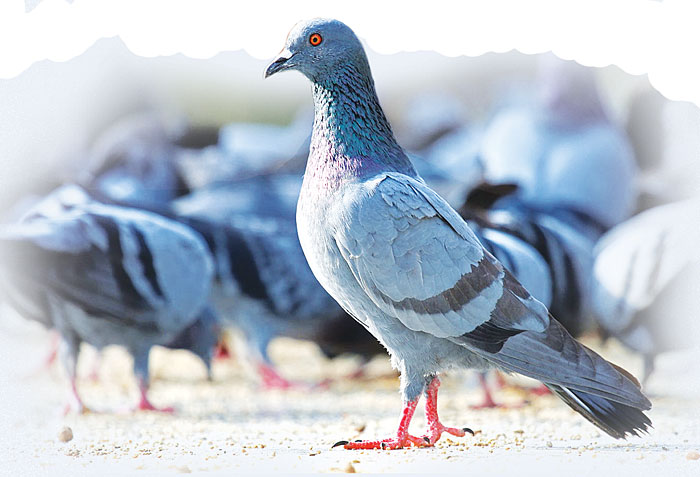
A month ago I received distress calls from people in Mumbai that the Municipal Commissioner had suddenly swooped down on a 20-year-old feeding platform (chabutra) for pigeons, which was on the side of the road in Khar, had covered it with plastic sheets and posted police people so that no one could feed the birds. The pigeons left inside died of starvation as they were not allowed out. The pigeons outside, who had been fed for years, had nowhere else to go so they stayed on the road waiting to be fed. Hundreds were run over by cars. Anyone who tried to feed them was made to sit in a police station. In the meantime the Municipal Commissioner had several completely untrue articles published in the local papers about how dangerous pigeons are to human health.
I talked to the Commissioner and this is the reason he gave me for this unnecessary and murderous act : Pigeons lay eggs. The eggs are eaten by crows. We don’t want crows. So if we get rid of pigeons, the crows will leave.
I have rarely heard such complete nonsense. There is no scientific proof of any link between pigeon eggs and crow breeding. Crows are scavengers. They will continue to breed as long as humans generate filth.
We need to know why pigeons are in the cities. Thousands of people feed them – in Delhi there are designated feeding areas and people come in scooters and cars to throw feed. My hospital has over a thousand pigeons that have been hurt by cats, dogs and cars.
There are no pigeons in the wild any more.
How did they become city creatures like dogs and cats ?
The pigeon we know today is a descendant of the Rock Dove (Columbia Livia) which prefers rocky coastal cliffs to cities. As far back as 10,000 years ago records show that people in Mesopotamia (now Iraq) and Egypt began coxing them with food and encouraging them to feed and breed near human dwellings. These birds were then caught and eaten. People started breeding them like chickens to eat. And the breeding and domestication led to the subspecies in our cities today.
Over time, people stopped eating them and started breeding them as a hobby. Pigeons were transported all over the world by ship to feed the pigeon breeding hobby. Obviously many escaped and began to breed freely in the cities. They had been bred over time to be comfortable with humans and so they took up nesting on building ledges, window sills: anything that looked like a cliff edge.
People realized that pigeons had a talent for navigation, and sailors used them to point lost ships towards land. They became valuable as airborne messengers and even armies started using them. Pigeon posts were recognized all over the world. Genghis Khan used pigeons as daily messengers both to enemies and allies. They were used widely in both World Wars. America alone used 200,000 in the Second World War. Medals for bravery were given to pigeons. The last messaging service using pigeons in the world was disbanded in 2006 by the police force in the state of Odisha !
By then pigeons had also adapted their appetites from berries, insects and seeds to anything that humans would feed them – from grain to ice cream and biscuits – and they became expert trash hunters. There is a lovely film on You Tube about a pigeon in Canada that steals a bag of chips from a shop every day !
 Their breeding biology is good for the survival of their children : both parents rear their chicks on a diet of protein-and fat-rich milk produced in a throat pouch called the crop, instead of relying on insects, worms and seeds to keep their young alive. As long as they can eat, their babies will survive.
So, when other birds finally gave up the ability to survive in the harsh urban environment and died out, the pigeon survives. Along with the crow, it is the only bird that most city children will ever see. Children, who are allowed to feed them, remember the experience years later and how it shaped their personalities into becoming more humane people.
What is there to hate in pigeons ? They are good looking with iridescent necks and so many colours. People, who have adopted injured pigeons who cannot fly any more, say that they are beloved members of the household. Charming, affectionate, sociable with individual personalities. When they live indoors, they keep themselves very clean and love bathing ! They are easy to potty train. They are important to the cleanliness of a city. Crows are still too shy to walk around with people. But pigeons eat all the trash that we throw on the sidewalk, even the vomit. They are smart with complex social systems. I think that they think they are people too.
What is their importance ? We need hawks, eagles, falcons and kites, and pigeons are a food for them.
Pigeon compost is considered the best of all manures. In early history perhaps the domestication of pigeons led to advances in the ability to grow the best possible crops. Pigeon faeces was so valuable that armed guards were hired to protect dovecotes from thieves. In the Middle East, where eating pigeon flesh was forbidden, dovecotes were built simply to provide manure for growing fruit and this practice continued for centuries. In France, Italy and Spain guano was used extensively on hemp crops and for the fertilisation of vineyards. It is extremely nitrogen rich. There are ads on the net advertising pigeon manure which sells for twice the price of other manures. Their compost is unsurpassed for fertilizing tomatoes, watermelon, eggplant, roses, and other plants that like a rich soil.
In Morocco pigeons’ droppings are collected and sold to leather tanneries as when leather is soaked in pigeon faeces it becomes more supple . Moroccan leather is considered the best in the world.
Who hates them ? The same people who drove out sparrows, wrens, warblers, blue jays, cardinals, egrets, and everything else. The same people who choose sterile joyless streets as a representation of “cleanliness” and “development” over human happiness.
And they make up these stories about disease spreading.
Do pigeons spread disease ? No. If they did they would not have been eaten for centuries without a single case of disease reported. In the 19th century the American government urged people to collect pigeons and eat them for protein.
Ironically, the pigeon is now wrongly perceived as a disease carrier as a result of commercial propaganda pumped out by the pest control industry, with America being the source of a majority of this misinformation – the same country that urges you to eat them.
Every country bureaucrat (never scientists) accuses the pigeon of spreading everything. The Mumbai Commissioner has accused them of tuberculosis. The Municipal Commissioner of New York spread stories about pigeons spreading meningitis. He had to apologise publicly.
The pest control industry pumps out propaganda suggesting that pigeons are disease carriers. In reality they pose little or no risk at all. I have a staff of people who look after diseased and sick pigeons . Not one person – and they work without gloves and face protectors – has ever fallen sick in the last 40 years.
Do pigeons, or their excrement, transmit diseases to human beings ? The answer is no, they do not. The likelihood of a bird passing on a disease to a human being is so infinitesimally small that it is not even worth considering.
Below are quotes from leading experts in respect of the potential for pigeons to transmit disease to human beings:
* The Center for Disease Control in Atlanta, the New York City Department of Health, and the Arizona Department of Health, all agree that diseases associated with pigeons present little risk to people. None of them has documented a SINGLE case of pigeon to human transmission of any disease.
* The UK’s Chief Veterinary Officer, when addressing the House of Lords in 2000 on the issue of intimate human contact with 8,000 pigeons feeding in
Trafalgar Square, was asked if this represented a risk to human health. The Chief Veterinary Officer told The House that it did not.
* The Cincinnati Environment Advisory Council report: “The truth is that the vast majority of people are at little or no health risk from pigeons and probably have a greater chance of being struck by lightning than contracting a disease from pigeons.”
* Mike Everett, Royal Society for the Protection of Birds, in The Big Issue Magazine, February 2001: “There is no evidence to show that pigeons spread disease.”
* David A. Palmer (B.V.Sc., M.R.C.V.S) said in an article entitled ‘Pigeon Lung Disease Fatality and Health Risk from Ferals’: “It really makes absolute nonsense for a popular daily newspaper to suggest that pigeons present a health hazard.”
* David Taylor BVMS FRCVS FZS: “In 50 years professional work as a veterinary surgeon I cannot recall one case of a zoonosis in a human that was related to pigeons.”
Many professions, such as those involved in veterinary medicine and wildlife rehabilitation, treat wild birds suffering from a variety of avian diseases on a daily basis. Those involved in the sport of racing pigeons also spend a great deal of time in dusty pigeon lofts that accommodate hundreds of pigeons. If the potential for the transmission of disease is so great, why is it that we do not see regular human fatalities in these professions and sports where close contact with birds, such as pigeons, is commonplace?
Four major studies done across the world in 1983/1993/ 1996 /2002 have confirmed that not only does the pigeon not carry any avian influenza, it is highly resistant to the disease, cannot be infected with it and cannot spread the disease.
How to reduce pigeon numbers in the city ? The answer is very simple. Making pigeon chabutaras and designated feeding sites, and using pigeon lofts where eggs can be removed, has been proven to be successful in every city where it has been tried. If the Mumbai Municipal Commissioner wants to reduce pigeons, it can only be done by establishing chabutaras, not by removing them.
To join the animal welfare movement contact gandhim@nic.in, www.peopleforanimalsindia.org





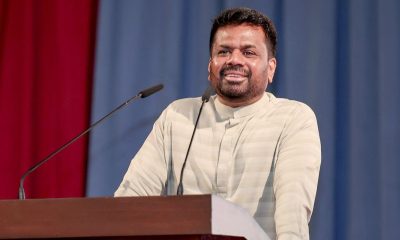


“They must foster the abiding values of freedom of thought and expression, respect and tolerance for viewpoint difference …”
Address recently delivered by Professor Savitri Goonesekere,
former Vice-Chancellor and emeritus Professor of Law of the university of Colombo,
at the establishment of the Prof. G.L. Peiris Trust for Legal Education and Research.
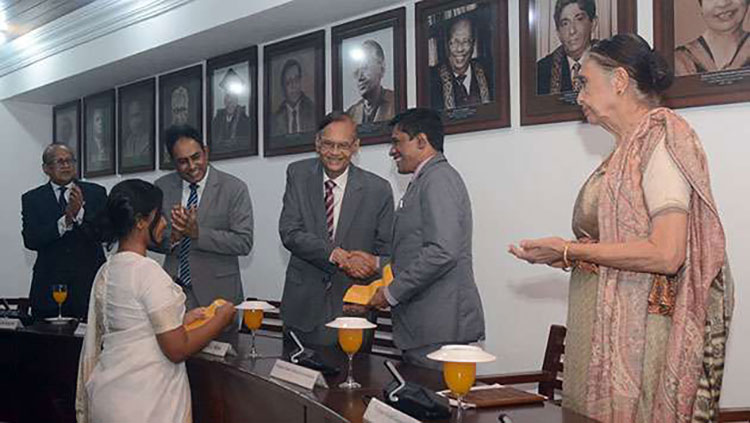
Thank you, Professor Peiris, for inviting me to speak this evening at an event to announce the endowment that is being made to the University of Colombo and the Sri Lanka Law College as the G. L. Peiris Trust for Legal Education and Research.
You and I have walked the corridors of this beautiful building as Vice Chancellors of this university. The walls of the Senate Room carry our portraits, but do not reflect the experiences that we have had in that capacity. We worked in this institution and chaired Senates and Councils. These fora were places that gave us an opportunity to respect viewpoint differences that were shared in an environment of collegiate connectivity, often in challenging times, when violence in armed conflict was a lived experience for all Sri Lankans.
This is also an occasion to share with this audience a day in this building when you had to confront the horror of the assassination of your predecessor, Professor Stanley Wijesundere, just across from your office. This was summary justice by the then JVP for taking decisions in academic bodies of the university in medical education. I was at the time Dean of the Faculty of Humanities and Social Sciences at the Open University in Nawala. Yet we connected across Universities, supported each other to cope with those dark times. You, as Vice-Chancellor of this University, and my Vice-Chancellor, the late Professor Dayantha Wijesekere, collaborated to network and respond to violence against staff and students from non-state and state actors. University Teachers for Human Rights was born at this time with the support of both Vice-Chancellors.
Some years later, as I walked up the stairs of College House, on what I expected to be a routine day, a colleague ran down that staircase to say that a former student and cherished friend, Dr. Neelan Tiruchelvam, had just been assassinated. Devastated as I felt, I had no inhibitions in speaking later at his funeral, in what had been a political assassination. I did not have to ask for permission from the University Council to do so.
Today, freedom of thought and speech in academic institutions is being challenged in the United States and our own country in restrictive norms on governance of public institutions. These events of the past and that history are an eloquent reminder that Universities, as centres of learning, must not be politicised. Rather, they must foster the abiding values of freedom of thought and expression, respect and tolerance for viewpoint difference, and bring that voice to both University fora and the public domain. In those times, professors and law teachers did not have to explain to Vice-Chancellors and Deans why they expressed views within and outside Universities on issues of public concern.
Today is a day to also recall Professor Peiris’s own scholarship in the area of public law and particularly on freedom of speech and expression that preceded the dramatically different career path he chose to take. That scholarship will now be available to generations of law students, teachers and lawyers, as well as others, hopefully inspiring an understanding and reflection on fundamental legal principles and concepts that can contribute to the wellbeing and sustainable development of a nation.
The literature and your scholarship that will be shared through the G.L. Peiris Trust will also hopefully be a reminder that “one must know the law as it is, to comment on what it should be”. For your early scholarship is very much in the tradition of analytical positivism that you and I were immersed in as students of the one and only Law Department in Peradeniya and later in this university. We pulled what are called “all-nighters”, as students and teachers, reading in our rooms or in that wonderful library in Peradeniya, referring cases, statutes, Grotius and Voet, the jurists of Civil Law, and of course the great Common Law and Civil Law scholars like Ivor Jennings, H. L. A. Hart, and R.W. Lee.
Professor Peiris, as you all know, came into the University with a stellar record from that institution near the Indian Ocean, where, (as loyal Royalists would have it), scholar students were not the norm. Coming into a University with a scholar’s record does not necessarily translate to a stellar University career. Professor Peiris, with his prodigious capacity for academic work, clarity of thought and writing, thrived in that new learning and teaching environment. He made history in the Law Department, winning every scholarship awarded and graduating at that time with the much prized first-class honours degree. I myself was a young law teacher at the time, and recall that it was impossible to grade GL’s papers with any grade but an A. The length of those contributions, of course, required exhausting attention, and I think taught his teachers to learn how to read carefully. My young grandchildren cannot read a long email from me today without missing a lot of its content!
The G. L. Peiris Trust will provide readers with a rich range of literature on a phenomenal diversity of laws in this country, with comparative jurisprudence from Civil and Common Law countries. If the Rule of Law in a democracy is to be maintained and strengthened, we must reflect on the fact that analytical positivist scholarship is not irrelevant in our times. It is that University tradition that was nurtured in the early post-independence and post-colonial era in Sri Lanka and Civil and Common Law countries that created the foundation for the great later jurisprudence in our own courts and in India. This is especially evident in important areas of public law, including constitutional law and human rights. Justices like A. R. B. Amerasinghe and Mark Fernando and lawyers like Mr. H.L.de Silva and my late husband, R. K. W. Goonesekere, were all alumni connected to this University. Their contribution to jurisprudence and legal reform in this country was nurtured in halls of learning that recognised that we must learn the law as it is, to understand what it ought to be. Professor Peiris himself demonstrates that heritage in his later work on public law and in contributing with another distinguished alumnus, the late Neelan Tiruchelvam, to the draft Constitution of 2000. I hope that the G. L. Peiris Trust will also include papers relating to that work, the best draft Constitution to date, abandoned in what has now become the norm of adversarial politics.
The long overdue institutional connection between university academia and the Law College that is made through the G .L. Peiris Trust is welcome. The Principal of the Law College, Prasantha Lal de Alwis, PC, an alumnus of our Law Faculty, has given leadership in creating a new path that must benefit both institutions.
In my time, students and teachers did not connect outside the halls of learning in later life as Sirs/Madams in perpetuity. They became and interacted as colleagues. As a former teacher, colleague, and Vice-Chancellor of this University, thank you, GL, for this generous endowment. May it be a valued institutional legacy that will inspire commitment to, and understanding of, the Rule of Law in a country that will always be a Democracy.
By Ifham Nizam
They are everywhere, yet most of us hardly notice them. In the corner of a garden, beneath a leaf, across a paddy field, inside a forest or quietly occupying an old tree, spiders are constantly at work.
They may be tiny enough to escape the human eye or large enough to command attention, but beneath their often-misunderstood appearance lies an ecological workforce that performs one of nature’s most important jobs.
They hunt
And in doing so, spiders help keep insect populations under control, strengthen food webs and contribute to the delicate ecological balance upon which both natural ecosystems and agriculture depend.
For Sri Lanka, a country celebrated for its extraordinary biodiversity and high degree of endemism, the world of spiders is particularly fascinating. Yet it remains one of the lesser-known chapters of the island’s natural history.
Field biologist and researcher Dr. Ranil Nanayakkara has spent years helping to open that chapter.
His work on Sri Lanka’s spiders, including the spectacular tiger spiders of the genus Poecilotheria, has demonstrated that there is much more to these creatures than the fear and suspicion with which they are often regarded.
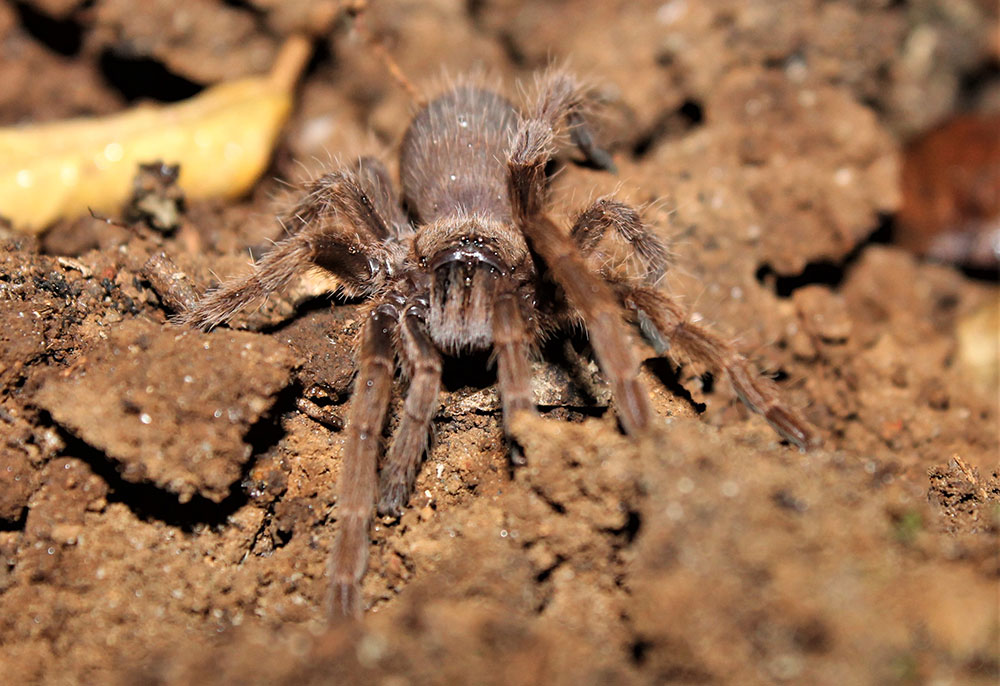
Nanayakkara has been involved in the description and documentation of several remarkable Sri Lankan tarantulas, including Poecilotheria rajaei and Poecilotheria srilankensis, as well as Chilobrachys jonitriantisvansickleae. His research has also taken him into the less-studied corners of Sri Lanka’s biodiversity.
His approach is significant because the story of Sri Lanka’s spiders is not simply a story about unusual or frightening creatures. It is a story about ecosystems.
Nature’s pest controllers
A spider sitting motionless in a web may appear inactive, but its ecological role can be anything but passive.
Spiders are predators, feeding predominantly on insects and other arthropods. Across an agricultural landscape, this makes them natural allies of farmers.
Moths, beetles, flies, grasshoppers, leafhoppers, planthoppers and many other insects become part of the prey base of different spider species.
Some spiders wait patiently in intricately constructed webs. Others actively hunt across leaves, vegetation and the soil surface. Jumping spiders stalk their prey with remarkable precision, while wolf spiders move across the ground rather than depending on webs to capture food.
Different species therefore occupy different ecological niches.
Together, they form an army of natural predators.
This is why the presence of spiders in a paddy field or vegetable plot should not automatically be interpreted as something undesirable. On the contrary, their presence may be an indication that a functioning predator community is at work.
Nanayakkara’s own publication, An Introduction to Common Spiders of Sri Lanka, was designed partly to introduce the public and research community to these frequently overlooked animals.
The book covers spider morphology, natural history and Sri Lankan spider families, while highlighting their importance as biological control agents and bioindicators.
-
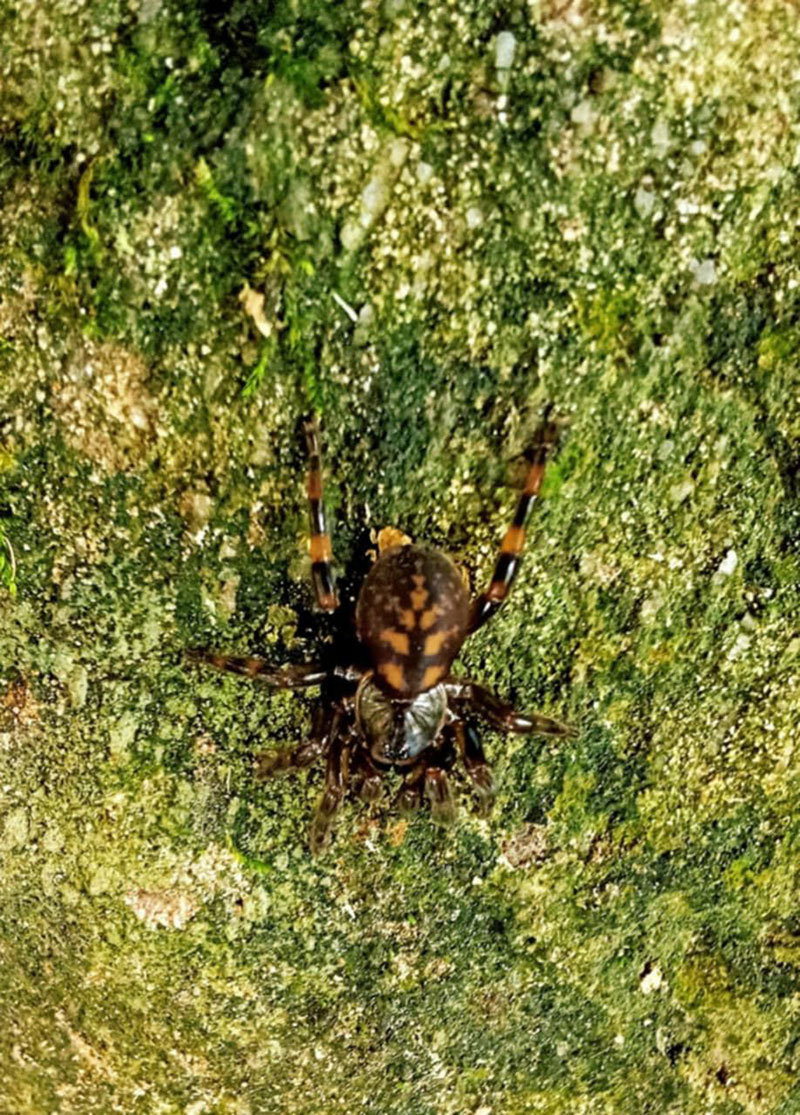
- Genus -Sason
-
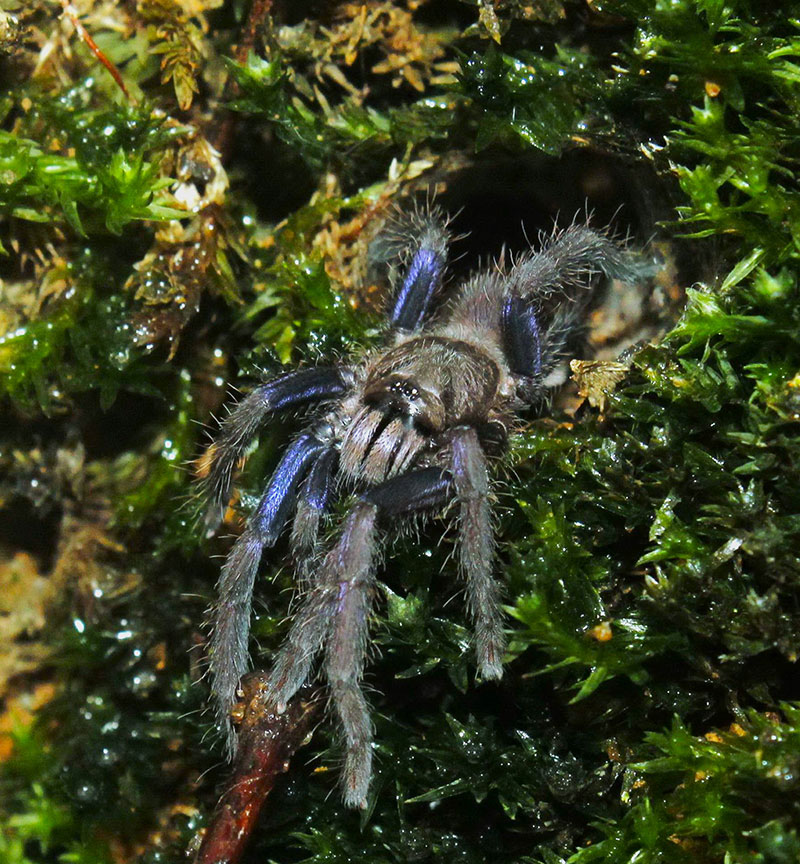
- Chilobrachy jonitriantisvansickelei
The invisible service
There is an important ecological service taking place every day that does not appear on an agricultural balance sheet.
A spider catches an insect.
Then another.
And another.
Multiply that interaction by thousands of spiders across thousands of hectares and the ecological significance becomes enormous.
Unlike a pesticide, a spider does not need to be manufactured, transported, mixed or sprayed. It does not require a farmer to purchase another container or return to the field with a spray machine.
It simply performs its ecological role.
That does not mean spiders can replace all forms of pest management. Rather, they can form one component of integrated pest management, in which natural predators, parasites, cultural practices and carefully targeted interventions work together.
The objective should not necessarily be to create an agricultural landscape in which every insect disappears.
It should be to create one in which pest populations are kept below damaging levels through a functioning ecological system.
When pesticides kill the allies
This is where the story takes a darker turn.
Broad-spectrum insecticides are designed to kill insects, but the ecological world does not always recognise the distinction between a farmer’s target species and a beneficial predator.
When chemicals are applied indiscriminately, spiders and other predatory arthropods can also be affected.
The consequences can be surprisingly complex.
A pesticide application may reduce a crop pest rapidly. But if it simultaneously reduces the predators that feed on that pest, the field may lose part of its natural defence system.
As surviving pest populations recover, farmers may again reach for the sprayer.
The result can become a vicious circle: fewer natural predators, greater reliance on chemicals and repeated disruption of the ecological relationships that once helped regulate pest populations.
Pesticides can also move beyond the field through runoff, spray drift and other pathways, potentially affecting surrounding vegetation, wetlands and waterways.
The real cost of chemical-intensive agriculture, therefore, cannot always be measured simply by the price of a bottle of pesticide.
There can be an ecological cost that remains invisible.
A paddy field is more than a crop
Sri Lanka’s paddy fields are often viewed through the lens of production: acreage, yield, irrigation, fertiliser and harvest.
But look more closely and another world emerges.
Between the rice plants are insects. In the water are aquatic organisms. Along the bunds are grasses and other vegetation. Amphibians move through the landscape. Birds forage. Reptiles pass through.
Microorganisms work beneath the surface.
And somewhere among the vegetation, spiders wait.
The paddy field is therefore not simply a food-production unit. It is an ecosystem.
Field margins, bunds, grasses and neighbouring vegetation can provide shelter and alternative habitat for spiders and other beneficial organisms. Maintaining this ecological complexity can help predator populations persist and recolonise cultivated areas.
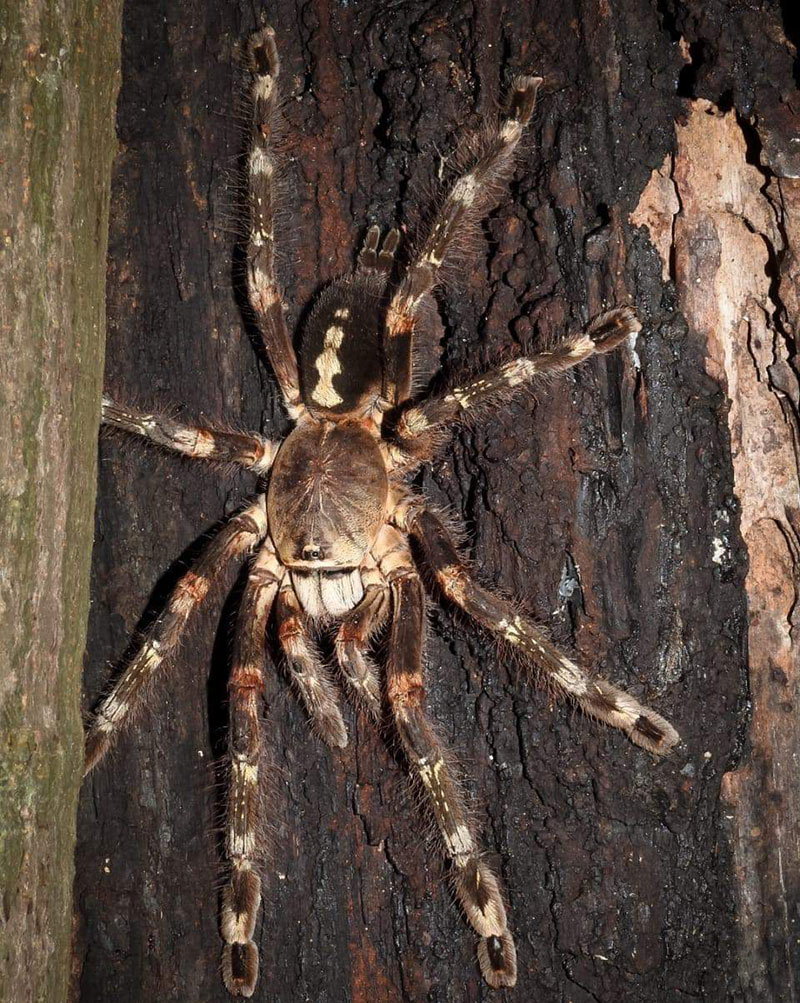
Poecilotheria sp.
Destroying those refuges or exposing them repeatedly to chemicals can simplify the ecosystem and weaken its natural resilience.
The spectacular world of tiger spiders
If ordinary garden spiders are largely invisible to the public, Sri Lanka’s tarantulas are impossible to ignore.
The genus Poecilotheria, commonly known as tiger spiders or ornamental tarantulas, includes some of the island’s most spectacular arachnids.
Their intricate patterns, extraordinary size and specialised lifestyles have made them subjects of scientific fascination.
Nanayakkara’s work brought international attention to this hidden world.
One of the best-known examples is Poecilotheria rajaei, a tarantula described from northern Sri Lanka after specimens were encountered during field surveys. The species was formally described in 2012 by Ranil Nanayakkara and co-authors.
The story illustrates something important about biodiversity research: discovery does not necessarily begin in a sophisticated laboratory.
Sometimes it begins in a forest.
Sometimes it begins with a local observation.
And sometimes it begins when a field researcher is willing to look closely at something that most people would rather avoid.
Another remarkable chapter came with Poecilotheria srilankensis, described from Belihuloya in 2019. The research documented another arboreal tarantula from Sri Lanka and added to understanding of the island’s highly distinctive Poecilotheria fauna.
Nanayakkara and his collaborators have also documented Chilobrachys jonitriantisvansickleae, a tarantula associated with a fragmented forest patch in Sri Lanka’s wet zone.
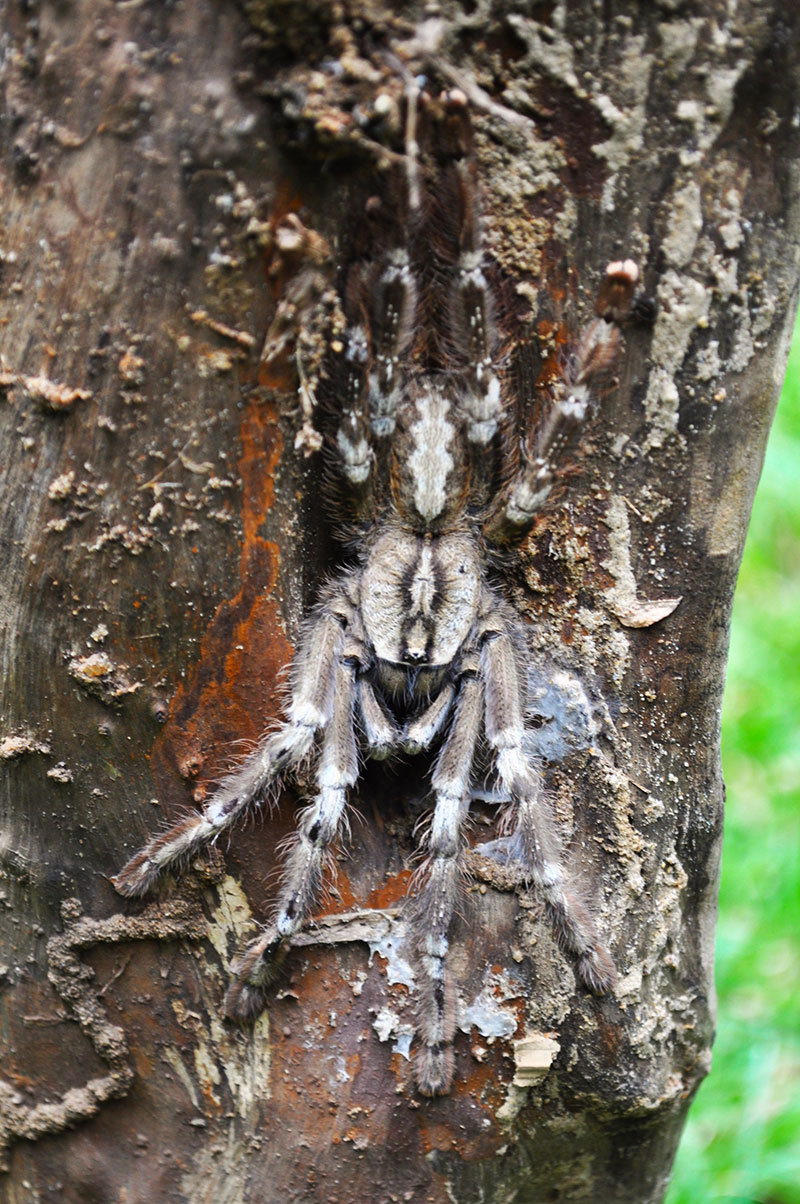
Poecilotheria smithi
These discoveries are not merely additions to a scientific list.
Each species raises questions.
Where does it live?
What does it eat?
How large is its population?
What habitat does it require?
How isolated are its populations?
What happens when its forest disappears?
The blue surprise in the forest
Perhaps nothing illustrates the richness of this hidden world better than the discovery of a striking blue tarantula in Sri Lanka’s rainforests.
The species, Chilobrachys jonitriantisvansickleae, was found in an isolated patch of southwestern rainforest surrounded by tea and rubber plantations. Its vivid blue colouring helped attract attention to an animal living in a highly fragmented landscape.
It is an important reminder that biodiversity does not always survive in vast wildernesses.
Sometimes it survives in small fragments.
And when a species is closely associated with a particular habitat, the destruction of even a relatively small area can have disproportionate consequences.
Beyond fear
One of Nanayakkara’s important contributions has been to make spiders accessible to people who may otherwise never look beyond their reputation.
His books, including An Introduction to Common Spiders of Sri Lanka and Poecilotheria – “Tiger Spiders” of Sri Lanka, have helped bring information about these animals to a wider audience. His Tiger Spiders of Sri Lanka focuses on the identification, habitats, behaviour and conservation of Poecilotheria.
The challenge is not simply scientific.
It is cultural.
For generations, spiders have often been associated with fear, danger and something that should immediately be killed.
But understanding changes attitudes.
Once a spider is seen as a predator rather than a pest, its role begins to look different.
Once a tarantula is understood as a specialised inhabitant of a particular forest habitat, destroying that habitat becomes a conservation issue rather than merely a matter of removing an unpleasant creature.
Small predators, enormous consequences
Spiders are also prey.
Birds, amphibians, reptiles and other animals depend on arthropods as part of their diets. Spiders consequently occupy several positions in food webs: they are predators of insects and, in turn, food for other animals.
Their disappearance can therefore create effects that travel through an ecosystem.
This is why biodiversity conservation cannot focus exclusively on elephants, leopards, birds or other charismatic wildlife.
The ecological machinery of a forest is also made up of creatures that are small, obscure and rarely photographed.
Some may never make the headlines.
But remove enough of them and the system changes.
A call to look closer
Sri Lanka still has much to learn about its spiders.
Taxonomy remains fundamental. Before conservationists can determine how a species is faring, they need to know what species exist, where they occur and how they differ from one another.
Field research is equally important because many species cannot be understood simply by examining specimens in collections.
Their habitats, behaviour, prey, reproduction and relationships with other organisms all matter.
Nanayakkara’s research illustrates the value of this patient field-based approach. His work has contributed to the documentation of Sri Lanka’s lesser-known biodiversity and to the scientific understanding of spiders that had previously received little attention.
But perhaps the larger lesson is even simpler.
Nature does not waste species.
The spider spinning a web beside a paddy field, the hunter moving through the undergrowth and the spectacular tarantula hidden in a forest tree are all pieces of a much larger ecological puzzle.
Protect the predators
Conserving spiders does not mean protecting every individual spider from every natural threat.
It means protecting the ecosystems that allow spider populations to survive.
It means reducing unnecessary pesticide use.
It means encouraging integrated pest management.
It means maintaining vegetation around agricultural fields, protecting forest fragments and conserving wetlands and streams.
It means giving farmers the knowledge to recognise that some of the creatures living among their crops are not enemies at all.
They are allies.
For Sri Lanka, there is another urgent reason to look more closely.
The island’s biodiversity is exceptional, but its habitats are increasingly fragmented and altered. The loss of specialised habitat can be particularly serious for species with narrow ecological requirements.
The work of researchers such as Dr. Ranil Nanayakkara reminds us that discovery and conservation are inseparable.
We cannot protect what we do not know.
And we cannot appreciate what we have never learned to see.
The next time a spider appears in a garden, on a paddy bund or quietly beneath a leaf, perhaps it deserves something more than a broom or a spray can.
It may be doing what nature designed it to do—hunting, regulating and maintaining balance.
For millions of years, spiders have been doing this work without asking for recognition.
Perhaps it is time we gave them some.
When we protect the predators, we protect the balance.


 Israeli Prime Minister Benjamin Netanyahu’s message to Israel’s enemies was blunt and stark.‘We’re going to win; we have no choice.’ He said so while the majority of attendees at a recent UN General Assembly session walked out of the conference hall when the Israeli Prime Minister took the podium; many of them booing in derision.
Those commentators who have been studying Israel’s handling of her enemy states over the decades are unlikely to dismiss the entirety of Netanyahu’s address as rhetoric. The general pattern has been for the Israeli state to stand up firmly against its enemies in the battle field. On most occasions, these adversaries have been beaten back.
It is also little realized in particularly the Southern hemisphere that Israel, for the most part, could defend herself without much US assistance. The history of the conflict bears this out.
However, from the viewpoint of working towards a just and equitable peace in the Middle East the Israeli hard line stance has proved and will prove incalculably detrimental. The sworn enemies of Israel are not going to be in any way deterred by Netanyahu’s stark warnings. On the other hand, they would be only further provoked into taking on Israel by conventional or unconventional military means and seek its destruction.
The recent aborted mid-air hijacking of a Flydubai flight, consisting mainly of Israeli passengers, by an Omani extremist drives home the point. Israel’s enemies are bound to redouble their efforts to annihilate Israel rather than be deterred by the latter’s warnings about standing firm against them. This too history has proved.
It would be in the fitness of things at this juncture to pay a tribute to the professionalism, courage and humanity of the relevant airline pilot, Captain Machchhar, whose timely action proved decisive in botching the hijack attempt. His intervention averted what could very well have been another 9/11 type tragedy. History is not going to forget his daring and resourcefulness.
Meanwhile, the ground realities in West Asia are undergoing further complications that portend increasing regional instability. For example at the time of writing Turkiye, Pakistan and Saudi Arabia have agreed under the recently established ‘Mecca Alliance for Defence’ to deploy ‘deterrence measures’ collectively in the event of any member of the alliance coming under military strikes from a non-member state.
The agreement is modeled on the NATO collective defence pact and should help in defusing any threat perceptions experienced by the alliance members in the short term. However, the group would need to be cognizant of the major and potentially divisive role Iran could play in the interstate politics of the Middle East region going forward.
Iran’s reported support, for example, for Yemen’s Houthi rebels, who are engaged in attacking Saudi national assets, could at some point in time compel the alliance, under the terms of the pact, to initiate deterrent military measures against Iran.
The implications for regional peace from such a turn of events hardly require elaboration. A full blown regional war emerges as a distinct possibility if Iran sees itself as being excessively antagonized by the alliance. A further complication is that antagonistic sectarian identities of an Islamic kind could come to play hugely divisive roles in it. Shiite Islamic states would be inclined to back Iran while those countries seen as Sunni Islamic in orientation are bound to support Saudi Arabia.
Accordingly, West Asia is a region rife with manifold aggravated insecurities. If the latter are not defused dexterously they could escalate into a conflict of extra regional dimensions. The latter development would render the world a collective loser.
Unfortunately, no constructive help could be expected from the US at this juncture by way of working towards regional and international peace even of short durance. Its war against Iran has only aggravated the world’s current insecurities.
For example, the world has been compelled to face the possibility of compounded economic woes as a consequence of the Hormuz crisis remaining unresolved. The world is currently experiencing what could be seen as a ‘winter of economic discontent’ of unprecedented proportions.
Unfortunately, the international community is to all intents and purposes helpless in the face of this multifaceted crisis. Substantial intervention is expected of the UN but since it has failed to reform itself over the years it is compelled to stand idly by while the world’s insecurities heighten and multiply.
Yet, it is the seemingly paralyzed UN system that has some potential to contain the current tide of international disorder to even a small measure. Given the persisting divergent and conflicting interests among the world’s principal power blocs, the G7 and BRICS for instance, it is mainly the UN and its principal agencies that could carry some credibility as peace brokers and mediators.
However, as an initial step towards bringing the principal protagonists to the negotiating table the UN would need to convince the principal powers of the UN Security Council of the need for a substantive broad-basing of the membership of the Council so as to reflect more accurately the current global political and economic realities. Such reforms would render the Council more representative and help in strengthening its credibility and effectiveness.
The above reforms call for years of dynamism, hard work and resourcefulness on the part of the international community, read the UN. Yet the aims are not impossible to achieve if strong leadership is brought to bear by the UN.
Meanwhile, the UN agencies and allied organizations need to pay stepped-up attention to the West Asian theatre and its wasting conflicts and wars. Here too there is immense hard work to be put in.
There is, for instance, identity politics and its issues that need to be managed urgently. While internal political matters of countries could not be addressed directly by UN agencies, awareness-raising programs and projects could be energetically carried out by them to blunt the appeal of identity-based slogans, relating to, for instance, religion and race.
Besides, values at the heart of democratic politics need to be freshly and enthusiastically propagated. Vast reserves of energy and resources are needed, to be sure, to consistently champion and implement these crucial projects but they need to be pursued single-mindedly if even a dent is to be made in the current runaway global disorder.
The aborted hijacking of the Flydubai flight pointed to the dehumanizing impact of identity politics on the human consciousness. It was also an indication that those sections endowed with humanity cannot stand idly by while identity politics continues to destroy civilizational values. The time to act is ‘now’.

Afghanistan fast bowlers hit back after Bangladesh’s strong start

Sri Lanka chose to bat first in Rawalpindi

Sutherland and Litchfield lead Australia to quick and convincing win in ODI series opener

USS Tulsa departs Colombo

Appointments for 1,540 Grama Niladhari Officers

Trump says US will not strike Iran before midterm elections

‘Dates have the highest sugar content to fight Coronavirus’

Sunday Island 27 December – Headlines

#SundayIsland 17th December – Headlines

Sunday Island – 28th March

Sunday Island Headlines – 21 March

Sunday Island – 21st February – Headlines
-

 Features6 days ago
The first woman in the foreign service or Ceylon Overseas Service it was then called
-

 News5 days ago
Geneva takes up Sallay’s case and govt. ignores opportunity to answer accusations
-

 Editorial7 days ago
Fuelling discontent and protest
-

 Foreign News6 days ago
Ten injured after car crashes into rugby supporters in Australia
-

 News6 days ago
Nearly 20 Iranian tankers stranded off Lanka amid US sanctions
-

 Latest News6 days ago
Tharindu Rathnayake, bowlers secure Asian Games Bronze for Sri Lanka
-

 Features5 days ago
Sri Lanka Cricket Bill: Governance reform is not yet a cricket strategy
-

 Features4 days ago
Preventing grievances from becoming communal