
Sports
Let’s hope that SLSRFA considers reverting back to old rugby format

By A Special Sports Correspondent
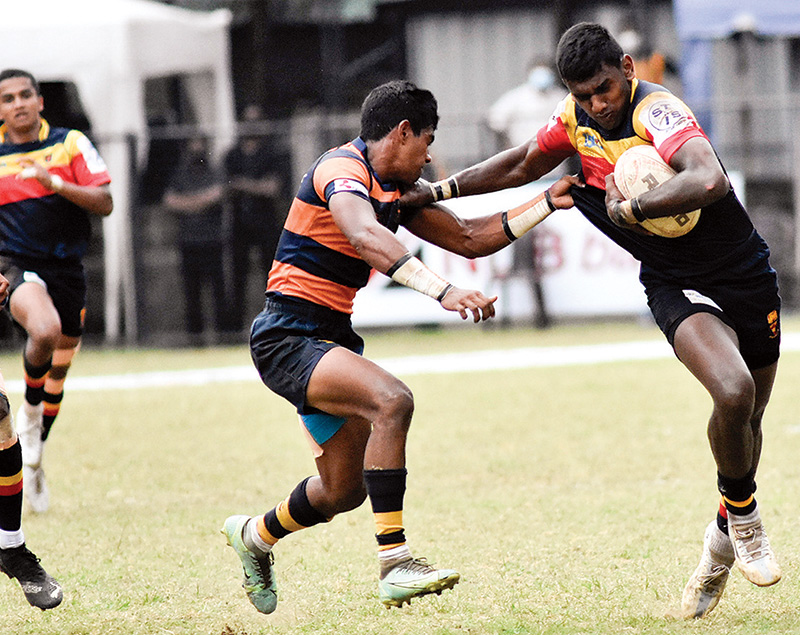
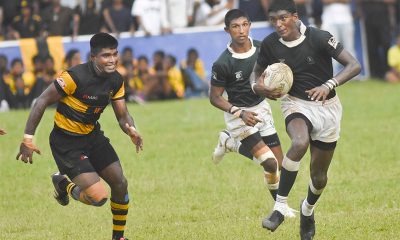
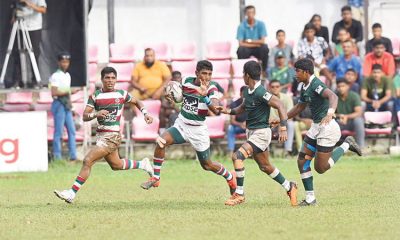
The schools’ rugby season has faced a storm due to a vibe generated by top rugby playing schools who are frowning upon a decision taken by the Sri Lanka Schools Rugby Football Association (SLSRFA) to hold the Super Round matches of the inter-school league tournament at neutral venues.
The super round is the ‘second round’ of the league rugby tournament and venues are set according to a ‘home and away’ system. This system has been in practice since rugby was introduced to this little island; first to clubs and then to schools. One team that hosts the match this year will travel to the other school as ‘guests’ the next year and no one has complained about this arrangement. But it seems the SLSRFA wishes to change this tradition. The schools section of Sri Lanka Rugby (SLR) maintains that this change will be implemented with the motive of preserving the quality of the tournament and avoiding any team enjoying undue benefits in terms of playing on familiar ground conditions. The SLSRFA affirms that it has no intention of taking home the gate collection generated from these second round matches. The SLSRFA also intends to conduct the super round of the league tournament in a ‘knockout basis’ which is a total contrast to how this stage of the tournament was conducted last season. Many schools have already voiced their disapproval as to how the format of the schools rugby tournament has been subject to change.
From the surface this decision by the SLSRFA seems logical, but we need to think deep from a rugby tradition point of view. Just imagine if ‘Bradby Shield’ brothers Royal and Trinity are grouped in a manner that they meet in the super round of this tournament! Luckily these two teams are not pooled in the same group this season and they can only meet if they qualify for the super round stage of the league tournament. If that happens at least one leg of the Brady Shield will be played at a neutral venue. Going by the history of these two schools, neither Royal nor Trinity would agree to this. The solution to this issue might come in the form of both schools pulling out of the schools rugby tournament midway during this much looked forward to sporting event. This would be very bad for rugby and the spirit of sport.
The schools rugby tournament has been subject to several changes since more schools playing the sport entered the fray and the SLSRFA became an authority in rugby. The tournament format till last season was fair for all top division rugby playing schools grouped in Division 1 Segment 1. This writer says this because the old format allowed the best teams in the tournament to make a comeback even after a surprise loss and still be in contention of the ‘plum’. This opportunity no longer exists with the schools rugby authorities demanding the introduction of a ‘sudden death’ or knockout flavor to the tournament. This is the other issue causing concerns to school teams this season.
Many rugby critics and veterans who have played the game have already opined that this would be too much of a change for schoolboys. Unlike clubs, most schools need time to settle down and play their best rugby. There have been some schools in the past which came back strongly midway during the season. In the year 1988, Ananda and especially Isipatana made strong comebacks in to the schools’ tournament after mediocre performances at the start. Isipatana lost around four games at the start of the league tournament, but made amends as the season progressed to finish on a high.
The schools section of the SLR back then hardly interfered in the conduct of the league tournament. Schools were free to pick their opponents and each school had to play seven games to be in contention of the league title. But at present there are too many regulations being imposed; which might dampen the spirit of the game.
The SLSRFA has affirmed that it’ll not stake a claim to the entire gate collection that’ll be generated during the super round of the tournament.
Many top rugby playing schools have already sent protest letters to the SLSRFA airing their grievances about the new format of the tournament. Let’s hope that the schools’ tournament doesn’t run into a snag because if a school that’s affected by this format change seeks legal assistance there could be a delay in starting the tournament.









The Sri Lanka Air Force [SLAF] Men’s Judo Team emerged overall champions in the Men’s Category at the 62nd National Judo Championship organized by the Sri Lanka Judo Association, reclaiming the prestigious title for the first time since 2014.
The championship was held from 30 January to 01 February 2026 at the Indoor Stadium of the Ministry of Sports, Sri Lanka, with the awards ceremony conducted at the same venue on 01 February 2026.
The awards ceremony was graced by Air Commodore Manoj Galappaththi, Chairman of SLAF Judo, Group Captain MADCI Gunasinghe, Secretary of SLAF Judo, and Wing Commander HDTNS Hettiarachchi, Assistant Secretary of SLAF Judo, along with several senior officers representing the tri-services.
The SLAF Men’s Judo Team secured the overall championship in the Men’s Category with a medal tally of six gold medals, three silver medals and six bronze medals.
Meanwhile, the SLAF Women’s Judo Team delivered a commendable performance to secure the Overall Runners-up position in the Women’s Category, winning four gold medals, four silver medals and six bronze medals.
Further highlighting the SLAF’s success, Sergeant Chamara Dharmawardana was adjudged the ‘Best Male Judo Player’ for the ninth consecutive year, continuing a notable record in Sri Lankan Judo. In recognition of emerging talent, Mr. Wipulaweera was awarded the ‘Emerging Player of the Year’ in the Men’s Category, while Leading Aircraftwoman Yapa YMMM received the ‘Emerging Player of the Year’ in the Women’s Category award. In addition, Leading Aircraftman Hansamal KST was recognized as the ‘Best Ippon Player’ of the championship.
Summary of results
Gold Medalists
Mr. Wipulaweera (66 Kg)
Sergeant Darmawardana RCN (73 Kg)
Leading Aircraftman Hansamal KST (81 kg)
Leading Aircraftman Osman MI (Over 70 kg)
Sergeant Darmawardana RCN (Open Event-Men )
Leading Aircraftwoman Yapa YMMM (57 Kg)
Leading Aircraftman Samaraweera HVPCSD (63 Kg)
Leading Aircraftman Wickramasinghe RMSP (Over 78 Kg)
Team Event (Mix)
Sergeant Darmawardana RCN
Leading Aircraftman Osman MI
Leading Aircraftman Hansamal KST
Leading Aircraftwoman Upamali IR
Leading Aircraftwoman Bandara BGNK
Sergeant Lakshani MGU
Silver Medalists
Leading Aircraftman Arachchi WAASW (73 Kg)
Corporal Mahesh TP (90 Kg)
Leading Aircraftman Hansamal KST (Open Event -Men)
Leading Aircraftman Premalal UKGAN (44 Kg)
Leading Aircraftwoman Bandara BGNK (52 Kg)
Leading Aircraftwoman Upamali IR (70 Kg)
Sergeant Lakshani MGU (Over 78 Kg)
Bronze Medalists
Leading Aircraftman Madushanka RMSL (50 kg)
Leading Aircraftman Weerasinghe RSN (55 Kg)
Mr. Wipulaweera (60 kg)
Corporal Kumara SD (81 kg)
Corporal Abesinghe KGCK (Under 100kg)
Leading Aircraftwoman Priyanthi S (48 Kg)
Aircraftwoman Rupasinghe DGITS (48 Kg)
Leading Aircraftwoman Senarathna JASS (52 Kg)
Leading Aircraftwoman Chathurangani BAI (63 kg)
Leading Aircraftwoman Deumini TML (78 Kg)
Leading Aircraftwoman Upamali IR (Open Event- Women)
Corporal Kumara SD (Open Event – Men)
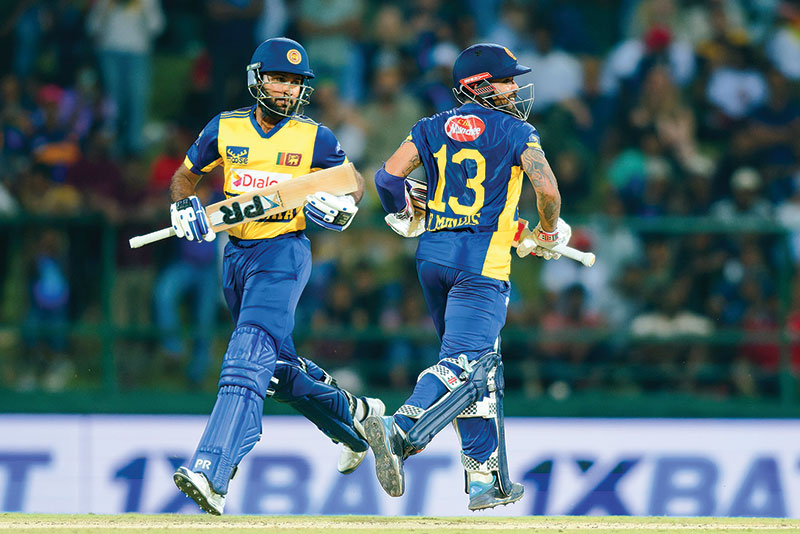
A home series against England was meant to be the ideal dress rehearsal, a chance for Sri Lanka to oil the wheels and gather momentum ahead of the World Cup starting later this week. Instead, the campaign has gone awfully wrong. Plenty of promise, precious little substance. Bar the lone victory in the opening ODI, the hosts have spent the white-ball leg chasing shadows, the ODI series defeat a bitter pill and the T20I whitewash a full-blown reality check. Sri Lanka’s frailties against spin were already an open secret; this series merely put them under a brighter spotlight, throwing up more questions than answers.
Handing three wickets in an over to a part-timer like Jacob Bethell is the sort of generosity normally reserved for charity matches. Failing to hunt down 129 on surfaces the batting unit has been reared on, rank turners that should feel like home cooking, tells its own grim tale.
The malaise is rooted in mindset. Too many batters are reaching for the glory shot, swinging from the heels when the situation demands nudges into gaps, hard yards between the wickets and a willingness to play the waiting game.
Cricket, after all, is not always about clearing the ropes; sometimes it is about milking the bowling and letting the scoreboard tick over. Unless these rough edges are sanded down, Sri Lanka risk walking into the World Cup with the same old cracks papered over.
Recent T20 World Cups have been a sobering reminder of how far the side has drifted. A meek first-round exit last time and the indignity of qualifying rounds before that should have set alarm bells ringing. Yet, carrying largely the same cast into a fourth successive global event, the team continues to tread water, repeating errors like a stuck record rather than turning the page.
One positive has been the improved handling of injuries that once felled key players at the worst moments, but elsewhere the repair job remains half-finished.
The biggest question mark hovers over captain Dasun Shanaka. A skipper struggling to read the wrong’un, let alone steer a chase, can quickly become dead weight. His elevation came out of the blue and the warning signs were there from day one, but they were waved away. Cricket, like life, has a habit of punishing stubbornness, and Sri Lanka are discovering that harsh truth the hard way.
Rex Clementine at Pallekele

India’s explosive batting juggernaut rolled on to the doorstep of the men’s T20 World Cup 2026, helping them beat South Africa by 30 runs in the warm-up fixture at the DY Patil Stadium in Navi Mumbai. The margin of defeat only reduced because of two overs of 22 and 20 against Shivam Dube at the death.
Opting to bat at a ground which saw teams preferring to chase in the first leg of WPL 2026, Ishan Kishan got India off to an explosive start. He rollicked to a 20-ball 53, which included a sequence of 6, 6, 4, 6 in the fifth over from Anrich Nortje, before retiring out as India finished the powerplay on 83 for 1. Tilak Varma, who played the warm-up for India A a couple of nights ago at the same venue and linked up with the Indian squad just before this warm-up game, looked fluent from get-go in his 19-ball 45.
Suryakumar Yadav as well as Hardik Pandya later freed their arm without inhibition as India posted a mammoth 240 for 5. Nortje, who has played just one international since the last T20 World Cup, conceded 57 in his three overs on the night, after his comeback game against West Indies last week also gave him figures of 3-0-59-0. Kagiso Rabada, too, was expensive, going for 44 off his three overs.
For South Africa, Aiden Markram and Ryan Rickelton added 65 in just five overs in the powerplay. Markram hit four sixes in his 19-ball 38 while Rickelton, batting at No. 3, made 44 off 21. But they kept losing wickets regularly and had lost half their side by the 11th over.
Jason Smith, Tristan Stubbs and Marco Jansen kept peppering the boundaries to punish Abhishek Sharma and then Dube but the challenge was too steep by then.
Brief scores:
India 240 for 5 in 20 overs (Ishan Kishan 53, Tilak Varma 45, Axar Patel 35*; Marco Jansen 1-18) beat South Africa 210 for 7 in 20 overs (Tristan Stubbs 45*, Ryan Rickelton 44, Aiden Markram 38, Jason Smith 35; Abhishek Sharma 2-32) by 30 runs
[Cricinfo]

Gunmen kill nearly 200 people in Nigeria’s Kwara and Katsina states

SLAF men’s Judo team crowned overall champs at 62nd National Judo Championship

Showers above 75 mm are likely at some places in the Uva province and in Batticaloa, Ampara, Hambantota and Nuwara-Eliya districts

Parliament: Govt. questioned on returned cheques, delayed payments for disaster victims

President urges shedding of petty differences to achieve an economically strong Sri Lanka

PM: No withdrawal of modules introduced for Grade 6 under proposed education reforms

‘Dates have the highest sugar content to fight Coronavirus’

Sunday Island 27 December – Headlines

#SundayIsland 17th December – Headlines

Sunday Island – 28th March

Sunday Island Headlines – 21 March

Sunday Island – 21st February – Headlines
-
 Opinion6 days ago
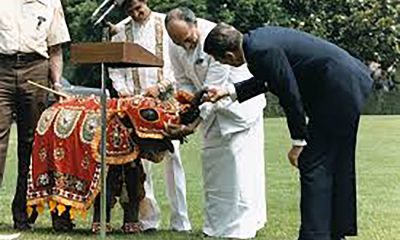
Sri Lanka, the Stars,and statesmen
-

 Business5 days ago
Hayleys Mobility ushering in a new era of premium sustainable mobility
-

 Business2 days ago
SLIM-Kantar People’s Awards 2026 to recognise Sri Lanka’s most trusted brands and personalities
-
 Business5 days ago
Advice Lab unveils new 13,000+ sqft office, marking major expansion in financial services BPO to Australia
-
 Business5 days ago
Arpico NextGen Mattress gains recognition for innovation
-

 Business4 days ago
Altair issues over 100+ title deeds post ownership change
-

 Editorial5 days ago
Govt. provoking TUs
-

 Business4 days ago
Sri Lanka opens first country pavilion at London exhibition