
Sports
Let’s hope that SLSRFA considers reverting back to old rugby format

By A Special Sports Correspondent
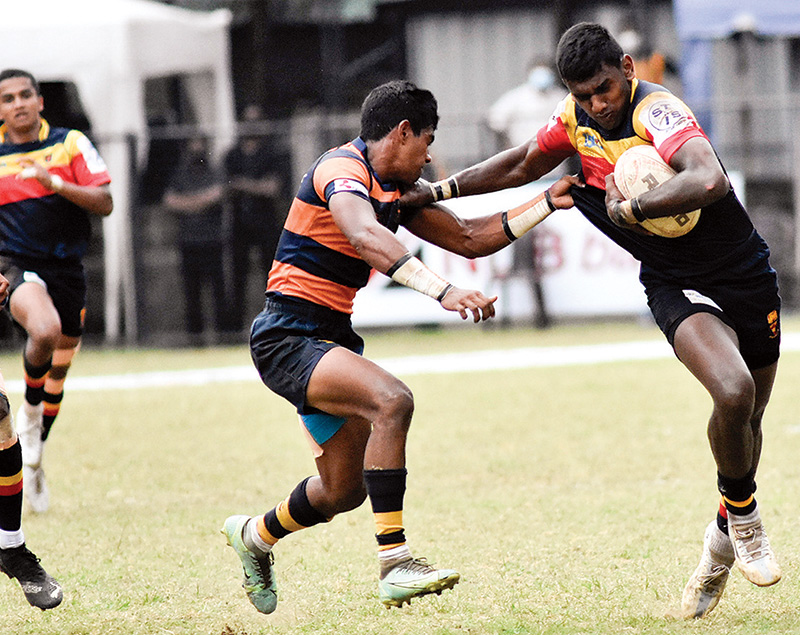
The schools’ rugby season has faced a storm due to a vibe generated by top rugby playing schools who are frowning upon a decision taken by the Sri Lanka Schools Rugby Football Association (SLSRFA) to hold the Super Round matches of the inter-school league tournament at neutral venues.
The super round is the ‘second round’ of the league rugby tournament and venues are set according to a ‘home and away’ system. This system has been in practice since rugby was introduced to this little island; first to clubs and then to schools. One team that hosts the match this year will travel to the other school as ‘guests’ the next year and no one has complained about this arrangement. But it seems the SLSRFA wishes to change this tradition. The schools section of Sri Lanka Rugby (SLR) maintains that this change will be implemented with the motive of preserving the quality of the tournament and avoiding any team enjoying undue benefits in terms of playing on familiar ground conditions. The SLSRFA affirms that it has no intention of taking home the gate collection generated from these second round matches. The SLSRFA also intends to conduct the super round of the league tournament in a ‘knockout basis’ which is a total contrast to how this stage of the tournament was conducted last season. Many schools have already voiced their disapproval as to how the format of the schools rugby tournament has been subject to change.
From the surface this decision by the SLSRFA seems logical, but we need to think deep from a rugby tradition point of view. Just imagine if ‘Bradby Shield’ brothers Royal and Trinity are grouped in a manner that they meet in the super round of this tournament! Luckily these two teams are not pooled in the same group this season and they can only meet if they qualify for the super round stage of the league tournament. If that happens at least one leg of the Brady Shield will be played at a neutral venue. Going by the history of these two schools, neither Royal nor Trinity would agree to this. The solution to this issue might come in the form of both schools pulling out of the schools rugby tournament midway during this much looked forward to sporting event. This would be very bad for rugby and the spirit of sport.
The schools rugby tournament has been subject to several changes since more schools playing the sport entered the fray and the SLSRFA became an authority in rugby. The tournament format till last season was fair for all top division rugby playing schools grouped in Division 1 Segment 1. This writer says this because the old format allowed the best teams in the tournament to make a comeback even after a surprise loss and still be in contention of the ‘plum’. This opportunity no longer exists with the schools rugby authorities demanding the introduction of a ‘sudden death’ or knockout flavor to the tournament. This is the other issue causing concerns to school teams this season.
Many rugby critics and veterans who have played the game have already opined that this would be too much of a change for schoolboys. Unlike clubs, most schools need time to settle down and play their best rugby. There have been some schools in the past which came back strongly midway during the season. In the year 1988, Ananda and especially Isipatana made strong comebacks in to the schools’ tournament after mediocre performances at the start. Isipatana lost around four games at the start of the league tournament, but made amends as the season progressed to finish on a high.
The schools section of the SLR back then hardly interfered in the conduct of the league tournament. Schools were free to pick their opponents and each school had to play seven games to be in contention of the league title. But at present there are too many regulations being imposed; which might dampen the spirit of the game.
The SLSRFA has affirmed that it’ll not stake a claim to the entire gate collection that’ll be generated during the super round of the tournament.
Many top rugby playing schools have already sent protest letters to the SLSRFA airing their grievances about the new format of the tournament. Let’s hope that the schools’ tournament doesn’t run into a snag because if a school that’s affected by this format change seeks legal assistance there could be a delay in starting the tournament.








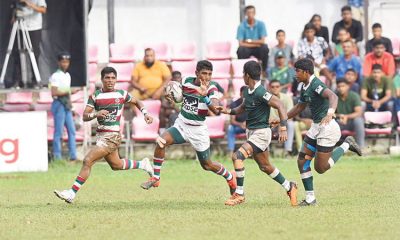


by Reemus Fernando
A combined bowling effort and top order batting anchord by Ranmith Senarath powered Nalanda to a vital six wickets win over St. Joseph’s in the Under-19 Division I Tier A Limited Overs Tournament match at Campbell Place on Friday.
Ranmith struck an unbeaten 51 to steer the team to victory in the 30th over as Nalanda completed their group matches unbeaten.
Earlier they beat Thurstan (155) by seven wickets, St. Servatius’ Matara (187) by four wickets and Gurukula (113) by nine wickets.
Ranmith’s composed knock which came in 69 balls included six boundaries and a six.
Nadul Jayalath provided an aggressive start with 27 off 23 balls, including five boundaries, while Nemindu Akmeemana contributed 25 off 41 deliveries. Lithum Wijekumara added 14, and Rusandu Silva remained unbeaten on eight.
St. Joseph’s, batting first, struggled to build momentum and were restricted to 135 for nine in 47.2 overs. Pamoda Dalpadado top-scored with 36 off 59 balls, while Kavith Fernando made 24 and Vishwa Peiris contributed 17 off 63 deliveries.
Nalanda’s bowlers maintained control throughout the innings, with Santhul Wijeyarathne leading the attack with two wickets for 19 runs from nine overs. Osanda Pamuditha, Nadul Jayalath, Rusandu Silva, Methuka Perera, Sadew Indeepa and Lithum Wijekumara claimed a wicket apiece.

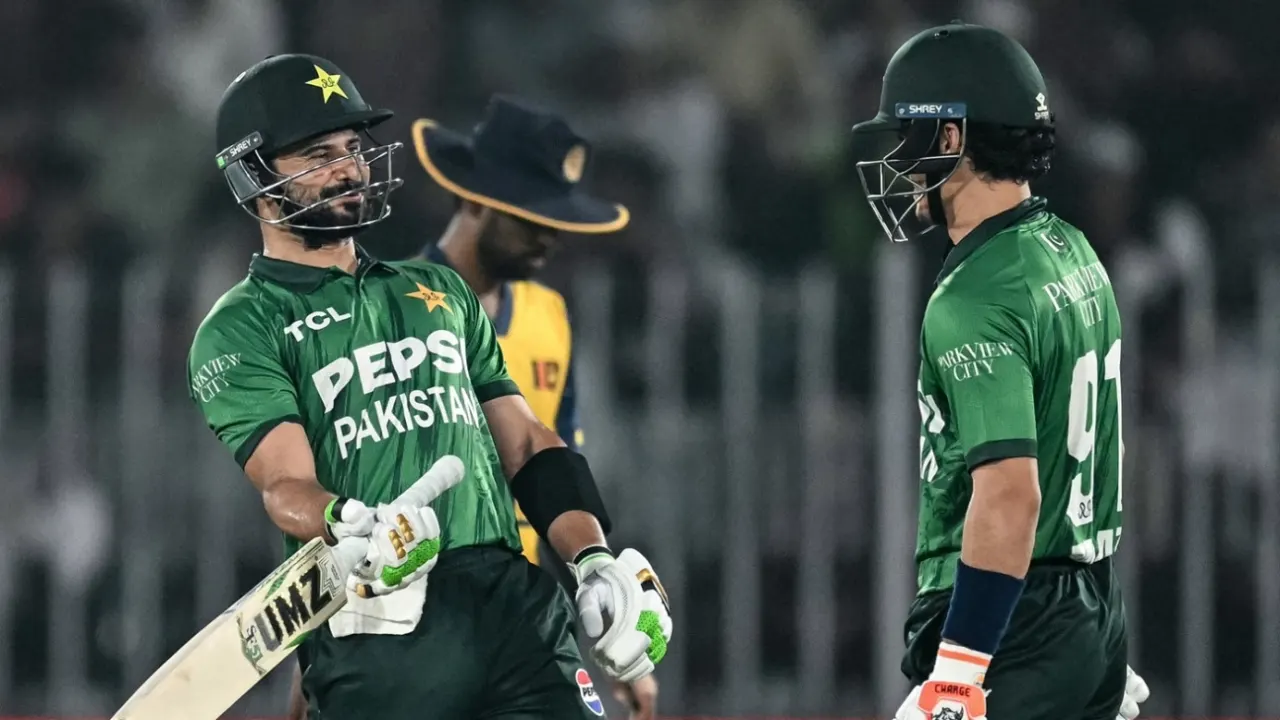
Sahibzada Farhan celebrated his ascension to the captaincy in grand style, smashing a 53-ball 89 that blazed his side to a comprehensive win in the first T20I against Sri Lanka . After Sri Lanka won the toss in Rawalpindi and somewhat curiously opted to set a target, the 182 they put up was made to look inadequate by a bellicose Pakistan’s showing up top that put up 70 in the powerplay and scarcely slowed down after. Maaz Sadaqat, who needed just 28 balls to bring up his half-century, put up a 92-run stand with Farhan after Fakhar Zaman’s cameo up top, flaying a lacklustre bowling attack.
Pakistan’s efforts with the ball were altogether more impressive, if sullied by bursts of untidiness that saw a whopping 29 extras conceded. But they reined Sri Lanka in from time to time, stifling their momentum and keeping the score within chasing range. Mohammad Imran’s 2-21 on debut was the pick of the bowling efforts, and while Lahiru Udara kept Sri Lanka afloat almost single-handedly with 91 off 55, the support he needed from the other end never quite came.
When Sri Lanka batted after winning the toss, it took Kamil Mishara nine deliveries to get off the mark. By the end of the fourth over, Sri Lanka were scoring at a run-a-ball, and had lost two wickets. Pakistan, by contrast, took just 2.2 overs to match that score; by the end of the sixth, they had powered through at dazzling speed thanks to Farhan and Zaman’s onslaught.
Sri Lanka took far too long to begin taking advantage of the powerplay. They struggled to find their timing, the powerplay littered with multiple plays and misses, and extravagant, low-percentage shots that bore no fruit. While they did launch a bit of a recovery in the final two overs, the slow start would end up proving costly as Sri Lanka left runs on the table.
To say Mohammad Imran wasn’t the most exciting debutant from Pakistan this game would be stating the obvious. That title belonged to Razaullah – the fast-bowling, six-hitting, sharp-jawed Edgbaston slayer Razaullah – who appears to have parlayed his stunning Test debut into white-ball call-ups. Imran, who also made his Test debut in that game and ended up being a footnote, instead found his feet in T20I cricket in Rawalpindi today.
Opening the bowling alongside Naseem Shah, he was the more effective bowler, utilizing sideways movement that more than made up for a lack of pace. He conceded just the one run in his opening over and 19 in three powerplay overs. As Sri Lanka found their feet at the halfway stage of the innings, Farhan turned back to him and Imran did not disappoint his captain. He struck with his first delivery upon return and allowed just two in the over, halting Sri Lanka’s momentum once more and capping a stellar debut.
Sri Lanka will want to move quickly on from this game, but to wipe it completely from the record would be a disservice to their opener. Confronted with a decent bowling attack on an off-day for his fellow batters, Udara almost batted through the Sri Lankan innings, playing just about every role a batter can in T20 innings.
He was the flashy starter, before shepherding his side through the early stages of the powerplay. He became an anchor for a bit before churning through the gears in the latter half of the powerplay. At times, he did so with strokes so classical they could be set to music, especially pleasing when he made some room and cleared extra cover off both pace and spin.
While support from Kamindu Mendis and Dasun Shanaka existed, it was fleeting. Soon enough, those wickets would fall, leaving Udara with the delicate dance of keeping the run rate up without letting the innings implode. That was especially true – and shown to be crucial at the death – because Sri Lanka were arguably playing a batter too light. When he finally holed out in the penultimate over, Sri Lanka ended up losing three wickets in five balls, the innings petering out on a surface where batting inadequacy was always going to be punished.
Scores:
Pakistan 187 for 6 in 18.5 overs (Sahibzada Farhan 89, Fakhar Zaman 21, Maaz Sadaqat 50, Khawaja Nafay 12*; Nuwan Thushara 1-32, Dushmantha Chameera 1-40, Eshan Malinga 2-33, Maheesh Theekshanan 2-36) beat Sri Lanka 182 for 8 in 20 overs (Lahiru Udara 91, Kamindu Mendis 23, Dasun Shanaka 18; Naseem Shah 3-36, Mphammad Imran 2-21, Rasaullah 1-29, Shadab Khan 1-33, Saim Ayub 1-17) by 4 wickets
[Cricinfo]
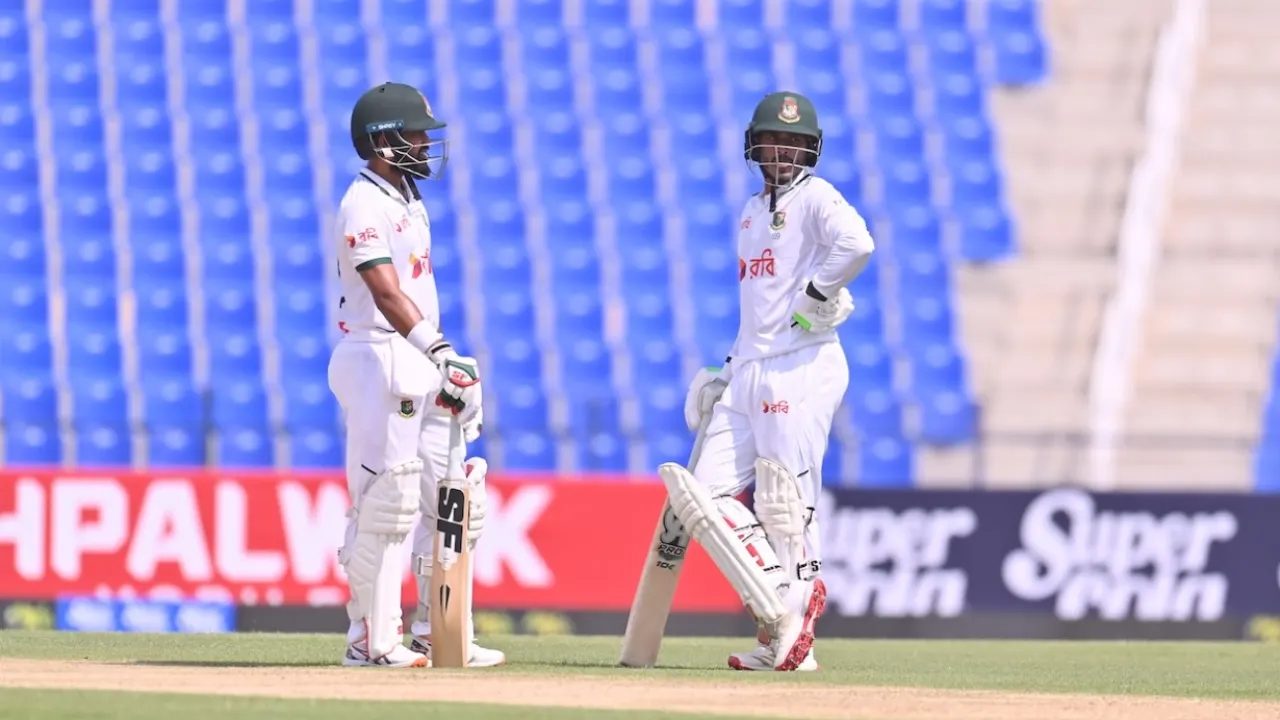
Afghanistan’s pace attack fought back late in the day as Bangladesh went to stumps on 317 for eight on day one in Abu Dhabi.
Mohammad Saleem, Yamin Ahmadzai and Ismat Alam combined to take seven out of the eight wickets that fell on the day. For Bangladesh, Shadman Islam, Tanzid Hassan and Litton Das made fifties.
Saleem targeted the shorter length after lunch, while Ahmadzai found success pitching the ball fuller. Ismat, meanwhile, bowled within himself and was rewarded with the wickets of both set batters Tanzid and Mehidy Hasan Miraz as he drew errors from each.
Tanzid was Bangladesh’s enforcer earlier in the day, hitting eight fours and four sixes in his 71-ball 83 in the first session. He looked set to get to a century in the first session, only for Ismat to thwart his charge.
Later, Shadman Islam and Litton Das struck fifties on either side of Bangladesh’s mini collapse. They lost three wickets for just four runs after they were 221 for two in the second session.
Bangladesh 317 for 8 in 84 overs (Shadman Islam 67, Tanzid Hasan 83, Litton Das 53; Yahmin Ahmadzal 2-62 , Mohmmad Saleem 3-70, Ismat Alam 2-20) vs Afghanistan
[Cricinfo]

Sri Lanka ITEC Alumni Association formally launched

Measures underway to protect Diyagama Forest as a Reserve — Deputy Minister of Environment

Showers or thundershowers will occur in most parts of the island after 1.00 p.m.

NPP govt. reminded of its responsibilities as US warship leaves Colombo

CERT: Beware of foreign Uni. scams on social media

Shiranthi receives treatment at National Eye Hospital

‘Dates have the highest sugar content to fight Coronavirus’

Sunday Island 27 December – Headlines

#SundayIsland 17th December – Headlines

Sunday Island – 28th March

Sunday Island Headlines – 21 March

Sunday Island – 21st February – Headlines
-

 News5 days ago
Geneva takes up Sallay’s case and govt. ignores opportunity to answer accusations
-

 Features7 days ago
The first woman in the foreign service or Ceylon Overseas Service it was then called
-

 News6 days ago
Nearly 20 Iranian tankers stranded off Lanka amid US sanctions
-

 Features5 days ago
Preventing grievances from becoming communal
-

 Sports3 days ago
Nissanka absence opens door for Sri Lanka’s young guns
-

 Features6 days ago
Sri Lanka Cricket Bill: Governance reform is not yet a cricket strategy
-

 News3 days ago
Gnansara Thera to be assigned to prison printing section: Officials
-

 News6 days ago
Lanka enters new phase of prosecutions as hurdles clear