
Editorial
Let the search begin

Saturday 24th December, 2022
Hope is said to spring eternal. It is the fervent hope of every Sri Lankan that the promised IMF assistance will be a reality soon. The Wickremesinghe-Rajapaksa government is as optimistic as the proverbial penniless man who walked into a restaurant and ordered oysters for dinner, hoping to settle the bill with the pearls he hoped to find on his plate. It says the IMF funds will be available early next year, and the situation will begin to improve thereafter. But the process of debt restructuring, which is a prerequisite for IMF assistance, is dragging on because China remains noncommittal.
The government should redouble its efforts to obtain IMF assistance, which is expected to be about USD 2.9 billion; such a bailout package will go a long way towards reviving the economy and preventing social upheavals. But much more needs to be done to straighten up the economy and ameliorate the untold hardships people are facing. President Ranil Wickremesinghe has stressed the need to improve the forex inflow and build foreign currency reserves to get the economy back on a solid footing; he has also called for increasing national productivity. One cannot but agree with him. The IMF loan will not be a panacea for all our economic ills, which are legion, and the economic recovery process will be a painful one.
Meanwhile, Minister of Justice Wijeyadasa Rajapakshe has reiterated that as much as USD 53 billion, which should have been repatriated to Sri Lanka over the years, has been stashed away overseas, and it must be traced and brought back. This amount is almost equal to what Sri Lanka owes to other countries and aid agencies. Even if 10 percent thereof can be recovered, the government will be able to turn the economy around with ease. Curiously, the Justice Minister’s claim has not jolted the government into action.
Minister Rajapakshe, a senior lawyer, would not have made such a claim without proof to substantiate it. So, the government’s silence thereon is puzzling. Is it that the errant exporters and others who have parked their dollars abroad illegally at the expense of Sri Lanka’s foreign reserves, are connected to the ruling party?
The Foreign Exchange Act No 12 of 2017, introduced by the Yahapalana government, has been a boon to forex racketeers, who now do not have to fear criminal action. It diluted the previous laws, which were tough enough to deter exporters, and others from carrying out forex rackets. It is also one of the causes of the present foreign currency crisis, and ironically the UNP, which was instrumental in introducing it, has had to consider strengthening the forex laws to save the economy! Pressure will have to be brought to bear on the government to ensure that the Foreign Exchange Act has enough teeth and tender an apology to the public for having contributed to the country’s bankruptcy.
The Opposition has called for the appointment of a Parliamentary Select Committee (PSC) to find out who is responsible for the present economic crisis, and the government has agreed to do so. The unprecedented economic crimes against the people must not go unpunished. The PSC to be set up should be tasked with ascertaining who had the Foreign Exchange Act No 12 of 2017 introduced, and assessing its impact on the economy. All 225 members of the current Parliament, in our book, should be held accountable; if they had performed their legislative duties and functions diligently, they would have been able to make an intervention to prevent the economic meltdown.
Now that the Justice Minister himself has declared that the country has been deprived of USD 53 billion, a special probe has to be launched to trace and bring it back as a national priority. Let the search for the hidden dollars begin. And fast!



Wednesday 4th March, 2026
President Anura Kumara Dissanayake yesterday spoke in Parliament about the worsening Middle East conflict and its impact on Sri Lanka. Sidestepping the hot-button issue of unprovoked US-Israeli attacks that killed Iran’s Supreme Leader Ayatollah Ali Khamenei on Saturday, he called upon all parties concerned to resolve the conflict peacefully. There was a time when the JVP would openly market its anti-American rhetoric, but under President Dissanayake’s leadership, it is wary of criticising the US for attacking a sovereign nation and killing its supreme leader. Interestingly, even UNP leader and former President Ranil Wickremesinghe, widely considered pro-American, has called US-Israeli attacks unacceptable.
President Dissanayake read the economic consequences of the Middle East conflict accurately, reassuring the public. He said the Central Bank and the Finance Ministry had been tasked with assessing the developing situation and its economic consequences and recommending how to navigate issues affecting Sri Lanka. It is said that in facing any conflict, one should expect the best and prepare for the worst.
The first casualty of any conflict in the Middle East region is the global oil supply. Iran has closed the Strait of Hormuz, located in its territorial waters, and threatened to attack all vessels that pass through it. This is bound to affect 20% of the global oil supply. Even before the closure of that vital sea route, Sri Lankans went on a fuel panic buying spree, causing long lines of vehicles outside filling stations. President Dissanayake referred to fuel queues in his speech, and assured the public that there would be no fuel shortage.
It is hoped that the government will be able to formulate a robust strategy to face any eventuality, with the Middle East conflict showing signs of spreading across the region. Sri Lankan economy is likely to receive multiple shocks, such as decreases in remittances and a decline in export earnings. The success of a national strategy to weather a mega crisis hinges on cooperation among political parties, especially in Parliament. Thankfully, the current Opposition has been acting responsibly during the past several days, without trying to aggravate the panic buying of fuel in sharp contrast to the manner in which the JVP instigated protests during the 2022 fuel crisis.
Revealing that sufficient fuel stocks were currently available and more oil shipments were on the way, President Dissanayake lamented the limited fuel storage facilities in Sri Lanka. This situation has come about because successive governments have not cared to develop the Trinco oil tank farm as a national priority. Only a section of the 99-tank complex built during World War II has been developed. According to media reports, 14 tanks have been given to Indian Oil Corporation (IOC); 61 are to be developed as a joint venture between the CPC and the IOC. The CPC owns 24 tanks with a capacity of about 10,000 MT each.
There have been only half-hearted efforts to develop the Trinco tanks owned by the CPC. It is up to the NPP government to expedite the development of these facilities and increase the country’s petroleum storage capacity significantly to face global supply disruptions and price escalations. After all, President Dissanayake, during the 2024 presidential election campaign, rightly flayed previous governments for their failure to make use of the Trinco oil tanks and promised to develop them under an NPP government.
Meanwhile, Sri Lanka is now paying the price for ignoring the wise counsel of renewable energy experts who have been striving to knock some sense into successive governments, but in vain. If their advice had been heeded and steps taken to lessen the country’s fossil fuel dependence, we would have gained tremendously.
One can only hope that the current crisis will strengthen Sri Lanka’s resolve to strategise and invest more in producing renewable energy, especially by expanding solar power generation, to overcome formidable challenges arising from escalating fossil fuel prices and supply disruptions. At the same time, the government should incentivise the use of electric vehicles with higher tax concessions to reduce the country’s reliance on fossil fuel imports and promote a cleaner transport sector.

Tuesday 3rd March, 2026
Sri Lankans had to languish in long queues outside filling stations for days on end in 2022, when the country was short of foreign exchange for fuel imports. The JVP/NPP leaders made the most of that situation; they condemned the government of the day, instigated protests and shored up their electoral prospects. Today, winding queues have appeared again outside filling stations due to panic buying and hoarding triggered by the ongoing Middle East conflict though the Ceylon Petroleum Corporation (CPC) has assured that it has fuel stocks sufficient for more than four weeks. The government is apparently all at sea, unable to stop panic buying and hoarding. Curiously, it has baulked at adopting the QR-based fuel dispensing method to keep panic buyers and hoarders at bay.
CPC Chairman D. J. Rajakaruna yesterday claimed that the QR-based fuel issuance method had been introduced during a fuel crisis, and therefore there was no need for it to be reintroduced as the country had enough fuel stocks. His argument is flawed. That method needs to be introduced as a temporary measure to clear the queues and prevent panic buying and hoarding from causing a countrywide fuel shortage. The government seems to be labouring under the misconception that it will be able to get rid of queues by stepping up the fuel supply. This measure is ill-conceived, for it will lead to more hoarding, with queues persisting. Most of all, it is not possible to replenish fuel stocks at all filling stations countrywide daily to meet the increasing demand, and even if the CPC accomplished that task by any chance, queues would still not go away; tuk-tuk operators are in overdrive stocking up on fuel. Trishaws never leave fuel queues; they rejoin queues after obtaining fuel and pumping it into cans. They are not alone in doing so. If police care to conduct raids, they will be able to detect hoarded fuel in many houses.
What the persistence of fuel queues signifies is that the public does not take the government’s assurances seriously; there seems to be a serious trust deficit. Worse, those who have listened to the government and refrained from joining fuel queues find themselves at a disadvantage; with panic buyers and hoarders waiting in queues and buying all the fuel. At this rate, they, too, will be compelled to join the queues, cursing the government.
The government seems to think that panic buying and hoarding of fuel will help boost its revenue substantially as petroleum products are heavily taxed, but it ought to look at the bigger picture and take urgent action to prevent the depletion of its fuel stocks if it is to avert a crisis. The current conflict in the Middle East is bound to take a heavy toll on remittances from expatriate workers, export proceeds and tourism earnings at least in the short term, thereby causing a severe strain on the country’s foreign currency reserves. There is a pressing need to control the forex outflow, but hoarding of fuel will create a situation where the government will have to spend more foreign exchange on oil imports. If fuel stocks are depleted—perish the thought—it will take months to replenish them, and emergency purchases will have to be made at a premium. Such an eventuality will entail huge economic and political costs.
Has the NPP government stopped short of adopting the QR-based fuel dispensing method lest the credit for tackling panic buying and hoarding should go to the previous rulers who introduced it to manage a far worse fuel crisis? It will be a big mistake for the government not to curtail the huge increase that panic buying and hoarding have led to in the demand for fuel.
If panic buying and hoarding of fuel do not show signs of abating today, the government ought to swallow its pride and adopt the QR-based fuel issuance method. Nobody will think less of it for doing so; however, it will incur public wrath if it fails to ensure that fuel is readily available countrywide.
Monday 2nd March, 2026
We are witnessing a new world order that is anything but rules-based. The US has once again demonstrated that might is right. Big powers have placed themselves above international law and reduced the UN to a mere spectator.
US President Donald Trump has graduated from abductions to assassinations in dealing for foreign leaders he considers hostile. The US and Israel seem to think they have succeeded in engineering a regime collapse in Iran by assassinating Supreme Iranian Leader Ayatollah Ali Khamenei and scores of others in a series of air strikes on Saturday. Those killings must be condemned unreservedly. President Trump has audaciously claimed in a social media post that a wicked man was eliminated. The question is whether those who ordered Saturday’s air strikes, killing many Iranian civilians, including schoolgirls, can consider themselves any less wicked.
If history is anything to go by, air strikes alone cannot bring down long-established systems, and there is no guarantee that the toppling of a repressive regime always yields positive results and helps bring order out of chaos. Iraq and Libya may serve as examples. They remain fragmented and are in a far worse situation than they were under Saddam Hussain and Muammar Gadhafi respectively. The US and its allies plunged those two countries into anarchy in the name of eliminating repressive regimes.
The US and Israel are accused of waging a diversionary war for the benefit of President Trump and Israeli Prime Minister Benjamin Netanyahu. Both of them are facing scandals at home. Trump is troubled by a renewed scrutiny of the Epstein files and a Supreme Court judgment preventing him from imposing tariffs according to his whims and fancies. Netanyahu is facing bribery and fraud charges, and will be in serious trouble if voted out of power. He has to cling on to power at any cost. Fighting wars purportedly to save Israel seems to be the only way he thinks he can keep his political enemies at bay at home.
Iran has threatened to destroy Israel and the US, but its military capabilities are limited, as is known to military experts. It would never have taken on the US militarily or done anything fraught with the danger of triggering disproportionate military retaliation. It has been nowhere near developing nuclear weapons. The casus belli that Trump and Netanyahu used to attack Iran reminds us of the falsified intelligence dossiers President George W. Bush and British Prime Minister Tony Blair unashamedly produced in a bid to justify the invasion of Iraq. They said Saddam Hussain had stockpiled weapons of mass destruction, but they could not trace any.
The current Iranian regime, whose crackdown on protesters claimed thousands of lives, has weakened international opposition to US aggression significantly. However, some prominent Democrats have already condemned Trump’s bombing spree. U.S. Senator Tammy Baldwin has pointed out that Trump’s military action is illegal in that according to the US Constitution, if the President wants to start a war, the Congress, elected by the people, needs to sign off on it. He has said the Senate needs to come back immediately to vote on Trump’s senseless and illegal bombings. The Republicans have defended Trump’s military aggression, claiming that it is in the interests of the Iranian people.
One can only hope that the US Congress and judiciary will make Trump act with restraint.
****
Adopt QR remedy
The escalation of the Middle East conflict has triggered panic buying of fuel in Sri Lanka. Long lines of vehicles could be seen near fuel stations in various parts of the country at the time of going to press. The Ceylon Petroleum Corporation (CPC) had to step up fuel supply yesterday while claiming to have fuel stocks sufficient for more than one month and urging the public not to panic. The raging conflict is bound to affect the global fuel supply, and this is why Sri Lankans have panicked.
There is no reason to doubt the veracity of the CPC’s claim that it has sufficient fuel stocks, but panic buyers are impervious to reason. Unless hoarders are kept at bay, the CPC will run out of its stocks soon. One may recall that during the 2022 economic crisis, pumps ran dry at most filling stations mainly due to excessive hoarding. Rationing helped bring the situation under control.
The only way to stem the current wave of panic buying of fuel is to activate the QR-based fuel issuance system. Unless the government adopts that method forthwith and arrests panic buying, hoarders will have a field day and create a fuel shortage.

Free 14 day visa extension for visitors unable to depart Sri Lanka

US embassy in Dubai hit; Israel pounds Tehran, Beirut

Perera, Sugandika, Ranaweera take Sri Lanka to T20I series win over West Indies

Maldives Coast Guard Ship Huravee arrives in Colombo

New charges for son of Norway’s crown princess on trial for rape

US sends planes to evacuate nationals from Middle East as Iran conflict spreads

‘Dates have the highest sugar content to fight Coronavirus’

Sunday Island 27 December – Headlines

#SundayIsland 17th December – Headlines

Sunday Island – 28th March

Sunday Island Headlines – 21 March

Sunday Island – 21st February – Headlines
-

 Opinion5 days ago
Jamming and re-setting the world: What is the role of Donald Trump?
-
 Features2 days ago
Brilliant Navy officer no more
-
 Features5 days ago
An innocent bystander or a passive onlooker?
-
 Features6 days ago
Ratmalana Airport: The Truth, The Whole Truth, And Nothing But The Truth
-

 Opinion2 days ago
Sri Lanka – world’s worst facilities for cricket fans
-
 Business6 days ago
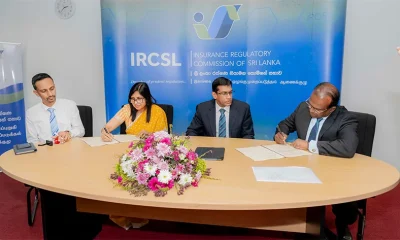
IRCSL transforms Sri Lanka’s insurance industry with first-ever Centralized Insurance Data Repository
-

 Business5 days ago
An efficacious strategy to boost exports of Sri Lanka in medium term
-
 Features3 days ago
Overseas visits to drum up foreign assistance for Sri Lanka