
News
Lasantha Wickrematunge among murdered global journalists as Tribunal opens in The Hague

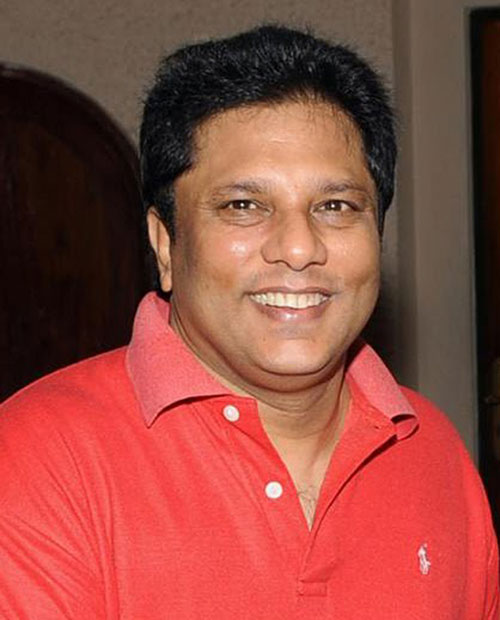
A ‘people’s tribunal’ to achieve justice for murdered journalists opened in The Hague last week to defend media freedoms in an age of increasing authoritarianism and populism, agency reports said.
A report from The Hague said: Set up by a coalition of press freedom organisations, the hearings lasting six months will focus on the unsolved cases of three journalists murdered in Mexico, Sri Lanka and Syria.
While it has no legal powers to convict anyone, the tribunal aims to raise awareness, pressure governments and gather evidence through what it calls its form of “grassroots justice”. Hatice Cengiz, who was set to marry dissident Saudi journalist Jamal Khashoggi before he was killed in 2018 inside Saudi Arabia’s consulate in Istanbul, said she was testifying at the tribunal so the world does not forget her murdered fiancée.
 “In the past people were targeting journalists, but now the government and the leaders of governments are targeting journalists. So, it’s a very, very important point,” Cengiz said.
“I am attending this people’s tribunal on the murder of journalists because to remind the world again what happened to Jamal and why we couldn’t achieve any justice until now.” Nobel Peace laureate Maria Ressa of the Philippines, and the son of murdered Maltese journalist Daphne Caruana Galizia are among the others who will testify at the tribunal in a 17th century former church in The Hague.
The tribunal was organised by Free Press Unlimited (FPU), the Committee to Protect Journalists (CPJ), and Reporters Without Borders and is starting on the International Day to End Impunity for Crimes Against Journalists.
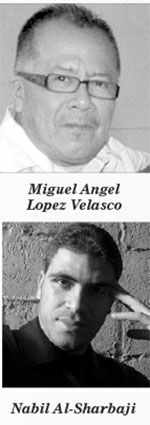
It will examine the 2009 assassination of newspaper editor Lasantha Wickrematunge during Sri Lanka’s Tamil separatist conflict, the 2011 murder of Mexican journalist Miguel Angel Lopez Velasco along with his wife and son, and Nabil Al-Sharbaji, who died in a Syrian detention centre in 2015.
Worldwide more than 1,400 journalists have been killed since 1992 and in eight out of 10 cases the killers have gone free, the CPJ said.
Media freedoms had been further undermined in recent years by populist leaders, including former US President Donald Trump, said Helena Kennedy, a high-profile British rights lawyer who is advising the tribunal.
“Journalism is about truth telling. It’s what populist and authoritarian governments are most afraid of,” she said via video link.
The tribunal aimed to show that it was possible to find new evidence for the murders of journalists, even when States are unable or unwilling, said FPU director Leon Willems.
“When we kill a journalist, when we let that happen, we kill stories. We kill stories that are important, that uncover wrongdoing,” he said.



Prime Minister Dr. Harini Amarasuriya stated that the upcoming 2027 Budget will place priority on waste management, waste reduction and recycling, emphasising that what should be left for future generations is not contaminated soil or seas filled with plastic, but a clean and green environment where they can breathe freely and live healthy lives.
The Prime Minister made these remarks while delivering the keynote address at the 3rd International Conference on “Plastic, Innovation and Environmental Sustainability”, organised by The Open University of Sri Lanka, held today (30 September) at the Cinnamon Lakeside Hotel, Colombo.
Held under the theme “Eco-Friendly Innovations,” the conference focused on minimising environmental damage caused by plastic waste, introducing environmentally friendly alternatives, developing circular economy models and promoting sustainable waste management. Addressing the conference, the Prime Minister further pointed out that plastic pollution is not merely an environmental issue, but a global challenge directly linked to the climate crisis.
The Prime Minister emphasised that the uncontrolled accumulation and disposal of waste poses a serious threat to both public life and the environment, and that the destruction of natural resources in the name of economic development cannot be considered meaningful development. The Prime Minister stated that several major projects are planned to be implemented under the Clean Sri Lanka national programme, including the “Pivithuru Purawara” National Waste Management Project, which will be implemented during the 2027–2029 period at a cost of Rs. 34 billion.
The Prime Minister further stated that the project aims to minimise the disposal of non-biodegradable waste, including plastic, into the environment, while expanding recycling and compost production. She also emphasised that laws and regulations alone are insufficient to ensure environmental protection, and that a sense of responsibility towards the environment must be cultivated through the education system itself. The Prime Minister also stated that steps are being taken through the new education reforms to practically integrate environmental education, plastic and waste management, and circular economy concepts into the school curriculum. She added that the “Green Schools” concept will be promoted at school level, encouraging children to adopt “Zero Waste” practices from an early age. In addition, the Prime Minister called on universities and researchers to adopt an interdisciplinary approach, bringing together fields such as engineering and social sciences, in order to develop practical and innovative solutions to these challenges.
The occasion was attended by the Vice Chancellor of The Open University of Sri Lanka Senior Professor P. M. P. C. Thilakarathne, Professor J. M. A. Manathunga, Professor Banduni Athapattu, Professor Alex Lin, members of the academic panel, local and international researchers, officials of the Ministry of Environment, and a group of university students were also present at the occasion. Prime Minister’s Media Division
[Prime Minister’s Media Division]
Court of Appeal issues warrant for monk’s arrest
by Shamindra Ferdinando
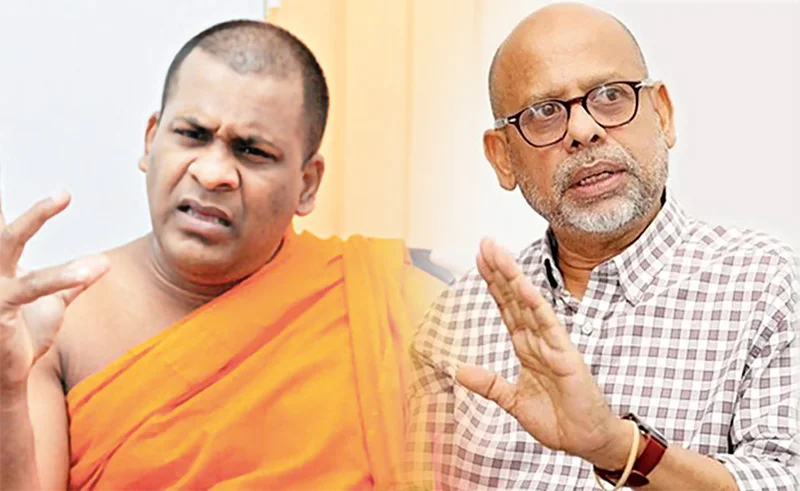
Civil society activist Gamini Viyangoda on Monday (28) lambasted the NPP government for its failure to act promptly on the Supreme Court cancelling the presidential pardon granted to the General Secretary of Bodu Bala Sena (BBS) Galagodaatte Gnanasara.
Addressing a gathering at the Sri Lanka Foundation to mark the launch of ‘Rajapaksha Samagama’ and ‘Pasku Praharaye Thoththa Babala’ by Lasantha Ruhununuge and Tharindu Uduwaragedara and M.F.M., Faseer, Viyangoda alleged that President Dissanayake’s government was also acting in a manner partial to Gnanasara Thera, the way all previous governments had done.
The NPP should be ashamed of its pathetic failure to act swiftly and decisively, immediately after the Supreme Court revoked President Maithripala Sirisena’s pardon. Viyangoda said that the government owed an explanation as to why law enforcement authorities couldn’t apprehend Gnanasara, following the announcement made on 14 Sept. “For two weeks what were they doing,” he asked.
Ven. Gnanasara was sentenced, in 2018, for a six-year period for contempt of court and intimidating Sandya Eknaligoda, the wife of Prageeth Eknaligoda who disappeared in 2010. But, President Sirisena pardoned him before the convicted monk completed one year of his six-year term.
Viyangoda said that Ven. Gnanasara had openly moved about freely, launched a book and acted as if the Supreme Court ruling didn’t have any impact. Every minute Gnanasara stayed in the open it was an affront to the Supreme Court, Viyangoda said, accusing the government of shielding a wrongdoer.
Referring to certain incidents during the Yahapalana time, Viyangoda revealed that he personally sought the then Prime Minister Ranil Wickremesinghe’s direct intervention to have Ven. Gnanasara, hiding at a faraway temple, apprehended. “I met Wickremesinghe at Temple Trees. When I raised the failure on the part of police to apprehend Gnanasara, Wickremasinghe immediately called Sagala Ratnayake, who was in charge of public security at that time. Ratnayake promised to take the monk to custody the following day. The next day, Gnanasara surrendered through a lawyer.”
Viyangoda alleged that the Wickremesinghe government had shielded Vem. Gnanasara. The Wickremesinghe-Sagala Ratnayaka duo did that in style, he said, accusing the present government, too, of doing the same.
The Court of Appeal yesterday (29) issued a warrant for the arrest of Gnanasara Thera and ordered that he be produced before the court on 1 Oct.
The court further directed that the warrant be executed through the Inspector General of Police.
This happened when a motion filed by the Attorney General, seeking an order to enforce the prison sentence imposed on Gnanasara Thera, was taken up before the Court of Appeal.
The motion was heard before a Court of Appeal bench, comprising Justices Mayadunne Corea and Lakmali Karunanayake.
President’s Counsel Anura Meddegoda, appearing for Gnanasara Thera, told the court that his client was resting due to illness and requested a date to study the motion and make submissions.
But State Counsel Sajith Bandara declared that the matter concerned a criminal case and requested that the court issue a warrant if the accused failed to appear before the court.

Colombo’s bus priority lane rule returned today, 29 September, as a pilot programme across the city and nearby areas. It applies from 6 a.m. to 9 a.m. and from 4 p.m. to 7 p.m. daily. The renewed operation covers seven designated lanes, meant to cut delays and make public transport more predictable.
Transport Minister Bimal Rathnayake said officials would monitor the trial to assess its effect on congestion and public transport efficiency. Police have told all officers to take legal action against violators. Drivers may enter a lane only in unavoidable cases, such as emergencies, exceptionally heavy traffic, or to cross it when turning.
The Lanka Private Bus Owners’ Association has welcomed the move, and Metro Bus is adding five new routes.
The rule has been revived before, and past efforts struggled with enforcement, so the pilot project’s results will matter.
(Image courtesy Hiru)

Waste management and recycling to receive priority in the 2027 Budget – PM

Rain stays away as India and Sri Lanka look for fair contest to enter final

Gold winner Tharanga gets brand-new Honda Vezel from SLAAJ

Showers above 50 mm are likely at some places inthe Uva, Eastern and Central provinces and in Polonnaruwa and Mullaittivu districts after 1.00 p.m.

Civil society activist accuses govt. of favouring Ven. Gnanasara

More cops than cones

‘Dates have the highest sugar content to fight Coronavirus’

Sunday Island 27 December – Headlines

#SundayIsland 17th December – Headlines

Sunday Island – 28th March

Sunday Island Headlines – 21 March

Sunday Island – 21st February – Headlines
-
 Latest News6 days ago
Showers above 100 mm are likely at some places in the Western, Sabaragamuwa, Central and North-western provinces and in Galle and Matara Districts
-

 Editorial7 days ago
Crimes punished and unpunished
-

 Features6 days ago
Beyond traditional jobs: Why Sri Lanka needs to facilitate the gig economy
-

 Editorial5 days ago
Birth of a bad law
-

 News3 days ago
Police remove Thileepan statue in Jaffna
-
 Latest News6 days ago
Kusal, Wellalage star as Sri Lanka defend 322 in Headingley thriller
-

 News5 days ago
TIN mandatory for key transactions from Nov. 1
-

 News7 days ago
IMF: Sri Lanka on course for 2027 market return