
News
Lanka’s Vedda tribe linked to ethnic Indians: Study


A study by Hyderabad-based Centre for Cellular and Molecular Biology and Colombo University has found that the Vedda tribe was genetically linked to ethnic Indians, said a report published by the Times of India.
It said: In a landmark study published this week in ‘Mitochondrion’ journal, 10 researchers from five institutions spoke about findings on the genetic history of the Vedda population, an indigenous group of Lanka.
It has found that the Vedda share a strong genetic similarity with the Austroasiatic Munda-speaking Santhal and Juang tribes in Odisha and the Dravidian-speaking Irula, Paniya and Pallar found in Karnataka, Kerala and Tamil Nadu.
Their study has revealed that the Vedda have a greater genetic similarity with these five tribes than with either Sri Lanka’s Sinhalese or Tamil populations with whom they have shared the island for centuries.
“This was a surprise — it shows Sri Lanka as an amazing place where three populations, living side by side, interacted very differently with one another,” Gyaneshwer Chaubey, a population geneticist at the Banaras Hindu University, who supervised the study, said.
“The Sinhala and Tamil are massively mixed — you could call them genetically nearly indistinguishable, but the Vedda have remained largely isolated, they’ve maintained their identity by very low mixing,” Chaubey said.
Archaeological excavations show that modern humans have been occupying Sri Lanka for the past 30,000 years, perhaps longer. The Vedda, originally hunter-gatherers, are the island’s only indigenous population and are believed to be the direct descendants of the island’s earliest inhabitants.
“The Vedda have long intrigued anthropologists, historians and scientists because of their distinct language and culture,” said Kumarasamy Thangaraj, a scientist and study collaborator at the Centre for Cellular and Molecular Biology, Hyderabad.
Kumarasamy added: “Our study unravels their genetic origins and affinities with Indian populations.”
The Vedda’s original language is linguistically isolated, unrelated to any known language. Chaubey said it was one of three such linguistically isolated languages on the subcontinent, alongside Nihali, spoken in central India, and Kusunda in Nepal.
For their study, the scientists extracted genetic material from blood samples collected from 37 healthy, maternally unrelated Vedda individuals and compared their genomic segments with those from other populations.
Their maternal ancestry analysis suggests that the Vedda are the descendants of people who arrived from the Indian subcontinent some 55,000 years ago and who were likely an offshoot of a branch of modern humans who moved out of Africa into India and Asia.
The genetic proximity of the Vedda with Indian tribal populations that were among the earliest populations in India shows their deep common genetic roots, Chaubey said.
“The study highlights a distinct demographic history of the Vedda,” said Anjana Welikala, a scientist at Colombo University, and the study’s first author. The findings show that the Vedda largely remained genetically isolated despite the geographic proximity with the Sinhalese and Tamil populations.
Ruwandi Ranasingh, the study’s lead author at Colombo University, said the study had shown that the Vedda had preserved their distinct genetic makeup with limited gene flow from neighbouring Sinhalese and Sri Lankan Tamil populations.
A study by Ranasingh and her Indian collaborators had last year shown that Sri Lanka’s Sinhalese and Tamil populations shared exceptionally high levels of genetic similarities, implying centuries of intermingling despite the differences in their arrival history, ethnicity, and language.
The Sinhalese had arrived in Sri Lanka between 800BC and 600BC while the island’s Tamil population are the descendants of arrivals from Tamil Nadu between 600BC and 300BC.
British husband-wife anthropologists Charles Seligmann and Brenda Seligmann had, in a treatise on the Vedda in 1911, proposed that they were related to the Dravidian jungle tribes in southern India but should be considered more primitive.


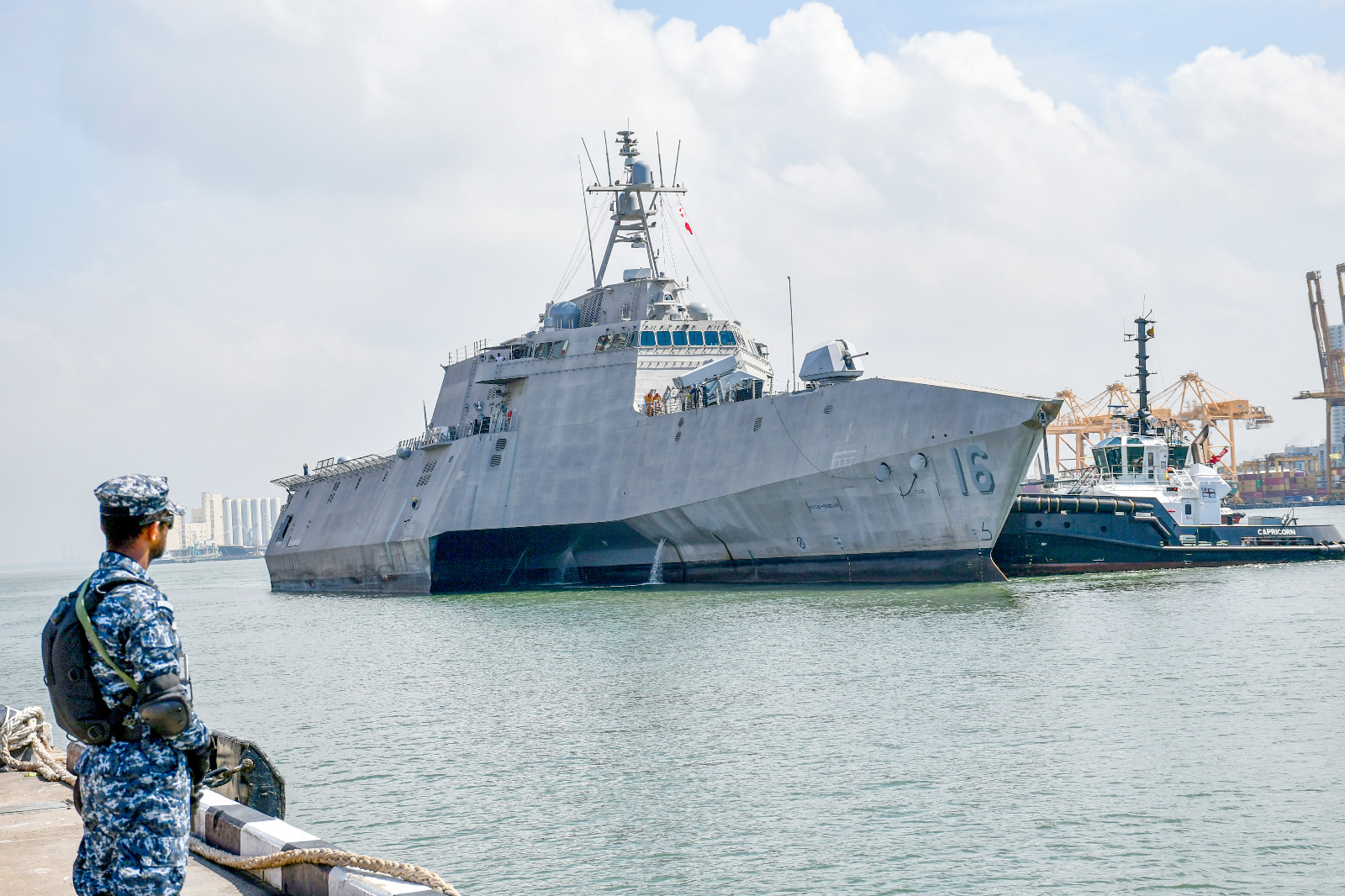
The U.S. Navy ship USS Tulsa (LCS 16) arrived at the Port of Colombo this morning, 7 October 2026 for replenishment purposes.
The visiting ship was welcomed by the Sri Lanka Navy in accordance with naval traditions.
The 127.7-metre-long platform is a Littoral Combat Ship commanded by Commander BM Wanier. Commissioned on 16 February 2019, USS Tulsa has since been in service with the US Navy.
The ship previously made a port call in Sri Lanka on 27 August 2025.
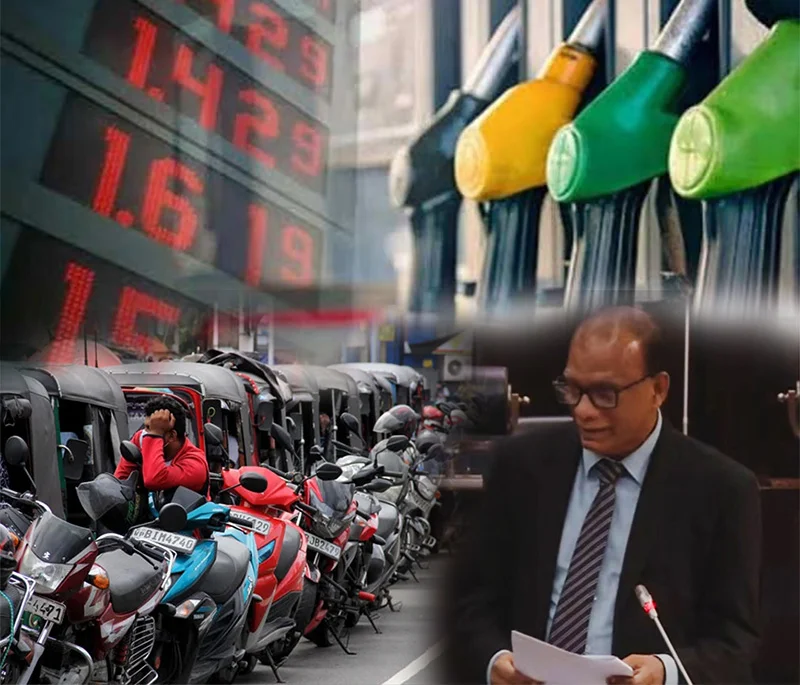
Govt. tells fuel distributors to maintain stocks to ensure uninterrupted supplies
by Saman Indrajith and Norman Palihawadane
The government had instructed private fuel distributors to maintain minimum stocks and ensure uninterrupted supplies to the market, Energy Minister Anura Karunathilaka told Parliament yesterday (06).
Karunathilaka said the Ministry of Energy Secretary had notified the relevant companies of the requirement, following a reduction in supplies by some private distributors, amid higher international fuel prices.
The Minister said private companies had informed the government that they were facing losses because international prices had risen while fuel was being sold, locally, at prevailing prices. As a result, some companies had reduced the volumes released to the market.
The reduced supplies had increased the burden on the Ceylon Petroleum Corporation (CPC), whose share of the diesel market had risen from about 54% to 82%, the Minister said.
“The CPC currently holds an 82% share of the market,” he said, adding that it had increased its supplies, compared with February, to compensate for the reduction by private distributors.
Karunathilaka said the government could not, under the existing agreements with private companies, specify the quantities they should supply to individual filling stations. However, it could require them to maintain minimum stocks in the country.
The Minister said the Energy Ministry had already instructed companies that had failed to maintain the required stocks to take steps to prevent supply disruptions.
The Minister attributed the queues reported at some filling stations to reduced supplies from private distributors, as well as normal variations in fuel distribution. He also said demand for CPC fuel had increased because private companies generally did not provide fuel to dealers on credit, while the CPC offered a three-day credit facility.
“We expect that, as the Ceylon Petroleum Corporation takes on this additional burden, the problem will ease to some extent by Wednesday or Thursday,” Karunathilaka said.
He said instructions had also been issued to increase supplies to CPC filling stations. A special discussion on the issue is scheduled for today (07), with officials of the Energy Ministry and CPC expected to participate,
along with President Anura Kumara Dissanayake.
Meanwhile, Petroleum Dealers’ Association officials have called for an early solution to the supply issue. Association Chairman D.V. Shantha Silva said queues had been reported at many filling stations, mainly those operated by private distributors.
He said the situation was not due to an overall shortage of fuel, but was linked to reduced orders by Lanka IOC, Sinopec and R.M. Parks amid concerns over losses incurred on fuel sales.
The Ceylon Petroleum Private Tanker Owners Association has urged motorists to refrain from panic buying, saying there was no nationwide disruption to fuel supplies.
The government earlier increased fuel prices and introduced a per-litre diesel subsidy following concerns raised by distributors over rising international prices.
by Norman Palihawadane
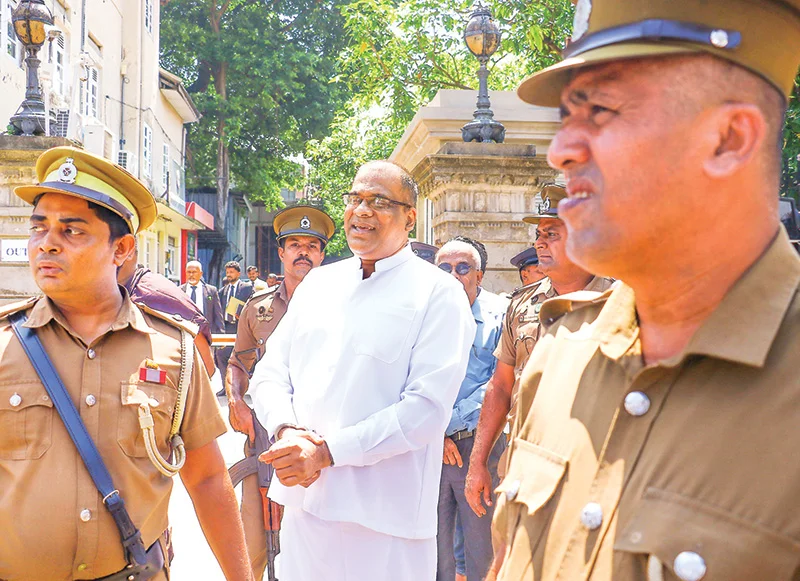
Bodu Bala Sena General Secretary Ven. Galagodaatte Gnanasara Thera, who has been ordered by the court to serve the remainder of his prison sentence, is to be assigned to the prison ‘printing work party’, prison officials said yesterday.
The monk was produced before the Colombo High Court yesterday by prison officials in connection with a warrant issued by the court.
He appeared before the court in civilian attire.
Prison sources said arrangements were being finalised for his detention and that he would subsequently be assigned to the printing work party.
The Thera initially objected when prison officials instructed him to change from his robes into the attire worn by convicted prisoners.
He later agreed to wear the prescribed prison clothes, sources said.
The Supreme Court, in September, annulled the presidential pardon granted to Gnanasara Thera in 2019. He had been serving a six-year prison sentence imposed following his conviction for contempt of court but had served only about nine months when then President Maithripala Sirisena granted him a presidential pardon in May 2019.
Following the Supreme Court ruling, the Thera was required to serve the remainder of his sentence. He was subsequently reported missing, prompting the Court of Appeal to issue an open warrant for his arrest.
The Court of Appeal on Monday ordered the authorities to enforce the remainder of his prison sentence.

U.S. Navy ship USS Tulsa arrives in Colombo for replenishment visit

Smriti Mandhana appointed India captain across formats

Ronaldo apologizes for Portugal walkout; says Jesus broke promise

Showers in the Western, Sabaragamuwa, Central, Uva, North-western and Southern provinces and in Anuradhapura and Mannar districts

Fuel crunch looms

Gnansara Thera to be assigned to prison printing section: Officials

‘Dates have the highest sugar content to fight Coronavirus’

Sunday Island 27 December – Headlines

#SundayIsland 17th December – Headlines

Sunday Island – 28th March

Sunday Island Headlines – 21 March

Sunday Island – 21st February – Headlines
-

 News6 days ago
US-assisted ‘Ice’ detection: NPC to examine IGP’s move to transfer drug-busting team
-

 Editorial5 days ago
Colombo Port drug bust: The plot thickens
-

 Editorial6 days ago
Drug busting, transfers and trust deficit
-

 Features4 days ago
The first woman in the foreign service or Ceylon Overseas Service it was then called
-

 Editorial5 days ago
Fuelling discontent and protest
-
 News7 days ago
Sri Lankan facing death penalty in Saudi Arabia: Mano G appeals to Crown Prince
-

 News2 days ago
Geneva takes up Sallay’s case and govt. ignores opportunity to answer accusations
-

 Latest News4 days ago
Tharindu Rathnayake, bowlers secure Asian Games Bronze for Sri Lanka