
News
Lankans migrate, work over time, and eat less to beat inflation

By SHIHAR ANEEZ
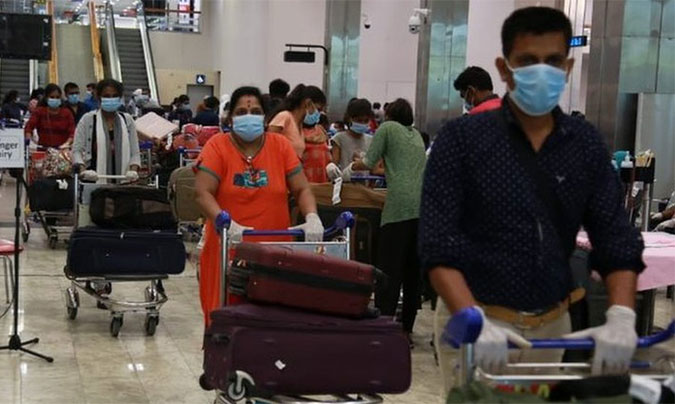
Leaving his family and relatives was the hardest decision for Suren. But he had no other option.He never wanted to go abroad for work. An accountant by profession, Suren even had the opportunity to be promoted for a higher post at the private firm he was working at in Colombo. But he was left with no choice.
“For the last three years, I had hopes that this country would become a better place for us to live peacefully. But it is becoming increasingly hard to live with the status quo,” the 36-year-old father of three from Colombo suburb Dehiwela said in conversation with EconomyNext.
Armed with a local accountancy qualification, Suren managed to find a job in Dubai. He leaves Colombo next week and is now in the process of preparing his family for his physical absence.
“It’s very hard to find an affordable school van service for my two sons. If I live in Sri Lanka, at least 40 percent of my salary will go only to send my boys to school,” he said after dropping his children at one of the main schools in Colombo.
A currency crisis that led to a shortage of essentials, sovereign debt default, and later into a political crisis has forced Suren to look for better opportunities than his 50,000 rupee (139 dollar) monthly salary.The sharp depreciation of Sri Lanka’s currency alone resulted in his monthly salary eroding from 250 US dollars to its current level. Excess money printing by the central bank to artificially maintain record low interest rates and exchange rates are now taking their toll on Sri Lankans from all walks of life.
Suren will now earn in UAE dirham which has almost doubled against the local rupee in the last seven months.
“I can’t think of a future for my kids because at one point we did not have milk powder for my younger child, wheat flour to make breakfast, cooking gas for our own meals or medicines for my mother. More than anything, costs have gone up like crazy with no additional income,” he said.
Thousands of Sri Lanka’s skilled workers and professionals are facing the same situation as Suren. Most of them plan to leave the country either for a foreign job or to migrate permanently.
Official data showed that over a quarter million people have left the country so far this year, mainly for jobs.
“When you earn in foreign currency, at least you can manage the expenses,” said Suren.
“It is a cushion against the high costs. I hope I can take my family as well in the future to a foreign country. I have lost hope in this country.”
Sri Lanka’s inflation is hovering at a record high of 70 percent. The price of essential goods have more than tripled just in the last eight months, data showed.A person needs at least 500 rupees to have three meals a day with minimum nutrition.
Food inflation is now hovering over 90 percent.The central bank’s tight monetary policy with a record increase of policy rates has yet to curb inflation.Money printing, supply disruptions caused by former president Gotabaya Rajapaksa’s fertilizer mess up, a crippling dollar shortage, and sharp depreciation of the rupee led to significant price increases and affected supply across the board.
Supermarkets have put up notices warning customers that there could be frequent price hikes and asking them not to argue with staff if the real prices are not the same as those displayed on the shelves.Many Sri Lankans have cut down on food. Some have reduced their meals to two a day while others manage with reduced protein content in their plates. Some others have changed meals to one and consume cheaper foods at main meals.
“My wife and I have stopped eating in the mornings. But we try to give nutritious meals to our kids,” Shantha Silva, a 46-year old father of two, told EconomyNext.
Silva was a threewheeler taxi driver before the economic crisis. But the fuel shortage and expensive petrol have resulted in less demand for hires as more people have shifted to public transport or push bicycles or walking.Now he goes on hires as a part-time driver mainly at night. In morning hours, he works as a security guard at a private office in Wattala, 10km from capital Colombo, while also working in a hotel kitchen when he has some time off.
“It’s a machine life now,” said Silva.
“If you want to survive in Sri Lanka without stealing or smuggling drugs, you have to have multiple jobs or reduce the meals you take.”
Silva’s wife is a cancer survivor but still needs medicines to keep the 45-year old kindergarden teacher healthy.
Both of their salaries are now adequate to manage only 50 percent of the total needs of their family. Before the crisis, Silva’s family saved at least 10,000 rupees or nearly 10 percent of their monthly compensation.But now Silva, similar to millions of Sri Lankans, is struggling to make ends meet.
“Reducing meals is not an option for children as they might face malnutrition. So I try my best to feed them by working multiple jobs,” he said.


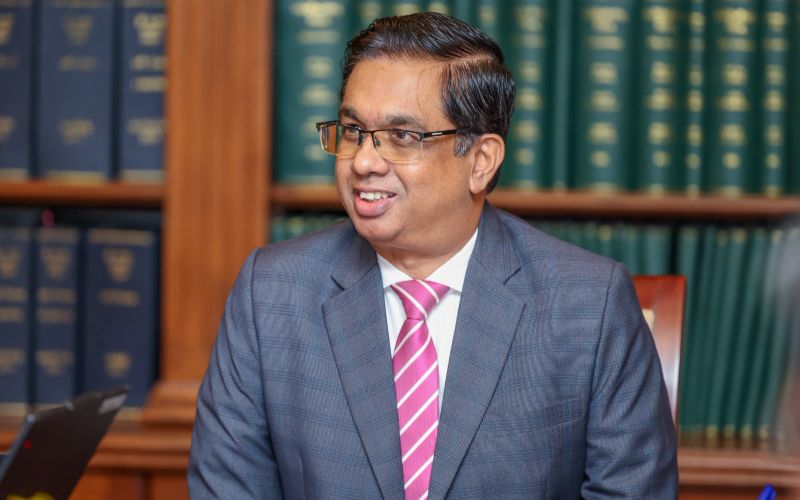
A progress review meeting on reforms and modernisation initiatives at Sri Lanka’s key state revenue-collecting institutions was held on Thursday (15) at the Presidential Secretariat, chaired by Secretary to the President Dr Nandika Sanath Kumanayake, with the participation of representatives of the International Monetary Fund (IMF) and officials of the Revenue Administration, Reform and Modernisation Bureau (RARMB) of the Presidential Secretariat.
At the meeting, the IMF representatives commended the revenue collection efficiency of the Department of Inland Revenue, Sri Lanka Customs and the Department of Excise, the country’s three leading state revenue-collecting institutions. Extensive discussions were also held on the progress of the reform and modernisation programmes being implemented at these institutions.
Secretary to the President Dr Nandika Sanath Kumanayake outlined the progress achieved by the three institutions to date and the reforms planned for implementation in the future.
The IMF representatives also highlighted the importance of strengthening risk management, developing human resources and ensuring the efficient operation of computer systems at the respective institutions.
Senior Additional Secretary to the President Seevali Arukgoda also attended the meeting. The IMF was represented by Cindy Negus, Senior Economist in Revenue Administration for the Asia and Pacific, Europe, Middle East and Central Asia regions; Alison Lister, Revenue Administration Adviser; and Gregory Toppin, Resident Revenue Adviser in Sri Lanka. A group of senior officials from the Revenue Administration, Reform and Modernisation Bureau of the Presidential Secretariat also participated.
(President’s Media Division)
By Anuradha Hiripitiyage
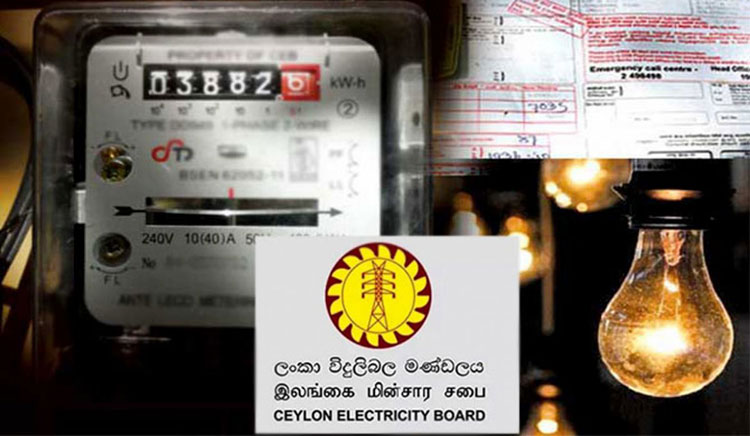
Electricity tariffs should be reduced by between 3 and 5 percent instead of being increased by 2.88 percent in the fourth quarter, as proposed by the National System Operator (NSO), Electricity Consumers’ Association Secretary Sanjeewa Dhammika said.
Addressing a media briefing in Maradagahamula, Divulapitiya, Gampaha, yesterday (16), Dhammika said a proper assessment of electricity generation costs, including the contribution of hydropower, could justify a reduction in tariffs.
He said the NSO had sought approval from the Public Utilities Commission of Sri Lanka (PUCSL) for a 2.88 percent tariff increase, which was expected to generate an additional Rs. 4,438 million.
However, the Commission had indicated that an increase of only 1.46 percent was warranted, amounting to Rs. 2,245 million, he said, adding that even this increase was unnecessary.
Dhammika alleged that the proposed revision sought to pass on to electricity consumers the financial burden arising from the non-arrival of five coal shipments and failed tenders.
“The Government had said that the burden of coal-related losses would not be passed on to the public. It is therefore unjust to make consumers bear these costs,” he said.
He pointed out that the PUCSL had forecast that hydropower would account for 32.34 percent of total electricity generation in the coming quarter, while the cost of such generation would represent only 3.45 percent of the overall cost of electricity production.
Consumers should benefit from the lower cost of hydropower generation rather than bear the burden of more expensive thermal power generation, he said.
Dhammika also questioned the inclusion of Rs. 669 million in capacity charges that had not been approved by the PUCSL, as well as a further Rs. 1,069 million to repay loans relating to incomplete projects.
Including such charges in the proposed tariff revision was unjustifiable, he said.
The PUCSL has given the public until October 30 to submit their views on the proposed tariff revision.
Dhammika said the possibility of increased hydropower generation in the coming weeks, as reservoir levels rise, should also be taken into account when determining electricity tariffs.
He maintained that tariffs could be reduced by 3 to 5 percent if hydropower generation was properly assessed and coal-related losses and unapproved charges were excluded from the calculations.
He further claimed that electricity tariffs could be reduced by as much as 10 percent through the promotion of renewable energy and the effective use of solar power and battery storage systems.
The Electricity Consumers’ Association urged the Government to withdraw the proposed tariff increase, insisting that consumers should not be made to bear costs arising from coal supply problems and other disputed charges.

By S.K. Samaranayake
Most Ven. Warakagoda Sri Gnanaratana Mahanayake Thera of the Asgiri Chapter has called for the immediate release of Ven. Galagodaaththe Gnanasara Thera, who is currently serving a prison sentence, following a court ruling.
The Asgiri Mahanayake made the appeal when a delegation of senior prison officials, including Assistant Commissioner of Prisons and Director of Operations Senaka Pallegedara, called on him on the 16th.
During the meeting, the prelate warned that the continued incarceration of Ven. Gnanasara Thera could lead to a volatile situation and cause public agitation.
Responding to the appeal, the prison officials informed the Mahanayake Thera that the authority to order the release of Ven. Gnanasara Thera did not rest with the Prisons Department but with the President.
Other senior prison officials, including Rajeev Srimal Silva, Sampath Warnakulasooriya and Mangala Welivita, were also present at the meeting.

Pakistan, Sri Lanka look to find the right mix as World Cup countdown begins

Mumbai Indians and head coach Mahela Jayawardene part ways

Review of progress in reforms and modernisation of key state revenue-collecting institutions

Rose Bowl expanded to include Australia vs New Zealand T20Is

Trump claims US Navy blockade stops Iranian ships in Hormuz

Showers above 75 mm are likely at some places in the Western, Sabaragamuwa, Central and North-central provinces and in Trincomalee and Mullaitivu districts

‘Dates have the highest sugar content to fight Coronavirus’

Sunday Island 27 December – Headlines

#SundayIsland 17th December – Headlines

Sunday Island – 28th March

Sunday Island Headlines – 21 March

Sunday Island – 21st February – Headlines
-

 News7 days ago
Sri Lanka escalates anti-graft drive with Shiranthi’s jailing
-

 News7 days ago
Iranian ships stranded, Lanka fears US sanctions
-

 Latest News6 days ago
Farhan and Sadaqat help Pakistan seal series in style
-

 Latest News4 days ago
Nissanka’s return headlines Sri Lanka’s Test squad against Pakistan
-

 Features6 days ago
Intake 16: 45 years of duty and honour
-

 News6 days ago
Malwathu Chapter issues statement on talks with President over Gnanasara Thera’s robes
-
 News7 days ago
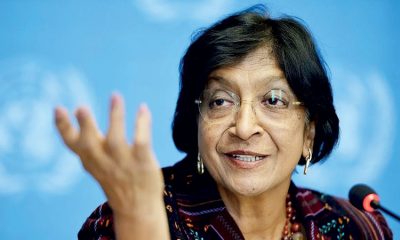
Navi Pillay’s Lankan affairs in focus as she wins 2026 Nobel Peace Prize
-
 News6 days ago
CP alleges NPP has taken the blame for illegal US sanctions on Iranian vessels