
News
Lankan workers in Middle East sending money, while more educated do not: Minister

By NESHELLA PERERA
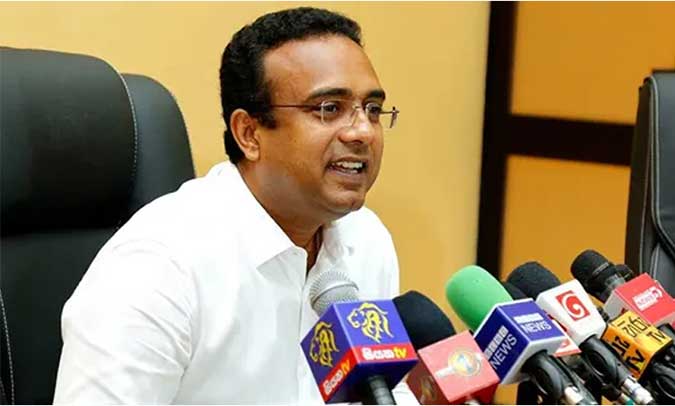
Millions of less affluent Sri Lankans works in the Middle East are sending money home to keep the economy afloat while the more educated who hold higher post in developed countries keep money stashed elsewhere, Labour Minister Manusha Nanayakkara said.
“The most amount of foreign exchange generated for Sri Lanka comes from the Middle Eastern region,” Nanayakkara said in Parliament.
“The ones who earn the least contribute to most of the remittances and those who hold bigger posts in developed countries, send very little money to the country because they are politically misled and will not send money.”
Many liberal developed nations give permanent resident status to foreign nationalized who can later become naturalized citizens, unlike nationalist nations like Sri Lanka critics say.As a result, they buy assets in those countries.
Middle Eastern nations also do not allow foreigners to settle permanently as a general rule.Sri Lanka is trying to raise salaries of workers in the Gulf, he said.
“We have discussed with Saudi Arabia, Oman, Kuwait and The United Arab Emirates to increase the salary earned by these women,” Nanayakkara said.
Many Sri Lankans are now leaving the country after the central bank printed money to maintain an artificially low policy rate and boost growth without working for it (output gap targeting or stimulus) under a discretionary flexible inflation targeting regime and collapsed the rupee.
Before the money printing central bank was set up in August 1950, Sri Lanka was a net importer of labour, like Dubai and Singapore.The weaker the currency the lower the salary that people will be prepare to migrate to countries with monetary stability.Sri Lanka has printed money for 73 years creating forex shortages, and with the support of economists in many cases have laid the blame on importers.In this crisis, the worst in the history of the central bank exporters were blamed and public money was used to track their transactions.
Minister Nanayakkara’s praise comes a few months after expat workers were themselves were scapegoated for sending money through unofficial gross settlement system which had been used for long distance maritime trade for centuries.
Remittances shifted to Undiyal/Hundi or Hawala settlement system from the formal banking system after the central bank printed money to artificially lower interest rates and maintain a fixed policy rate.Undiyal funds kept the country fed through open account trade, with the formal banking system was unable to prioritize as the newly printed money struggled to go out of the country through the credit system.
Sri Lanka’s remittances through official channels rose to 568 million US dollars in March 2023, up 78 percent from a year earlier, as parallel premiums declined as the central bank put brakes on money printing.( ECONOMYNEXT)








Four persons including a Budhist monk died and 32 others were injured when two SLTB buses collided head on at Weerawila at arond 12 noon today (18).
Three of the deceased were women. 22 of the injured were admitted to the Hambanthota Hospital while 10 others have been admitted to the Debarawewa hospital.
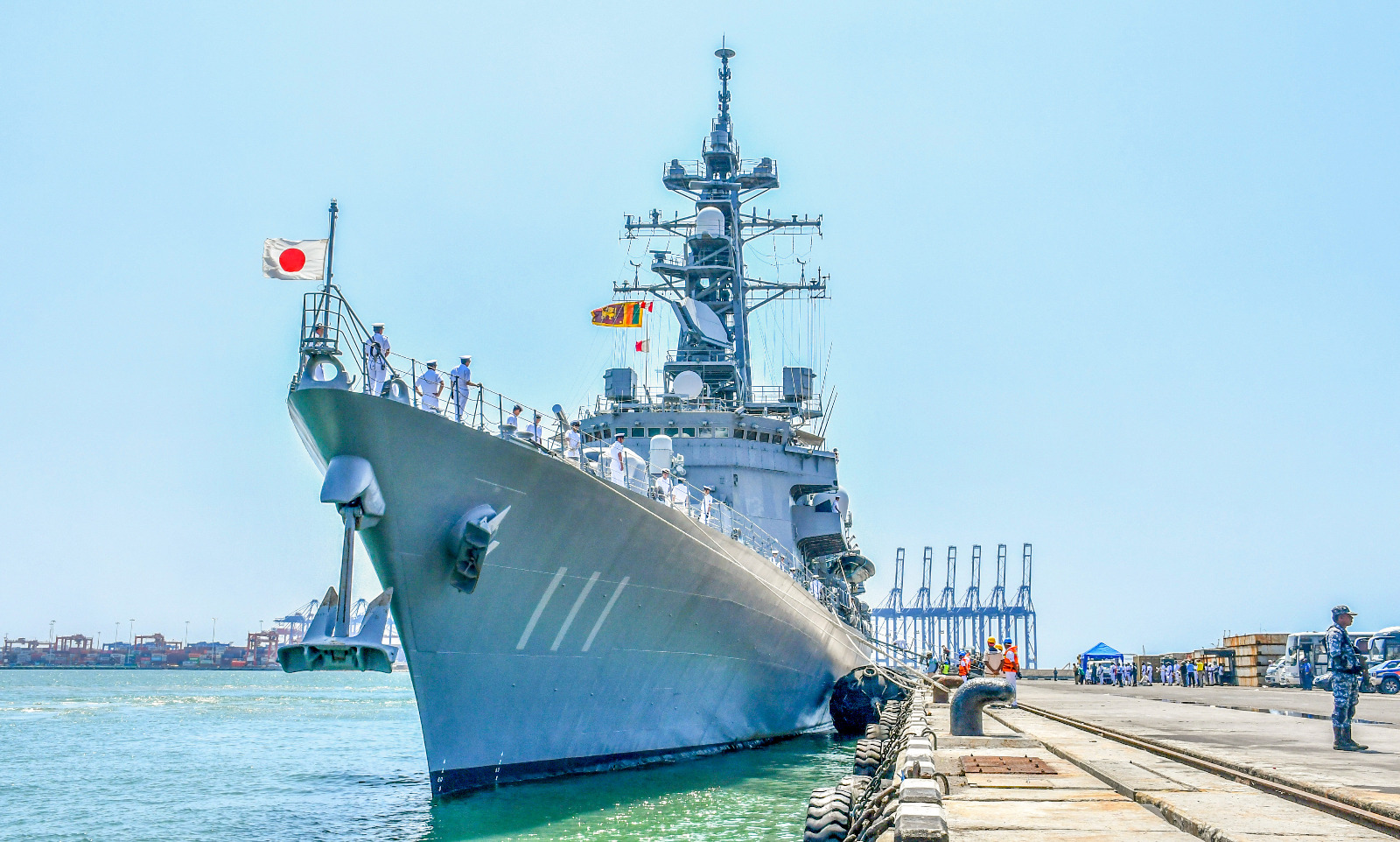
The Japan Maritime Self-Defence Force (JMSDF) ship OONAMI which arrived at the port of Colombo on a goodwill and replenishment visit on 09 Mar 26 departed on 11 March.
The departing ship was given a formal farewell from the Sri Lanka Navy, in keeping with naval traditions at the Port of Colombo.
The 150.5m long JMSDF OONAMI is commanded by Commander IIO Hiromasa.
During the stay in the island, crew members of the ship explored some tourist attractions in Colombo. The itinerary also included a coastal clean-up drive participated by naval personnel of both countries and engagements with the Sri Lanka Navy, designed to strengthen the bonds of friendship and cooperation.

The Central Cultural Fund established under the provisions of the Central Cultural Fund Act No. 57 of 1980 is responsible for development of cultural and religious monuments in Sri Lanka, settling the expenditure borne for development, renovation and conservation of local and foreign cultural monuments, awarding financial donations for artisans as well as awarding those who served the nation in the fields of culture and religious sectors.
The said act has been passed in Parliament 45 years back and, the requirement to revise the provisions of the act according to the contemporary requirements haa been recognized.
Accordingly, the Cabinet of Ministers granted their policy
approval to amend the said act, considering the resolution furnished by the Minister of Buddhasashana, Religious and Cultural Affairs.

SriLankan Airlines Alerts Customers to Social Media Scams

Four dead 32 injured in head on collision at Weerawila

JMSDF ship OONAMI concludes goodwill visit

Cabinet nod to amend Central Cultural Fund Act No. 57 of 1980
’National Namal Uyana’ declared as a National Heritage
Establishment of Supervisory Committees for restoring economic activities.

‘Dates have the highest sugar content to fight Coronavirus’

Sunday Island 27 December – Headlines

#SundayIsland 17th December – Headlines

Sunday Island – 28th March

Sunday Island Headlines – 21 March

Sunday Island – 21st February – Headlines
-
 News7 days ago
Historic address by BASL President at the Supreme Court of India
-

 Sports7 days ago
The 147th Royal–Thomian and 175 Years of the School by the Sea
-

 Business3 days ago
Browns EV launches fast-charging BAW E7 Pro at Rs. 5.8 million
-

 Life style4 days ago
From culture to empowerment: Indonesia’s vision for Sri Lanka
-
 News7 days ago
Power sector reforms jolted by 40% pay hike demand
-

 Latest News4 days ago
QR code system will be implemented for fuel with effect from 06.00 a.m. today (15th)
-
 Opinion6 days ago
M. D. Banda: Memories of Appachchi – II
-

 News2 days ago
Australian HC debunks misleading travel risk claims for Sri Lanka