
News
Lankan crisis embedded into political system with leaders playing Sinhalese Buddhist card and catering to majoritarian sentiment

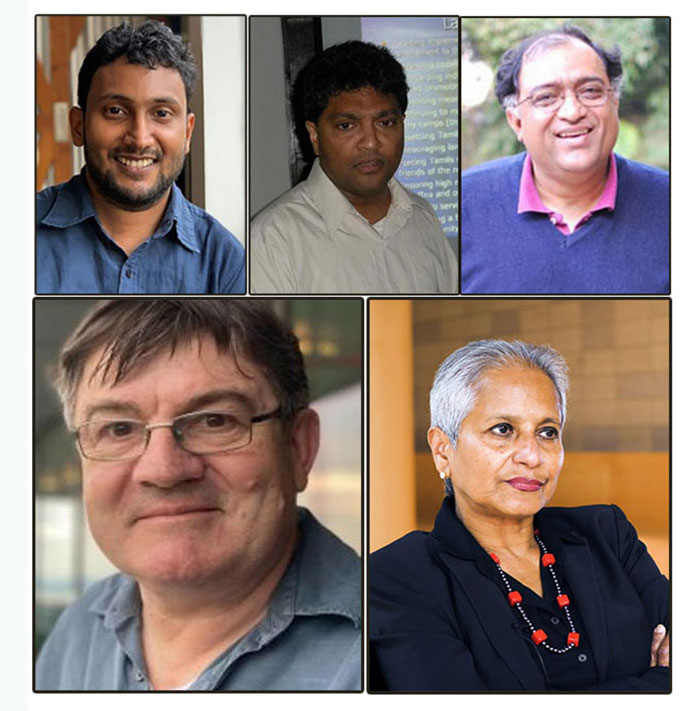
UK-based NGO holds discussions on what lessons South Asian nations can draw from Lankan crisis
London (ANI): A recent Democracy Forum seminar highlighted the dire political and economic problems overwhelming Sri Lanka, and what other South Asian nations might learn from its experience.On July 14th, Sri Lankan President Gotabaya Rajapaksa resigned, as his country faced economic ruin and civil unrest. Protestors demanded that the interim government probe allegations of corruption against Rajapaksa and his family, who have dominated Sri Lankan politics for much of the past two decades.
To analyze what lies behind the Rajapaksas’ fall and Sri Lanka’s economic collapse, and discuss what lessons other South Asian nations might learn from the country’s predicament, London-based NGO The Democracy Forum invited a panel of experts to address the central theme: ‘Sri Lanka: Lessons for South Asia’.
In his opening comments, TDF President Lord Bruce spoke of the plight of Sri Lanka, a country traumatized by its political shortcomings, exacerbated by a combined balance of payments and sovereign debt crisis, which betrays many of the systemic problems that continue to beset countries throughout South Asia.The Sri Lankan government’s reckless pursuit of unsustainable foreign borrowing has propelled the country into the midst of a proxy tug-of-war between China and India, he said, and although Beijing has long courted the Rajapaksa family with loans for huge infrastructure projects, it has been slow to respond to Colombo’s evolving crisis.
In contrast, the Indian government earlier this year offered a package of credit, loans, and humanitarian assistance worth USD 3.8bn. The outcome of this hegemonic rivalry is far from clear, but the machinations reflect the shifting sands of allegiance in South Asia, concluded Lord Bruce, with Beijing still wielding the most significant clout in the region.
Focusing on deep-rooted, long-term economic vulnerabilities that led to sovereign default in Sri Lanka – the first time in the country’s history – Umesh Moramudali, a Lecturer at the University of Colombo and Researcher on Public Debt and Development, pondered why Sri Lanka had come to this.
While some observers believe China, the Russian war, and Covid are key external culprits in Sri Lanka’s economic decline, Moramudali pointed to three long-term internal vulnerabilities: Sri Lanka’s declining tax revenue, a much reduced exports-to-GDP ratio, and very low foreign direct investment.On Sri Lanka’s path to becoming a middle-income country, he argued, it had failed to fix the structural weakness of its economy, and core political weaknesses. Heavy borrowing from China for infrastructure projects, as well as increasing domestic and external debt, had also left their mark.
Dr Neil DeVotta, Professor of Politics and International Affairs at Wake Forest University, discussed the proximate causes of the crisis facing Sri Lanka, juxtaposing that with mal-governance over the decades and linking the island’s current problems with its ethnocentric trajectory. The hardship that Sri Lanka continues to face is almost invisible, he said, as the protest movement is now less vigorous, yet malnutrition, poverty, dipping agricultural output and lack of medicines are among growing problems.
DeVotta also drew attention to exogenous causes (Covid, the war in Ukraine), although he believed the long-term explanation was rooted in Sri Lanka’s ethnonationalism and its dynamics, with decades of ethnocentric governance having eroded meritocracy, leading to poor governance, corruption and lack of transparency. This is embedded into the political system, he said, with leaders playing the Sinhalese nationalist Buddhist card and catering to majoritarian sentiment.
The political roots of the crisis were also at the forefront for Jonathan Spencer, Regius Professor of South Asian Language, Culture & Society at the University of Edinburgh, who specifically focused on the gap between the political class and the people. He underscored the essentially non-violent nature of most protests, but also the limitations of what has been achieved by the protestors, who initially focused their ire against Gotabaya and Mahinda Rajapaksa, but are now also directing it at the other 225 current members of parliament.
Spencer called the existing political system ‘sealed’, and asked why there have been no new forces and voices entering it – for example, there are only 12 women MPs in parliament out of 225, in a country that had the first democratically elected female prime minister, and young people and those from poorer communities are also blocked from participation. So there is a long-term structural crisis though a crisis of representation in the current Parliament.
The good news, concluded Spencer, is that the aspirations of the young protestors who want to see post-ethnic, post-corruption politics have not been crushed by the repression of recent months; but the bad news is it is very hard to see how they can find expression in the mainstream political realm.
Broadening the focus to a more regional viewpoint, Dr. Ali Cheema, Associate Professor of Economics, Lahore University of Management Sciences and Research Fellow, IDEAS, looked at Pakistan’s domestic political economy challenges and development, in light of what might be learned from Sri Lanka’s recent experiences.
He drew parallels between Sri Lanka and Pakistan, given their structural weaknesses, and how these have been worsened within the context of the global economic crisis. But Cheema cautioned against being reductive, as each South Asian nation has a different set of fragilities, underpinned by growth models that are themselves fragile.
Dr Deepa Ollapally, Research Professor of International Affairs & Director of the Rising Powers Initiative at the Elliott School of International Affairs, George Washington University, also addressed the regional repercussions of the Sri Lankan crisis, especially what it means for India’s role vis-a-vis Colombo, and in the region.
She spoke of how the region is being redefined, as are regional roles and expectations, with Quad member Japan now a major player, seen as an honest broker able to develop, along with other Quad members, restructuring packages and provide alternatives to the China option, especially the BRI.
Ollapally said that, previously, India had watched helplessly as Sri Lanka fell into Beijing’s arms. But, with the Ukraine war diverting most of the international community’s attention, China then vanished from the scene and India appeared as a first responder with a huge aid package, far outstripping China’s. Sri Lanka, she added, had been overly optimistic in its expectations of China, which is a tough customer when it comes to bailouts, as it is more concerned with its own economic situation.
Many countries are in debt to China (eg Pakistan, African nations), and the upshot is a slowing down of the BRI, which had been speeding up. At the same time, Sri Lanka has underestimated India – despite the island nation begging for global help, only India came good.
India’s expectations of Sri Lanka have also increased, as the crisis has given India the opportunity to push back China. Prime Minister Narendra Modi government has been much quicker than its predecessors to realize that, in order to project itself globally, India needs to take care of its immediate neighborhood – otherwise there are others waiting in the wings, like China, to play that role. So Sri Lanka, concluded Ollapally, is a test case in India’s journey towards being a global power.
Barry Gardiner MP, Chair of the Forum, closed the event by considering some of the elements of a useful rescue package for Sri Lanka. More money would need to be channelled to the bottom of society, and fuel and fertilizer would have to reach farmers for healthy harvests next year. Regarding lessons the region could learn from Sri Lanka’s situation, Gardiner stressed the importance of borrowing to invest, not to consume, and putting funds into the hands of the people, who will help drive growth, tackle corruption, and fostering transparency within the polity.

Latest News
A strong Technical and Vocational Education and Training (TVET) system equips individuals with practical, relevant, and future-oriented skills helping to innovate responsibly towards a greener and sustainable future – PM

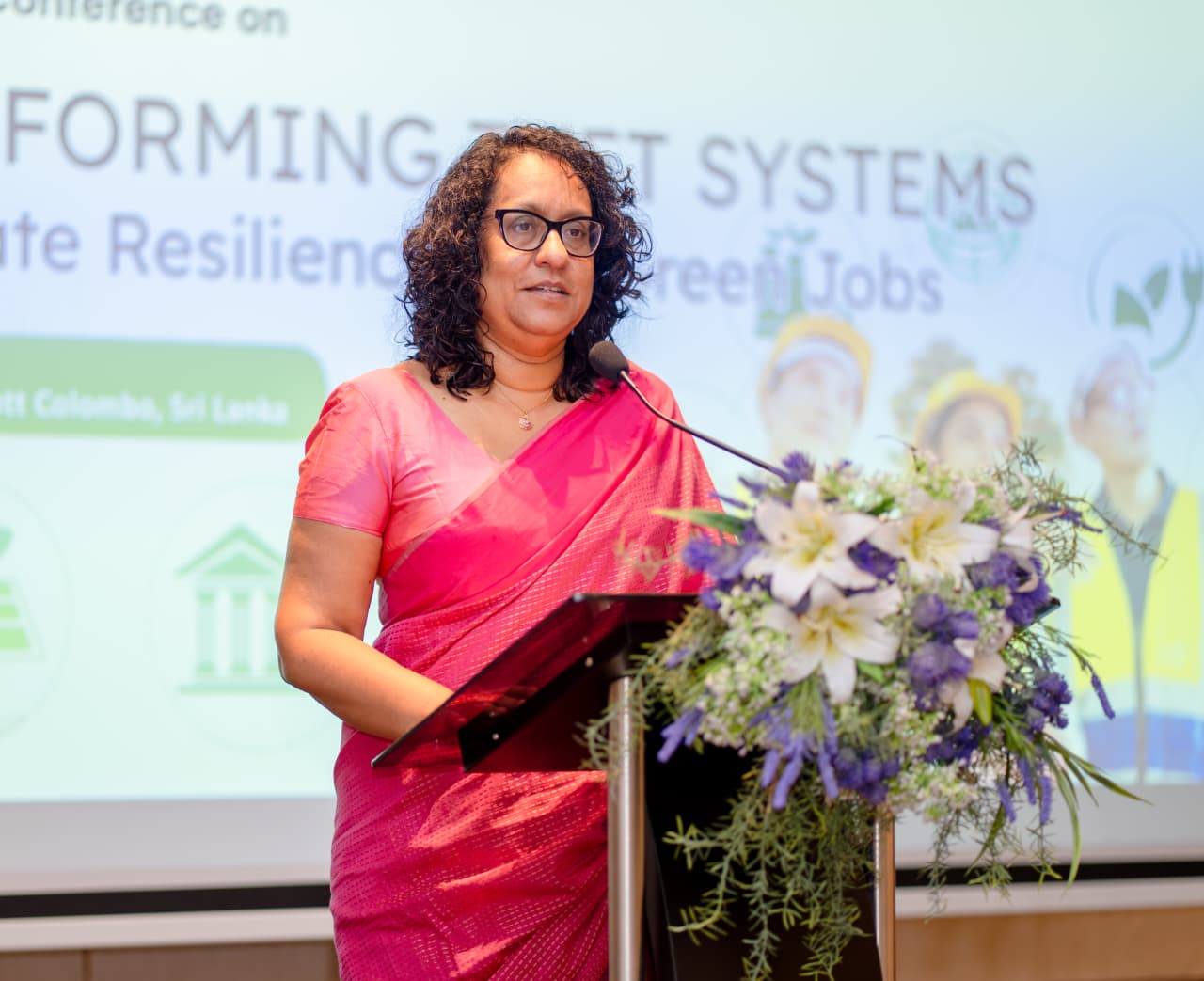
The Prime Minister, Minister of Education, Higher Education and Vocational Education Dr. Harini Amarasuriya participated as the Chief Guest in the international conference on ’Transforming TVET Systems for climate resilience and green jobs’ organized by Colombo Plan Staff College, Philippines together with the Ministry of Education, Higher Education and Vocational Education Sri Lanka on 24 th of March at Courtyard by Marriott Colombo, Sri Lanka.
The Conference serves as the flagship event of the five-day Regional Programme on “Transforming TVET for a Digital, Green, and Inclusive Economy” (23-27 March 2026), which continues throughout the week, bringing together representatives from CPSC member countries including Bhutan, Fiji, Malaysia, Maldives, Myanmar, Nepal, Philippines, Thailand, Pakistan, and Sri Lanka, fostering high-level dialogue and knowledge sharing on climate-resilient and green skills development.
The Conference features technical and plenary sessions on climate-responsive TVET systems, green skills development, national policy frameworks, and emerging technologies shaping industry transformation.
Addressing at the event, the Prime Minister emphasized the role of Technical and Vocational Education and Training (TVET) that equips individuals with practical, relevant, and future-oriented skills in addressing climate change and shaping a sustainable future.
The Prime Minister reaffirmed that this transformation remains a national priority for Sri Lanka. She stressed that education must go beyond knowledge dissemination to empower individuals with opportunities, dignity, and the capacity to contribute meaningfully to society.
She further emphasized the need to integrate environmental sustainability into education and training systems by embedding green skills in curricula, investing in modern training facilities, promoting innovation, and fostering collaboration between training institutions and emerging green industries.
Highlighting the importance of ensuring equity the Prime Minister further stated, that opportunities arising from the green transition must be accessible to all, including youth, young women, people with special needs, and marginalized communities.
Reaffirming Sri Lanka’s commitment to working closely with regional and international partnerships, the Prime Minister emphasized the importance of transforming them to actual benefits and partnerships.
The occasion was attended by the Secretary to the Ministry of Education, Higher Education and Vocational Education Nalaka Kaluwewa, Additional Secretary (Vocational Training) Ms. Samanthi Senanayake Director General Colombo Plan Staff College Prof. Dr. Suresh K. Dhameja , TVET administrators, institutional leaders, policymakers, instructors, industry representatives, and international delegates from across the region and seniors officials and officials from Ministries.
(Prime Minister’s Media division)
News
PM reviews progress of the committee appointed for the establishment of a National Nursing University
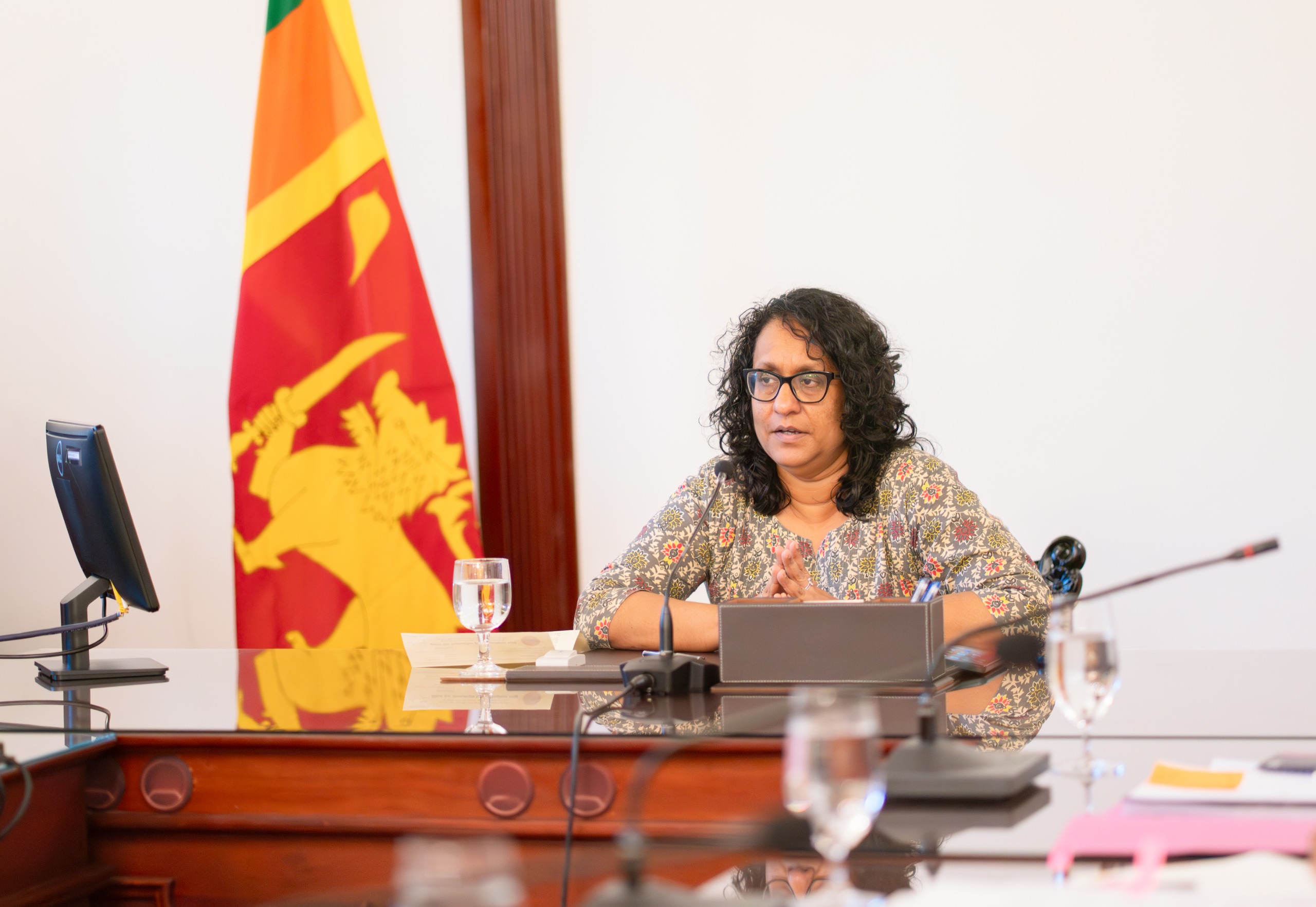
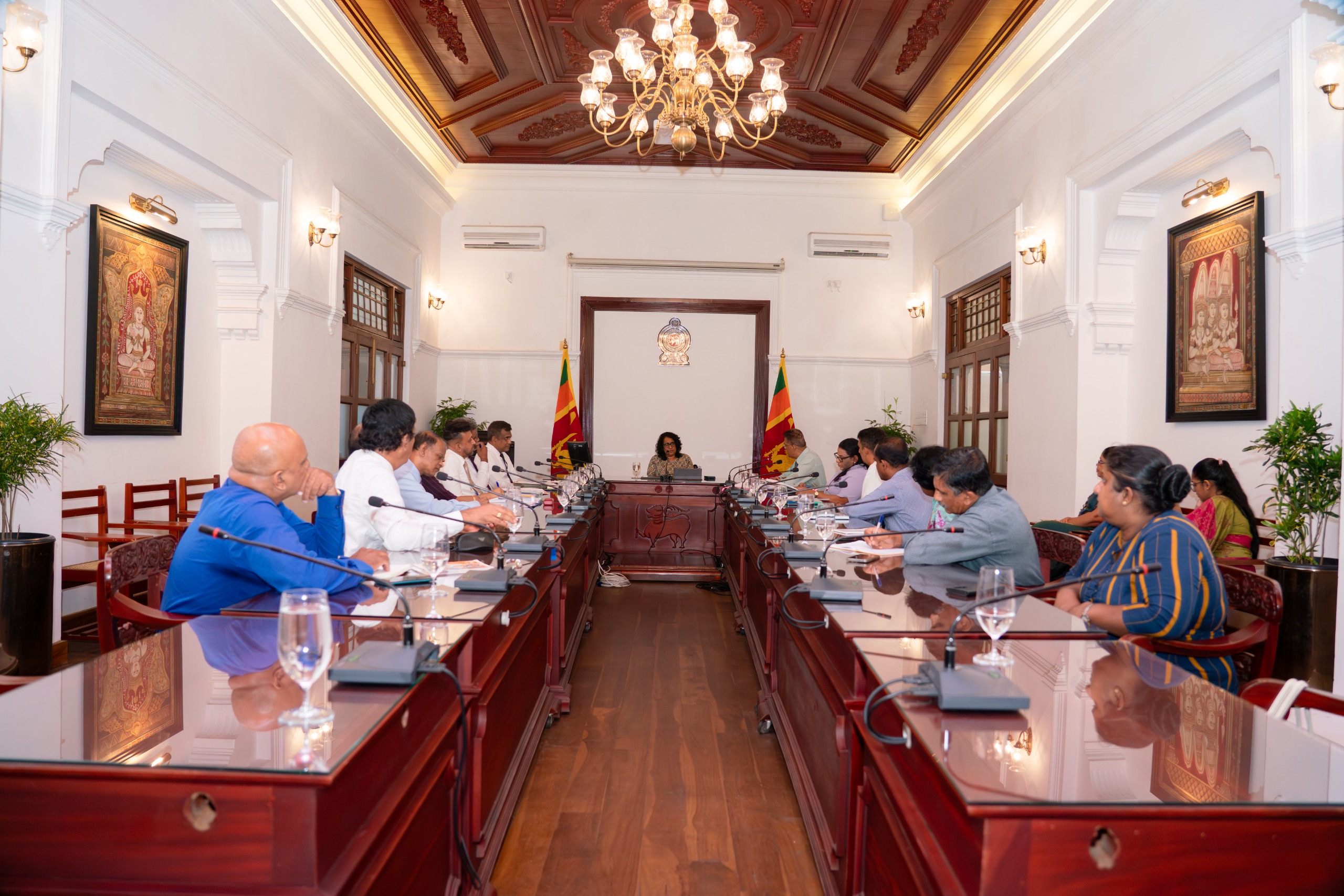
A discussion to review the current progress of the special committee appointed under the government’s policy proposals to establish a National Nursing University aimed at elevating the nursing profession in Sri Lanka to degree level was held on 23rd of March at the Prime Minister’s Office under the patronage of Prime Minister Dr. Harini Amarasuriya.
During the meeting, the Prime Minister inquired into the progress made by the committee in relation to the establishment of the Nursing University and paid attention to the issues and views presented by the committee members.
Emphasizing that establishing a university is a long-term and complex process, the Prime Minister pointed out the importance of advancing this project in line with higher education standards, without hasty decisions, while also taking into account the existing conflicts and challenges within the university system.
The meeting was attended by the Vice Chairman of the University Grants Commission, Professor K. L. Wasantha Kumara, representatives of the All Ceylon Nurses’ Association, and officials from the Ministry of Health and Mass Media.
(Prime Minister’s Media Division)
Latest News
Heat Index at ‘Caution level’ in the Western, Sabaragamuwa, Southern and North-western provinces and in Anuradhapura, Mannar, Vavuniya and Monaragala districts
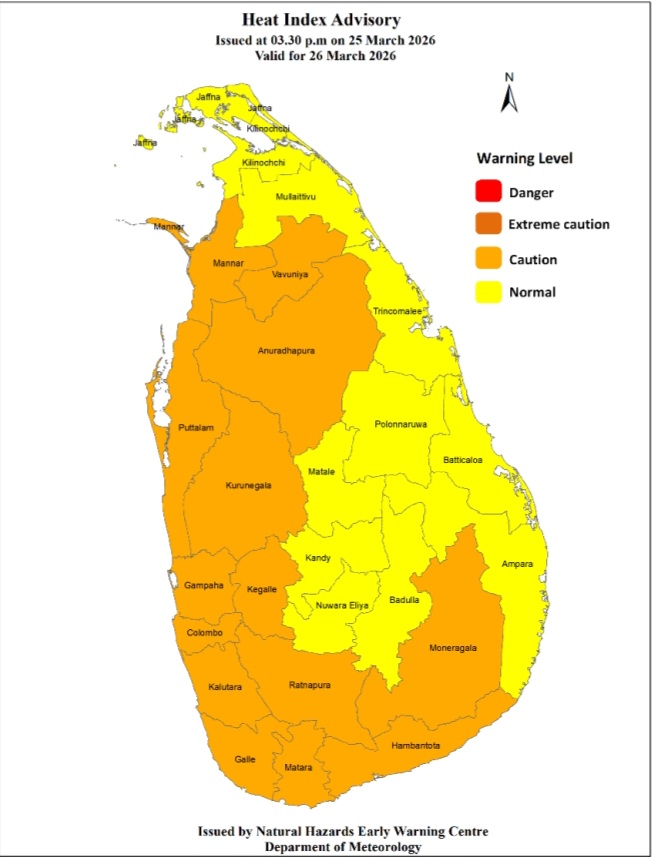
Warm Weather Advisory
Issued by the Natural Hazards Early Warning Centre of the Department of Meteorology
at 3.30 p.m. on 25 March 2026, valid for 26 March 2026.
The Heat index, the temperature felt on human body is likely to increase up to ‘Caution level’ at some places in the Western, Sabaragamuwa, Southern and North-western provinces and in
Anuradhapura, Mannar, Vavuniya and Monaragala districts.
The Heat Index Forecast is calculated by using relative humidity and maximum temperature and this is the condition that is felt on your body. This is not the forecast of maximum temperature. It is generated by the Department of Meteorology for the next day period and prepared by using global numerical weather prediction model data.

Effect of the heat index on human body is mentioned in the above table and it is prepared on the advice of the Ministry of Health and Indigenous Medical Services.
ACTION REQUIRED
Job sites: Stay hydrated and takes breaks in the shade as often as possible.
Indoors: Check up on the elderly and the sick.
Vehicles: Never leave children unattended.
Outdoors: Limit strenuous outdoor activities, find shade and stay hydrated.
Dress: Wear lightweight and white or light-colored clothing.
Note:
In addition, please refer to advisories issued by the Disaster Preparedness & Response Division, Ministry
of Health in this regard as well. For further clarifications please contact 011-7446491.

A strong Technical and Vocational Education and Training (TVET) system equips individuals with practical, relevant, and future-oriented skills helping to innovate responsibly towards a greener and sustainable future – PM

PM reviews progress of the committee appointed for the establishment of a National Nursing University

UN votes to recognise enslavement of Africans as ‘gravest crime against humanity’

Meta and YouTube found liable in landmark social media addiction trial

Showers expected in the Western and Sabaragamuwa provinces and in Galle and Matara districts after 2.00 pm.

Heat Index at ‘Caution level’ in the Western, Sabaragamuwa, Southern and North-western provinces and in Anuradhapura, Mannar, Vavuniya and Monaragala districts

‘Dates have the highest sugar content to fight Coronavirus’

Sunday Island 27 December – Headlines

#SundayIsland 17th December – Headlines

Sunday Island – 28th March

Sunday Island Headlines – 21 March

Sunday Island – 21st February – Headlines
-

 News2 days ago
Senior citizens above 70 years to receive March allowances on Thursday (26)
-

 Features4 days ago
Trincomalee oil tank farm: An engineering marvel
-

 News7 days ago
CIABOC tells court Kapila gave Rs 60 mn to MR and Rs. 20 mn to Priyankara
-
 Features7 days ago
Science and diplomacy in a changing world
-

 Features4 days ago
The scientist who was finally heard
-
 News2 days ago
Japanese boost to Sri J’pura Hospital, an outright gift from Tokyo during JRJ rule
-
 News2 days ago
CEB Engineers warn public to be prepared for power cuts after New Year
-

 News6 days ago
Colombo, Oslo steps up efforts to strengthen bilateral cooperation in key environmental priority areas