
News
Lanka won’t adopt reforms without int’l pressure – Japanese envoy


… corruption cited as one of the three issues faced by the country
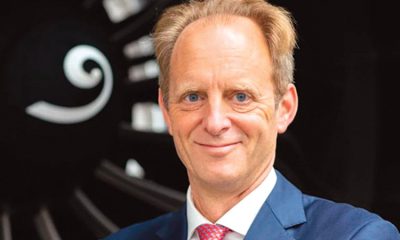
Japanese Ambassador Hideaki Mizukoshi Thursday (21) urged Sri Lanka to turn the continuing economic, political and social crisis into an opportunity to achieve success.
The Ambassador said that the country should take advantage of the continuing external pressure to adopt reforms, build-up competitive industries and take tangible measures to overcome corruption. Among those present were President Ranil Wickremesinghe, Governor of the Central Bank Dr. Nandalal Weerasinghe and former Speaker Karu Jayasuriya.
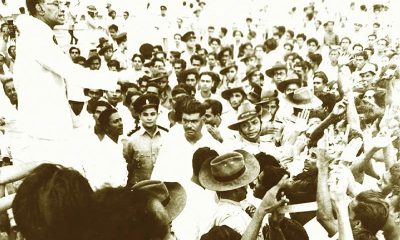
Ambassador Mizukoshi dealt with post-war developments in Japan after the conclusion of the second world war, the late JRJ’s role in Japan’s reintegration into the international community and modern Japan and comprehensive reforms before he explained how Sri Lanka could draw from the Japanese experience to turn things right.
Addressing an event held at Granbell, Marine Drive, Colombo, by the Indian Ocean think tank Geopolitical Cartographer, Ambassador Mizukoshi highlighted the following issues (a) Taking advantage of External Pressure: Firstly, taking advantage of external pressure. Looking back at Japan’s history, most reforms in Japan that were achieved would not have been possible without pressure from the international community. The reformist leaders of Japan, whether during the Meiji restoration period or under occupation after WWII, had made wise decisions for the future of the country under foreign pressure.
Today, Sri Lanka is trying to reform the economic system under the agreement with the IMF. Reforms such as tax reform, electricity reform, or SOE reform may be challenging and not always popular with citizens. However, viewing the utilization of such external pressure for the betterment of the country should not be seen as a weakness but as a testament to the wisdom of leaders. India, which went into financial crisis in 1991, went through structured adjustment of the IMF and World Bank. The economic reforms achieved at the time transformed India into a fast-growing economy. From an international perspective, agreements with the IMF serve as backing for Sri Lanka’s commitment to pursuing rational and consistent economic policies. Japan would not have supported the debt restructuring negotiation of Sri Lanka without agreement with IMF, which assures the consistency of Sri Lankan economic policy.
(b) Building up Competitive Industries: 2nd lesson from Japan’s experience that I can think of is importance of building up a competitive industry for economic growth. Sri Lanka is now at a crossroads.
This economic crisis can be utilized as a golden opportunity to transform and grow. Japan’s experience of the economic miracle shows that it is important to formulate its industrial policy to foster a competitive export industry. What can be the strong and competitive industries for Sri Lanka?
Sri Lanka’s economy has stabilized under the IMF programme. The inflation was contained to single digit and the GDP growth turned positive from the 3rd quarter of the last year. I commend the immense efforts of the current government and the people of Sri Lanka to bring about this economic stability in a very short time. However, without a competitive export industry, once Sri Lanka lifts its import restriction, there is a possibility of foreign currency shortage happening again.
Therefore, after achieving the stabilization, it is essential to build up a competitive industry that can push sustainable development of the country. In building up industries, Sri Lanka may learn lessons from Japan’s industrial policies. It is important not to protect a loss making industry with government money out of favoritism but to ensure a smooth transition from uncompetitive industry to more competitive industry.
(c) Overcoming Corruption: Thirdly, I would like to touch upon corruption problems because it is a challenge both for Japan and Sri Lanka. Observing Sri Lankan politics since I came here, I would like to point out two aspects of problems of corruption in Sri Lanka.
First, corruption is a source of distrust of leaders of the country by the people, and it discourages people from being responsible citizens of the country when leaders are corrupt. It gives convenient excuses to tax payers for tax evasion.
Secondly, it is very harmful when Sri Lanka wants to attract foreign investment.
Foreign investors want a transparent and predictable business environment. Japanese companies are nowadays strictly observing the compliance obligation and therefore never offer bribes or kickbacks. If that kind of culture remains in Sri Lanka, there is no prospect of Japanese investment coming into Sri Lanka.
I am saying this because I would like to see more Japanese investment in Sri Lanka to support economic growth. I hope, in Sri Lanka, ongoing anti- corruption reforms draw lessons from various countries, including Japan, to develop effective anti-corruption mechanisms. We would like to strongly support on going Sri Lanka’s effort in this field and we are funding the UNDP project for the enhancement of the Commission to Investigate Allegations of Bribery or Corruption (CIABOC).
There are many other lessons that can be drawn from Japanese experiences and we are ready to provide opportunities for Sri Lankan people to learn from them through JICA and other means.









By Anuradha Hiripitiyage
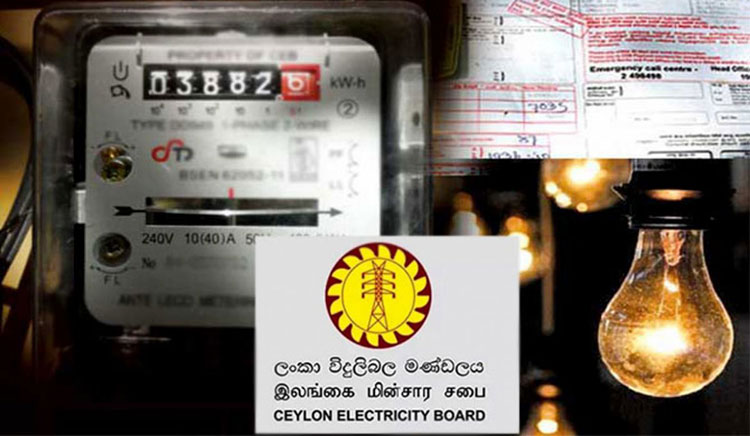
Electricity tariffs should be reduced by between 3 and 5 percent instead of being increased by 2.88 percent in the fourth quarter, as proposed by the National System Operator (NSO), Electricity Consumers’ Association Secretary Sanjeewa Dhammika said.
Addressing a media briefing in Maradagahamula, Divulapitiya, Gampaha, yesterday (16), Dhammika said a proper assessment of electricity generation costs, including the contribution of hydropower, could justify a reduction in tariffs.
He said the NSO had sought approval from the Public Utilities Commission of Sri Lanka (PUCSL) for a 2.88 percent tariff increase, which was expected to generate an additional Rs. 4,438 million.
However, the Commission had indicated that an increase of only 1.46 percent was warranted, amounting to Rs. 2,245 million, he said, adding that even this increase was unnecessary.
Dhammika alleged that the proposed revision sought to pass on to electricity consumers the financial burden arising from the non-arrival of five coal shipments and failed tenders.
“The Government had said that the burden of coal-related losses would not be passed on to the public. It is therefore unjust to make consumers bear these costs,” he said.
He pointed out that the PUCSL had forecast that hydropower would account for 32.34 percent of total electricity generation in the coming quarter, while the cost of such generation would represent only 3.45 percent of the overall cost of electricity production.
Consumers should benefit from the lower cost of hydropower generation rather than bear the burden of more expensive thermal power generation, he said.
Dhammika also questioned the inclusion of Rs. 669 million in capacity charges that had not been approved by the PUCSL, as well as a further Rs. 1,069 million to repay loans relating to incomplete projects.
Including such charges in the proposed tariff revision was unjustifiable, he said.
The PUCSL has given the public until October 30 to submit their views on the proposed tariff revision.
Dhammika said the possibility of increased hydropower generation in the coming weeks, as reservoir levels rise, should also be taken into account when determining electricity tariffs.
He maintained that tariffs could be reduced by 3 to 5 percent if hydropower generation was properly assessed and coal-related losses and unapproved charges were excluded from the calculations.
He further claimed that electricity tariffs could be reduced by as much as 10 percent through the promotion of renewable energy and the effective use of solar power and battery storage systems.
The Electricity Consumers’ Association urged the Government to withdraw the proposed tariff increase, insisting that consumers should not be made to bear costs arising from coal supply problems and other disputed charges.

By S.K. Samaranayake
Most Ven. Warakagoda Sri Gnanaratana Mahanayake Thera of the Asgiri Chapter has called for the immediate release of Ven. Galagodaaththe Gnanasara Thera, who is currently serving a prison sentence, following a court ruling.
The Asgiri Mahanayake made the appeal when a delegation of senior prison officials, including Assistant Commissioner of Prisons and Director of Operations Senaka Pallegedara, called on him on the 16th.
During the meeting, the prelate warned that the continued incarceration of Ven. Gnanasara Thera could lead to a volatile situation and cause public agitation.
Responding to the appeal, the prison officials informed the Mahanayake Thera that the authority to order the release of Ven. Gnanasara Thera did not rest with the Prisons Department but with the President.
Other senior prison officials, including Rajeev Srimal Silva, Sampath Warnakulasooriya and Mangala Welivita, were also present at the meeting.
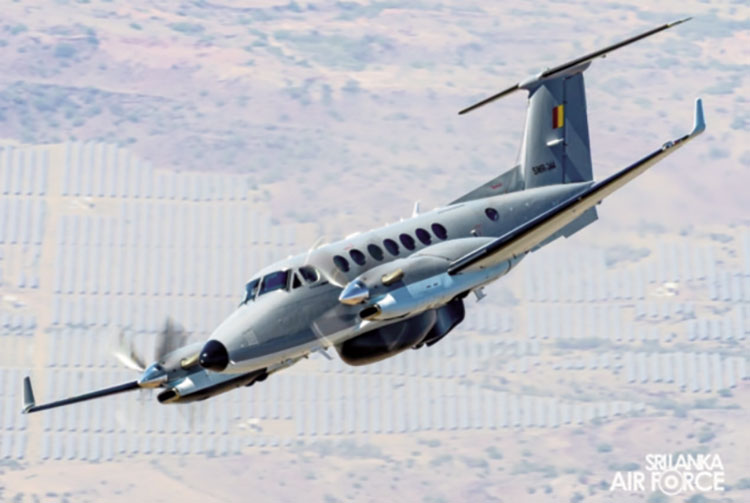
The Sri Lanka Air Force participated in a multinational air exercise in India, alongside the air forces of the United States, France and Germany, as Sri Lanka continues to expand military cooperation with foreign countries.
A Sri Lankan Air Force Beechcraft King Air 360ER aircraft, and a six-member crew, took part in Exercise Tarang Shakti 2026, held at Air Force Station Jodhpur, from September 26 to October 12.
The exercise was hosted by the Indian Air Force, under the theme “Power in Partnership,” and involved Australia, Bangladesh and the United Arab Emirates, among other participating countries.
According to the Sri Lanka Air Force, the exercise was aimed at enhancing operational cooperation and interoperability among participating air forces and providing opportunities to share tactics and operational experience.
India’s public broadcaster reported that the exercise included training and experience in planning and conducting joint multinational combat operations, including counter-air, air defence, reconnaissance and air-to-air refuelling missions.
The exercise also involved 32 countries as observers.
Sri Lanka’s participation comes amid increased military engagement with foreign partners. India and Sri Lanka recently exchanged 240 military personnel under a tri-service exchange programme.
Sri Lankan military personnel also recently participated in a counter-terrorism exercise with Russia, while a senior US Army Pacific official visited Sri Lanka and discussed opportunities for greater joint training.

Trump claims US Navy blockade stops Iranian ships in Hormuz

Showers above 75 mm are likely at some places in the Western, Sabaragamuwa, Central and North-central provinces and in Trincomalee and Mullaitivu districts

Cut power bills by 3-5%, don’t hike them, consumers demand

Asgiri Mahanayake calls for immediate release of Gnanasara Thera

Lanka Air Force joins multinational exercise in India

Shiranthi granted bail in ‘Siriliya Saviya’ fund probe

‘Dates have the highest sugar content to fight Coronavirus’

Sunday Island 27 December – Headlines

#SundayIsland 17th December – Headlines

Sunday Island – 28th March

Sunday Island Headlines – 21 March

Sunday Island – 21st February – Headlines
-

 News6 days ago
Sri Lanka escalates anti-graft drive with Shiranthi’s jailing
-

 Latest News5 days ago
Farhan and Sadaqat help Pakistan seal series in style
-

 News6 days ago
Iranian ships stranded, Lanka fears US sanctions
-

 Latest News4 days ago
Nissanka’s return headlines Sri Lanka’s Test squad against Pakistan
-

 Features5 days ago
Intake 16: 45 years of duty and honour
-

 News5 days ago
Malwathu Chapter issues statement on talks with President over Gnanasara Thera’s robes
-

 News6 days ago
Navi Pillay’s Lankan affairs in focus as she wins 2026 Nobel Peace Prize
-

 News5 days ago
CP alleges NPP has taken the blame for illegal US sanctions on Iranian vessels