
News
Lanka gives top priority to sustenance of international maritime services

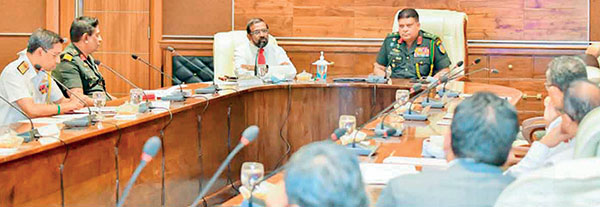
Representatives of four leading bodies associated with seafaring assignments and maritime services in Lankan seas, Ceylon Association of Shipping Agents (CASA), Colombo Logistics, Avant Garde and Rakna Lanka (Pvt) Ltd during a high level meeting co-chaired by Secretary to Ministry of Foreign Relations, Admiral (Retd) Prof Jayanath Colambage and Head of the National Operation Centre for Prevention of COVID- 19 Outbreak, Chief of Defence Staff & Commander of the Army Lt. Gen. Shavendra Silva on Monday (17) explored possibilities of continued sustenance of their maritime services, such as ship crew changes, security for floating ships against pirates, etc adhering to best health practices.
Discussions pointed out that the Sri Lanka Navy while playing an exemplary operational role hand in hand with those maritime organizations enormously helped evacuation of hundreds of ship crew members at sea, some of who remained affected with COVID-19 while on board their commercial vessels. The importance of continuing such practices for commercial purposes was highlighted during the proceedings.
Due to the pandemic, the entire industry faced a huge setback and lost a fair share of their profits. Co-chairs attentively gave ear to their grievances and confronting issues and assured the government’s backing for the initiative. Similarly, co-chairs highlighted the significance of preparing a strategic mechanism through which common concerns of those sear farers could be addressed or resolved and their professions well-guaranteed.
The Navy during the height of the epidemic set a record as the first such service provider in the whole of the South Asian region rendering an exemplary service for crewmen at sea, and facilitated stranded ship crew members in sailing ships to sign off or re-join onboard in the seas off Colombo as directed by respective authorities.
The attendees submitted their views and operational proposals for further discussion, review and decision-making during the cordial meeting.
Maj. Gen. Harendra Ranasinghe, Director General Operations Sri Lanka Army, Rear Admiral Y.N Jayarathna, Director General Operations Sri Lanka Navy, Mr H.S Hettiarachchi, Head of Airport Manager, Dr Samitha Ginige, Consultant Epidemiologist, Dr Roshan Sampath and those representatives of shipping agencies, including Mr Ashan Welagedara, Mr Ralph Anandappa, Mr Shano Sabar, Mr Iqram Cutilian from CASA, Major (Retd) Nishshanka Senadhipathi, Chairman, Commander (Retd) Nandana Diyabalanage, Brigadier (Retd) Nishantha Wadugodapitiya, Maj. Gen. (Retd) Rasika Karunathilake of Avant Garde and Mr Eric Ambarangoda, Maj. Gen.(Retd) Chargi Gallage of Colombo Logistics were associated with the day’s arrangement at the Commander’s office.
Brigadier Haren Peris, Brigadier Hirosha Wanigasekara, Director Supply and Transport, Brigadier Wandhitha Mahinkanda, Director Real Estate and Quartering, Colonel Saveen Semage, Deputy Director, Directorate of Army Preventive Medicine and Mental Health Army Headquarters, Brigadier Vipula Chandrasiri, Brigadier Coordination National Operation Centre for Prevention of COVID – 19 Outbreak (NOCPCO) were also at the venue.


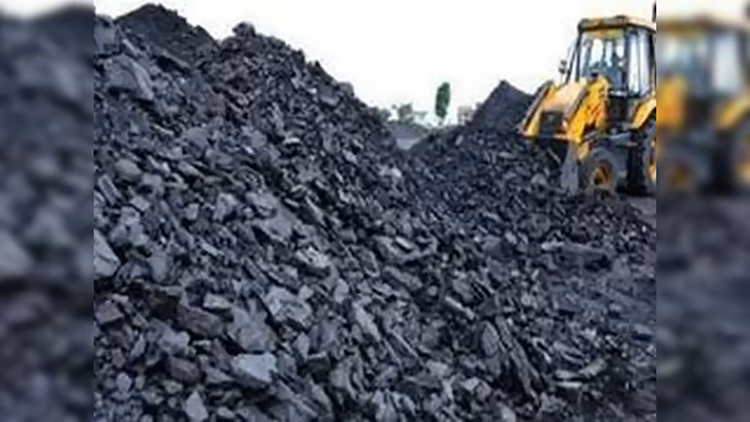
The scam involving the import of substandard coal has become the litmus test for the NPP Government, says the Frontline Socialist Party.The substandard coal scam has become the litmus test for the NPP government’s integrity and transparency, Frontline Socialist Party (FSP) Education Secretary Pubudu Jayagoda said on Thursday, alleging serious irregularities and contradictions in the government’s handling of coal procurement for the Lakvijaya Power Plant.
Addressing the media in Colombo, Jayagoda strongly rejected recent statements made by Tilvin Silva, General Secretary of the JVP, during an interview with a state television channel on the ongoing coal tender controversy. He said several of Silva’s claims were factually incorrect and echoed earlier statements made by the Minister of Power and Energy that had already been abandoned after being proven false.
“There are serious inaccuracies in the views expressed by Tilvin Silva. Some of these false points were first raised by the Power Minister a week or two ago, but he stopped repeating them once we produced documentary evidence,” Jayagoda said, adding that the JVP General Secretary appeared to be “not up to date with the facts.”
Jayagoda rejected claims that coal had previously been purchased without calling for tenders from a politician’s company at inflated prices. He said that since the Lakvijaya Power Plant commenced operations in 2008, tenders had been called annually and contracts awarded to the lowest bidder.
He also dismissed assertions that no tenders were called in 2023. “The Power Minister initially made this claim, too, but stopped after we presented the tender advertisements,” Jayagoda said. He questioned contradictory statements made by government representatives, pointing out that while Silva claimed no tender was called in 2023, references to 2023 tender specifications had been publicly cited by Deputy Minister Kumara Jayakody.
“If no tender was called in 2023, how were tender specifications published that year?” Jayagoda asked, describing the claims as mutually contradictory.
According to Jayagoda, tenders were, indeed, called in 2023 and the contract was awarded to Coral Energy. When that company failed to supply coal on time, the supply responsibility was transferred to Black Sand. He further rejected claims that no tenders were called in 2024, explaining that during the bidding process a company named Potentia had offered a lower price than the initial lowest bidder.
“Based on approvals from the Technical Evaluation Committee, the Procurement Committee, the Cabinet, and finally the Attorney General, coal was purchased from the lowest bidder,” he said, adding that any doubts regarding the legality of the process could be investigated through proper legal channels.
However, Jayagoda stressed that the controversy was not merely about whether tenders were called, but about how the process was manipulated. He listed several concerns raised by the FSP from the outset, including a four-month delay in calling for tenders, changes to tender specifications, and the tender period being reduced by half.
“Urgency was cited as the justification for these changes, yet there was a six-week delay in awarding the tender. That clearly shows there was no real urgency,” he said.
Jayagoda also alleged that laboratory reports were concealed when substandard coal shipments were imported, in order to protect the supplying company. He said that despite a contractual clause requiring the tender to be cancelled if two shipments failed quality standards, the government continued with the order. He further accused the authorities of violating the agreement by approving emergency purchases in a way that benefited the supplier.
“The entire process is suspicious,” Jayagoda said. “A Minister will not resign unless they admit to fraud. But it is the responsibility of the President and the government to conduct an independent investigation, determine whether fraud has occurred, and remove the Minister if wrongdoing is established.”
He concluded by reiterating that the coal tender controversy would serve as a decisive test of the government’s commitment to accountability. “This is the litmus test for the integrity and transparency of the government,” Jayagoda said.

A consignment of 10 Bailey Bridges arrived in Colombo from Visakhapatnam aboard the Indian Navy ship INS Gharial and was formally handed over at a ceremony held on 05 February.The bridges were handed over by the Acting High Commissioner of India to Sri Lanka, Dr. Satyanjal Pandey, to Deputy Minister of Ports and Civil Aviation, Janitha Ruwan Kodithuwakku.
The additional Bailey Bridges have been provided under India’s grant assistance of USD 5 million for post-Cyclone Ditwah reconstruction, aimed at strengthening critical connectivity infrastructure in affected areas. Another consignment, carrying the remaining bridge components, is expected to arrive shortly.
The supply of Bailey Bridges forms part of India’s comprehensive USD 450 million Reconstruction and Rehabilitation Package announced by India’s External Affairs Minister, Dr. S. Jaishankar, during his visit to Sri Lanka, following Cyclone Ditwah.
The newly supplied bridges are to be installed at various locations across the country. Technical assessments for installation are being carried out by Indian Army engineers, in close coordination with the Sri Lankan Army and the Road Development Authority (RDA).
India has previously supplied four Bailey Bridges to Sri Lanka, two of which were installed in the Kilinochchi District and two along the Kandy–Ragala Road. These bridges have played a key role in restoring connectivity in difficult and hilly terrain, improving access for local communities and facilitating the resumption of essential services, livelihoods, and economic activity.

Former Secretary to the Ministry of Mass Media and former Chairman of the Telecommunications Regulatory Commission of Sri Lanka (TRCSL), Anusha Palpita, was further remanded until 20 February by the Colombo Chief Magistrate’s Court.
The Court issued this order after considering the facts presented by the Bribery Commission and the attorneys representing the suspect.
Palpita was taken into custody and subsequently produced before the court on 23 January in connection with an investigation conducted, based on information received by the Bribery
Commission regarding the failure to disclose the source of assets amounting to Rs. 46 million, the Commission stated.
According to the Bribery Commission, Anusha Palpita arrived at the Commission on 23 January 23 was taken into custody after recording his initial statement.
The arrest was made on the charge of accumulating significant assets and property, exceeding his income, during a specific period, following an investigation into assets gathered beyond his legal earnings, within that time frame.

Coal scam has become litmus test for NPP: FSP

INS Gharial delivers 10 Bailey Bridges to Lanka

Anusha Palpita further remanded until 20 Feb.

SC deems proposed Parliamentary Pensions (Repeal) Bill consistent with Constitution

Colombo DC puts off verdict in case filed by MP Dayasiri to allow him to function as SLFP General Secretary

GREAT 2025–2030: Sri Lanka’s Green ambition meets a grid reality check

‘Dates have the highest sugar content to fight Coronavirus’

Sunday Island 27 December – Headlines

#SundayIsland 17th December – Headlines

Sunday Island – 28th March

Sunday Island Headlines – 21 March

Sunday Island – 21st February – Headlines
-

 Business4 days ago
SLIM-Kantar People’s Awards 2026 to recognise Sri Lanka’s most trusted brands and personalities
-

 Business6 days ago
Altair issues over 100+ title deeds post ownership change
-

 Business6 days ago
Sri Lanka opens first country pavilion at London exhibition
-

 Business5 days ago
All set for Global Synergy Awards 2026 at Waters Edge
-
 Business4 days ago
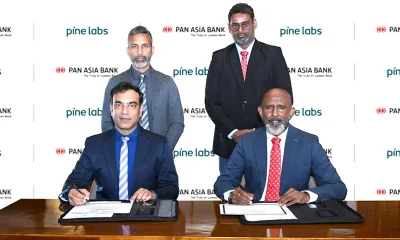
API-first card issuing and processing platform for Pan Asia Bank
-
 Business6 days ago
ESOFT UNI Kandy leads the charge in promoting rugby among private universities
-

 Editorial2 days ago
All’s not well that ends well?
-

 Features2 days ago
Phew! The heat …