
News
Lanka can overcome its problems while avoiding foreign debt traps Prof.TISSA VITARANA

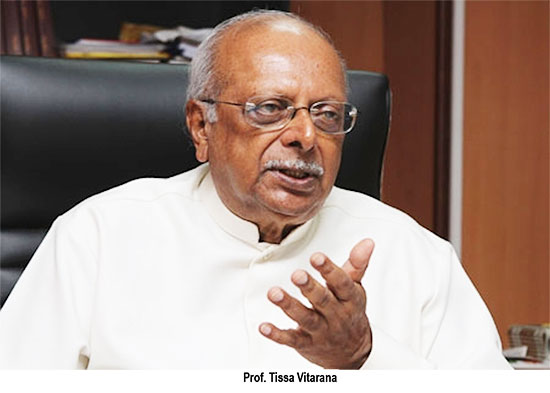
Sri Lanka faces a severe economic, social and political crisis. More than sixty per cent of families have incomes below the poverty line and manage on one or at most two meals per day, many going to bed hungry. The level of malnutrition is 18.4%, close to twenty per cent. That is one out of five children are malnourished, and both mental and physical development will be retarded, with grave consequences to our future generation. The floating of the Rupee and the widening budget deficit has made matters worse. The present SLPP government has aggravated this situation by publicly stating that there will be no price control and traders are free to charge whatever they like. The trader middle men are making enormous profits and prices , specially of food, are going sky high. The massive printing of currency notes, without a commensurate increase in production, has led to very high inflation. Incomes have remained static or even dropped due to staff cuts or closures affecting the private sector. On this May Day, international Labour Day, one is sad to see that the trade union movement is too weak to fight back. The horrible contract labour system has undermined the strength of the unions. On this May Day the LSSP and the socialist Left state that we are categorically opposed to the above policies and are ready to support the workers to rebuild the Trade Union movement to what it was in the 1970s. Dr.NM Perera as Finance Minister in the 1970 Coalition Government overcame the severe economic crisis (when there was little or no local industry and the country depended on imports, and the price of a ton of sugar rose from 40 pounds to 600 pounds), not only balancing the budget but even showing a surplus. Through a dual value for the Rupee, locally and in relation to the dollar, the rupee and the country remained stable, and exports were promoted.
Besides the above rupee crisis, there is a massive dollar crisis. Most governments, whether green or blue, have resorted to loans from foreign sources to bridge the adverse foreign trade gap. As a result we have a massive foreign debt burden of US$ 52 Billion and the cost of debt servicing alone is about US $ 6 Billion per year. But our foreign reserve which averaged around US $ 7 to 8 Billion is now down to well below US $ 1 Billion, nearer 500 million. Internationally accepted rating agencies like Fitch and Moody have dropped us down to the bottom value of a single C in their scale. This means that our importers cannot get their requirements quickly for the market by sending letters of credit (LCs) through our major banks. They have to send dollars. But if there are no dollars available in the banks in the country the inevitable result is an acute shortage of medicines that endanger the lives of people. The import of essential food items, of fuel, of LP gas etc. is the result. More and more queues to torture the people, the middle class as well. Galle Face and “Gota go home” is the inevitable outcome. Is it that we in Sri Lanka cannot produce these items.
Development of the national economy can make us self- sufficient in food, and healthier through a gradual shift to proper organic farming ( Eco- Agriculture). The Medicinal Drug policy of Prof.Senaka Bibile ( a member of the LSSP) enabled every Government Hospital to provide every medicine to practically every disease free of charge in the 1970 – 1975 Coalition Government period. More than 100 Third world countries have adopted his policy under WHO leadership. Some like Bangladesh have become leading exporters. Senaka created the State Pharmaceutical Corporation (SPC)for the bulk purchase of all Sri Lanka’s entire needs at rock bottom prices under the pharmaceutical name. An off-shoot, the SPMC, manufactured over 50 essential and much used drugs. A good pharmaceutical industry will prevent patients’ lives being put at risk as at present, and also give many jobs for our youth and earn dollars abroad.
The import of LP Gas, can be replaced by popularizing the Bio-gas cookers developed by the Government owned NERD institution in Jaela. The team of engineers and technicians led by Sunil Weliwita have developed this so that the energy is obtained from kitchen waste and trees and plants in the garden. There is no need to pay nearly Rs 5,000 for imported LP gas as at present. We only need some Sri Lankan entrepreneurs to invest in setting up some factories to mass produce them. Under the theme ” Smart Home Garden” it not only achieves waste disposal, but also helps to produce water.
One of the major factors provoking the peoples’ protest is the cut in electricity supply, often at unexpected times, not according to the published time schedules. This can be better organized. The shift to renewable energy ( solar, wind, and water has been extremely slow. This must be speeded up. The anaerobic fermentation of all types of waste collected in towns can be used to produce good organic fertilizer and also bio-gas. We tried to introduce this to Colombo but it failed, but I am happy that it has worked in Yatiyantota and Balangoda and a few other towns.
There is no need to go begging to the IMF for dollar loans. These take over 3 months to arrive and the amounts are small e.g. US $ 300 to 600 million. The conditions are harmful to us e.g. the insistence that Sri Lanka permits uncontrolled imports, the major cause of our present problem. We get into more debt. Instead what should be done is to negotiate a Moratorium on our debt with our creditors. This is common practice when countries are faced with crises like ours. I am told that Uruguay and Argentina have done so this time. The principle is to delay our annual debt servicing payments, which was US $ 6 Billion last year, for about 5 years. This would mean that we save about US $ 30 Billion , which can ensure our peoples’ needs as well as be used for productive development. Why has the SLPP Government not done this yet?
Why are we sending out valuable raw material at rock bottom prices, as was done during British rule. We have the best graphite in the world in Bogala and other places which is being converted into the wonder material, Graphine, which is being used to produce a whole range of goods in UK and Europe. The latter is spending over one billion Euro on related research. Why are we sending the mineral rich earth from Pulmoodai in ship loads abroad. The Ilmenite alone is a source of Titanium dioxide, a base for all paints. From the latter is obtained Titanium , a highly priced substance essential for the aeronautics industry. What about the Phosphate deposits in Eppawela that the McMorran Co. of USA tried to steal from us for a pittance. But the LSSP stopped with our former General Secretary, Batty Weerakone, defeating the move in the Supreme Court.
We have so many raw materials as the basis for industry. As the Minister of Science and Technology I targeted setting up one technology transfer centre in in each Administrative Division. I succeeded in 263 out of the 341 ( LTTE was a obstacle). In the 5 years I was Minister 12,643 entrepreneurs emerged, all SMEs, a majority also providing jobs. I am glad to learn that more than a thousand of them are exporting their products. Hi Tech is important for large industry. I planned and developed SLINTEC as the only Nanotechnology Centre in South Asia, the 18th in the world. One benefit is that Dr. Kottegoda and her team have produced in a pilot plant, nanoparticles with 43% nitrogen. But our SLPP Government chooses to buy from India Nanoparticles with only 4.7% Nitrogen at a huge cost.
When are we going to think of developing our country, and not to line certain peoples’ pockets. It is also high time that the tax policy is changed and the upper limit raised from 14% to 75%.


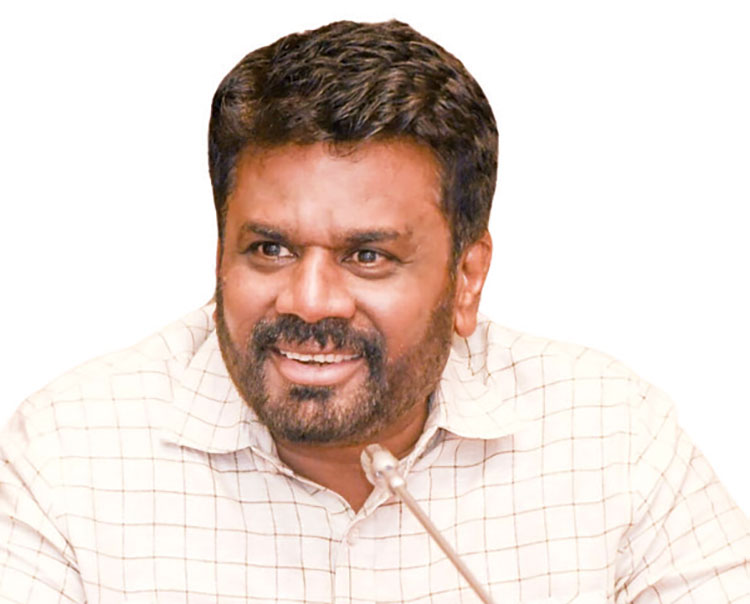
The Presidential Secretariat (PS) yesterday said that prison regulations concerning Buddhist monks serving prison sentences were expected to be adopted within the next two weeks.
The PS said: “Once they come into effect, arrangements will be made for Buddhist monks to be taken outside prison in their robes, based on the recommendation of the relevant Nikaya or chapter.”
The process to amend prison regulations was initiated on 08 October following discussions between President Anura Kumara Dissanayake and the Maha Sangha. The President called the meeting amidst controversy over producing General Secretary of Bodu Bala Sena (BBS) Ven. Galagodaaththe Gnanasara in civilian attire in court.
A special five-member Committee was in the process of studying the current regulations and standing orders under the Prisons Ordinance, the PS said.
The Committee is chaired by Prince Senadheera, Secretary to the Ministry of Buddhasasana, Religious and Cultural Affairs. Its other members are Piyumanthi Peiris, Additional Secretary to the Ministry of Justice, Wasantha Ariyaratne, Additional Secretary to the Ministry of Public Administration, R. M. G. Senaratne, Commissioner-General of Buddhist Affairs, and A.C. Gajanayake, Commissioner-General of Prisons.
The first meeting of the special Committee was held at the Presidential Secretariat on the 9th, chaired by Prince Senadheera. Attorney-at-Law Harshana Nanayakkara, Minister of Justice and National Integration, provided the necessary policy guidance for the Committee’s work.
The proposals concerning Buddhist monks would be presented to the Maha Sangha by the middle of next week to obtain their views and recommendations before their implementation, PS stated.

The Communist Party of Sri Lanka (CPSL) has alleged that the ruling UNP, in a ridiculous bid to whitewash illegal US sanctions on Iranian oil carriers stranded off Sri Lanka, has taken on itself the blame for refusing to supply humanitarian aid to the trapped crews of the oil tankers.
The text of the statement issued by Dr. G. Weerasinghe,
General Secretary, CPSL: “The Communist Party of Sri Lanka condemns the attempts by the USA to prevent essential supplies of food and water to the 19-20 Iranian oil tankers stranded off the coast, which are running short of food, fuel, and fresh water. It urges the Government of Sri Lanka to face up to the criminal actions of the US Government and do its duty under international humanitarian law.
On 30 September 2026, the Wall Street Journal reported that US officials had threatened Sri Lanka with sanctions if it continued supplying the tankers. These tankers (stranded about 24 km off Sri Lanka, within the Exclusive Economic Zone) which already discharged their cargoes, are empty and unable to return to Iran owing to the illegal war being waged against that country by the USA and Israel.
In response to this report, on 4 October, Foreign Minister Vijitha Herath denied that Washington put pressure on the Government of Sri Lanka which, he claimed, always abides by international maritime law. However, he clarified that the Government would enforce US sanctions.
A US Embassy spokesman had earlier stated that Washington is working with allies to cut off “illicit Iranian revenue,” warning that supplying fuel, food, or provisions to sanctioned vessels could expose companies and individuals to US sanctions, including civil or criminal penalties.
Furthermore, from 9-11 September, the US Embassy in Colombo carried out a three-day maritime sanctions compliance workshop. Officers of the Sri Lanka Navy and Coastguard, as well as officials of the Ministry of Defence, Central Bank, Ports Authority and Merchant Shipping Secretariat, participated in this workshop. The officials were warned that any services (including fuel, food, or water) rendered to US-sanctioned vessels, such as the Iranian-linked tankers stranded off Sri Lanka’s coast, could expose companies and individuals to secondary sanctions, civil penalties, or criminal liability.
In fact, it is actions of the USA which are illicit. The US-imposed unilateral and secondary sanctions violate international law, sovereign equality, and the principle of non-intervention. Furthermore, the unprovoked US-Israeli aggression against Iran itself, which had shown no belligerent intent, is illegal in international law. Participation of government officers in the workshop itself is controversial.
According to unofficial reports, Sri Lanka’s national security establishment objected to the demands made by US officials and urged the government to lodge a protest with Washington, pointing out that under UNCLOS Article 98, SOLAS 1974, and the SAR Convention 1979, Sri Lanka is obligated to assist the crews.
However, the response of the National People’s Power (NPP) regime has been to attempt to whitewash the illegal actions of the USA and to take on itself the blame for refusing to supply humanitarian aid to the trapped crews of the oil tankers.
The pusillanimous behaviour of the NPP regime rips aside any pretence that it is in any way progressive or patriotic. Together with its major constituent, the Janatha Vimukthi Peramuna (JVP), it stands exposed as the handmaiden of US President Donald Trump’s reckless, warlike and imperialist foreign policy establishment. It begs the question whether the Government has signed secret war-related deals with the USA and thereby ditched Sri Lanka’s 70-year history of non-alignment.
The Communist Party of Sri Lanka, therefore, condemns these illegal attempts by the USA to prevent Sri Lanka from carrying out its humanitarian duty. It calls upon the Government of Sri Lanka to abide by international humanitarian law, work-out suitable strategies and to supply the stranded crews with essential supplies, including food and water. It also calls upon the Government to reveal any secret deals it has entered with the USA.”
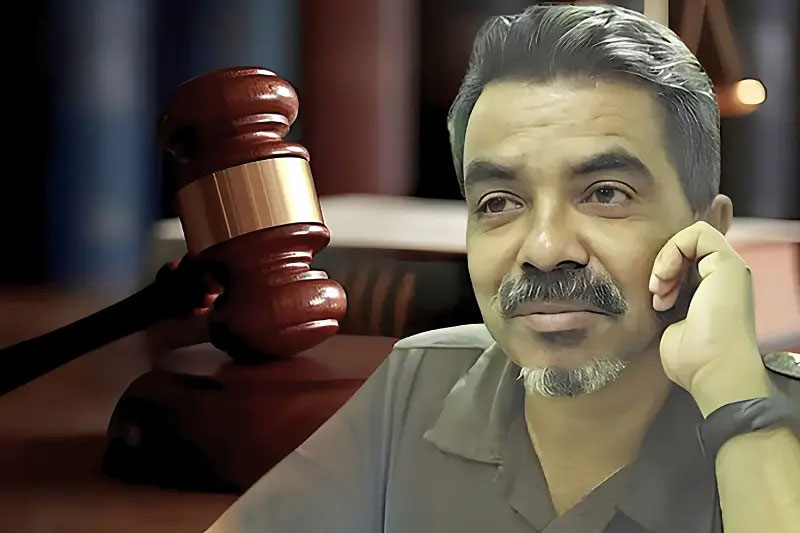
An ex-LTTE cadre Sumathipala Suresh Kumar, alias Thavendran ‘Murali’, has told a three-member bench of the Colombo High Court, hearing the disappearance of media personality Prageeth Ekneligoda, that during the war they discussed plans to assassinate President Mahinda Rajapaksa and a group of government people. The alleged meeting took place in Habarana.
The bench consisted of A.G.U.S. N. K. Seneviratne (Chairperson), Dr. Nalin Hewawasam and Lakmali Hewawasam.Kumar said so giving evidence as the fourth witness on behalf of first, second and sixth accused in this case.
Ekneligoda disappeared on the eve of 2010 January 26 presidential election.
Kumar told court that Ekneligoda proposed to fire a missile at an aircraft carrying President Rajapaksa and other top people. There had been another person, identified as Nadan, there.
Asked by the prosecution whether he served as a leader of LTTE intelligence at the time he met Ekneligoda, Kumar said that he was a prisoner at that time. The witness claimed that he had gone with the Army and it was his first visit to that place where the meeting took place.
When the prosecution proposed that what he said was not true, Kumar denied that.
The nine accused are Army officers and men, including Lieutenant Colonel Shammi Arjun Kumararatne. The others are R.M.P.K. Rajapaksa alias Nathan, W.V. Priyantha Dilanjan Upasena alias Suresh, Seneviratne Mudiyanselage Ravindra Rupasena alias Ranji, Yapa Mudiyanselage Chaminda Kumara Abeyratne, Seneviratne Mudiyanselage Kanishka Gunaratne, Aiyasami Balasubramaniyam, Dangaha Gamaralage Tharanga Prasad Gamage and T.E.R. Peiris.
The fourth witness surrendered to the Army in May 2009 and during investigations it transpired that he was used by Military Intelligence to contact Ekneligoda in a bid to ascertain his intention during the presidential polls campaign.

New prison regulations for monks serving jail terms soon: President’s Office

CP alleges NPP has taken the blame for illegal US sanctions on Iranian vessels

Ex-Tiger witness claims Ekneligoda proposed to fire missile at MR’s plane

Chandrasekaran welcomes Indian stand of Katchatheevu

Alleged killer of couple apprehended

19 ex-ministers convicted in CIABOC cases under NPP rule

‘Dates have the highest sugar content to fight Coronavirus’

Sunday Island 27 December – Headlines

#SundayIsland 17th December – Headlines

Sunday Island – 28th March

Sunday Island Headlines – 21 March

Sunday Island – 21st February – Headlines
-

 Features6 days ago
Preventing grievances from becoming communal
-

 Features4 days ago
The Sri Lankan who made Scottish history
-

 Sports4 days ago
Nissanka absence opens door for Sri Lanka’s young guns
-

 News5 days ago
Gnansara Thera to be assigned to prison printing section: Officials
-

 News3 days ago
NDB fraud Rs 60mn more than reported
-

 News3 days ago
Removing monk’s robes matter for Sangha to decide: Mahanayake Theras
-

 Features4 days ago
Future of Sri Lanka’s state university system: Should it be shut down and reopened?
-
 News5 days ago
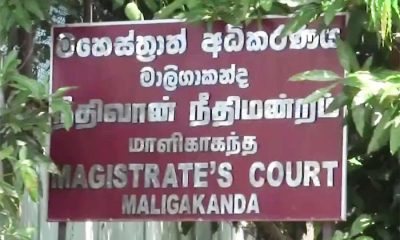
OIC of FCID summoned before Maligakanda Magistrate