
News
Lanka begins 2026 with robust export growth


Sri Lanka’s export sector commenced 2026 with a strong momentum, recording a robust year-on-year growth of 13.71%, signalling a renewed momentum in external trade performance, the Sri Lanka Export Development Board (EDB) stated.
According to statistics released by the Sri Lanka Customs, together with estimated export figures for gems and jewellery, petroleum products, and services, total export earnings reached US$ 1,532.6 million.
The positive performance reflects broad-based growth across key export sectors, improving global demand conditions, and sustained national efforts to enhance export competitiveness at the outset of the year, the EBD noted.
Commenting on this achievement, Mangala Wijesinghe, Chairman and Chief Executive Officer of the Sri Lanka Export Development Board, stated: “Sri Lanka’s export earnings for January 2026 reached US$ 1,532.6 million, reflecting a strong year-on-year growth of 13.71% and a promising start toward achieving our annual export targets. This performance highlights the resilience and growing competitiveness of the country’s export sector, supported by the gradual recovery of key international markets, sustained industrial capacity, and the continued implementation of strategic export development initiatives. We remain confident that, with focused policy support and market diversification efforts, Sri Lanka is well positioned to maintain this positive momentum throughout 2026.”
In January 2026, merchandise exports recorded a year-on-year growth of 10.66 %, reaching US$ 1,165.02 million, according to provisional data released by Sri Lanka Customs, including estimated figures for gems and jewellery and petroleum products.
Meanwhile, services export earnings for January 2026 are estimated to have increased significantly by 24.59%, reaching US$ 367.55 million.
The services sector, comprising ICT/BPM, construction, financial services, and transport and logistics, continues to play a pivotal role in diversifying the country’s export basket while generating high value employment opportunities nationwide, further reinforcing Sri Lanka’s transition toward a more innovation driven and services-oriented economy.
Most export sectors recorded notable year-on-year increases in January 2026. Tea exports, which accounted for 12.8 % of total merchandise exports, increased by 8.11% to US$ 121.84 million, driven primarily by higher earnings from Bulk Tea (+ 9.72%) and Tea Packets (+ 2.3%). In terms of volume, tea exports grew by 6.9 %. Key markets such as Turkey, Russia, and Saudi Arabia recorded significant increases of 120.95 %, 8.84 %, and 11.24 %, respectively.
Coconut-based products also recorded a strong performance, with export earnings increasing 30.69 % year-on-year in January 2026. Within this sector, earnings from Coconut Kernel Products increased by 43.32%, while Coconut Shell Products grew by 46.87%, reflecting strong global demand and enhanced value addition.
Among Coconut Kernel Products, January 2026 exports showed substantial gains: Coconut Oil (+76.2%), Coconut Milk Powder (+60.71%), Coconut Cream (+47.94%), and Liquid Coconut Milk (+23.09%) compared to January 2025. Meanwhile, earnings from Activated Carbon, a key Coconut Shell product, increased by 39.51 %, reaching US$ 20.34 million, underscoring the sector’s expanding contribution to Sri Lanka’s export earnings.
Export earnings from Rubber and Rubber based products have increased by 3.88 % y-o-y to US$ 77.97 million in January 2026, driven by strong growth in Pneumatic & Retreated Rubber Tyres & Tubes, which increased by 18.61%.
The Food & Beverages sector recorded a significant 25.29% year-on-year increase, reaching US$ 52.31 million, with processed foods contributing the largest share of growth (+28.7%).
Electrical and electronics components showed remarkable growth, with earnings rising 50.79% to US$ 42.93 million, led by a 73.49% increase in exports of Insulated Wires and Cables.
Seafood exports surged 66.55% year-on-year to US$ 29.43 million, boosted by higher shipments of frozen fish (+37.64%) and fresh fish (+135.39%). Ornamental fish exports also recorded a significant growth of 70.06% to US$ 2.67 million.
Meanwhile, exports across all major services sectors are estimated to record positive growth in January 2026 compared with January 2025: ICT/BPM (+60.21%, US$ 177.83 million), Construction (+5.48%, US$ 11.6 million), Financial Services (+5.71%, US$ 5.29 million), and Transport and Logistics (+2.88%, US$ 172.83 million). This performance underscores the continued expansion and resilience of Sri Lanka’s knowledge and services driven economy, highlighting its growing contribution to national export earnings, the EDB stated.
Export earnings from Apparel & Textiles decreased by 2.82 % y-o-y, reaching US$ 447.25 million in January 2026, compared to the same month in 2025. This decrease was primarily due to a 2.73% drop in exports to the United States and a 1.82% decline in shipments to the EU region.
Spices and Essential Oils exports also declined by 4.57 % to US$ 37.21 million during the same period, largely driven by a significant 54.38% reduction in Pepper exports to India.
The estimated export value of Diamonds, Gems & Jewellery is expected to decrease by 10.96 %, reaching US$ 33.58 million in January 2026 compared to January 2025.
Sri Lanka’s key export destinations demonstrated resilient performance at the start of 2026. Among the top 10 markets, India, the United Kingdom, Germany, Italy, the Netherlands, China, and Australia recorded positive year-on-year growth, reflecting steady demand recovery and strengthened trade engagement across both traditional and emerging markets.
The United States, which remains Sri Lanka’s largest single export destination and accounts for approximately 22 % of total merchandise exports, recorded a marginal decline of 0.9% to US$ 257.85 million in January 2026 compared with the same period in 2025.
India continued to rank as Sri Lanka’s second-largest export destination, surpassing the United Kingdom, with exports expanding significantly by 38.67 % to reach US$ 113.57 million in January 2026. Meanwhile, exports to the United Kingdom increased by 3.18%, reaching US$ 82.08 million compared with January 2025.
In January 2026, exports to India and Pakistan accounted for 10.5 % of Sri Lanka’s total merchandise exports, increasing 38.26 % y-o-y to US$ 122.08 million.
Exports to India increased significantly by 38.67 %, driven mainly by higher shipments of Petroleum Oils, Apparel, Animal Feed and Electrical & Electronic Products. In parallel, exports to Pakistan increased by 32.97 %, reflecting higher shipments of Betel Leaves, Textile and Coconut Kernel Products.
Exports to the European Union (EU), which account for 22 % of Sri Lanka’s merchandise exports, increased during January 2026 by 12.27 %.
Exports to the top five EU markets were recorded as; Germany US$ 58.05 million (increased by 7.76 %), Italy US$ 57.05 million (increased by 25.27 %), Netherlands US$ 39.02 million (increased by 6.52 %), France US$ 21.49 million (decreased by 3.02 %) and Belgium US$ 21.11 (increased by 7.48 %) during the month of January 2026 in comparison to the corresponding period in 2025, the EDB added.

News
Prime Minister of Sri Lanka holds a bilateral meeting with Minister for Education and Skills Development of Bhutan

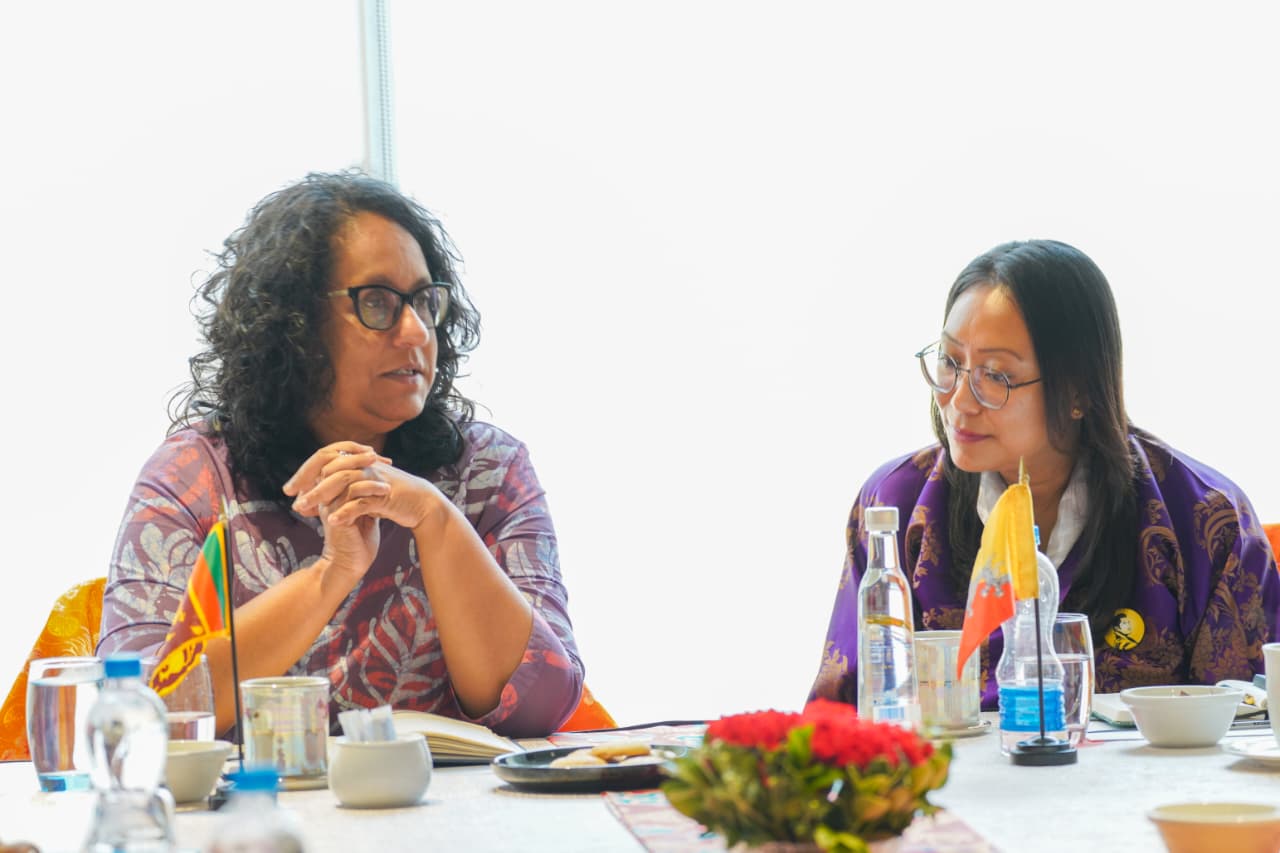
On the sidelines of the inaugural Global Conscious Food Systems Summit 2026, being held in Bhutan from 31 August to 4 September 2026, Prime Minister of Sri Lanka, Dr. Harini Amarasuriya, in her capacity as Minister of Education, Higher Education and Vocational Education, held a productive bilateral meeting with Yeezang De Thapa, Minister for Education and Skills Development of Bhutan, on 03 September 2026.
The discussions focused on further strengthening and expanding Sri Lanka-Bhutan cooperation in the education sector, with particular emphasis on developing mutually beneficial initiatives through enhanced Government-to-Government engagement.
Both sides underscored the importance of deepening institutional cooperation and exploring new avenues for collaboration in education, higher education and vocational training, with a view to creating greater opportunities for students, educators and academic institutions of both countries.
During the meeting, both sides agreed to initiate discussions towards the finalization and signing of a Memorandum of Understanding (MoU) on cooperation in the fields of education and vocational training. It was also agreed that the implementation of the MoU could be facilitated through the establishment of a Joint Working Group, headed at the Secretary level, with meetings to be convened annually to review progress, identify new areas of cooperation, and facilitate the effective implementation of agreed activities.
The major areas of cooperation discussed included enhancing collaboration among universities and academic institutions, promoting academic and faculty exchanges, joint research and university programmes, strengthening training and capacity-building opportunities for educators and teachers, and sharing expertise and best practices in the education and vocational training sectors.
The two sides also discussed strengthening child protection and safeguarding mechanisms, promoting ethical values among students, and addressing violence against children while ensuring their safety, protection, well-being and access to quality education.
Opportunities for Bhutanese students to pursue undergraduate studies at universities in Sri Lanka were also discussed, with particular emphasis on Dentistry, Medicine (MBBS), and allied health disciplines such as Physiotherapy. The discussions further covered opportunities for postgraduate studies in medical and health sciences at Sri Lankan universities, as well as enhanced collaboration among universities and other academic institutions of the two countries.
The meeting provided a valuable opportunity for Sri Lanka and Bhutan to advance cooperation in education and vocational training and explore new avenues for long-term collaboration for the mutual benefit of students, educators and academic institutions of both countries.
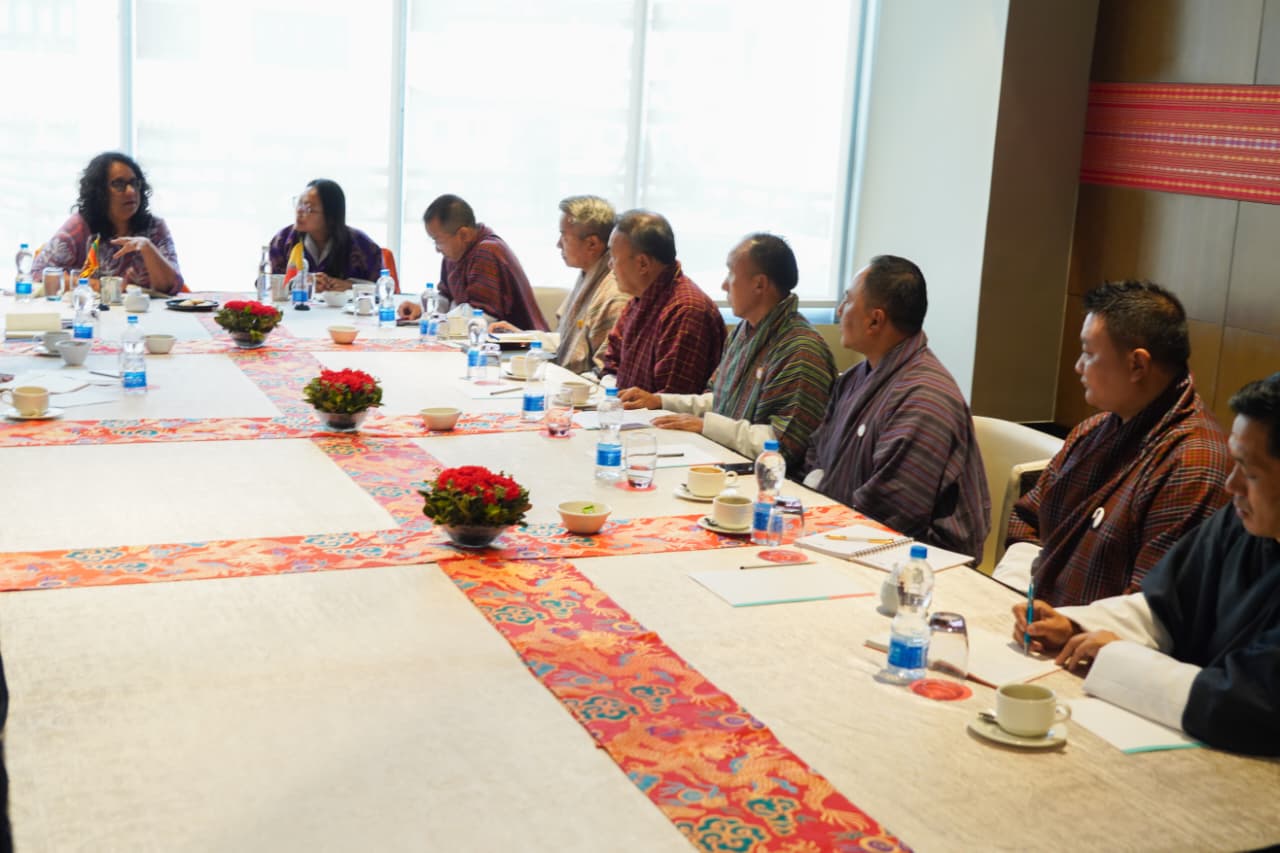
(Prime Minister’s Media Division)
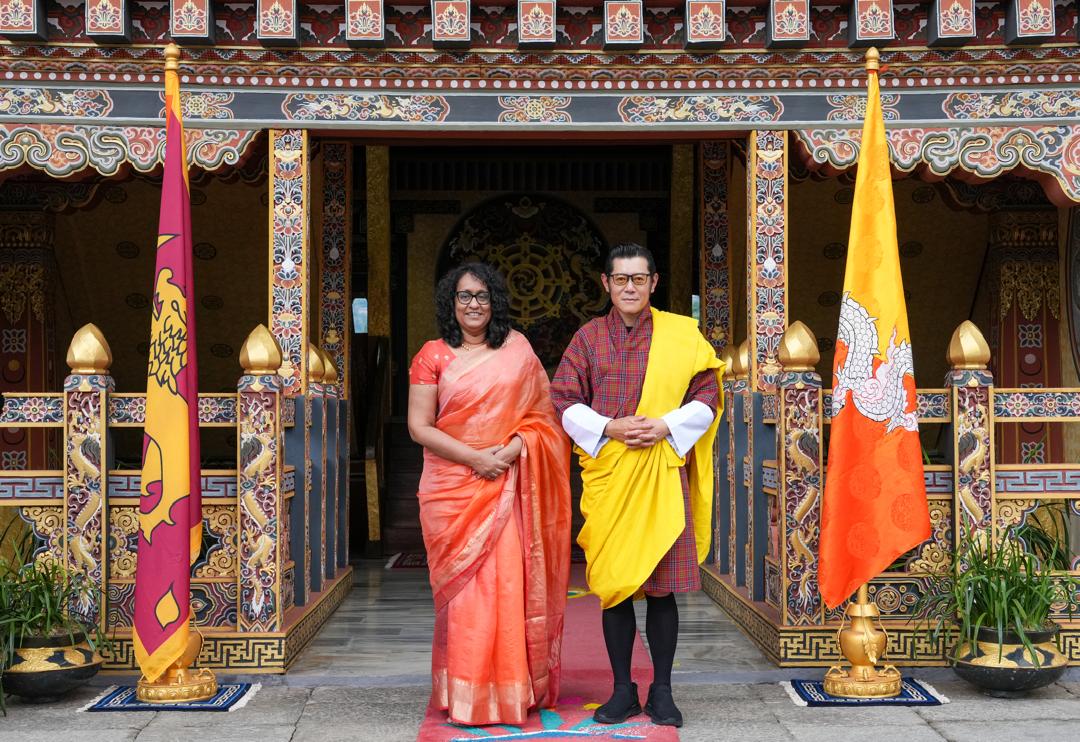
Prime Minister Dr. Harini Amarasuriya had an audience with His Majesty King Jigme Khesar Namgyel Wangchuck at the Tashichhodzong in Thimphu on September 02, during her official visit to the Kingdom of Bhutan.
The cordial discussion focused on Bhutan’s future development priorities and opportunities for cooperation between the two countries.
His Majesty expressed Bhutan’s interest in drawing on Sri Lanka’s experiences and expertise in areas relevant to its development plans. The discussion also focused on promoting investment between the two countries, including the possibility of establishing an investment zone in Bhutan.
The two sides also exchanged views on demographic challenges facing Bhutan, including the increasing migration of young people and its impact on the country’s population and future workforce.
The meeting highlighted the importance of strengthening bilateral cooperation and sharing experiences and best practices in support of the sustainable development of both countries.
(Prime Minister’s Media Division)
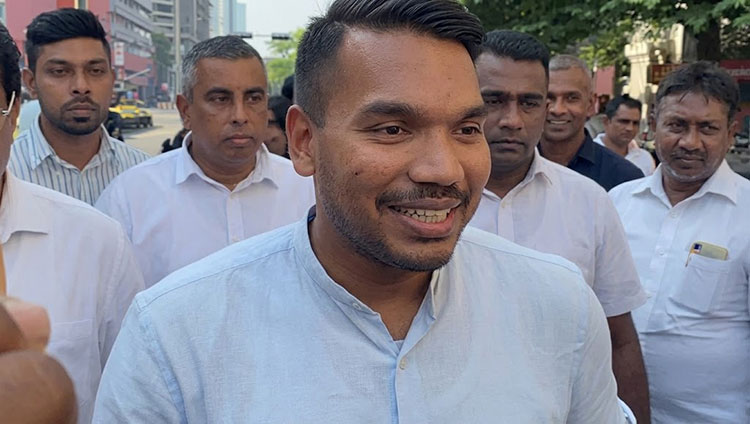
Sri Lanka Podujana Peramuna (SLPP) Member of Parliament Namal Rajapaksa has been arrested by the Commission to Investigate Allegations of Bribery or Corruption (CIABOC).
Namal Rajapaksa had been summoned by CIABOC to provide a statement in connection with investigations into the controversial Airbus deal. He was subsequently arrested by CIABOC after recording his statement for over 5 hours.

Prime Minister of Sri Lanka holds a bilateral meeting with Minister for Education and Skills Development of Bhutan

Prime Minister Meets His Majesty the King of Bhutan

Kusal Mendis, Binura Fernando ruled out of T20I series in England

SLPP MP Namal Rajapaksa arrested by CIABOC

Devapathiraja clinch U15 Division I title with 33-run win over Royal

Mandhana’s record ton powers India into semi-finals

‘Dates have the highest sugar content to fight Coronavirus’

Sunday Island 27 December – Headlines

#SundayIsland 17th December – Headlines

Sunday Island – 28th March

Sunday Island Headlines – 21 March

Sunday Island – 21st February – Headlines
-

 Features6 days ago
“Wrap Me Up in My Blazer”— A Gentlemanly Bradby Reminiscence
-

 Features5 days ago
When Sri Lankan stories find their own voice
-
 Features6 days ago
JVP/NPP government as seen from outside by Lionel Bopage now domiciled in Australia
-

 News5 days ago
BASL takes exception to Justice Ganepola being denied a place in SC
-

 Editorial7 days ago
Govt. trying to dupe UN Rapporteur?
-

 Features6 days ago
Prof. Savitri Goonesekere: What has she done?
-

 News2 days ago
Denied of promotion to SC despite vacancies, justice Gurusinghe retires
-

 Latest News2 days ago
Grade 5 scholarship exam results released