
Business
Korea could assist SL to reach pinnacle of development – Ambassador Woonjin JEONG


By Lynn Ockersz
‘The time is right for Sri Lanka to change and take a leap to a higher level. Korea is the very country that can assist Sri Lanka to reach the pinnacle of national development and prosperity. Korea’s economic miracle, “The Miracle on the Han River” is a story of overcoming many hardships by the Korean people that led to Korea’s national transformation from poverty to prosperity. As a true friend, Korea would like to share the technological know-how and resources to help Sri Lanka to achieve “the Miracle on the Kelani River”, ambassador to the Republic of Korea in Sri Lanka Woonjin JEONG said.
Speaking to ‘The Island Financial Review’ recently in an exclusive interview ambassador JEONG also said that besides providing growing markets for Sri Lanka’s rubber, coconuts, graphite and apparels, among many other items, Korea-Sri Lanka tourism links are another area in bilateral economic ties that could be further developed. He said that 13,000 Koreans visited Sri Lanka last year. ‘But this is only 0.5 per cent of the total tourism in Korea.’
The interview:
In which broad directions do you hope to take Korea-SL ties?
Since the establishment of diplomatic relations in 1977, Korea and Sri Lanka have come a long way together to form a cordial bilateral partnership. We have been true friends to each other. Our relations have much potential to grow.
Sri Lanka is not only one of Korea’s priority ODA cooperation partner countries, but also one of the top five countries that are benefitted from the Economic Development Cooperation Fund of Korea. The sum of investment in various ODA projects and grants for Sri Lanka since 1987 is over one billion USD. The Sri Lanka office of KOICA has assisted and funded commercial and infrastructure projects of Sri Lanka in the various fields such as education, transportation, water resources, sanitation and regional development in Sri Lanka.
The engagement in labour cooperation has also been impressive in recent years. 23,000 Sri Lankan employees are presently in Korea. Around 520 million US dollars were transmitted by them from Korea to Sri Lanka last year. They greatly contribute to the economic advancement of both countries. Since COVID-19 outbreak, the process of departure to Korea for employment has been suspended. However, it resumed last September and I invited the first batch of Sri Lankan migrant workers who were going to the Republic of Korea to express my appreciation for their contribution to uplift the economies of both countries.
Our cultural exchanges also have intensified over the years. The Korea Week 2020 was conducted virtually on digital platforms to provide an immersive experience of the Korean culture. I witnessed the enthusiasm and interest among the Sri Lankan participants. It is evident that our cultural bonds have grown stronger over the years.
I hope to further expand our economic ties, labour cooperation and cultural exchanges during my term as Ambassador to Sri Lanka.
What are the best investment opportunities for Korean corporates in SL?
Korea was Sri Lanka’s biggest foreign investor during the 1980s and early 90s. I believe that it is an opportune moment for Korea and Sri Lanka to revive investments, learn from each other’s experiences and intensify mutually beneficial trade and FDI. Sri Lanka is endowed with natural resources and high quality human resources which are very complimentary with the capital and technology of Korea.
The South Korean economy is the 10th largest in the world with a GDP of $1.6 billion; the exports have increased by 750 times between 1970 and 2018. Korea’s economic miracle, so called ‘The Miracle on Han River’ is a story of overcoming many hardships by the Korean people that led to the national transformation from poverty to prosperity. As a true friend, Korea would like to share the technological know-how and resources to help Sri Lanka achieve “the Miracle on Kelani River”. I can say that it is the right time for Sri Lanka to change and take a leap to a higher level. Korea is the very country that can assist Sri Lanka to reach the pinnacle of national development and prosperity.
I invite Korean investors to explore opportunities especially in the key sectors including agriculture, renewable energy, infrastructure, LNG, digital economy and so on. There is more potential for the business opportunities to expand between our two countries.
Likewise, what are the best opportunities for SL businesses in Korea?
Import and export relationship is also important as it is two wheels of the same vehicle. Sri Lanka is famous in Korea for rubber, coconut and graphite. Furthermore, apparel products including leather, fabric, and other agricultural items make a significant contribution to the Korean economy. I would also like to mention that Sri Lankan tea is very popular among Koreans for its high quality and distinct taste.
Tourism is also another main aspect; 13,000 Koreans visited Sri Lanka last year. It is only 0.5% of the total tourism in Korea. I am confident that more tourists will arrive in Sri Lanka to enjoy the charm and beauty of the island as Sri Lanka was ranked as the top country to visit by the famous travel guidebook publisher,” Lonely Planet” in 2019.
How are Lankans in Korea contributing to Korea’s well being?
Approximately 23,000 Sri Lankan workers are employed in Korea under the Employment Permit System (EPS). The proactive engagement of the EPS centre has led to the first delegation of migrant workers heading for Korea and it has strengthened the strong bilateral relations of the two countries amid the coronavirus pandemic.
The Republic of Korea is maintaining a strong policy of equal pay for equal work which applies to both Korean nationals and foreign workers including Sri Lankan people. Sri Lankan migrant workers have contributed greatly to uplift both economies. I consider them as civilian diplomats on Korean soil and the Republic of Korea is appreciative of their precious contribution to the Korean economy.
I hope to expand the labour collaboration between our two countries.
S. Korea is one of the most creative countries. What are the keys to her success?
The Republic of Korea witnessed economic growth with the sheer hard work and dedication of its people. With the limited territory and natural resources, Korea has focused on education and investment on people. The strength of world-renowned enterprises such as Samsung, Hyundai and LG also empowered the Korean economy. With the technological advancement, Korea is a major force in several fields including smart devices, automotive, shipbuilding, and heavy industries. However primary industries such as mass agricultural production also contributed to the economic success in Korea.
The Korean cultural renaissance including K-pop and K- dramas have become popular globally and have also contributed to the economy and helped attract more tourists. Korea would like to share the success stories with Sri Lanka as Korea developed with limited resources, limited workforce. As the ambassador to the Republic of Korea, I love Sri Lanka, I love Sri Lankan people. I look forward to closely working with all of you to achieve our common goals. Let’s stay strong together!




By Ifham Nizam
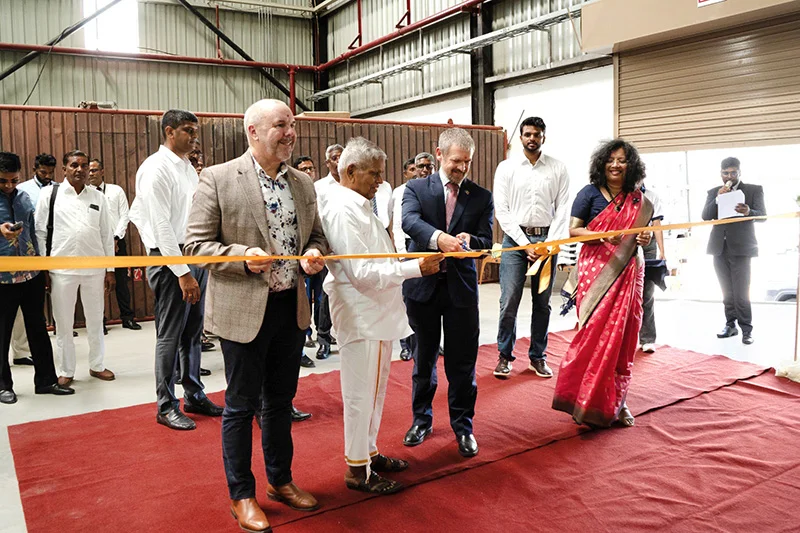
Australian High Commissioner to Sri Lanka Matthew Duckworth described Omega Traders’ latest investment in a modern dhal-processing facility as a strong example of how cross-border supply chains can translate into productive investment, local value addition and new business opportunities in Sri Lanka.
The investment, which adds a 150-metric-tonne-per-eight-hour-day processing capacity to Omega Traders’ operations, marks a significant expansion of the company’s manufacturing footprint as it celebrates 45 years in Sri Lanka’s food commodity industry.
Speaking at the inauguration of the new Lentil and Orid Dhal Processing Factory in Wattala, last Friday, H.C. Duckworth said the facility represented more than an increase in production capacity, pointing to the wider economic value created when Australian agricultural production is connected with Sri Lankan processing and distribution.
‘This facility is not operating on its own. It is part of a long supply chain and a trade partnership between Sri Lanka and Australia, Duckworth said.
His comments placed the Omega Traders’ investment within a broader commercial context: Australia brings agricultural production and established export capabilities, while Sri Lanka provides processing capacity, labour, market access and opportunities for further value addition.
The investment comes as Sri Lanka continues to look towards greater domestic processing and value-added manufacturing rather than relying solely on the import and distribution of finished commodities.
Dr. (Mrs.) Siddhika G. Senaratne, Director General/CEO of the Sri Lanka Standards Institution (SLSI), who attended the inauguration as Guest of Honour, highlighted the importance of quality assurance in food processing and the role of standards in maintaining confidence across the supply chain.
The facility is equipped with new-generation cleaning, processing, sorting and quality-control machinery, including advanced colour-sorting technology, automated systems and an in-house quality-control laboratory.
The additional capacity will support Omega Traders’ three principal Mysoor Dhal brands — Rainbow Jumbo Dhal, Komas Dhal and Rozanna Dhal — which serve different segments of the Sri Lankan market.
But the investment also has a distinctly local agricultural dimension.
Through its Orid Dhal operation, Omega Traders plans to source locally grown black matpe from Sri Lankan farmers and process it at the new facility.
That creates a domestic value chain linking farmers to industrial processing and consumers, while potentially increasing demand for locally produced agricultural commodities.
Duckworth said this type of business partnership could generate benefits for both countries.
‘Australia produces some of the world’s best agricultural products and we are very efficient and very capable at trading them. But that alone is not going to bring success to Australia. Just as building a factory like this is not going to bring success to Sri Lanka, he said.
‘It’s when we bring these entities together that our products produced in Australia can be processed in excellence here in Sri Lanka that enables this to be a success, the H.C. explained.
The investment therefore combines two complementary supply streams: imported agricultural commodities, including Australian-origin products, and locally produced black matpe for the Orid Dhal operation.
For Sri Lanka, the business significance extends beyond Omega Traders itself. Increased processing capacity creates demand for logistics, packaging, distribution, services and agricultural inputs, while supporting employment within the food-processing ecosystem.
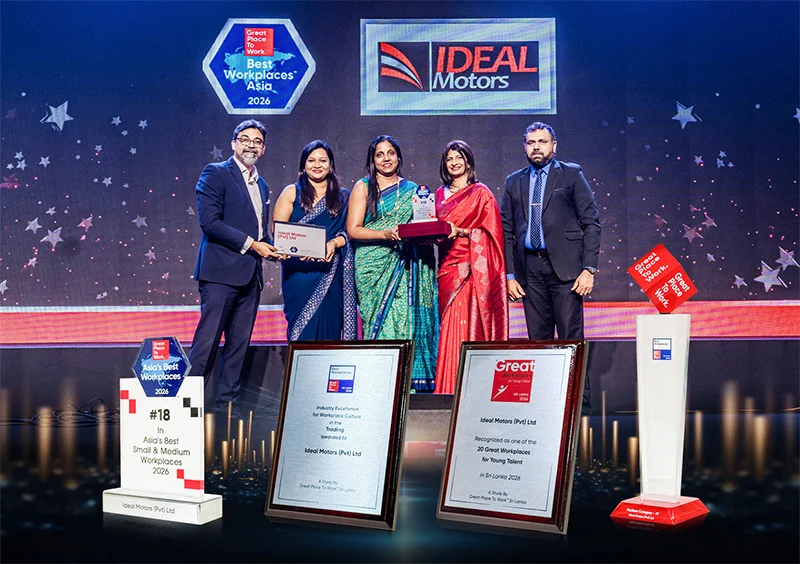
HR-led transformation places people, culture and business performance at the heart of the organisation
Ideal Motors (Pvt) Ltd,has achieved a significant milestone by securing multiple prestigious workplace and organisational culture accolades in 2026, reinforcing its position as an employer of choice in Sri Lanka’s automotive sector.
Among its latest achievements, Ideal Motors has been recognised as one of the 20 Great Workplaces for Young Talent in Sri Lanka 2026, ranked No. 1 and awarded the Gold Medal in the Small and Medium category of Best Workplaces™ in Sri Lanka 2026, and ranked No. 18 among Best Workplaces™ in Asia in the Medium Scale category—the highest-ranked Sri Lankan organisation in the category. The company also received Industry Excellence for Workplace Culture – Trading Industry.
The Young Talent recognition was presented at the Great Place To Work® CXO Forum 2026 held on 10 September 2026 at Cinnamon Life, Colombo. The recognition followed an evaluation of more than 100 certified organisations and highlights workplaces that create meaningful opportunities for employees under 35 to develop, contribute and grow.
At the Best Workplaces™ in Sri Lanka Awards Gala 2026, held on 11 September 2026 at Cinnamon Life, Colombo, Ideal Motors achieved another historic milestone by entering the Best Workplaces Sri Lanka list for the first time and securing the No. 1 Gold Medal in the Small and Medium category. The company also achieved No. 18 in Best Workplaces™ in Asia, reflecting the strength of its workplace culture beyond Sri Lanka.
These achievements represent more than a collection of awards. They reflect the transformation taking place within Ideal Motors, where people, culture and business performance are increasingly viewed as interconnected drivers of sustainable growth.
Over the past few years, the organisation’s HR function has evolved from a predominantly administrative role into a strategic business partner, with greater emphasis on employee experience, capability development, engagement, performance, communication, wellbeing, diversity and inclusion, and data-driven HR practices.
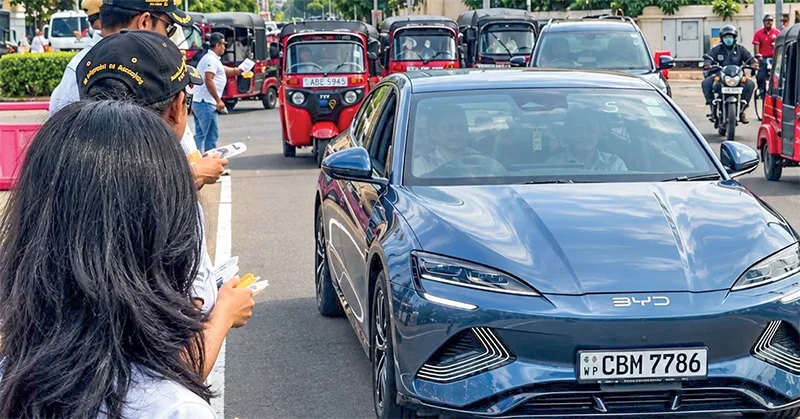
The Automobile Association of Ceylon (AAC) conducted a seat belt safety awareness programme in front of its headquarters and along Galle Face Centre Road, encouraging motorists and passengers to make seat belt use a habit on every journey.
AAC staff, working alongside officers of the Sri Lanka Police Traffic Division, distributed specially designed hanging tags and stickers to drivers. The material carries a clear reminder that seat belts protect drivers as well as passengers in both the front and rear seats.
The public awareness drive was held ahead of the requirement taking effect on 20 September 2026, under which seat belt use becomes mandatory for every occupant of a vehicle travelling on an expressway.
AAC emphasized that the regulation should be understood as a life-saving measure rather than only a legal obligation. Wearing a seat belt can help prevent occupants from being thrown inside or from a vehicle during a collision and can lessen the severity of injuries.
The Association said road safety legislation must be supported by sustained public education, visible enforcement and responsible behaviour by all road users. The participation of the Traffic Police helped the campaign reach motorists directly in a busy part of central Colombo.

High Court convicts 14 over deadly Easter bombings

Mandhana, Shafali and Ghosh lead dominant India to Asian Games gold

Fatima Sana and Umm-e-Hani secure bronze for Pakistan in Asian Games

India bat first in Asian games womens cricket final

Showers about 100mm will occur in the Western, Sabaragamuwa, Central and North-western provinces and in Galle and Matara Districts

Govt. confident of 2/3 majority despite NPP split speculation

‘Dates have the highest sugar content to fight Coronavirus’

Sunday Island 27 December – Headlines

#SundayIsland 17th December – Headlines

Sunday Island – 28th March

Sunday Island Headlines – 21 March

Sunday Island – 21st February – Headlines
-

 News6 days ago
US embassy won’t comment on IGP’s probe into joint drug raid
-

 News4 days ago
Shanakiyan urges urgent action over reported death sentence for Lankan in Saudi Arabia
-

 News5 days ago
Bid for Basil’s extradition nears final stage: Police
-

 Business6 days ago
All-new Bolero MaXX unveiled in Sri Lanka
-

 News3 days ago
Namal Rajapaksa Buddhist gambit fails, bail denied
-

 Opinion6 days ago
A journalist who wrote across the divide
-

 Editorial7 days ago
More fuel price shocks shrouded in secrecy
-

 Features3 days ago
Why the spelling Sri Lankan names in English vary