
News
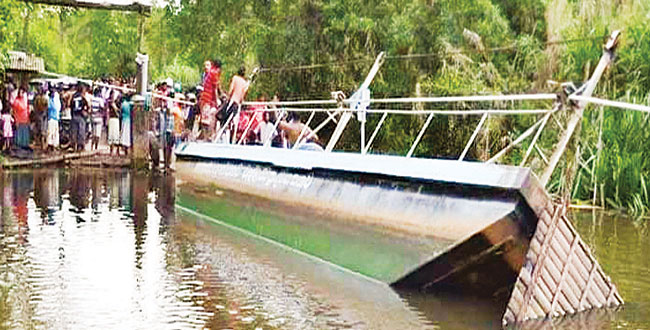
Kinniya UC chairman blamed for ferry disaster

By Saman Indrajith
Rural Roads and Other Infrastructure State Minister, Nimal Lanza, yesterday, in Parliament, said that the Kinniya Urban Council Chairman, who is the brother-in-law of SLMC Batticaloa District MP Imran Maharoof, was responsible for the tragedy in Kinniya which claimed six lives on Tuesday.
Minister Lanza said that the government had not issued any permits for a ferry service in the Kurinchenkerni lagoon. The regional politicians, using their political power, had operated the ferry service and many lives had been lost due to the actions of the Urban Council Chairman. Minister Lanza said, requesting the Governor of the Eastern Province to remove the UC chairman concerned from office and take disciplinary action against him.
Making a special statement in Parliament State Minister Lanza said: “We extend our condolences to the victims and family members of this disaster. We also wish speedy recovery of those who are in the hospital owing to this tragic accident. People in Kinniya had suffered for a long time because they did not have a bridge across the Kurinchenkerni lagoon. Some had used boats for their travel across the lagoon. Following the requests from the people, several ministers of the yahapalana government went there and placed foundation stones several times. Yet they could not construct the bridge. After we came to power we laid the foundation stone to construct the bridge on April 10, 2021. There had been a meeting on Nov 24, 2020 at the Kinniya Divisional Secretariat where permission was granted to use a three and half km long road as an alternative route until the bridge is completed. That decision had been made by the political authorities of the Urban Council and Members of the Pradeshiya Sabhas of the area. While people were using that alternative route the political authority gave permission for the operation of the ferry.
“When the Kinniya Pradeshiya Sabha asked for permission from the Road Development Authority that request was turned down because it was not safe. The RDA also turned down a request by Kinniya Urban Council for the use of a barge because it was unsafe. It is after that the Urban Council had issued the permit on its own. The permit had been issued to a businessman. There are safety measures to be followed when operating a ferry service. These operators have not even provided a life jacket to the passengers. I state that the first person responsible for this tragedy is the chairman of the Kinniya Urban Council. It was he who arrogated power to himself to grant the permit while the government and the officials continuously rejected the requests for a permit. A question has been raised in parliament on July 14, 2021 seeking the approval for the ferry service and in response to that we instructed the contracting company to expedite the work on the bridge. As per the request of people and MPs a decision was made to consider the start of a ferry service and RDA was planning to commence a proper ferry service with safety precautions but the urban council chairman by the name of Riyaz, who is the brother in law of SJB MP Imran Maharoof, issued a permit on his own. MP Maharoof too was involved in commencing the ferry service. The urban council has no powers to start a ferry service in this manner. I table all the documents with regard to this process which violated many regulations. It is wrong for the opposition to try to place the blame at our doorstep. We call on the President, the Prime Minister, and Minister in charge of police, and the IGP to investigate this incident. I also call on the Governor Eastern Province to suspend this chairman immediately and to take disciplinary action against him. It was he who should pay for this crime and loss of lives of innocent people by his imprudent act of assuming powers not belonging to his post to give a permit for the operation of the ferry.”





News
AgriConnect Sri Lanka’ to be launched on 30 October to Modernise the Agricultural Sector Through Digitalisation

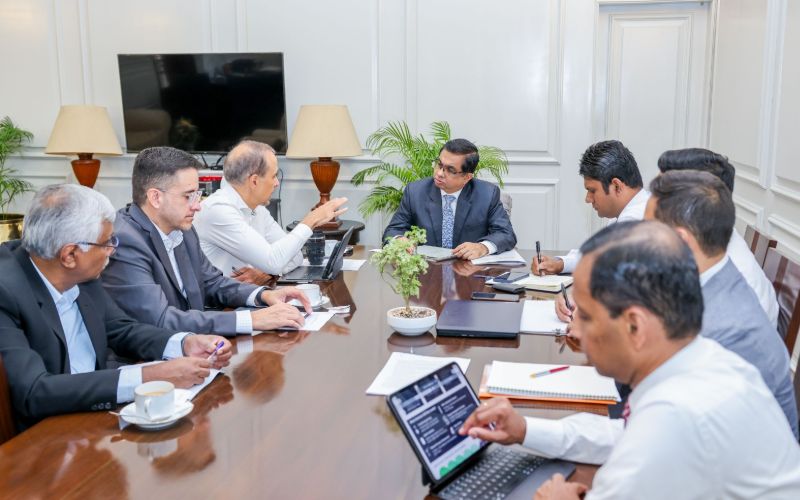
A discussion on the official launch of the ‘AgriConnect Sri Lanka’ programme was held at the Presidential Secretariat on Tuesday (13) morning between Secretary to the President Dr. Nandika Sanath Kumanayake and a delegation led by Gevorg Sargsyan, World Bank Group Manager for Sri Lanka and the Maldives.
The discussion focused on the official launch of the ‘AgriConnect Sri Lanka’ programme, scheduled to take place on 30 October at TRACE Expert City.
The World Bank delegation provided a comprehensive briefing on the programme and emphasised that Sri Lanka is set to become the first country in South Asia to join this global initiative of the World Bank Group, marking a significant milestone.
Victor Anthonypillai, Senior Country Officer of the International Finance Corporation (IFC), Tomas Ricardo Rosada Villamar Practice Manager at the World Bank, Felipe F. Dizon, Senior Economist and Athula Senaratne, Senior Agriculture Specialist, also attended the meeting. The Presidential Secretariat was represented by Senior Assistant Secretary to the President Dr Danushka Perera and Assistant Secretary to the President R. A. Ruwanpathirana.
President’s Media Division (PMD)

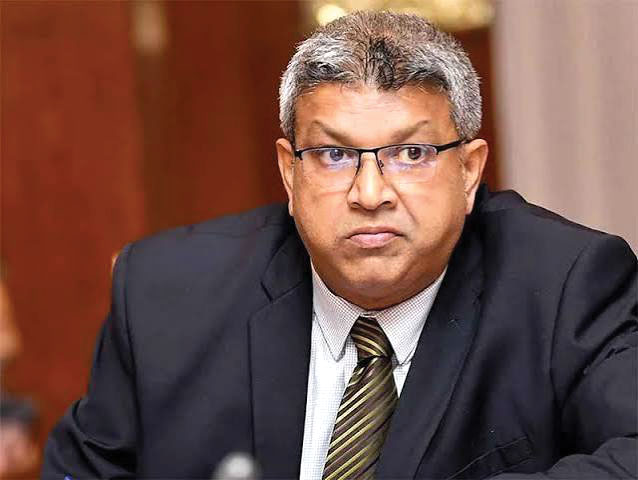
Appointment of committee eyewash, says UNP
The government is considering changes to prison regulations pertaining to the treatment of Buddhist monks serving jail terms, including their right to wear monastic robes when taken outside prison.
Justice and National Integration Minister Harshana Nanayakkara announced the proposed changes yesterday (14) following the submission of an interim report by a committee appointed to review the rules and procedures governing prisons.
The report was handed over to Secretary to the President Dr Nandika Sanath Kumanayake at the Presidential Secretariat.
One of the key recommendations is to amend Prison Standing Order 356 by introducing a new provision, 356(A). The proposed revision would require prison authorities to consult the Department of Buddhist Affairs on the removal of a monk’s robes upon admission to prison. The Commissioner of Prisons would be allowed 10 days to notify the department and take the necessary steps.
A separate amendment to Departmental Order 550 would allow Buddhist monks to wear their robes whenever they are taken outside prison, unless their respective Nikaya formally requests that the privilege be withdrawn.
The committee has also recommended extending similar arrangements, with suitable modifications, to members of other religious clergy who are imprisoned.
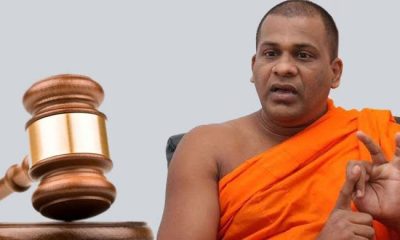
The proposals follow concerns raised over the treatment of Ven. Galagoda Aththe Gnanasara Thera after he was taken into custody. President Anura Kumara Dissanayake subsequently held discussions with representatives of the three main Buddhist Nikayas and appointed the committee to examine the existing legal framework.
Nanayakkara said the interim report had been forwarded to the Acting Commissioner General of Prisons, along with instructions to revise the relevant standing orders in accordance with its recommendations.
The proposed amendments have yet to be confirmed as formally implemented.
Meanwhile, the UNP yesterday criticised the government’s decision to appoint a committee to make recommendations on the attire to be worn by imprisoned Buddhist monks and other religious leaders when taken outside prison, describing the move as unnecessary.
In a statement issued yesterday (14), the UNP said the procedures governing the matter were already clearly set out in the Department of Prisons’ Standing Orders, making the appointment of a separate committee unwarranted.
The party cited remarks by Professor G.L. Peiris, Convenor of the Janathawadi Joint Opposition, who had described the committee’s appointment as a
“complete eyewash” and questioned the need for such a move.
Referring to Standing Order 550 of the Prisons Department, the UNP said convicted prisoners appearing before court for legal proceedings should not be required to wear prison uniforms.
It further stated that the regulations allowed prisoners to wear civilian clothing consistent with what they wore before imprisonment, including attire appropriate to their cultural and religious backgrounds.
The UNP accused the government of unnecessarily prolonging the issue by appointing a committee, despite the existence of regulations governing prisoners’ attire.
The party also called on the government to seek forgiveness from the Mahanayake Thera and the Sangha Council of the Kotte Sri Kalyani Samagri Dharma Maha Sangha Sabha of the Siyam Maha Nikaya over the decision concerning the religious attire of Ven. Galagoda Aththe Gnanasara Thera.
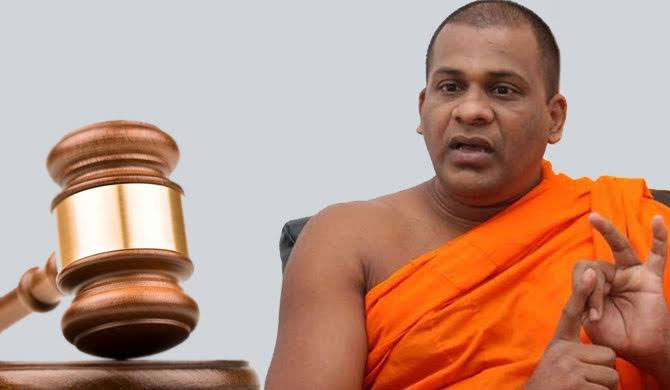
Court of Appeal President Justice Rohantha Abeysuriya yesterday withdrew from the bench hearing petitions challenging the decision by prison authorities to require Ven. Galagoda Aththe Gnanasara Thera to wear prison attire following his imprisonment.
The decision was announced when the petitions seeking to invalidate the prison authorities’ decision were taken up for consideration on October 14.
Following his withdrawal, a three-judge bench was appointed to hear the petitions.
The petitions relate to the prison authorities’ decision to require Gnanasara Thera to wear prison attire after he was taken into custody to serve the remainder of his sentence for contempt of court.
In September this year, the Supreme Court annulled the presidential pardon granted to Gnanasara Thera by former President Maithripala Sirisena in May 2019.
Following the ruling, the Court of Appeal directed the Commissioner General of Prisons to take the necessary steps to enforce the remainder of the monk’s prison sentence.
Gnanasara Thera had originally been sentenced to six years’ imprisonment for contempt of court but had served only around nine months before receiving the presidential pardon in 2019.

AgriConnect Sri Lanka’ to be launched on 30 October to Modernise the Agricultural Sector Through Digitalisation

57th Annual Saints’ Quadrangular Tournament on Saturday and Sunday

Showers or thundershowers will occur at most parts of the island

Prison rules to be revised over monks’ attire

AC President recuses himself from hearing prison attire case pertaining to Gnanasara Thera

Court orders steps to obtain INTERPOL Red Notice against Basil

‘Dates have the highest sugar content to fight Coronavirus’

Sunday Island 27 December – Headlines

#SundayIsland 17th December – Headlines

Sunday Island – 28th March

Sunday Island Headlines – 21 March

Sunday Island – 21st February – Headlines
-

 News7 days ago
NDB fraud Rs 60mn more than reported
-

 News7 days ago
Removing monk’s robes matter for Sangha to decide: Mahanayake Theras
-

 News6 days ago
NPP govt. reminded of its responsibilities as US warship leaves Colombo
-

 News5 days ago
Sri Lanka escalates anti-graft drive with Shiranthi’s jailing
-
 Latest News6 days ago
Farhan, Sadaqat help Pakistan ace 183 chase to go 1-0 up
-
 News7 days ago
BHC, Colombo: “LTTE remains a proscribed org. in the UK”
-

 Latest News4 days ago
Farhan and Sadaqat help Pakistan seal series in style
-

 News5 days ago
Iranian ships stranded, Lanka fears US sanctions