
News
Kenya too falls into Chinese debt trap

By S Venkat Narayan,
Our Special Correspondent
NEW DELHI. Kenya is one of China’s largest trade partners in Africa. It owes $6.5 billion to China, which is 22 percent of its total external debt. China’s interest payments represent 87 per cent of the cash used to service debt expenditure in 2019. Kenya is yet to work out an arrangement with China, but has been reluctant to seek debt relief amid reports that it was concerned it could hurt its ability to tap capital markets.
Kenya and neighbouring Ethiopia, according to the World Bank’s international debt statistics, are among the world’s most indebted countries. Kenya’s external debt rose four times over the last decade, only second to Ethiopia that saw its debt increase five-fold during the decade.
Analysts say the $3.2-billion contract with China in 2014 to build the standard gauge railways connecting Kenya’s capital Nairobi and the port city of Mombasa symbolised the problem. The railway line was expanded in 2015 to Naivasha town 75 miles northwest of Nairobi, raising the project cost by another $ 1.5 billion.
The railway line made a loss of $ 90 million in its first year. The government promised a profit in 2019. It ended up in the red again. The government has been forcing businesses to move their cargo on the railway to ensure it generates enough cash for operations but the project still recorded a loss of $200 million over three years. In September, a panel of lawmakers nudged the government to renegotiate the loan deal and cut operating expenses by half. Kenya hasn’t had its way yet.
The overpriced project, hugely criticised by independent observers right from the time it was first announced, has also been in the spotlight after Kenya’s appellate court ruled in June that the contract had been signed in violation of the rules and was illegal.
In the end, Kenya doesn’t have an option but to pay back the money.
Or Kenya could stand to lose the lucrative Mombasa port that was pledged as collateral when the huge loan was accepted.
Mombasa is counted as east Africa’s largest and most valuable port. It is not just the gateway into Kenya, but also its landlocked neighbours; Burundi, Congo, Rwanda, South Sudan and Uganda. Also, Kenyan media has reported, Nairobi could also have to give control of the Inland Container Depot that could bring thousands of port workers under Chinese lenders.
Zambia has finally received a six-month reprieve from China Development Bank on repayment of its debt due in October, the government in Lusaka announced last month after a desperate SOS that it was on the verge of a default.
Lusaka had already been attempting to restructure and refinance its Chinese debt when SARS-CoV-2, the virus that causes Covid-19, first reached Africa and rapidly spread across the world, infecting over 52 million and wreaking havoc on global economies. It has only gotten worse.
Kenya and Zambia’s story repeats itself across Africa, Asia and Latin America. According to the Financial Times (London), China has transferred nearly $150 billion to governments and state-owned firms in Africa alone to secure commodity supplies and fund its global network of infrastructure projects, President Xi Jinping’s signature Belt and Road Initiative (BRI).
Beijing is already the world’s largest non-commercial lender, more than the International Monetary Fund (IMF) and the World Bank. China’s share of bilateral debt owed by the world’s poorest countries to members of the G20 has risen from 45 percent five years ago to 63 percent last year. A recent World Bank report estimated China’s external loans and trade credits at $1.6 trillion, or close to 2 percent of global gross domestic product.
China watchers in New Delhi, quoted by the Hindustan Times, speak about how Beijing has expanded its footprint and influence in South Asia too by pouring billions of dollars in pricey infrastructure projects that mostly serve Beijing’s strategic interests and have to be executed by Chinese companies and Chinese workers.
Like the China Pakistan Economic Corridor (CPEC) that eventually will be paid for by Islamabad. Or the rail and deep-sea port projects along an economic corridor to Myanmar that will link China’s south-western interior to the Indian Ocean.
Because the loans are not based on the economic feasibility of the projects in the first place and are opaque, they are also seen to fuel allegations of corruption and autocratic behaviour.
Beijing has its grip on Sri Lanka to an extent that when US Secretary of State Mike Pompeo was in the country to campaign against China’s debt diplomacy. Colombo—-which is in the middle of negotiations with Beijing for another tranche of loans—-politely made it known that it is not going to change its approach to China.
In 2017, Sri Lanka had already handed over the strategic port of Hambantota on the country’s southern coast to China on a 99-year lease when it had trouble repaying its initial loan for the port.


“No shipment for 10 days; seas off western coast will become rough by April end”
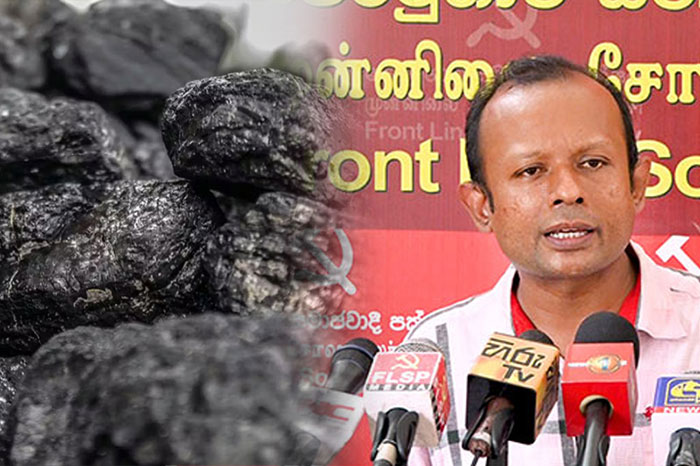
Education Secretary of the Frontline Socialist Party (FSP) Pubudu Jayagoda says the Indian company which secured a tender to supply coal for electricity generation this year has delivered only 13 of the 25 shipments required and no vessel has arrived in Sri Lanka for the last 10 days or so.
Jayagoda said so while addressing the media during a protest held in Colombo yesterday.
Jayagoda said the Indian company Trident Chemphar, which secured the tender to supply 25 coal shipments for 2026, had placed the country’s coal stocks at risk.
Although all 25 coal shipments are required to be unloaded before the end of April, only 13 vessels have arrived in Sri Lanka so far, according to Jayagoda. He also claimed that no shipment had arrived during the first week of March, adding that coal vessels had not arrived for about 10 days.
Jayagoda warned that the situation could endanger the country’s energy supply as the seas off the western coast usually turn rough by the end of April, disrupting unloading operations.
According to Jayagoda, a report submitted by the Public Utilities Commission of Sri Lanka to the Parliamentary Oversight Committee on infrastructure and strategic development, power cuts may become necessary from August even if the country falls short of five shipments unless electricity is generated using costly diesel-powered thermal plants.
Jayagoda also alleged irregularities in the tender process, claiming that the government had changed tender specifications and delayed the tender process by about four months, possibly to allow the Indian company time to register and secure performance guarantees.
He further alleged that the coal supplied by the Indian company was substandard.
Jayagoda questioned why the tender had not been cancelled despite several shipments allegedly failing to meet quality standards and why no investigation had been launched.He asked why legal action had not been taken against the company despite supply disruptions.
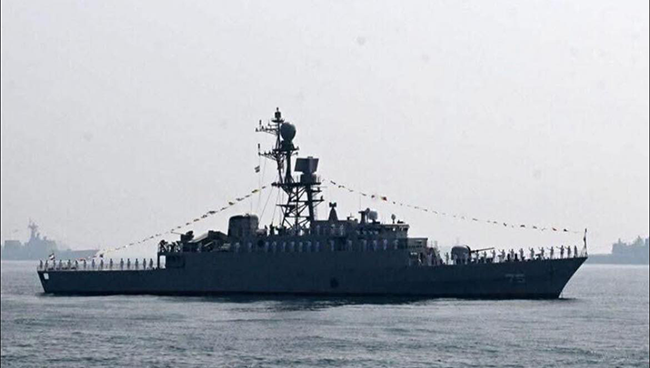
The US Department of State has said that Washington respects Sri Lanka’s sovereignty in handling matters relating to the Iranian warship IRIS Bushehr and its crew, according to agency reports, quoting a State Department Spokesperson. He has said the final decision regarding the vessel, its crew and the rescued Iranian sailors rests with Sri Lanka in accordance with its domestic laws and international legal obligations.
The statement follows comments by Foreign Minister Vijitha Herath that Sri Lanka was looking after 32 sailors rescued from the Iranian frigate IRIS Dena under Colombo’s international treaty obligations.
The frigate was sunk by a US submarine off Sri Lanka’s southern coast on Wednesday during escalating hostilities involving the United States and Iran.
Sri Lanka’s Navy conducted rescue operations, following the incident, recovering 84 bodies.
Asked whether Colombo was under US pressure not to repatriate the Iranian sailors, Herath said Sri Lanka had taken all actions in accordance with international law.
Sri Lanka also provided safe harbour to the second Iranian warship, IRIS Bushehr, and evacuated its 219 crew members a day after the Dena was torpedoed. The vessel was taken to the port of Trincomalee after reporting engine problems.
Citing an internal cable, Reuters reported that Washington had urged Sri Lanka not to repatriate the Iranian sailors. However, the State Department spokesperson reiterated that the disposition of the crew and survivors was a matter for Sri Lanka to decide, adding that the United States respects Sri Lanka’s sovereignty in managing the situation.
Meanwhile, India allowed a third Iranian warship, IRIS Lavan, to dock in a port on humanitarian grounds after it reported operational difficulties.
The ship docked at the port of Kochi, where many of the crew, including young cadets, were disembarked and transferred to a nearby facility.
President Anura Kumara Dissanayake said Colombo would follow the provisions of the Hague Convention, which requires neutral states to detain combatants of warring parties until the end of hostilities.
A senior administration official said Sri Lanka was in discussions with the International Committee of the Red Cross regarding the treatment of survivors from the torpedoed vessel. International humanitarian law would apply to the wounded, who could be repatriated if they requested it, the official added.
Iranian diplomats in Colombo have requested the return of the remains of sailors killed in the attack to Iran.
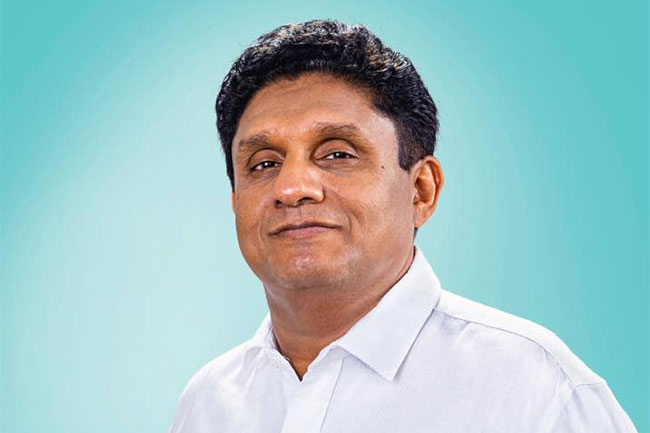
Opposition and SJB leader Sajith Premadasa, emphasised the critical need for the Indian Ocean region to remain peaceful and not become part of any conflict, said a news report published by NDTV yesterday.
It said: As the Iran-Israel war enters its second week, the theatre of the war has expanded dramatically, reaching the waters of Sri Lanka. With the sinking of Iranian warship IRIS Dena in international waters off Lanka’s coast and the docking of a second Iranian vessel, IRIS Busheher, Colombo has become embroiled in a conflict where it seeks to remain only a neutral bystander.
Speaking with NDTV, Sajith Premadasa, Leader of the Opposition in Sri Lanka emphasised the critical need for the Indian Ocean region to remain peaceful and not become part of any conflict.
“The Indian Ocean has on successive occasions been declared a peaceful area and should remain so,” said Premadasa.
The Sri Lankan government has said that it will attend to all survivors of the ill-fated IRIS Dena and IRIS Busheher as per international protocols and norms. Sri Lankan President Anura Kumara Dissanayake said his country had a “humanitarian responsibility” to take in the crew of the vessel, which was allowed to dock at Trincomalee in Northern Sri Lanka.
Premadasa, who is the leader of the opposition party SJB, called on all parties to cease the ‘asymmetric warfare’. He cautioned that the widening conflict would have devastating consequences for smaller countries like Sri Lanka, which is still reeling from its worst economic crisis in 2022.
“The Middle East conflict is already spreading to other countries, and this is having an impact on Sri Lanka and Sri Lankan people,” Mr Premadasa told NDTV.
A third Iranian vessel that was in the Indian Ocean, IRIS Lavan, has docked at Kochi in India. India has said it was a “humanitarian call” after the vessel sent out a distress call.

Iran names Khamenei’s son as new supreme leader after father’s killing

Oil prices jump above $100 for first time in four years

Dry weather will prevail over the island

FSP warns of possible coal shortage

Repatriation of Iranian naval personnel Sri Lanka’s call: Washington

Indian Ocean must remain peace zone: Sajith

‘Dates have the highest sugar content to fight Coronavirus’

Sunday Island 27 December – Headlines

#SundayIsland 17th December – Headlines

Sunday Island – 28th March

Sunday Island Headlines – 21 March

Sunday Island – 21st February – Headlines
-
 News3 days ago
University of Wolverhampton confirms Ranil was officially invited
-

 News4 days ago
Legal experts decry move to demolish STC dining hall
-

 News3 days ago
Female lawyer given 12 years RI for preparing forged deeds for Borella land
-

 News2 days ago
Peradeniya Uni issues alert over leopards in its premises
-

 Business5 days ago
Cabinet nod for the removal of Cess tax imposed on imported good
-
 News3 days ago
Library crisis hits Pera university
-

 News2 days ago
Wife raises alarm over Sallay’s detention under PTA
-
 Business5 days ago
War in Middle East sends shockwaves through Sri Lanka’s export sector