
News
Kelanitissa receives diesel as govt. strives to minimise load shedding


By Ifham Nizam
The Kelantissa Power Plant Complex is expected to receive 8,000 MT of fuel today to minimise load shedding in some parts of the country.
On Sunday evening, the power complex was provided with 2000 MT or 2.5 million litres of fuel.
Finance Minister Basil Rajapaksa was having talks with some of the Middle East nations to buy oil, a senior government official said.
Energy Minister Lokuge yesterday said that the distribution of diesel and petrol in filling stations had commenced countrywide, and the fuel shortage would be over soon.
The CEB’s monthly fuel requirement is as follows: diesel – 42,000 million litres; furnace oil – 32,000 million litres and naphtha – 28, 000 million litres.


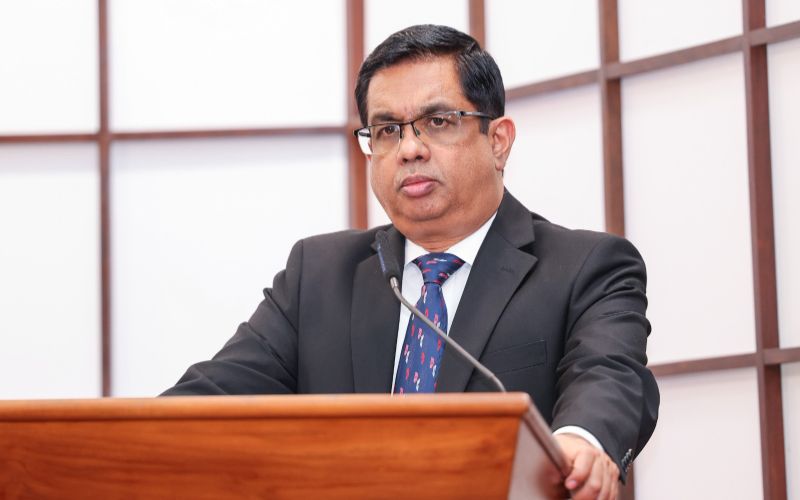
The Memorandum of Understanding (MoU) relating to the project to provide technological solutions to prevent wild elephants from being hit by trains was signed yesterday (01) afternoon at the President’s Media Centre, under the patronage of Secretary to the President Dr Nandika Sanath Kumanayake.
Coordinated through the “Clean Sri Lanka” programme, the project is being implemented as a public-private partnership, with the Railway Department, the Department of Wildlife Conservation and the Forest Conservation Department working together, with full financial support from People’s Bank.
The system consists of three-beam detection, passive infrared (PIR) sensors, automatic temperature sensors and a tamper alarm system to detect animals weighing more than 20 kilogrammes and unauthorised interference. Signal lights (red/yellow/green) installed on either side of the railway tracks, together with a special screen installed inside the locomotive cab, will alert the driver in advance to the exact location of an elephant.
A demonstration test of the system was successfully conducted at the Pinnawala Elephant Orphanage premises in the presence of the relevant officials, following which a report on the system was prepared.
The system will be implemented as a pilot project from next month at 13 locations where wild elephant accidents are frequent. A newly developed website is also scheduled to be launched to enable the progress of the project to be viewed live.
Additional General Manager of Railways P.D.S.B. Chandrasena, Director General of Wildlife Conservation M.S.L.R.P. Marasinghe, Conservator General of Forests S.C. Palamakuumbura and Chairman of People’s Bank Chandana Guniyangoda signed the relevant MoU. Officials from the Clean Sri Lanka Secretariat, including Presidential Additional Secretary (Clean Sri Lanka) Engineer S.P.C. Sugeeshwara, as well as senior officials from the Railway Department, Department of Wildlife Conservation, Forest Conservation Department and People’s Bank, were also present.
[President’s Media Division]

The Commissioner General of Examinations has announced that the results of the 2026 Grade 5 Scholarship Examination have been released online, and can be viewed on the department’s official website: www.doenets.lk

Prime Minister Dr. Harini Amarasuriya departed Sri Lanka on Monday, 31 August, to undertake an official visit to Bhutan to participate in the Global Conscious Food Systems Summit, scheduled to be held in Bhutan.
During her visit, Prime Minister Dr Amarasuriya participated in the opening plenary of the Summit on 1 September, where she delivered a keynote address under the theme “Rising to the Moment: Igniting Consciousness to Address the Polycrisis.”
The Prime Minister will also engage in discussions with international leaders and representatives on strengthening cooperation towards sustainable food systems, food security and resilient communities.

[Prime Minister’s Media Division]

Malta businessman acquitted of plotting journalist Caruana Galizia murder

Nilakshika fifty, Athapaththu seven-for rescue Sri Lanka against Indonesia

Winners to receive medals at Western Province School Games after many years

MoU signed for technology to prevent wild elephant-train collisions

Grade 5 scholarship exam results released

Prime Minister participates in Global Conscious Food Systems Summit in Bhutan

‘Dates have the highest sugar content to fight Coronavirus’

Sunday Island 27 December – Headlines

#SundayIsland 17th December – Headlines

Sunday Island – 28th March

Sunday Island Headlines – 21 March

Sunday Island – 21st February – Headlines
-

 News6 days ago
Eight politicians in drug kingpin probe
-

 Features4 days ago
“Wrap Me Up in My Blazer”— A Gentlemanly Bradby Reminiscence
-

 Business6 days ago
Sri Lanka opens up: A new season of direct connectivity
-

 Features3 days ago
When Sri Lankan stories find their own voice
-

 Features6 days ago
Redefining ageing in Sri Lanka
-
 Latest News7 days ago
Nepal-Tibet floods: What happened, what caused them and who is missing?
-

 Editorial7 days ago
Unfolding El Niño and burning issues
-

 Editorial6 days ago
The toxic legacy of two lakes