
Editorial
Keheliya’s exit and the upcoming budget


Last week’s removal of Health Minister Keheliya Rambukwella from his position was not altogether unexpected. True, he had predictably weathered a motion of no confidence in parliament last month after a three-day debate, thanks to the pohottuwa’s voting strength. Although he had the confidence of 113 members of the SLPP and a 40-vote majority, he obviously did not have the confidence of President Ranil Wickremesinghe who replaced him at the health ministry with Dr. Ramesh Pathirana, a qualified though non-practicing doctor. Whether Pathirana gladly accepted the assignment thrust upon him or not, the public will not know. But he seems to have successfully insisted that he remains Minister of Industries, part of his old portfolio, although he has divested himself of plantation industries for which he was previously responsible.
The Ministry of Health and the minister personally had been under sustained attack in the media and on the streets for a variety of reasons for the past several months. Among these was the alleged irresponsible import of substandard medicine and surgical equipment which had weakened the health sector and caused the death of several patients under treatment at state hospitals.
The main opposition alleged that the government continued to bring in low quality medicines and surgical equipment without complying with due procurement and registration processes on the excuse that compulsions of emergency purchases for urgent needs required lowering barriers. Rambukwella’s problems began way back in 2022 when a lot of noise was made about a visit he made to India to inspect a pharmaceutical factory from which Colombo intended to import medicines.
On that occasion, it was alleged that an Indian pharmaceutical company had funded the minister’s visit. He strongly denied these allegations saying a friend paid the expenses as his credit card had reached its weekly spending limit. He had since reimbursed the friend in cash upon landing in India. He told a Colombo news conference at his ministry that he had traveled to 86 countries, the first being to England with his parents an eight-year old, and was now holding his 17th passport.
He claimed he maintained close relations with travel companies as he was a frequent traveller and there were two of three companies that offered him massive discounts. As a cabinet minister, he could have used government funds for the trip but did not do so as the government had advised ministers to be economical in their spending. He also displayed a receipt at the press conference indicating that the payment for his ticket had been made by his friend and not a pharmaceutical company.
Rambukwella countered questions on his expertise on pharmaceuticals and their manufacture saying he took the chief executive officer of the National Medicines Regulatory Authority on this visit for this reason. He was quoted saying that when the country was spending 250 million dollars for purchases of medicine, did he not as health minister have the right to look into these industries, using his own funds? Whether the public, given its wide perceptions of politicians in general, would buy into the argument that they would spend out of pocket on public business, is another question. It will not be difficult to provide a near unanimous answer to that.
However that be, a legitimate question that can be posed to the president is that if Keheliya Rambukwella has proved himself a massive failure, as all the circumstantial evidence surrounding his departure from the health ministry suggests, then how good a job will he do at the environment ministry in which he has been found a comfort zone? The harsh reality is that the president, who to his credit has resisted massive pressure from the SLPP to expand the cabinet, is not strong enough to make a sacrificial lamb of the former health minister and has found him an alternative ministry without banishing him to the back bench.. Rambukwella, swallowing his pride – if he has any – has accepted. But is the overburdened taxpayer, already reeling under the weight of an unbearable cost of living, have any choice but pick up the tab.
President Wickremesinghe a few days ago told the UNP Convention that the presidential election followed by the parliamentary poll will be held the next year and the year after as decreed in the constitution. But the recent appointment of a Presidential Commission to report on prevailing election law and desirable changes have created fears that powers that be may be having some politricks up their sleeve to quote Mr. Neal de Alwis, a well known leftist of yesteryear. There is no doubt that the president has brought a semblance of stability to the country after last year’s chaos. But whether that can be sustained once Sri Lanka resumes paying its debts is an open question.
The Rajapaksas and their fellow travellers are now out of the woodwork. The president took a couple of them to the UN general assembly in September despite ours being a bankrupt nation. Namal Rajapaksa and SLPP General Secretary Sagara Kariyawasam last week, in effect, took the president to task over the recent cabinet changes. This provoked Nimal Lanza, a pro-Ranil SLPPer to loudly proclaim that Namal and Sagara are free to defeat next month’s budget, if they dare, and force a parliamentary election.
We no doubt live in interesting times. Whatever next month’s budget brings, it will not be sunshine. More hardships are inevitable and concessions to meet mounting demands without money printing will be impossible. The president as finance minister and the government locked into an agreement with the IMF will have to walk an impossible tightrope. Whatever happens, hopefully the next few months will see the election which is the rightful due of the people.







Monday 6th April, 2026
Seven years have almost elapsed since the 2019 Easter Sunday carnage, but there are still no answers to some vital questions about the tragedy that shook the world. Several schools of thought have emerged on the mastermind/s behind the 2019 terror strikes. It is being claimed in some quarters that the terror attacks were carried out by National Thowheed Jamaat (NTJ) leader Zahran Hashim and his followers at the behest of Islamic State (IS), which was suffering severe setbacks at the time. This argument has not found favour with others who think that some foreign powers were behind the terror attacks or the handlers of the suicide bombers were on a mission to facilitate the return of the Rajapaksas to power by stoking fears about national security among the people. These allegations, counter allegations, arguments and counterarguments have given rise to various conspiracy theories which have obfuscated the main issue.
There is hardly anything that politicians spare in their quest for power, and they have made the most of many tragedies, from the rape and murder of Premawathi Manamperi during the 1971 counterinsurgency operations against the JVP to the Easter Sunday carnage. The countless extrajudicial killings during the second JVP uprising and the civilian deaths during the Eelam war are issues that politicians have flogged hard to advance their political agendas. The SLPP came to power, promising to uncover the truth about the Easter Sunday carnage, but reneged on its pledge. The JVP/NPP made a solemn pledge to bring the masterminds behind the terror attacks to justice expeditiously, and secured the support of the campaigners for justice, but its promise also remains unfulfilled although it has been in power for nearly one and a half years.
Those who are seeking justice are confused. They first pinned their hopes on the SLPP and backed it in elections. After being ensconced in power, the SLPP insisted that NTJ leader Hashim or Moulavi Nauffer had masterminded the terror strikes; they cited FBI reports, etc., to bolster their claim. Those seeking justice then accused the SLPP of having masterminded the terror attacks to capture power. Now, the leaders of the JVP/NPP who, as Opposition MPs thundered in Parliament, blaming Islamic extremists for the carnage, and urged some Muslim politicians to put the genie back into the bottle, have changed their tune. They have held their immediate predecessors responsible for the terror attacks and are in overdrive, trying to prove their claim.
Partisan politics have stood in the way of efforts to find out the masterminds behind the Easter Sunday terror attacks. There has been a call for a fresh, thorough probe into the carnage, based on the findings of the Presidential Commission of Inquiry (PCOI) which probed it. This, in our view, is a sensible suggestion. Prejudices and political affiliations of some lead investigators have tainted the integrity of the ongoing probe. An investigation must be free from the influence of those who are trying to cover up their own lapses that led to the terror attacks or to settle political scores. The police have impartial, capable officers and they must be entrusted with the task of investigating the 2019 terror strikes.
Meanwhile, Opposition and SJB Leader Sajith Premadasa, in his Easter Sunday message, has said that delivering justice for the victims of the 2019 terror attacks remains a fundamental responsibility of the state. He has lamented that it is a grave failure as a nation that justice has not yet been delivered to those killed, injured and affected by the Easter Sunday terror attacks. What he says is true, but there is no way he and other SJB MPs who were members of the UNP-led Yahapalana government can absolve themselves of the blame for that dysfunctional regime’s failure to prevent the Easter Sunday carnage. They were in the Yahapalana Cabinet. The PCOI report says, “The government, including President Sirisena and Prime Minister [Ranil Wickremesinghe] is accountable for the tragedy” (p. 471). In other words, the PCOI has held all members of the Yahapalana government, including those who are currently in the SJB, accountable for the carnage. The JVP propped up that failed government which could not protect national security.
The former members of the Yahapalana government and others who won elections by promising to serve justice to the Easter Sunday terror victims should now cast their politics aside and make a concerted effort to have the carnage thoroughly investigated and clear doubts in the public mind.

The Health Ministry and the Government Medical Officers’ Association (GMOA) are playing a game of chicken over doctors’ transfers. The GMOA is protesting against an alleged government move to gain control of doctors’ transfer scheme. It insists that doctors’ transfers must be handled professionally, free from political interference, for the benefit of doctors and the public. Accusing the government of trying to politicise doctors’ transfers for the benefit of the ruling party loyalists in the health service, the GMOA says that such a course of action will plunge the medical service into chaos and place the doctors serving in the ‘difficult areas’ at a disadvantage.
Health Minister Dr. Nalinda Jayatissa has told the GMOA in no uncertain terms that it is his way or the highway. No trade union action would deter him from implementing the new transfer scheme, he said, on Thursday, warning the post-intern doctors that unless they applied for postings by Saturday (04), they would not be allowed to join the state health service.
The GMOA is not entirely blameless for unresolved trade union issues in the health sector. It has been afflicted by what may be described as the Uncle Sam syndrome; it apparently believes that only doctors’ interests must be looked after in the health sector. It has alienated other health workers. However, one cannot but endorse its position on doctors’ transfers, which must be effected systematically, with the participation and concurrence of the trade union representatives of medical officers. Politicians are driven by partisan political interests and known to act according to their whims and fancies. It is thanks to them that the state service finds itself in an unholy mess. There is provision for appeals under the current doctors’ transfer scheme, and the government can intervene in case of complaints of irregularities and injustices.
The doctors’ transfer scheme has worked all these years, and there is no reason why the government should meddle with it. At the time of writing, the GMOA was discussing ways and means of intensifying their trade union to win their struggle. It is likely to resort to a continuous strike if the government leaders try to bulldoze their way through. Its calls for negotiations with the Health Minister have gone unheeded.
The JVP-NPP government’s intransigence, and threats and warnings to workers involved in trade union struggles evoke the dreadful memories of a bygone era when a government, intoxicated with power, rode roughshod over trade unions and resorted to mass sackings to crush strikes and intimidate workers into submission. The politicians of the incumbent government sound just like the ministers in President J. R. Jayewardene’s UNP government. One may recall that in July 1980s, when workers struck work, demanding a pay hike, acting on President Jayewardene’s orders, Prime Minister Ranasinghe Premadasa warned that the workers would be treated as having abandoned their jobs unless they returned to work immediately. More than 40,000 workers who defied the government order were terminated overnight, and the vacancies so created were filled with UNP supporters. Interestingly, the JVP, which had agreed to join that strike, pulled out at the eleventh hour on some flimsy pretext. It was honeymooning with the UNP at the time.
The JVP leaders who came to power, claiming to espouse Marxism and promising to safeguard the interests of workers and resolve all labour issues through negotiations, are emulating their capitalist predecessors, such as Jayewardene and Premadasa, whom they condemned as the worst enemies of the working class. It can also be argued that the current leaders have taken a leaf out of the late LSSP leader Dr. N. M. Perera’s book. In 1972, NM, as the Finance Minister of the SLFP-led United Front (UF) government, chose to wear down the bank employees who launched a strike, demanding better pay and improved service conditions. The UF government invoked emergency regulations and threatened to terminate the strikers who did not return to work. NM succeeded in breaking the strike, which lasted for 108 days. This is how all governments react, regardless of their political ideologies, when their interests are threatened.
The JVP-NPP government should negotiate with the protesting doctors and make a serious effort to resolve the transfer issue amicably. Its intransigence and threats will only prolong the ongoing trade union dispute, causing untold hardships to the public who cannot afford out-of-pocket healthcare expenses.

Saturday 4th April, 2026
Pivithuru Hela Urumaya leader and former minister Udaya Gammanpila is complaining that a fake copy of his book on the Easter Sunday terror attacks, Pasku praharaye mahamolakaru soya yema (“Searching for the mastermind behind the Easter Sunday attacks”), has been released on social media. He says the spurious book in Portable Document Format is based on an incomplete manuscript of his work, sent to former top military intelligence officer Maj. Gen. (Retd.) Suresh Sallay for fact-checking on a specific section. The Criminal Investigation Department (CID) took the incomplete manuscript into custody after Sallay’s arrest, Gammanpila has said, alleging that the fake book is based on that document. He has threatened legal action against the CID for misusing intellectual property and forgery.
The fake book under discussion will perhaps be the least of Gammanpila’s problems. The self-styled Hercule Poirots in the CID and their political masters must be drawing up plans for a witch-hunt against him, for he has ruffled the feathers of the powers that be by challenging the government’s narrative about the Easter Sunday carnage, and taking up the cudgels on behalf of those arrested by the CID, which is headed by a member of the JVP/NPP—retired SSP Shani Abeysekera, who is a member of the NPP’s Retired Police Collective.
The CID has been an appendage of the political party or coalition in power all these years. The JVP/NPP came to power promising a radical departure from the rotten political culture and swift action to depoliticise vital institutions, such as the police, but it is stuck in the same old rut as its predecessors; it keeps all state outfits under its thumb to advance its political agenda. The CID has been doing more political work than criminal investigations, under successive governments; no wonder unsolved crimes abound and the conviction rate remains extremely low (4% to 6%).
The release of the fake book at issue can be considered a propaganda misadventure. The controversy created by that ill-conceived move will help Gammanpila sell more copies of his book and bolster his claim that unable to counter his arguments, the government is trying to create confusion in the public mind about his narrative. Gammanpila’s real book offers fresh insights into the crucial issues surrounding the Easter Sunday carnage and related matters.
Meanwhile, Opposition Leader Sajith Premadasa has drawn criticism for attending Gammanpila’s book launch on 31 March. It is being claimed in some quarters that he should not have been there as the SJB does not subscribe to the contention that Zahran Hashim was the mastermind behind the Easter Sunday terror attacks. This argument is not tenable. One’s presence at a book launch is not tantamount to one’s endorsement of the views of the author concerned.
Interestingly, the JVP leaders, including Anura Kumara Dissanayake and Vijitha Herath, vigorously promoted Mahinda Rajapaksa’s presidential election manifesto, Mahinda Chinthanaya, in 2005, as a silver bullet capable of solving all the problems Sri Lanka was facing at that time. Videos of their fiery speeches promoting Mahinda Chinthanaya are available in the digital realm. A few years later, they turned against President Rajapaksa and even tried to topple his government. Today, they are vilifying Mahinda, who would not have been able to secure the executive presidency in 2005, much less become a prominent national leader, without their help. Sajith has not promoted Gammanpila’s book, has he?

Shami sets up Lucknow Super Giants victory before Pant fifty takes them home

Showers or thundershowers will occur at several places in the Northern, Eastern, North-central, Central and Sabaragamuwa provinces and in Puttalam, Galle and Matara districts after 2.00 p.m.

Sun directly overhead Beruwala, Gurulubadda, Rakwana, Godakawela, Udawalawe and Thanamalwila at about 12:13 noon today (06)

Heat Index at Caution Level in the Western, Sabaragamuwa, Southern, Eastern, North-western, Northern and North-central provinces and in Monaragala district

West Asian conflict benefits China-managed H’tota Port

Minister’s Norochcholai visit sparks concern over acting plant head appointment

‘Dates have the highest sugar content to fight Coronavirus’

Sunday Island 27 December – Headlines

#SundayIsland 17th December – Headlines

Sunday Island – 28th March

Sunday Island Headlines – 21 March

Sunday Island – 21st February – Headlines
-

 News4 days ago
2025 GCE AL: 62% qualify for Uni entrance; results of 111 suspended
-
 News6 days ago
Tariff shock from 01 April as power costs climb across the board
-
 Business5 days ago
Hour of reckoning comes for SL’s power sector
-

 Editorial4 days ago
Search for Easter Sunday terror mastermind
-
 Features6 days ago
Seychelles … here we come
-

 Opinion6 days ago
Sri Lanka has policy, but where is the data?
-
 Opinion3 days ago
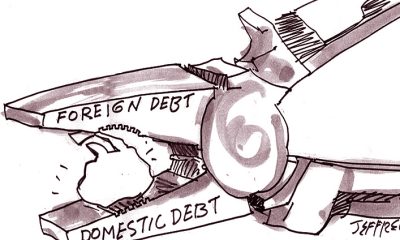
Hidden truth of Sri Lanka’s debt story: The untold narrative behind the report
-

 Features1 day ago
Ranjith Siyambalapitiya turns custodian of a rare living collection