
Business
K9 Outsourcing unleashes potential of the Sri Lankan work force

On a mission to empower the Sri Lankan workforce, K9 Outsourcing, a member of the Ceilao Logistics Group Pvt Ltd and based in Australia, transcends geographical boundaries with innovation and technological supremacy at its forefront.
“We are a talent acquiring partner, offering talented, dedicated staff from Sri Lanka to ensure maximum efficiency with minimum cost, no matter where the location is,” states its broad vision in an era when the world is on a growth trajectory in the sphere of digitalisation.
Managing Director, K9 Outsourcing, Anuja Fernando, who recently migrated to Australia, said “I’m extremely proud to build bridges, strengthen bilateral agreements, and create opportunities for the Australian diaspora to support their fellow Sri Lankans”.
The Covid-19 pandemic has created opportunities in the Sri Lankan marketplace. Given the current scenario, all businesses across the globe are on the quest to remain financially viable and operationally sustainable. Managing costs during this global crisis is critical. While many businesses were forced to reduce employment, K9 Outsourcing has been established to provide cost effective, dedicated Sri Lankan talent to the Australian market while supporting sustainable employment opportunities to Sri Lankans. With a highly skilled workforce and a cost-competitive business environment, Sri Lanka is emerging as a hidden gem for outsourcing.
“K9 outsourcing is a network built, with carefully chosen individuals who are motivated by goals and driven by results. Whether you are on a hunt for outgoing and qualified sales staff to engage in your workforce or searching for a network of professionals for your team, we have them all”, Fernando added.
K9 Outsourcing makes working from home viable with facilities ranging from dedicated workspaces, best ergonomic chairs, laptops, 24/7 WIFI with dedicated phone lines, ambient lighting, 8hrs UPS, and headsets provided in addition to attractive remuneration.
Ensuring professionalism in all areas, the K9 team is knit together with a force of individuals who have over 30+ years of experience individually in the corporate business environment engaging in diversified trades. The powerful collaboration provides a multi-faceted range of business strategies in areas of leadership, marketing, communications, customer sales and services, talent management, human resources and management.
Sri Lanka offers a unique mix of extremely low costs, in fact among the lowest anywhere, combined with a highly educated, English-speaking population with sophisticated technical skills, and a business environment and infrastructure that are superior to most low-cost countries.
Before the Covid-19 pandemic, working from home for many, seemed like a perk limited to freelancers and not a privilege accessible to others. Yet, K9 has optimised on the current trend with almost all services being forced to digitise, making it the go-to platform for broader prospective career pathways in the progressive future.
The first IT and BPO companies established operations in Sri Lanka as far back as the 1980s. Today, more than 300 IT and BPO companies have operations in Sri Lanka, more than 60,000 people hold IT or BPO jobs, and the sector generates more than $400 million in exports. Several well-known international firms such as HSBC, IFS, Motorola, HP subsidiary MphasiS, RR Donnelley, and WNS have established R&D, IT, and BPO centres in Sri Lanka.


National Development Bank PLC (hereinafter ‘the Bank’) announced its results for the financial year ended December 31, 2025 to the Colombo Stock Exchange recently. Full year results tabled by the Bank showcase a strong growth across all business lines with Net Banking Revenue increasing by a 45.2% on a comparable basis.
Like most other peers, the Bank’s 2024 financial performance was positively impacted following the successful conclusion of the ISB debt restructure with a one-off impact on interest income, fee income and net impairments amounting to LKR 1.4 billion, LKR 0.7 billion and LKR 9.4 billion, respectively for the said year.
Fund based income
Net interest income (NII), which accounts for close to 75.0% of Bank’s total operating income, grew by 6.5% on a normalised basis. Despite pressure on interest-earning assets arising from the lower interest rate environment, the Bank’s disciplined margin management helped stabilise Net Interest Margin (NIM) at 4.0% for the year. On a comparable basis, excluding one-off exceptional items, NIM stood at 4.2%, compared to 4.3% for both scenarios in 2024. By the end of the year, the Bank had close to LKR 29.3 billion in Loans and Deposits under a special arrangement with its customer(s) with a netting-off feature (end 2024: LKR 19.6 billion).
Non-fund based income
Net fee and commission income reached LKR 8.1 billion for the year – representing a growth of 14.3% from LKR 7.1 billion in 2024 excluding ISB restructuring related fees. Key growth drivers for the current year were trade finance, credit and lending, digital banking and credit and debit cards.
Credit and operating costs
Credit costs for the year amounted to LKR 5.7 billion, reflecting a substantial reduction of 57.1% compared to LKR 13.2 billion in 2024, a testament to the Bank’s strong credit underwriting practices and focused efforts on collections and recoveries. The Bank’s success on account of the latter is best reflected in notably improved stage 2 and 3 loan stock which stood at 7.9% and 10.8% respectively at end 2025 as compared with 16.6% and 14.0% at end 2024. Stage 3 provision coverage also saw further improvement to 59.1% from 54.5% during 2024 showcasing the Bank’s prudent management of credit risk.
Operating expenses closed at LKR 19.0 billion for the year, marking a 13.1% YoY increase. This increase was primarily driven by routine staff-related increments and necessary market realignments, along with higher investments in IT infrastructure and business development undertaken during the year.(NDB)

PMF Finance PLC has announced the appointment of Ms. Nishani Perera as a Non-Executive Independent Director, further strengthening the Company’s strategic oversight, governance framework, and board-level expertise as it continues to advance its transformation and long-term growth agenda.
Ms. Perera is a Fellow Member of the Institute of Chartered Accountants of Sri Lanka and brings over 19 years of experience across audit, assurance, advisory, risk management, and corporate governance. She currently serves as Partner – Audit & Assurance at Moore Aiyar and as Director of Moore Consulting (Pvt) Ltd.
Over the course of her career, Ms. Perera has gained substantial exposure to listed companies, banks, finance companies, and other regulated entities. Her areas of expertise include financial reporting under SLFRS/LKAS, audit and risk oversight, regulatory compliance, and the implementation of quality management standards. She has worked closely with Boards of Directors and Audit Committees on matters relating to financial reporting integrity, internal control frameworks, enterprise risk governance, and adherence to evolving regulatory requirements.
Ms. Perera holds a Master of Laws (LL.M.) from Cardiff Metropolitan University in the United Kingdom and a Bachelor of Science in Business Administration (Special) from the University of Sri Jayewardenepura. She is also an Associate Member of ACCA and CMA Sri Lanka, and a Fellow Member of AAT Sri Lanka.
Business
Capital Alliance deepens capital market presence with third Closed-End Fund Listing at the CSE
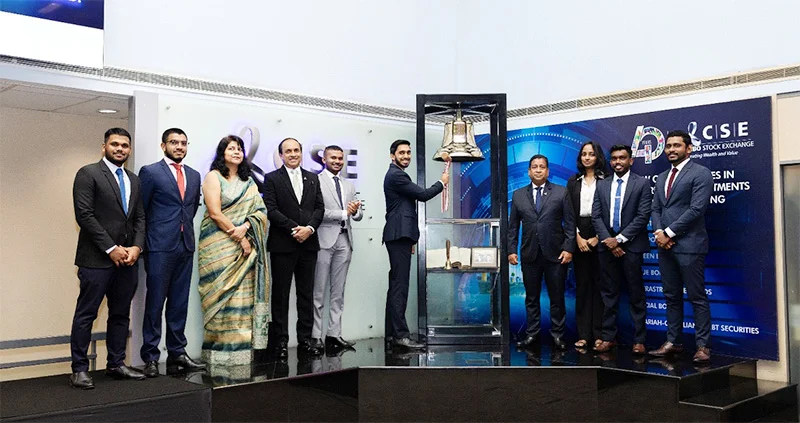
The units of the “CAL Three Year Closed End Fund” were officially listed on the Colombo Stock Exchange (CSE) recently. Accordingly, a total of 841,263,375 units of the ‘CAL Three Year Closed End Fund’ were listed by Capital Alliance Investments Ltd (CALI), a member of the Capital Alliance Ltd Group (CAL Group). The listing was commemorated by way of a special bell ringing ceremony on the CSE trading floor.
CSE CEO Rajeeva Bandaranaike speaking at the occasion remarked upon the rising demand for Unit Trusts: “When you look at funds, particularly unit trusts in today’s active capital market, we see a lot of domestic interest in the market with more investors entering. Funds, not only fixed income funds but also growth and balanced funds, can be the ideal vehicle through which new investors can enter the market. We see this interest reflected in the success of CAL’s Three Year Closed End Fund. More people are seeking to invest their money through professional fund managers.”

’Reimagining International Relations from a Global South Perspective’ offers a timely and rigorous contribution, providing key insights into policy, diplomacy, and global governance – PM

Fair weather will prevail over most parts of the island

CID arrests former top military intelligence officer under PTA

Corruption in coal procurement: CP demands action against all responsible

Jaffna University leads campaign against PTA and PSTB

Indian Naval Sail Training Ship INS Tarangini here soon

‘Dates have the highest sugar content to fight Coronavirus’

Sunday Island 27 December – Headlines

#SundayIsland 17th December – Headlines

Sunday Island – 28th March

Sunday Island Headlines – 21 March

Sunday Island – 21st February – Headlines
-

 Features4 days ago
Why does the state threaten Its people with yet another anti-terror law?
-

 Features4 days ago
Reconciliation, Mood of the Nation and the NPP Government
-

 Features4 days ago
Victor Melder turns 90: Railwayman and bibliophile extraordinary
-

 Features3 days ago
LOVEABLE BUT LETHAL: When four-legged stars remind us of a silent killer
-
 Features4 days ago
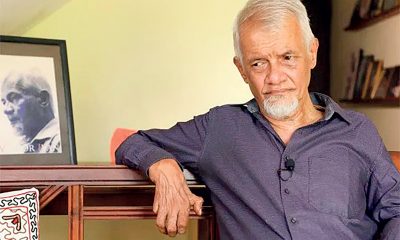
Victor, the Friend of the Foreign Press
-

 Latest News5 days ago
New Zealand meet familiar opponents Pakistan at spin-friendly Premadasa
-

 Latest News5 days ago
Tariffs ruling is major blow to Trump’s second-term agenda
-

 Latest News6 days ago
ECB push back at Pakistan ‘shadow-ban’ reports ahead of Hundred auction