
News
JVP takes govt. to task over high prices of essentials

By Saman Indrajith
The government is all mouth no trousers when it comes to controlling the prices of essential food items, says the JVP.
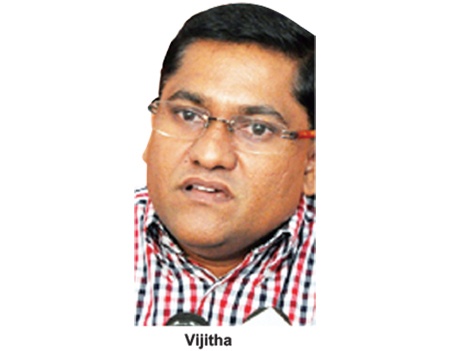
JVP Propaganda Secretary MP Vijitha Herath told the media at the party headquarters in Pelawatte yesterday said that traders would not bring down prices of goods just because the government ministers give voice cuts to TV channels, calling for price reductions. “They go to economic centres and markets and stand near vegetable stalls and give voice cuts to TV vowing that prices would be brought down. But the traders will not reduce the prices. The ministers also vow that they will arrest traders who sell above the stipulated prices but no such arrests have been made so far. This government is only big talk, but no action. The price of a kilo of rice is now at Rs 140 that is very much above the stipulated price. The government keeps issuing gazettes announcing price controls but no trader gives any consideration to those gazettes.”
He said that the process of economic collapse started prior to the advent of COVID-19 pandemic. “The government tries to take cover behind the pandemic, for its failure to manage the economy that is another indication of its failure. The collapse of the economy started long before the COVID-19. For example, the agriculture sector output dropped by 5.6 percent in the first quarter of 2020. The drop of the industrial sector output was 7.8 percent and the service sector contracted by 1.6 percent during the same time period. The country went to lockdowns after March 19. So, it shows that the first quarter of this year did not have the impact of the pandemic.
“Prices of essential commodities have reached unprecedented heights under this government within one year. The government has failed to control the prices and manage the economy. Those who came to parliament in bicycles demanding the then government to bring down fuel prices are now ruling the country but they did not bring down the prices at least by five cents”.
“I have the official price lists issued by the Central Bank on Nov 20, 2019 and Dec 23, 2020. In Nov 2019 price of a kilo of samba rice was at Rs 95, now it’s between Rs 132 and 140. This government issued at least five gazettes on rice prices alone for the past one year, but none has had any effect. Big onion price was Rs 147 a kilo now it’s Rs 160. Price of dry chillies was Rs 480 a kilo then now it’s Rs 550. A coconut was then Rs 58 now it’s higher than Rs 85. Lentil that the President promised in his address to the nation at Rs 65 a kilo was Rs 110 in Nov, 2019 and now it’s Rs 180. In that address to the nation there were promises to give canned fish at Rs 100 and big onion at Rs 150. It’s known now there are no such items for such prices. Finally the address to the nation became a big joke. Price of sprats a kilo was at Rs 600 now it’s Rs 850. Price of coconut oil has increased from Rs 320 to 480. Sugar price increased from Rs 100 to 135. These are the Central Bank figures that give an idea of the plight of the people after one year under this government. I do not bring the prices of vegetables to this but it’s a known fact that their prices too have increased to unknown heights. For the first time in history a gazette was issued on Sept 25, this year to control the prices of coconut. Nowhere one can find coconuts for that price now. The government has proven that it has lost control of prices in the market. It has failed miserably and people suffer as a consequence.”

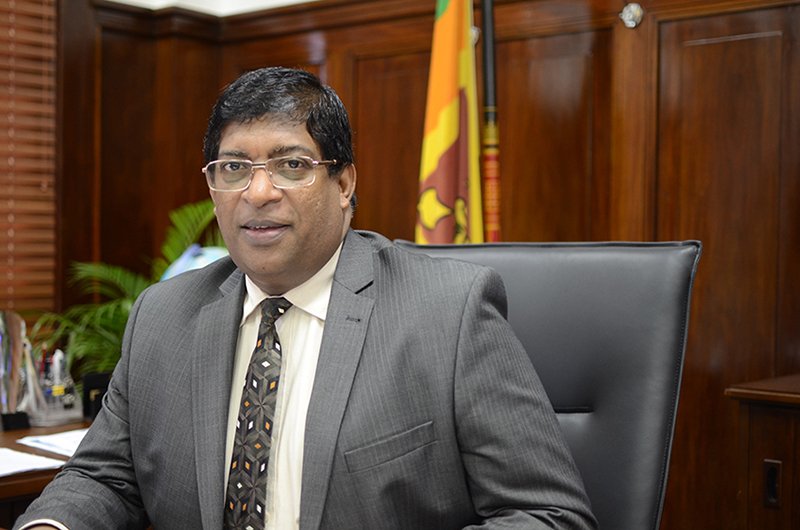
Opposition MP Ravi Karunanayake on Wednesday called for an urgent government statement to Parliament on the integrity and usability of Sri Lanka’s Gross Official Reserves (GOR), raising concerns over foreign exchange leakages and regulatory consistency under the Foreign Exchange Act No. 12 of 2017.
Raising the issue under Standing Order 27 (i), Karunanayake urged the Government to provide a comprehensive disclosure on the composition, encumbrances and deployability of the country’s reserves, as well as on the Central Bank’s oversight of foreign currency transactions.
“Reserve credibility depends not merely on headline numbers, but on transparency, enforceability and consistency in regulation,” the MP told the House.
He sought clarification on the latest reported GOR figure and the net usable reserves after excluding encumbered assets, swaps and pledged balances. He also requested details of annual revenue earned on reserves from 2023 to 2025.
Following are the questions raised by MP Karunanayake:
1. What is the latest reported GOR figure, and what is the net usable reserve after excluding encumbered assets, swaps, and pledged balances? What is the revenue earned on are GOR 23-25 per year?
2. Provide a separate and detailed breakdown of GOR, including: (a) Monetary gold (quantity and valuation basis) is it real gold or gold paper? (b) Foreign currency assets by major currency and instrument; (c) SDR holdings; (d) IMF reserve position; (e) Foreign currency swaps, specifying counterparty type, principal amount, tenure, maturity profile, and all-in cost; (f) Domestic swaps, specifying amount, tenure, rollover terms, collateralisation, and effective cost.
3. Of the total reserves reported, how much is encumbered, swap-backed, or otherwise not immediately deployable for debt servicing or currency stabilisation?
4. What SLR spread, fee, or margin does the Central bank apply when buying or selling USD to the Government for reserve accumulation and external debt servicing and what total profit or gain has the C.bank realised from such transactions during the past three financial years? Advice per year.
5. Is the Central Bank subject to continuous and statutory audit by the Auditor General? If so, will the Government table the most recent audit report, specifying audit scope, sample size, reserve confirmations, swap verification and gold custody validation?
6. What triggered the recent circular warning domestic institutions on foreign currency transactions?
7. Has the C.bank quantified foreign exchange and tax revenue losses resulting from Sri Lanka-based businesses routing credit card and commercial payments through overseas payment gateways?
8. If domestic entities are regulated strictly, why has a binding circular not been issued against noncompliant business entities using foreign payment gateway arrangements that divert foreign exchange outside Sri Lanka’s regulated banking system?
The government asked for two weeks’ time to respond to the queries.
by Saman Indrajith
News
Sajith exposes highly questionable coal imports from South Africa in 25 vessels; calls for independent probe

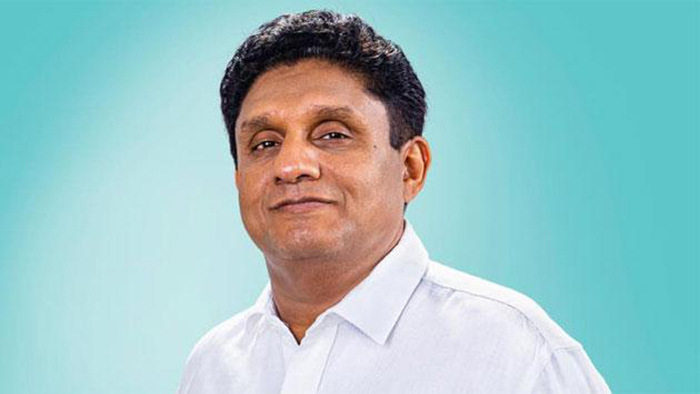
Opposition Leader Sajith Premadasa yesterday alleged in Parliament that eight recently imported coal shipments were substandard and called for an independent probe into the matter.Speaking in the House, Premadasa said Sri Lanka typically requires 36–38 coal shipments annually. While 11 Russian shipments received so far had raised no concerns, he claimed that 25 vessels ordered from South Africa under a new tender were facing quality issues.
He cited combustion reports from the Norochcholai Coal Power Plant showing that the eight shipments already received under the new tender failed to generate the expected 300 megawatts per unit. According to the MP, the outputs were: 285 MW, 290 MW, 260 MW, 295 MW, 285 MW, 270 MW, 275 MW, and 255 MW.
“These are scientific data generated automatically through boiler combustion reports that cannot be altered,” Premadasa said, asserting that the figures indicate the coal supplied was below required standards.
He warned that low-quality coal could increase fuel consumption, raise operational costs, and damage equipment. Any shortfall in power generation, he said, would necessitate additional coal imports or greater reliance on diesel power, ultimately driving up electricity tariffs for consumers.
“The loss will have to be borne by the electricity consumer,” Premadasa said, urging the government to clarify whether the shipments met required specifications.
He also criticized delays and changes in tender requirements, alleging that supplier eligibility criteria had been relaxed to allow non-standard providers.
by Saman Indrajith
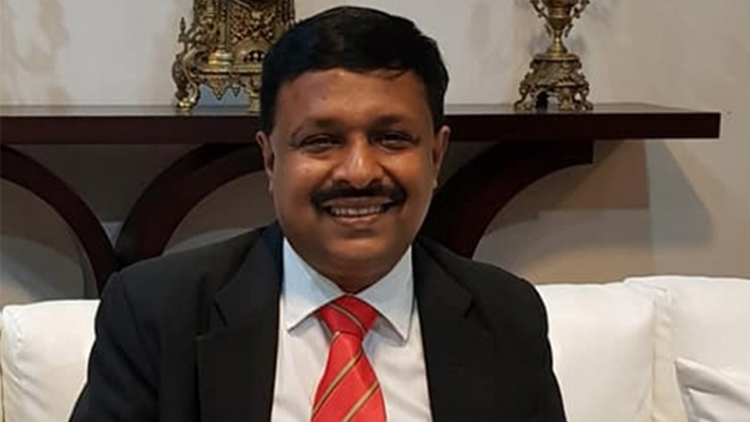
Former Mass Media Ministry Secretary and former Telecommunications Regulatory Commission of Sri Lanka (TRCSL) Chairman Anusha Palpita was yesterday released on bail by the Colombo Chief Magistrate’s Court.Colombo Chief Magistrate Asanga S. Bodaragama granted bail after considering submissions made by officials of the Bribery Commission and counsel for the defence.
The Magistrate ordered the suspect’s release on two personal surety bonds of Rs. 5 million each and imposed a foreign travel ban.
When the case was taken up, Bribery Commission officials informed court that a report had been called regarding alleged investments made by the suspect in the stock market. They sought a further date to present facts pertaining to those reports.
Appearing for the suspect, Attorney-at-Law Kanchana Ratwatte submitted that his client had been in remand custody for nearly a month and was prepared to extend full cooperation to investigators. He moved for bail on that basis.
After hearing both sides, the Magistrate observed that no reasonable grounds had been placed before court to further remand the suspect and ordered his release on bail. The case was fixed for 29 May.
Palpita was arrested on 23 January in connection with an investigation initiated by the Bribery Commission over the alleged failure to disclose the source of assets amounting to Rs. 46 million.
The Commission stated that he had arrived at its office on the day of his arrest to give a statement and was taken into custody thereafter.
He was arrested on allegations of amassing assets and property disproportionate to his declared income during a specified period, following a probe into wealth allegedly accumulated beyond his lawful earnings.

Atmospheric conditions are favorable for thundershowers over most parts of the island

Trump brings in new 10% tariff as Supreme Court rejects his global import taxes

Ravi demands full disclosure on Lanka’s usable reserves, flags forex leakages

Sajith exposes highly questionable coal imports from South Africa in 25 vessels; calls for independent probe

Ex-TRCSL Chairman Palpita enlarged on bail

NWSDB GM, two others granted bail in corruption case

‘Dates have the highest sugar content to fight Coronavirus’

Sunday Island 27 December – Headlines

#SundayIsland 17th December – Headlines

Sunday Island – 28th March

Sunday Island Headlines – 21 March

Sunday Island – 21st February – Headlines
-

 Life style6 days ago
Marriot new GM Suranga
-

 Business5 days ago
Ministry of Brands to launch Sri Lanka’s first off-price retail destination
-

 Features6 days ago
Monks’ march, in America and Sri Lanka
-

 Features6 days ago
The Rise of Takaichi
-

 Features6 days ago
Wetlands of Sri Lanka:
-

 News6 days ago
Thailand to recruit 10,000 Lankans under new labour pact
-

 News6 days ago
Massive Sangha confab to address alleged injustices against monks
-

 Sports2 days ago
Old and new at the SSC, just like Pakistan