
News
Justice Minister suggests abolition of all Kandyan, Thesawalamai and Muslim laws through new Constitution

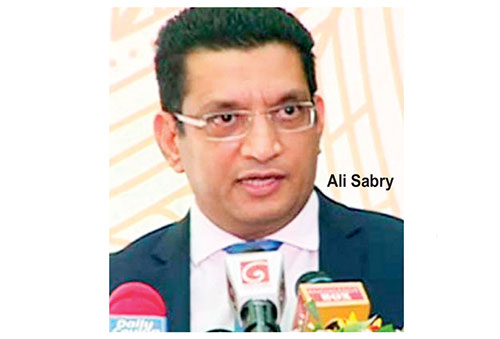
By Saman Indrajith
Making use of personal laws prevailing in a country at present to attack a single community would not be approved by any civilized nation, Justice Minister Ali Sabry told Parliament yesterday.
“It is so unfortunate that practices of those laws have become a tagline or a slogan for campaigns intended to raise hatred and disharmony among communities,” the Minister said.
Responding to a series of questions raised by Our Power of People’s Party National List MP Ven Aturaliye Ratana Thera, Minister Sabry said that personal laws in the country had evolved over centuries. The One Law One Country concept of the government was being implemented in spirit and in letter to promote the Sri Lankan national identity, the Minister said.
“There are several personal laws in this country. Among them are the Kandyan Marriage and Divorce Act, the Jaffna Thesawalamai Law, the Muslim Marriage and Divorce Act, the Buddhist Temporalities Act and the Church of Ceylon Act. The Muslim law has been recognised as a personal law in many other countries, including India, the Philippines, Israel and Singapore. The Muslim laws are not solely made on the basis of the Quran. It was first recognised as the Mohammadan Code among other personal laws such as the Kandyan Law and the Theswalamai law in 1806. Thereafter, these laws evolved with time. For example, until 1938 amendments to the Kandyan law polyandry and polygamy were accepted in law. It is asked whether the Muslim law permits the marrying off of underage Muslim girls without their consent. This is not true. Such marriages are registered with their consent and only their fathers place their signature on registration documents on their behalf too after ascertaining the consent of the girl. In some states in the US the minimum age for marriage is 13, while in some provinces in Japan it is 15. Until 1997, here in Sri Lanka, that age was 16 years. According to Sections 8 to 15 of the Kandyan Law and the Section 22 of the Marriage Ordinance an underage marriage is accepted if the marrying children have the consent of their parents. There had been many such mismatches in the law until the Court intervened in 2002 and gave an order that the minimum age for marriage should be 18 years. Even in Saudi Arabia the minimum age of marriage is 18 now. We too have accepted that the minimum age of marriage should be set 18. I submitted a Cabinet paper in Nov 2020 to that effect. There I have also proposed the amending of the laws enabling females to act as Quazi judges and that the females getting married should place their signature in the registration documents. In addition, I have set up an advisory committee to amend Muslim laws and when their recommendations are ready they will be announced to the community so that people too could submit their proposals. We will consider all of them in amending the laws. I am against the marriages under the age of 18. There is also another fact that around 80 percent of underage mothers are not reported from the Muslim community but from other communities. That means they have become mothers even if their marriages are not registered.”
Minister Sabry said that achieving one law one country could not be achieved by doing away with personal laws of Muslim community only; there was the possibility of abolishing all personal laws at once and that could be done through the new Constitution being drafted, he added.

News
National SME Strategy Framework 2026 is critical because it brings policy consistency and stability to the sector – PM

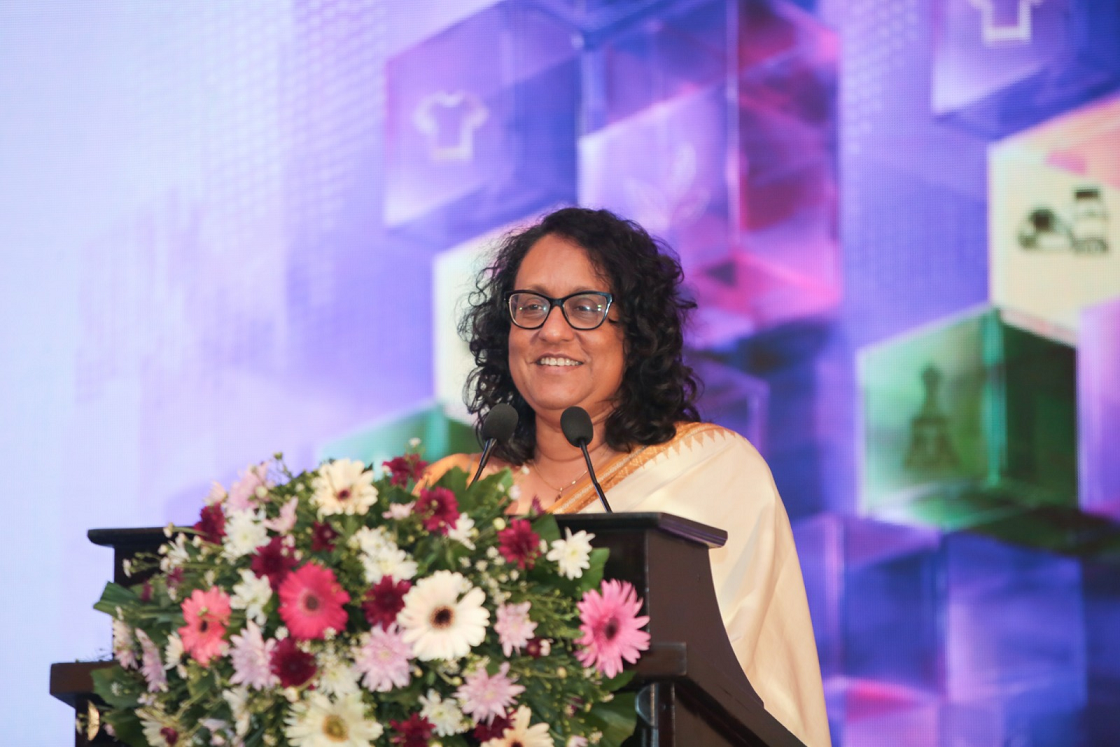
The Prime Minister Dr. Harini Amarasuriya participated in the 2nd day of the dialog on “National SME Strategy Framework 2026” organized by the Ministry of Industry and Entrepreneurship Development held on Thursday [14th of May].
The official launch of the “National SME Strategy Framework 2026” to empower Small and Medium Enterprises (SMEs), was held on Wednesday (13) under the patronage of the Minister of Industry and Entrepreneurship Development, Sunil Handunnetti, and Deputy Minister Chathuranga Abeysinghe.
The Framework has been developed by the Industry and Entrepreneurship Development Ministry, with input from the SME Advisory Committee and key system stakeholders in line with the national manifesto of “A Thriving Nation – A Beautiful Life.”
This framework creates the opportunity for the entrepreneurs to easily register their businesses, access modern technology, and obtain specialized financial facilities along with the advisory services that directly support the growth of entrepreneurs, departing from the traditional method free of charge.
The second day marks the dialog on the “National SME Strategy Framework 2026” focusing on the discussion into implementation and strategy to action featuring series of panel discussions.
During the event National SME Strategy Framework 2026 was presented to the Prime Minister by the Deputy Minister of Industry and Entrepreneurship Development Chathuranga Abeysinghe.
The Prime Minister stated that the country is implementing its transformative agenda during a period of global instability and disruptive global context stressing the importance of adaptation, sustainability and building resilience, particularly within the Small and Medium Enterprise (SME) sector in such context.
Underscoring the importance of the SME policy framework, the Prime Minister further stated that the government’s role is to ensure consistency, stability and collaboration within the sector.
The event was attended by the Minister of Industry and Entrepreneurship Development, Sunil Handunnetti, Deputy Minister Chathuranga Abeysinghe, Australian Deputy High commissioner to Sri Lanka, Ms. Ruth Baird and Secretary to the Minister of Industry and Entrepreneurship Development Mrs. J.M. Thilaka Jayasundara and develop and develop partners and representatives from business community.
[Prime Minister’s Media Division]


… calls for modernising Inland Revenue Dept.
Opposition and SJB Leader Sajith Premadasa yesterday criticised the government’s proposed amendments to the Inland Revenue Act, claiming that a new provision in the draft legislation could unfairly lead to criminal action against ordinary citizens and small business owners over administrative tax-related matters.
In a statement, Premadasa said the public was “not angry about paying taxes” but was frustrated by what he described as unfair treatment under the proposed law.
He alleged that Section 185A of the proposed bill could make delays in filing tax returns or registration-related issues criminal offences, warning that struggling small-scale entrepreneurs could be treated in the same manner as individuals deliberately evading millions of rupees in taxes.
“That is wrong,” the Opposition Leader said.
Premadasa further accused the government of resorting to criminal action against people instead of reforming and modernising the Inland Revenue Department and simplifying tax compliance procedures.
He also questioned the government’s commitment to tackling corruption and financial crimes, asking why stronger measures had not been taken against money laundering, financial fraud and those accused of misappropriating public funds.
“Go after the corrupt. Punish real fraudsters. But do not weaponise the law against the common man,” he said.
Premadasa added that the Opposition would continue to resist legislation that undermined “fairness, proportionality, and the constitutional rights of the people.”
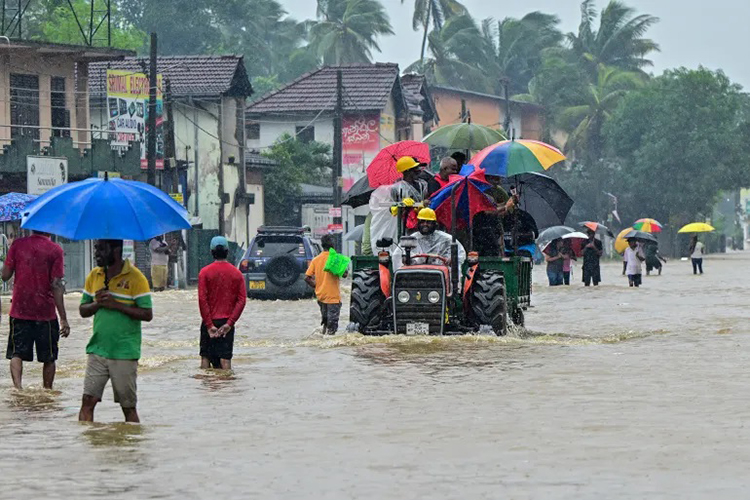
Adverse weather conditions prevailing across the country have severely affected 3,475 persons belonging to 1,113 families in seven districts, according to the Disaster Management Centre (DMC).The DMC said 1,310 individuals from 489 families had been relocated to eight temporary safety shelters due to the deteriorating weather situation.
The DMC also confirmed one death from the Koralepatthu South area in the Batticaloa District.
As of 10 am yesterday (14), a total of 88 houses and one business establishment had sustained partial damage as a result of the adverse weather conditions.
Authorities have urged the public in vulnerable areas to remain vigilant and follow safety instructions issued by disaster management and local officials as heavy rains continue to affect several parts of the country.
Meanwhile, the National Building Research Organisation (NBRO) yesterday extended landslide warnings for several districts across the country due to the prevailing adverse weather conditions.
According to the NBRO, Level 2 landslide warnings have been issued for Neluwa in the Galle District; Agalawatte, Baduraliya, Matugama, Horana and Walallawita in the Kalutara District; and Ratnapura and Pelmadulla in the Ratnapura District.
Level 1 landslide warnings remain in effect for several areas in the Badulla, Galle, Kalutara, Kandy, Kegalle, Kurunegala, Matale, Monaragala, Nuwara Eliya and Ratnapura districts.
The warned areas include Bandarawela, Passara and Hali Ela in Badulla; Thawalama, Elpitiya and
Niyagama in Galle; Ingiriya and Bulathsinhala in Kalutara; and multiple Divisional Secretariat areas in the Kandy District, including Poojapitiya, Deltota, Udunuwara and Pathahewaheta.
Warnings have also been issued for Bulathkohupitiya, Mawanella, Kegalle, Aranayake, Yatiyanthota, Warakapola and Rambukkana in the Kegalle District; Ridigama in Kurunegala; Rattota, Naula and Ambanganga Korale in Matale; and Wellawaya, Badalkumbura and Bibile in Monaragala.
In the Nuwara Eliya District, the warning covers Norwood, Ambagamuwa Korale and Kotmale, while Eheliyagoda, Kalawana, Kuruwita, Godakawela, Kiriella and Ayagama in the Ratnapura District have also been placed under alert.
The NBRO said the warnings were extended in view of further rainfall forecast by the Department of Meteorology and urged residents in vulnerable areas to remain vigilant and follow instructions issued by authorities for their safety.
Meanwhile, the water levels in several major river basins that had risen due to recent heavy rainfall are now receding following a decline in rainfall over the past 24 hours, the Department of Irrigation said.
Director of Irrigation (Hydrology and Disaster Management) L.S. Sooriyabandara said water levels in the Nilwala River, Gin Ganga, Kalu Ganga and Attanagalu Oya basins were showing a downward trend as rainfall eased.
He noted that water levels were declining in most areas, with the exception of the Millakanda area in the Kalu Ganga basin.
However, Sooriyabandara warned that the current improvement could be temporary, as the Department of Meteorology has forecast further rain in the coming days.
According to the Department, 18 of the country’s 73 major reservoirs are currently spilling over, while another 18 medium-sized reservoirs are also discharging water.
He stressed that the release of water does not indicate a major flood situation at present, but urged the public to remain vigilant and follow future advisories issued by authorities.
By Norman Paliahwadane and Chaminda Silva

LPL 2026 Opening Game between Jaffna and Galle

New Zealand’s Māori Queen meets King Charles at Buckingham Palace

Trump and Xi conclude ‘very successful’ talks but no deals announced

India hikes fuel prices as Iran crisis bites

Kuldip Yadav in for Khaleel; Gleeson for Thushara

Eyman Fatima powers Pakistan to series victory

‘Dates have the highest sugar content to fight Coronavirus’

Sunday Island 27 December – Headlines

#SundayIsland 17th December – Headlines

Sunday Island – 28th March

Sunday Island Headlines – 21 March

Sunday Island – 21st February – Headlines
-

 News6 days ago
Lanka Port City officials to meet investors in Dubai
-
 News3 days ago
Ex-SriLankan CEO’s death: Controversy surrounds execution of bail bond
-

 News7 days ago
SLPP expresses concern over death of former SriLankan CEO
-
 News7 days ago
Police inform Fort Magistrate’s Court of finding ex-CEO of SriLankan dead under suspicious circumstances
-
 Features4 days ago
When University systems fail:Supreme Court’s landmark intervention in sexual harassment case
-
Features4 days ago
High Stakes in Pursuing corruption cases
-
 Midweek Review3 days ago
A victory that can never be forgotten
-

 News7 days ago
President of Vietnam and delegation departs Sri Lanka